Glasgow’s Low Emission Zone (LEZ) is a city-centre traffic restriction designed to reduce harmful air pollution by limiting access for vehicles that do not meet specified emissions standards. Understanding the Glasgow LEZ rules, penalty charges, operating hours, vehicle exemptions and boundary map helps drivers check compliance before entering the restricted area.
- What is the Glasgow Low Emission Zone?
- Where is the Glasgow LEZ boundary on the map?
- Which vehicles are allowed in Glasgow’s LEZ?
- What Euro standard does a petrol car need?
- What Euro standard does a diesel car need?
- Do vans, taxis, buses and lorries have to comply?
- Are electric and hybrid vehicles permitted?
- When does Glasgow’s LEZ operate?
- How much is the Glasgow LEZ fine?
- How do repeat offences increase the penalty?
- Can a driver receive several fines on the same day?
- How can drivers pay a Glasgow LEZ penalty?
- Which vehicles are exempt from Glasgow’s LEZ?
- Do Blue Badge holders receive an exemption?
- Are historic vehicles and specialist vehicles exempt?
- Are emergency vehicles and military vehicles exempt?
- How does Glasgow enforce its Low Emission Zone?
- What happens when a non-compliant vehicle enters?
- Do cameras check every vehicle entering Glasgow city centre?
- How can drivers check whether their vehicle meets Glasgow LEZ rules?
- What information should drivers check?
- What should drivers do if the checker gives an unexpected result?
- What happens if a driver receives an incorrect Glasgow LEZ fine?
- Why was Glasgow’s LEZ introduced?
- How should visitors and businesses prepare for Glasgow’s LEZ?
- What should visitors driving into Glasgow do?
- How should delivery companies and fleet operators respond?
- What alternatives are available for non-compliant vehicles?
- What should drivers remember about Glasgow’s LEZ rules?
What is the Glasgow Low Emission Zone?
The Glasgow Low Emission Zone is a legally designated city-centre area where vehicles must meet minimum European emissions standards or qualify for an exemption. Glasgow City Council enforces these restrictions to reduce harmful air pollution and improve public health across central Glasgow.
A Low Emission Zone (LEZ) restricts access according to a vehicle’s emissions performance. It does not operate as a conventional congestion charge. Drivers cannot pay a daily fee to enter Glasgow’s LEZ with a non-compliant vehicle.
The scheme forms part of Scotland’s national transport and air-quality policy. The Transport (Scotland) Act 2019 established the legal framework for local authorities to introduce and enforce LEZ restrictions. Scottish regulations establish common emissions standards, penalty charges and exemption arrangements.
Glasgow introduced its first LEZ at the end of 2018, initially targeting buses. The city subsequently expanded the scheme to cover other vehicle categories, including cars, vans, taxis, motorcycles and heavy goods vehicles.
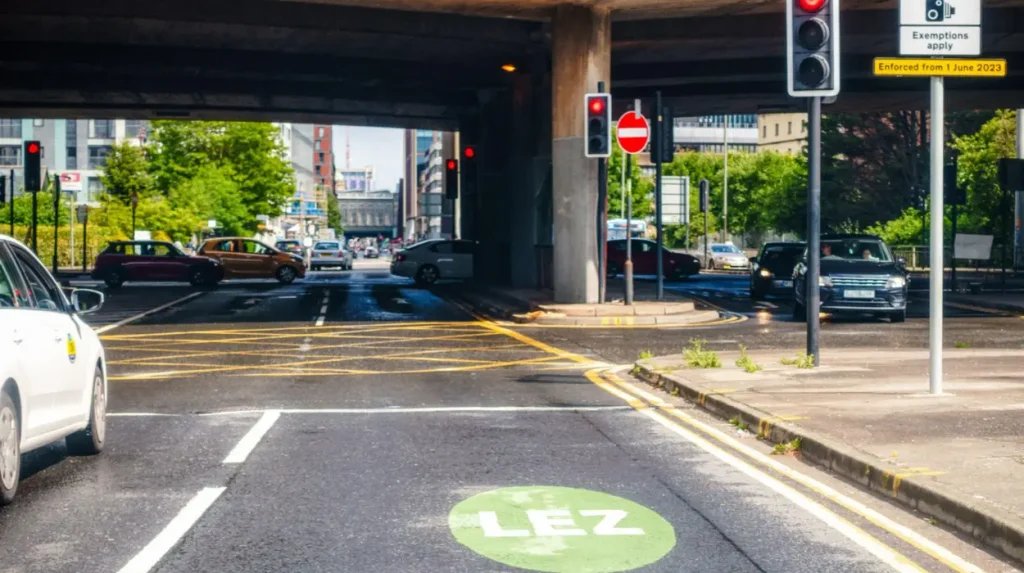
The wider restrictions became enforceable for most vehicle types on 1 June 2023. Vehicles belonging to residents within the zone received an additional grace period until 1 June 2024. Glasgow’s LEZ is now fully operational, and drivers must check compliance before entering the restricted area.
The scheme targets pollutants associated with road traffic, particularly nitrogen oxides and particulate matter. These pollutants contribute to poor urban air quality and are associated with respiratory and cardiovascular health problems.
Glasgow’s LEZ is one of four major Scottish city schemes, alongside those in Edinburgh, Dundee and Aberdeen. The zones follow nationally consistent emissions and penalty rules, although each city has its own geographical boundary.
Where is the Glasgow LEZ boundary on the map?
The Glasgow LEZ covers a substantial part of the city centre, including areas around High Street, Saltmarket and central commercial streets. Drivers should consult Glasgow City Council’s official boundary map and street information to establish whether their destination or planned route enters the restricted zone.
The boundary is particularly important because the Glasgow LEZ does not cover the entire Glasgow City Council area. It concentrates restrictions on central streets where road traffic contributes to urban air pollution.
The official map identifies the perimeter and the roads within the zone. Drivers should distinguish between travelling towards the city centre and actually crossing the LEZ boundary. A route that approaches central Glasgow does not automatically enter the restricted area.
Which central Glasgow areas should drivers check?
The official boundary documentation identifies High Street and Saltmarket among the areas covered by the scheme. The zone also includes central streets around major commercial and transport destinations.
Drivers planning journeys to central shopping streets, offices, hotels, cultural attractions and city-centre car parks should check their exact access road. The address of a destination alone does not always establish whether the approach route crosses the LEZ boundary.
The Cathedral Precinct is excluded from the designated boundary for operational reasons. A section of A804 Dobbie’s Loan is also excluded. The boundary design takes account of motorway access and the need to give drivers opportunities to change routes after encountering warning signs.
How can drivers use the official LEZ map?
Use the Glasgow City Council website to locate the current LEZ map and associated street information. Compare the boundary with the destination postcode and the roads shown in your navigation directions.
Drivers should check the route rather than relying exclusively on a satnav’s environmental-zone warning. Navigation systems do not always display the latest local boundary or explain the Scottish exemption rules.
The official street listing is especially useful when a destination sits near the perimeter. Checking the precise road connection helps establish whether a journey enters the zone or remains outside it.
Which vehicles are allowed in Glasgow’s LEZ?
Vehicles entering Glasgow’s LEZ must meet the applicable Euro emissions standard or qualify for a recognised exemption. The principal thresholds are Euro 4 for petrol vehicles and Euro 6 for diesel vehicles, with additional standards applying to certain heavy vehicles.
The Euro emissions standards are European regulatory classifications that limit pollutants produced by motor vehicles. They help authorities distinguish vehicles according to their certified emissions performance rather than simply their fuel consumption or engine size.
For most private motorists, the main checks concern petrol and diesel cars. However, commercial vehicles and public-service vehicles must also meet the standards relevant to their category.
What Euro standard does a petrol car need?
Petrol cars entering Glasgow’s LEZ generally need to meet Euro 4. Many petrol cars registered from January 2006 meet this standard, although registration date is only a guide and does not guarantee compliance.
For example, a petrol car registered in 2007 is more likely to meet the required standard than an older petrol model. The actual emissions classification recorded for the vehicle remains the important factor.
Drivers should verify the registration number through Scotland’s official LEZ vehicle checker before travelling into the city centre.
What Euro standard does a diesel car need?
Diesel cars generally need to meet Euro 6 to enter Glasgow’s LEZ. Many diesel cars registered from September 2015 meet this requirement, but the registration date alone does not confirm compliance.
For example, a diesel car registered in 2017 is more likely to satisfy the standard than an older diesel vehicle. Drivers should still check the specific vehicle rather than assume that every car from that year qualifies.
Euro 6 imposes stricter limits on nitrogen oxide emissions than earlier diesel standards. This is particularly relevant in urban areas where traffic-related pollution affects people living, working and walking near busy roads.
Do vans, taxis, buses and lorries have to comply?
Yes. Glasgow’s LEZ applies to a range of vehicle categories, including light goods vehicles, taxis, buses, coaches, heavy goods vehicles, motorcycles and mopeds. Each vehicle must meet its applicable standard or qualify for an exemption.
Commercial operators should check each vehicle individually. A compliant company car does not establish that a delivery van or fleet vehicle meets the same requirements.
Bus and coach operators should also verify the applicable vehicle classification. The scheme originally focused on buses, so compliance planning has been an important part of Glasgow’s wider LEZ implementation.
Are electric and hybrid vehicles permitted?
Fully electric vehicles produce no exhaust emissions while driving and generally satisfy the LEZ’s emissions requirements. Plug-in hybrid and conventional hybrid vehicles must still be assessed according to their certified emissions classification.
A hybrid badge does not automatically prove compliance. Drivers should use the official checker, particularly when operating an older hybrid vehicle.
The same principle applies to converted vehicles. A modification or alternative-fuel system does not automatically change the official emissions classification used for LEZ enforcement.
When does Glasgow’s LEZ operate?
Glasgow’s LEZ operates 24 hours a day, seven days a week, throughout the year. There is no standard evening, weekend or public-holiday exemption for non-compliant vehicles, so drivers must meet the requirements whenever they enter the restricted area.
The continuous operating schedule is an important difference between the LEZ and restrictions that apply only during weekday rush hours. Drivers cannot assume that travelling after work or visiting central Glasgow on Sunday removes their compliance obligations.
The scheme uses automatic number plate recognition cameras to monitor vehicles entering the zone. These cameras capture registration numbers, allowing the enforcement system to identify vehicles and check whether restrictions have been breached.
Does the LEZ apply at weekends and on bank holidays?
Yes. The operating rules remain in force on Saturdays, Sundays and public holidays. A non-compliant vehicle entering the zone on a quiet Sunday faces the same basic compliance requirement as a vehicle entering on a busy weekday.
For example, a driver visiting a city-centre attraction on a public holiday should check the vehicle’s emissions status before setting off. A less congested road does not create an exemption.
Do drivers need to pay to enter the zone?
No. Glasgow’s LEZ does not provide a standard payment option that allows a non-compliant vehicle to enter legally. Drivers must use a compliant vehicle, qualify for an exemption or choose a route that remains outside the restricted boundary.
This distinction matters when planning a short visit. Paying for parking, purchasing a visitor attraction ticket or paying a separate road-related charge does not satisfy the LEZ requirements.
How much is the Glasgow LEZ fine?
The initial Glasgow LEZ penalty charge is £60 for a contravention, with a 50% reduction to £30 when paid within 14 days. Repeated contraventions can double the charge, subject to vehicle-specific maximums and the applicable 90-day reset rules.
A Penalty Charge Notice (PCN) is the formal notice issued when the enforcement system identifies a breach of the LEZ requirements. The registered keeper of the vehicle is generally responsible for the penalty, subject to the applicable rules and exemptions.
The national penalty structure applies across Scotland’s LEZ schemes. Glasgow City Council administers its local enforcement process, while Scottish regulations establish the standard charge and escalation mechanism.
How do repeat offences increase the penalty?
The penalty doubles for each subsequent contravention involving the same vehicle and liable person within the relevant 90-day period. The charge increases until the applicable maximum is reached.
The standard progression is:
- First contravention: £60, reduced to £30 if paid within 14 days.
- Second contravention: £120, reduced to £60 within the discount period.
- Third contravention: £240, reduced to £120 within the discount period.
- Fourth contravention: £480, reduced to £240 within the discount period.
For cars and light goods vehicles, the maximum is £480. For buses, coaches and heavy goods vehicles, the maximum is £960. The precise progression depends on the vehicle category and the number of qualifying repeat contraventions.
If the relevant 90-day period passes without another detected contravention, the penalty resets to the initial £60 level for a subsequent offence.
Can a driver receive several fines on the same day?
The national framework limits the charge to one penalty per day for qualifying repeated contraventions involving the same vehicle, zone and liable person. This provision prevents multiple charges for the same day’s repeated breaches from accumulating without limit.
The daily rule does not mean drivers can repeatedly enter the zone without consequences. A later contravention can still count towards the escalating penalty structure, depending on the circumstances.
Drivers should read the specific PCN carefully. Its issue date, vehicle details, contravention information and payment deadline determine the next steps.
How can drivers pay a Glasgow LEZ penalty?
Glasgow City Council provides an online service for paying a penalty and viewing details about the alleged contravention. Drivers generally need the vehicle registration number and the PCN number.
Drivers should observe the deadline printed on the notice. Paying within 14 days generally preserves the 50% discount. If a notice appears incorrect, review the appeal instructions rather than ignoring it.
Which vehicles are exempt from Glasgow’s LEZ?
Certain vehicles qualify for exemptions from Glasgow’s LEZ, including eligible vehicles used by Blue Badge holders and specific vehicle categories defined in Scottish regulations. Exemption eligibility depends on the circumstances and applicable conditions, so drivers should verify requirements before entering the zone.
An exemption is a legal exception to the normal emissions requirements. It does not mean that every vehicle owned by a person in an eligible category automatically qualifies in every circumstance.
Scottish regulations establish the national exemption framework. Glasgow City Council administers the scheme locally, while the official Scottish LEZ service provides information about vehicle compliance and relevant exemption arrangements.
Do Blue Badge holders receive an exemption?
Eligible vehicles used by Blue Badge holders are included in the exemption arrangements. The scheme recognises that disabled people can depend on vehicles for essential journeys, medical appointments and everyday activities.
Blue Badge status should not be confused with a general exemption for every vehicle registered to a disabled person. The applicable conditions and registration process must be followed.
Drivers should consult the official Scotland LEZ website for current exemption guidance. Blue Badge holders should confirm whether the vehicle and journey meet the requirements and whether registration is necessary before entering the zone.
Are historic vehicles and specialist vehicles exempt?
Some vehicle categories qualify for exemptions under the national regulations. These include specified historic vehicles and certain specialist or operational vehicles, subject to the applicable definitions and conditions.
Historic status should not be assumed simply because a vehicle is old or rarely driven. The relevant legal classification determines whether an exemption applies.
Similarly, specialist use does not automatically exempt every commercial or public-service vehicle. Operators should check the official exemption criteria for the exact vehicle category before relying on an exception.
Are emergency vehicles and military vehicles exempt?
Specified emergency and military vehicle categories are covered by the national exemption framework. The exemption depends on the legal classification and conditions applicable to the vehicle.
Drivers should not assume that every vehicle associated with an emergency service or government organisation qualifies automatically. The official regulations determine eligibility.
Where an exemption applies, it is separate from the normal Euro emissions test. Where it does not apply, the vehicle must satisfy the relevant emissions requirements to enter the LEZ legally.
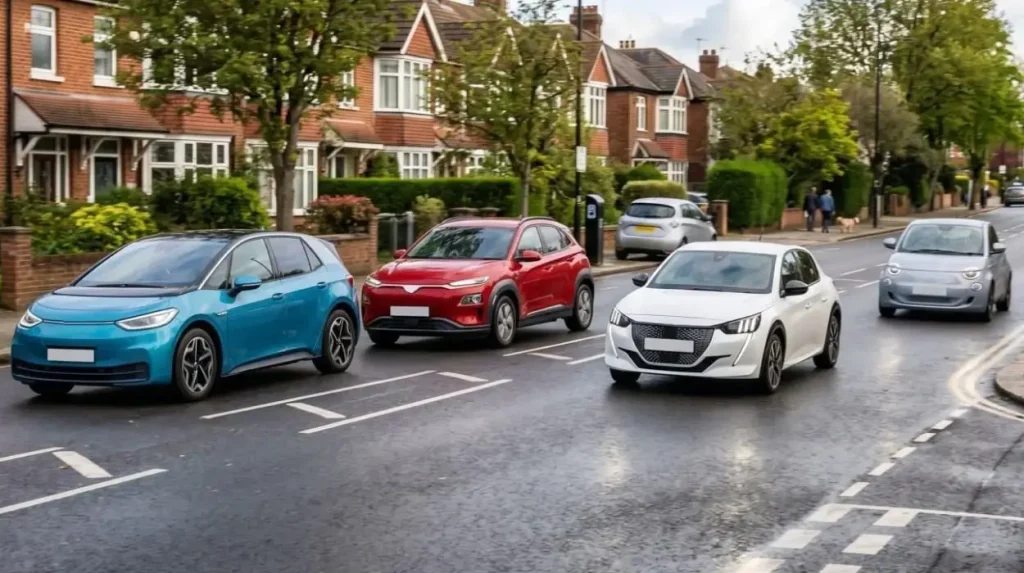
How does Glasgow enforce its Low Emission Zone?
Glasgow City Council enforces the LEZ using automatic number plate recognition cameras and vehicle-registration information. The system identifies vehicles entering the zone and supports checks against compliance and exemption records, allowing the council to issue penalty notices for qualifying breaches.
Automatic number plate recognition (ANPR) is a camera-based technology that reads vehicle registration plates. It is used in traffic enforcement systems to identify vehicles without requiring an officer to stop every driver.
In Glasgow, the enforcement process is designed to operate continuously. Cameras monitor entry points and capture registrations as vehicles cross the zone boundary.
What happens when a non-compliant vehicle enters?
The enforcement process follows several stages:
- An ANPR camera captures the vehicle registration as it enters the zone.
- The system checks the vehicle information against relevant compliance and exemption records.
- A qualifying breach is processed under the applicable enforcement rules.
- Glasgow City Council issues a Penalty Charge Notice to the liable person.
The legal framework provides for payment, internal review and appeal procedures. Drivers should use the information on the notice to understand the alleged breach and any available response.
Do cameras check every vehicle entering Glasgow city centre?
ANPR cameras form the basis of the enforcement system, but drivers should not assume that every individual vehicle is checked through a manual inspection. The system uses registration data to identify vehicles and assess compliance.
A camera’s presence also does not mean that every vehicle passing nearby has entered the zone. The designated boundary and the vehicle’s actual route determine whether the restrictions apply.
Drivers should follow the road signs and consult the official map rather than trying to identify camera locations. Compliance depends on the legal requirements, not on whether a driver notices an enforcement camera.
How can drivers check whether their vehicle meets Glasgow LEZ rules?
Drivers can check Glasgow LEZ compliance by entering their vehicle registration number into Scotland’s official Low Emission Zone vehicle checker. The service helps identify whether a vehicle meets the required emissions standards, allowing motorists to plan city-centre journeys before departure.
The official vehicle checker is the most practical starting point for motorists who are uncertain about their vehicle’s emissions classification. It is particularly useful for older diesel cars, imported vehicles, commercial vans and vehicles with unusual registration histories.
What information should drivers check?
Drivers should confirm the following details before entering Glasgow’s LEZ:
- Vehicle registration: ensure the registration number entered into the checker is correct.
- Fuel type: establish whether the vehicle is petrol, diesel, electric or another fuel type.
- Emissions standard: verify the recorded Euro classification against the applicable requirement.
- Exemption status: check whether a legally recognised exemption applies and whether any registration process is required.
- Route: compare the planned journey with Glasgow’s official LEZ boundary map.
These checks are relevant to residents, visitors, taxi drivers, delivery operators and businesses managing vehicle fleets.
What should drivers do if the checker gives an unexpected result?
Drivers should verify the registration details and consult the vehicle’s official documentation. If the result remains unclear, they should contact the relevant official service or vehicle authority for clarification before entering the zone.
A vehicle’s model year, fuel type or manufacturer’s description is not a substitute for confirming the applicable emissions classification.
Businesses operating multiple vehicles should maintain a compliance record for each registration. This reduces the risk of a vehicle being dispatched into Glasgow city centre without the necessary checks.
What happens if a driver receives an incorrect Glasgow LEZ fine?
Drivers who believe a Glasgow LEZ penalty is incorrect should examine the Penalty Charge Notice, check the vehicle and contravention details, and follow Glasgow City Council’s formal challenge or appeal procedure. They should retain supporting evidence and observe the deadlines stated on the notice.
A penalty notice should identify the vehicle and explain the alleged contravention. Drivers should compare these details with their vehicle records, route information and any exemption documentation.
Potential issues include an incorrect registration, a vehicle that qualifies for an exemption, or circumstances that require the council to review the enforcement decision.
What evidence can support an appeal?
Useful evidence depends on the reason for challenging the notice. Examples include vehicle registration documents, official emissions information, relevant exemption records and documents showing that the registration or vehicle details have been recorded incorrectly.
Drivers should explain the specific reason for their challenge and provide evidence that directly supports it. General disagreement with the LEZ policy does not itself establish that an individual penalty is invalid.
Where can a penalty be challenged?
The Glasgow LEZ payment and appeal portal provides access to penalty information and the council’s online service. Drivers should follow the challenge instructions and deadlines applicable to their notice.
They should not assume that contacting the council informally automatically suspends a payment deadline. The notice and the official appeal guidance determine the required process.
Keeping copies of correspondence, reference numbers and submitted evidence helps drivers track the outcome of a challenge.
Why was Glasgow’s LEZ introduced?
Glasgow introduced its Low Emission Zone to reduce harmful traffic-related pollution, improve urban air quality and protect public health. The policy forms part of Scotland’s wider transport strategy, which promotes cleaner vehicles, sustainable travel and reduced exposure to harmful emissions in busy urban areas.
Road transport produces pollutants that affect air quality, particularly in streets with high traffic volumes and buildings close to the road. Nitrogen oxides and particulate matter are important pollutants because exposure is associated with respiratory and cardiovascular health effects.
Glasgow’s LEZ addresses vehicle emissions in a defined geographical area. It complements wider measures involving public transport, walking, cycling and cleaner vehicle technology.
How has Glasgow’s LEZ developed?
The scheme developed in stages rather than introducing restrictions for every vehicle at once.
In late 2018, Glasgow introduced its initial bus-focused LEZ. The Transport (Scotland) Act 2019 subsequently provided a national legislative framework for local authorities to establish and enforce low emission zones.
The expanded Glasgow scheme was formally introduced in 2022. Enforcement for most vehicle types began on 1 June 2023, with residents inside the zone receiving until 1 June 2024 to comply. Scotland’s four largest cities subsequently moved to full LEZ enforcement in June 2024.
This phased approach gave affected motorists and operators time to prepare for the expanded requirements.
How does the LEZ affect public health and transport?
The scheme targets emissions at the point where traffic interacts with city-centre residents, workers and visitors. Restricting the most polluting vehicles encourages the use of compliant vehicles and alternative transport options.
However, an improvement in air quality cannot be attributed to one measure without examining monitoring data and other influences, such as traffic volumes, weather conditions and changes in the vehicle fleet.
The Scottish Government’s stated objective is to improve air quality and support healthier urban environments. The LEZ is one component of that broader policy rather than a complete solution to every source of pollution.
Expl0ore More Area Guide
Glasgow LEZ: Which Cars Are Allowed in 2026?
Glasgow to Edinburgh: Cheapest and Fastest Travel Guide
How should visitors and businesses prepare for Glasgow’s LEZ?
Visitors and businesses should check vehicle compliance, review the official LEZ map and plan suitable routes before travelling into central Glasgow. Drivers using non-compliant vehicles should arrange alternative transport or remain outside the boundary to avoid a penalty charge.
Preparation is particularly important for people unfamiliar with Glasgow’s central street network. A hotel, workplace or delivery address can sit close to the zone boundary, making the approach road an important part of journey planning.
What should visitors driving into Glasgow do?
Visitors should confirm their vehicle’s status before booking parking or setting off. A compliant petrol or diesel car can enter the LEZ without paying a separate LEZ entry charge.
Drivers travelling in non-compliant vehicles should consider public transport, walking or cycling for the city-centre portion of their journey. They can also investigate parking outside the zone and completing the final part of the trip by another mode.
For example, a visitor driving an older diesel car to a central Glasgow hotel should check the vehicle registration and route first. If the car does not comply and no exemption applies, the driver should arrange another way to reach the destination.
How should delivery companies and fleet operators respond?
Fleet operators should maintain an up-to-date record of the emissions status of every vehicle that enters Glasgow. This is particularly important for businesses using a mixture of cars, vans, taxis and heavy goods vehicles.
A practical compliance process includes checking new vehicles before assigning city-centre work, reviewing replacement vehicles, training dispatch staff and recording any relevant exemptions.
Route planners should account for the LEZ boundary when scheduling deliveries. A driver should not be sent through a restricted street simply because the route is shorter or the destination lies nearby.
These checks help businesses reduce avoidable penalty charges and disruption to deliveries.
What alternatives are available for non-compliant vehicles?
Drivers have several practical alternatives, depending on their journey:
- Public transport, including local buses and rail services, provides access to central Glasgow without entering the zone in a private vehicle.
- Walking and cycling are options for shorter journeys where the route and circumstances are suitable.
- Parking outside the boundary and completing the final part of the journey by public transport can avoid an LEZ breach.
- Replacing an older vehicle with a compliant model provides a longer-term solution for people who regularly drive into central Glasgow.
The appropriate choice depends on the destination, accessibility needs, travel distance and availability of transport services.
What should drivers remember about Glasgow’s LEZ rules?
Glasgow’s LEZ requires vehicles to meet the applicable emissions standards or qualify for an exemption. The zone operates continuously, uses camera-based enforcement and applies escalating penalties for repeat breaches. Checking the official vehicle checker and boundary map is the safest preparation.
The key requirements are straightforward. Petrol vehicles generally need Euro 4, while diesel vehicles generally need Euro 6. The applicable standard for other vehicle categories should be checked individually.
The initial penalty is £60, reduced to £30 if paid within 14 days. Repeat contraventions can increase the charge, subject to the national escalation rules and maximums.
The scheme remains an important part of Glasgow’s approach to urban air quality. For residents, visitors and commercial operators, checking compliance before entering the city centre helps avoid penalties and supports better-informed travel planning.
What is the Glasgow LEZ?
Glasgow’s Low Emission Zone is a city-centre area that restricts vehicles that fail to meet minimum emissions standards. The scheme aims to improve air quality and protect public health.