
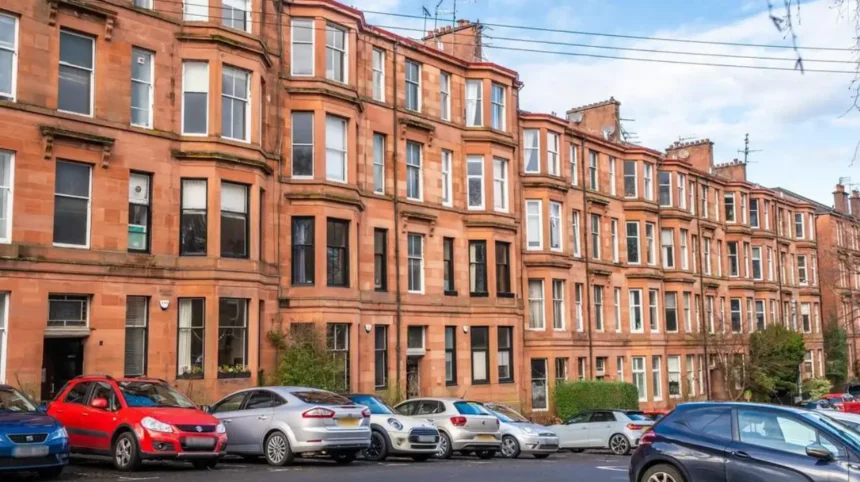
Glasgow has several residential districts where property prices sit well above the city average. Hyndland, Dowanhill, Kelvinside, Jordanhill, Park, Pollokshields and selected city-centre streets contain some of Glasgow’s highest-value homes, shaped by architecture, location, transport, amenities and limited housing supply.
- Which areas are the most expensive places to live in Glasgow?
- Why is Glasgow’s West End so expensive?
- Why is Hyndland one of Glasgow’s most expensive neighbourhoods?
- Why are Dowanhill and Kelvinside expensive areas to live?
- Why is Park one of Glasgow’s premium residential districts?
- Why is Jordanhill considered an expensive area of Glasgow?
- Why is Pollokshields one of Glasgow’s expensive residential areas?
- Are Glasgow city-centre properties among the most expensive?
- How does property type affect expensive areas in Glasgow?
- How do Glasgow’s expensive areas compare with the wider Scottish housing market?
- What makes a Glasgow neighbourhood expensive?
- What should buyers consider when living in Glasgow’s expensive areas?
- How has Glasgow’s expensive housing market developed historically?
- Will Glasgow’s expensive areas remain important for the city’s housing market?
Glasgow is Scotland’s largest city and an important centre for employment, education, culture, healthcare, retail and professional services. Its housing market contains a wide range of property types, from traditional tenement flats and Victorian villas to modern apartments and detached suburban houses.
The phrase “most expensive areas to live in Glasgow” refers to neighbourhoods where property values and housing costs are comparatively high within the city. It does not mean that every property in the area is expensive. Individual prices vary according to property size, condition, floor level, architectural features, outdoor space, parking, tenure and exact street.
Official Scottish housing statistics provide an important citywide benchmark. The UK House Price Index recorded an average Glasgow City property price of £185,801 in Q1 2026, up 2.5% from a year earlier. The four-quarter comparison to Q1 2026 showed a 5.1% increase.
The wider Scottish market had an average price of £187,421 in Q1 2026 under the same measure. This demonstrates that Glasgow’s overall average is close to the Scottish average, while its premium neighbourhoods operate at substantially higher price points.
Which areas are the most expensive places to live in Glasgow?
Glasgow’s most expensive residential areas include Hyndland, Dowanhill, Kelvinside, Park, Jordanhill and parts of Pollokshields, with premium properties also found around the city centre and West End. Exact values differ by street, property type and condition.
The strongest concentration of high-value housing is in Glasgow’s West End. Hyndland, Dowanhill, Kelvinside and nearby streets contain substantial Victorian and Edwardian housing alongside large tenement flats.
The Park district, close to Kelvingrove Park and the city centre, is another high-value residential location. Glasgow City Council describes its architectural quality as exceptionally high, with numerous listed buildings and a strong concentration of traditional materials such as sandstone, slate, timber and wrought iron.
Pollokshields provides another important premium market in the south of Glasgow. The neighbourhood includes substantial Victorian housing, traditional tenements, villas and conservation areas.
Jordanhill differs from the central West End districts because its housing stock includes family-oriented suburban properties alongside flats. Its proximity to transport links, schools, green space and the wider West End contributes to its residential appeal.
Price comparisons require care. Registers of Scotland and the Scottish Government publish robust geographic statistics, while individual neighbourhood figures often come from recorded transactions or property-market datasets. Low transaction volumes in a particular postcode can create substantial year-to-year movements.
Why is Glasgow’s West End so expensive?
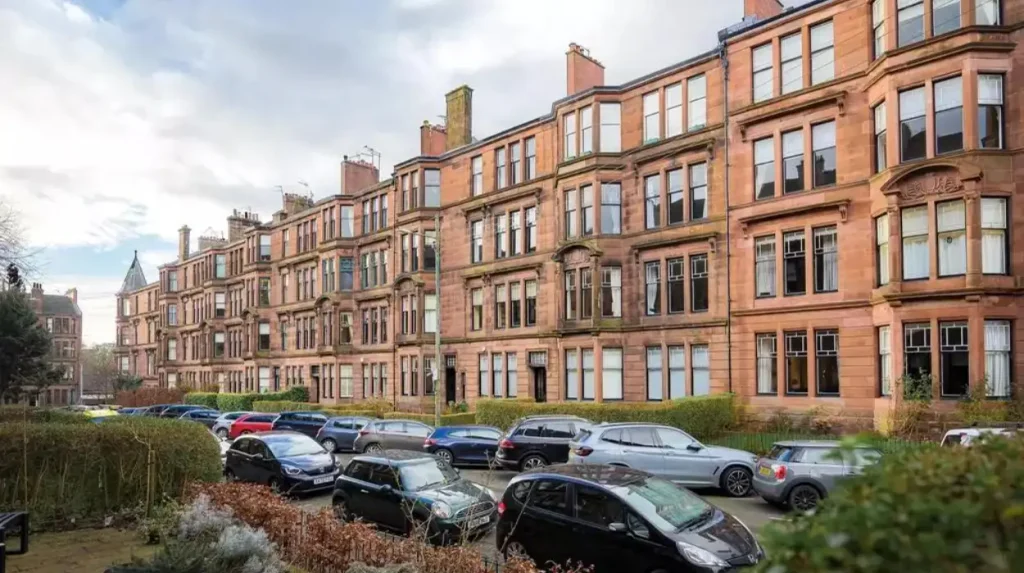
Glasgow’s West End commands premium property prices because it combines historic architecture, established residential streets, universities, green spaces, transport connections, restaurants, cultural institutions and proximity to central employment areas within a relatively constrained housing market.
The West End contains some of Glasgow’s most recognisable residential architecture. Large sandstone tenements, Victorian villas and substantial terraces form much of the built environment.
Neighbourhoods such as Hyndland and Dowanhill developed substantially during Glasgow’s expansion during the nineteenth and early twentieth centuries. Industrial wealth, population growth and suburban development produced large residential buildings with decorative stonework and generous internal layouts.
The area also benefits from its proximity to the University of Glasgow, Kelvingrove Park, the Botanic Gardens, Byres Road and major cultural institutions.
Transport adds another component. Subway stations, railway stations and bus corridors connect West End neighbourhoods with Glasgow city centre and other parts of the metropolitan area.
The Glasgow West Conservation Area includes important historic residential districts. Glasgow City Council identifies purpose-built villas and terraced housing in the Dowanhill character area as significant components of the area’s architectural character.
This architectural stock has a direct relationship with property value. Large rooms, high ceilings, original features, substantial communal staircases and sandstone façades differentiate many West End homes from newer developments.
At the same time, conservation controls affect alterations to historic properties. This creates an important ownership consideration because maintaining traditional windows, stonework, roofs and other architectural elements can require specialist work and planning controls.
Why is Hyndland one of Glasgow’s most expensive neighbourhoods?
Hyndland is one of Glasgow’s most expensive residential districts because it combines large traditional tenement flats, substantial period properties, excellent West End access, established amenities and limited supply of high-quality homes in a tightly defined neighbourhood.
Hyndland is located in Glasgow’s West End. It is known for sandstone tenements, traditional residential streets and proximity to Hyndland railway station.
Recent recorded transaction data illustrates the price range. Rightmove’s Registers of Scotland-based data reports an overall average sold price of £392,641 in Hyndland over the previous year. Flats averaged £368,787, while the smaller number of terraced properties recorded an average of £1,323,750.
These figures demonstrate why averages need context. The terraced-property figure is based on a much smaller category of transactions than flats. It does not represent the typical Hyndland home.
Individual transactions also show the upper end of the market. Recent recorded sales include flats at £550,000, £571,100, £600,000, £625,000 and £690,216. A property at Princes Terrace recorded a £920,000 transaction in July 2026.
Hyndland’s housing market therefore contains substantial variation.
Two-bedroom flats can sit at very different prices depending on floor position, renovation, size, outlook and architectural features. Larger period homes command significantly higher values.
The area also has strong connections with Glasgow’s wider West End. Byres Road, Great Western Road, the University of Glasgow, Kelvingrove Park and nearby commercial areas are within the wider neighbourhood network.
Why are Dowanhill and Kelvinside expensive areas to live?
Dowanhill and Kelvinside contain some of Glasgow’s most substantial period homes, including Victorian villas, sandstone terraces and large tenement properties, supported by West End amenities, green spaces, transport links and architectural conservation that limits large-scale redevelopment.
Dowanhill lies immediately around several important West End residential streets. Its built environment includes purpose-built villas and terraces that form part of the Glasgow West Conservation Area.
Glasgow City Council identifies the Dowanhill character area as an important part of the West Conservation Area. Athole Gardens, developed in 1878, is specifically identified for its curved terrace composition, decorative detailing and architectural character.
Kelvinside occupies another prominent position in the northern West End. The neighbourhood contains substantial sandstone properties and large traditional flats.
Property prices within both areas vary substantially. A small flat in an older tenement does not occupy the same price bracket as a renovated townhouse or large villa.
The premium is therefore linked to property characteristics as well as location.
Large floor areas, original fireplaces, decorative cornicing, bay windows, private gardens, garages and off-street parking all influence individual values.
The area’s established character also limits the availability of completely new residential sites. Existing buildings dominate much of the housing stock.
This combination of strong demand and constrained supply contributes to higher values for desirable properties.
Why is Park one of Glasgow’s premium residential districts?
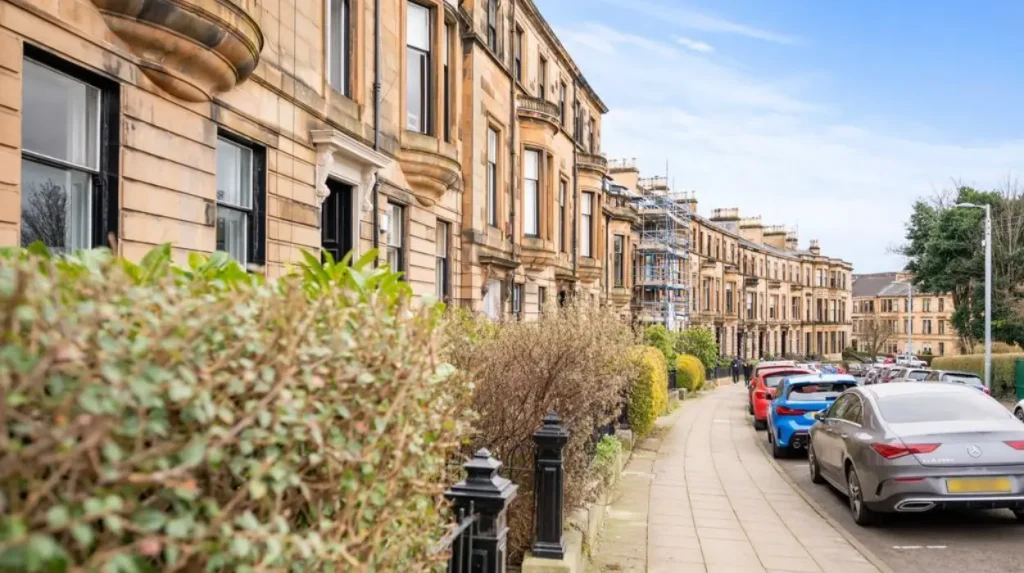
Park is a high-value residential district beside Kelvingrove Park and the West End, distinguished by listed buildings, sandstone architecture, traditional terraces and villas, proximity to central Glasgow and a limited supply of historically significant residential properties.
The Park Conservation Area occupies an important position between central Glasgow and the West End.
Glasgow City Council describes the area’s architecture as exceptionally fine and records a high concentration of listed buildings. Its built environment uses sandstone, natural slate, timber, wrought iron, brick and granite setts.
Its location is a major factor.
Residents have access to Kelvingrove Park, cultural attractions and the city centre. The district also sits close to Glasgow’s major employment and institutional areas.
Housing includes large traditional flats and substantial period properties.
The area’s architectural status also affects property ownership. Conservation-area controls apply to alterations that affect historic character. This can include external changes to windows, roofs, stonework and other elements.
For buyers, the combination of central location and historic architecture is important. For owners, the same characteristics create responsibilities around maintenance and alterations.
Why is Jordanhill considered an expensive area of Glasgow?
Jordanhill is a premium residential area because it combines established family housing, access to transport, green space, schools and West End amenities, while offering a suburban environment close to major employment and education destinations.
Jordanhill is located west of Glasgow’s central West End and is associated with established residential streets and family housing.
Its housing profile differs from Hyndland. The area contains more conventional suburban houses alongside flats and smaller residential properties.
Jordanhill’s transport position supports its residential market. Jordanhill railway station provides rail access towards Glasgow city centre and other destinations.
The district is also close to the University of Glasgow and wider West End employment and education areas.
Family housing contributes to the area’s higher-value segment. Larger houses with gardens and multiple bedrooms occupy a different price category from standard city flats.
Jordanhill therefore illustrates an important feature of Glasgow’s expensive housing market: premium values do not depend exclusively on centrality.
Space, schools, transport and neighbourhood character also influence property demand.
Why is Pollokshields one of Glasgow’s expensive residential areas?
Pollokshields contains high-value Victorian villas, substantial sandstone properties and traditional flats, with East Pollokshields benefiting from conservation status, mature streets, green space and transport connections to central Glasgow and the south side.
Pollokshields lies south of the River Clyde and contains some of Glasgow’s most substantial nineteenth-century residential architecture.
The area includes East Pollokshields Conservation Area, which Glasgow City Council designated following a formal conservation appraisal. The council states that Glasgow has multiple designated conservation areas covering different architectural and historic environments.
Pollokshields contains a mixture of housing types.
Large detached and semi-detached villas occupy some of the most valuable parts of the neighbourhood. Traditional tenement flats provide a wider range of price points.
The area’s location also provides access to public transport, parks, local shops and central Glasgow.
The presence of substantial houses differentiates Pollokshields from neighbourhoods dominated by smaller flats.
Historic architecture is another factor. Traditional sandstone façades, bay windows, gardens and generous plots create property characteristics that are difficult to reproduce in new developments.
Are Glasgow city-centre properties among the most expensive?
Some Glasgow city-centre properties are among the city’s higher-priced homes, particularly large modern apartments, penthouses and high-specification residences, although city-centre prices vary substantially between developments, streets, property sizes and building quality.
Glasgow city centre has undergone significant residential development.
Modern apartments form an important part of the central housing market. They include converted historic buildings, purpose-built apartment blocks and newer developments.
The most expensive city-centre homes generally occupy a different market from traditional West End villas.
Their value is connected to factors such as floor area, floor level, views, balconies, parking, building facilities, security and proximity to employment, restaurants, retail and cultural venues.
The central market also has a greater concentration of smaller apartments. This creates a lower average price for some developments even when premium penthouses in the same district command much higher prices.
Therefore, “city centre” should not be treated as a single property market.
The exact building and property specification matter considerably.
How does property type affect expensive areas in Glasgow?
Property type has a major effect on Glasgow housing prices because large villas, townhouses and premium apartments sell at different values from standard flats, while condition, floor area, gardens, parking, period features and building quality create further differences between individual properties.
Glasgow’s housing stock contains a large number of traditional tenement buildings.
Glasgow City Council estimates that the city has approximately 9,950 pre-1919 tenement buildings, containing around 70,000 flats and approximately 5,200 commercial premises.
This makes tenement housing central to understanding Glasgow’s property market.
A tenement flat in Hyndland can command a high price because of its size, location and architectural features. Another flat in a different tenement can sell for substantially less.
Villas form another premium segment.
Large Victorian and Edwardian houses generally offer more floor space, gardens and multiple bedrooms. Their scarcity creates a distinct market.
Modern apartments provide a third category. Premium developments can command high prices through large floor areas, views, terraces, parking and upgraded specifications.
Property condition also matters.
A period property requiring roof repairs, stonework or window replacement carries different ownership costs from a fully renovated property.
How do Glasgow’s expensive areas compare with the wider Scottish housing market?
Glasgow’s overall average property price sits close to the Scottish average, but premium Glasgow neighbourhoods operate far above the citywide figure because expensive districts contain concentrated stocks of large, historic or high-specification properties.
The Scottish Government reported an average Scottish house price of £187,421 in Q1 2026, while Glasgow City recorded £185,801. Glasgow’s annual growth was 2.5%, compared with 2.0% across Scotland in the same period.
These figures are citywide and do not describe individual neighbourhoods.
The distinction is important.
A city average includes lower-cost districts, ordinary flats, family houses, new-build properties and premium homes. A neighbourhood with a high concentration of large properties can therefore operate substantially above the city average.
Registers of Scotland reported that Scotland’s median residential property price was £198,000 in 2025-26, up 4% from £190,000 in 2024-25. It also reported 104,408 residential property sales during the year.
The same report found that Glasgow recorded the largest ten-year increase in median residential property price among Scotland’s eight cities, at 57%.
This long-term change provides important context for Glasgow’s premium neighbourhoods.
What makes a Glasgow neighbourhood expensive?
Expensive Glasgow neighbourhoods generally combine strong accessibility, desirable housing types, historic architecture, limited supply, established amenities, green space and proximity to employment or education, with individual property prices further determined by size, condition and specification.
Location remains a fundamental factor.
Properties close to the University of Glasgow, major parks, railway stations, Subway stations and central employment districts have strong locational advantages.
Housing supply is another factor.
Historic neighbourhoods have limited opportunities for large-scale redevelopment. Existing buildings occupy established streets, while conservation policies protect architectural character.
Glasgow City Council’s housing strategy identifies improving existing housing conditions, preserving pre-1919 tenements and improving energy efficiency as important housing priorities.
This matters for premium properties because many expensive homes are historic.
Owners need to consider maintenance costs, communal repairs, roof condition, stonework and energy performance.
Amenities also influence values.
The West End combines restaurants, retail, cultural institutions, parks, universities and transport. Pollokshields provides parks, local commercial areas and transport. Jordanhill provides a more suburban residential environment with access to West End facilities.
The resulting property market is therefore based on several interacting factors rather than price alone.
What should buyers consider when living in Glasgow’s expensive areas?
Buyers should examine the exact property rather than relying only on neighbourhood reputation, with particular attention to Home Report valuation, building condition, communal repairs, energy performance, conservation restrictions, property size, transport access and long-term maintenance requirements.
Scotland’s property-buying system places particular importance on the Home Report.
A Home Report generally contains a Single Survey, an Energy Report and a Property Questionnaire. These documents provide information about condition, energy performance, valuation and property details.
Historic Glasgow properties require additional attention to building maintenance.
Tenement owners can face communal repair obligations involving roofs, stonework, staircases, gutters and other shared elements.
Glasgow City Council identifies the maintenance of pre-1919 tenements as a significant housing issue because of the scale and age of the stock.
Conservation-area status is another consideration.
Glasgow has designated conservation areas covering historic residential environments. Within such areas, alterations can be subject to additional planning controls.
Buyers should therefore examine planning history and restrictions before making major alterations.
Transport should also be assessed according to daily needs.
A property near a railway station or Subway station provides different practical benefits from one dependent on private-car travel.
Parking also affects value in dense historic neighbourhoods. Properties with private parking or garages occupy a distinct segment of the market.
Explore More Area Guide
Cheapest Areas to Rent in Glasgow: Affordable Postcodes
Best Areas to Live in Glasgow for Students
How has Glasgow’s expensive housing market developed historically?
Glasgow’s expensive residential districts developed largely during nineteenth-century urban expansion, when industrial growth, population increase and rising wealth produced Victorian villas, sandstone terraces and substantial tenement neighbourhoods across the West End and south side.
Glasgow expanded rapidly during the Industrial Revolution.
The city’s industrial economy generated substantial commercial wealth and population growth. Residential development followed the expansion of employment and infrastructure.
The West End developed extensively during the nineteenth century.
Large homes were constructed for affluent households, while dense tenement housing accommodated a growing urban population.
The resulting architecture remains visible today.
Sandstone terraces, villas and tenements form major parts of Glasgow’s historic housing identity. Many buildings now fall within conservation areas or have listed status.
The Park district demonstrates this architectural legacy particularly clearly. Glasgow City Council identifies its traditional materials and concentration of listed buildings as major components of its character.
Pollokshields provides another example of planned suburban development from the Victorian period.
The survival of these historic neighbourhoods is significant because new housing rarely reproduces the same combination of location, land area, construction quality and architectural detail.
This historic housing stock remains an important part of Glasgow’s premium market.
Will Glasgow’s expensive areas remain important for the city’s housing market?
Glasgow’s premium neighbourhoods will remain important because established housing stock, architectural conservation, transport infrastructure, employment centres and limited land continue to shape demand, while future prices will depend on economic conditions, mortgage costs, supply and property-specific factors.
Recent official data shows continued activity in the Scottish housing market.
Residential property sales in Scotland increased from 99,832 in 2024-25 to 104,339 in 2025-26, according to the Scottish Housing Market Review.
Glasgow City recorded a four-quarter average price of £185,801 in Q1 2026, with annual growth of 2.5%.
The premium districts operate within this wider market but have their own characteristics.
Historic properties face maintenance and conservation requirements. New developments face land, construction and planning constraints.
Demand also differs between buyer groups.
Families often seek larger homes and gardens. Professionals can prioritise transport and proximity to employment. Students and university-related households create additional demand around the West End. Investors assess rental demand and property management costs.
The most expensive areas to live in Glasgow are therefore not defined by one fixed price threshold.
Hyndland, Dowanhill, Kelvinside, Park, Jordanhill and Pollokshields stand out because they combine valuable housing stock with strong locations and established neighbourhood characteristics. Individual streets and properties remain the decisive factor when comparing actual purchase prices.
For anyone researching Glasgow’s premium housing market, the most reliable approach is to combine citywide Scottish Government and Registers of Scotland statistics with recent sold-price records and property-specific Home Reports. This produces a more accurate picture than relying on neighbourhood labels alone.
What is the most expensive area to live in Glasgow?
Hyndland is one of Glasgow’s most expensive residential areas. It is known for large sandstone tenements, period homes, strong transport links and its location within Glasgow’s West End.