Key Points
- Renfrewshire Council recently discussed a proposal to rename Glasgow Airport after the late legendary Scottish singer-songwriter Gerry Rafferty.
- The idea was brought up during a council meeting as the aviation hub approaches its significant 60th-anniversary milestone.
- The motion was spearheaded by Councillor Janis McDonald and backed by Councillor Graeme Clark, while Councillor Andy Doig proposed launching a public consultation.
- Proponents highlighted the airport’s crucial role in creating employment, bolstering local tourism, and driving economic growth.
- Airport operator AGS Airports and a Glasgow Airport spokesperson firmly rejected the idea, stating there are no plans to alter the airport’s name.
- The council meeting concluded that airport operators should be approached directly before pursuing any further rebranding initiatives.
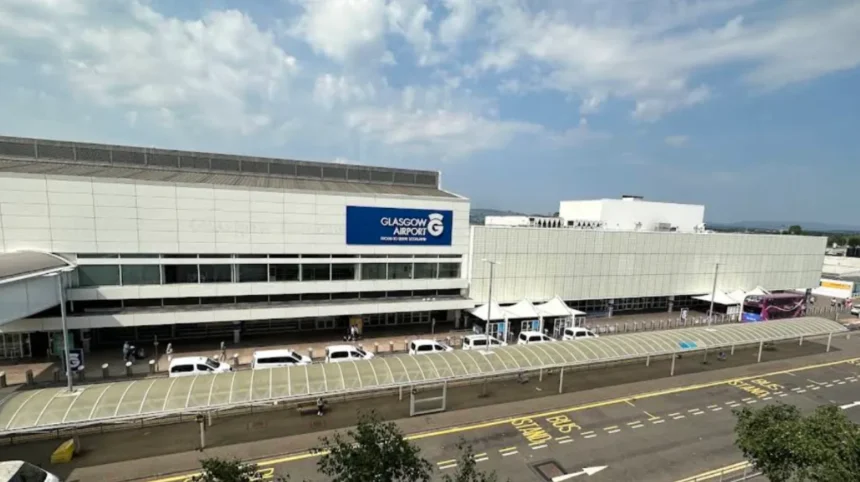
Glasgow (Glasgow Express) September 30, 2026 – Glasgow Airport will retain its historic name after airport operator AGS Airports firmly stepped in to reject a proposal that suggested renaming the aviation hub after legendary Scottish musician Gerry Rafferty. The debate originated during a recent Renfrewshire Council meeting as the prominent travel facility prepares to mark its 60th anniversary of operations in the west of Scotland.
Why Was the Proposal to Rename Glasgow Airport Put Forward?
The motion to honor the iconic “Baker Street” and “Right Down the Line” hitmaker was spearheaded by Councillor Janis McDonald. According to the discussions, the intent behind the renaming proposal was to celebrate not only the rich cultural heritage and musical legacy of Gerry Rafferty—who hailed from Paisley in Renfrewshire—but also to recognize the travel hub’s immense historical importance in creating local jobs, boosting regional tourism, and strengthening the Scottish economy over the past six decades.
The motion gained initial momentum within the council chambers after being formally backed by Councillor Graeme Clark. Furthermore, recognizing the public interest such a symbolic gesture might generate among travellers and local residents alike, Councillor Andy Doig suggested initiating a wide-reaching public consultation to gauge community sentiment before any final decisions were reached by local authorities.
How Did Airport Operator AGS Airports Respond to the Rebranding Idea?
Despite the enthusiastic backing from several local politicians, the prospect of a name change was swiftly dismantled by the corporate entities managing the aviation hub. AGS Airports intervened to make it clear that the council’s ambitious vision would not be put into practice.
When approached for comment regarding the proposal, a spokesperson for Glasgow Airport issued a definitive statement addressing the situation. The spokesperson stated:
“We welcome the council’s motion recognising the important role Glasgow Airport has played in supporting connectivity, jobs and investment across the region during its 60th anniversary year. Glasgow Airport has no plans to change its name and remains focused on serving passengers and supporting economic growth across the west of Scotland.”
Following this clear stance from the operator, the council meeting concluded with the consensus that engaging directly with airport management should have preceded any formal public campaigns or motions regarding major structural or identity changes. Consequently, the landmark airfield will continue operating under its established title as it looks toward future development and passenger service milestones.
Background of the Particular Development
The debate surrounding the potential renaming of Glasgow Airport highlights a frequent tension between local civic pride and corporate operational governance. Regional councils often seek ways to leverage cultural icons to boost civic identity, local heritage tourism, and community morale, particularly during milestone anniversaries like a facility’s 60th year. However, transport hubs and international airports are heavy corporate assets managed by private operators—in this case, AGS Airports—whose primary strategic focus remains centered on commercial continuity, international branding recognition, operational efficiency, and passenger logistics. Changing an established global airport identifier involves considerable administrative, logistical, and financial adjustments for airlines, ticketing systems, and international navigation databases, which often makes operators resistant to purely symbolic rebranding suggestions.
Prediction
This development primarily affects local residents, cultural enthusiasts, and regional policymakers in Renfrewshire and the wider west of Scotland. For the local community and fans of Gerry Rafferty, the rejection brings a sense of missed opportunity to cement a local musical legend into the physical infrastructure of the region. However, for everyday passengers, airlines, and business travellers, the decision ensures absolute continuity and avoids any potential confusion in global travel itineraries, ticketing, and route marketing. In the long term, this outcome signals to local stakeholders that while civic bodies can champion cultural celebrations, major operational and branding decisions regarding key transport infrastructure ultimately remain tightly controlled by corporate management prioritizing commercial stability and seamless global connectivity.