Key Points
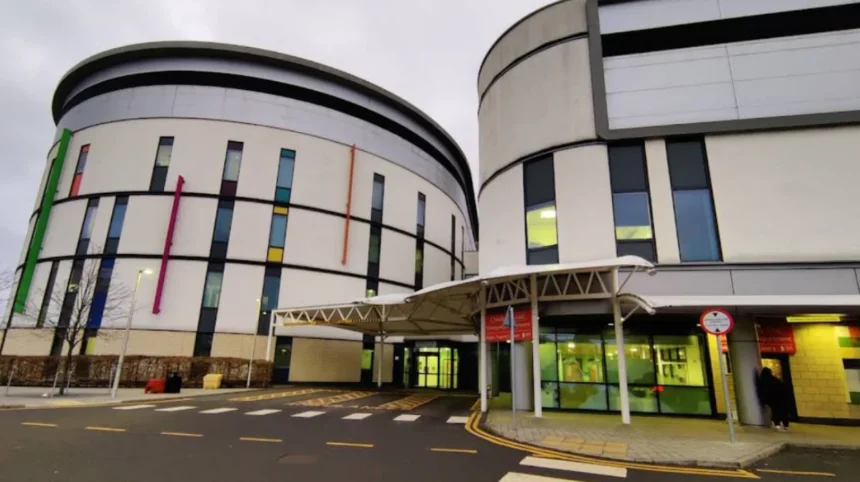
- Around 10 people, including parents with sick children, were reportedly left standing outside the Accident and Emergency department at the Royal Hospital for Children in Glasgow.
- The incident allegedly occurred at approximately 8pm on Tuesday, September 22, after the facility’s doors were closed and a staff member was positioned outside.
- NHS Greater Glasgow and Clyde strongly disputed claims that patients were delayed or blocked from getting care, describing any such suggestions as inaccurate.
- Health board representatives explained that waiting areas frequently become very busy during evening hours, prompting safety measures such as limiting accompaniment to one adult per child.
- Officials maintained that no child patients faced barriers or delays in accessing necessary medical treatment inside the emergency department.
Glasgow (Glasgow Express) September 25, 2026 — Parents carrying unwell children were allegedly left stranded outside a major Scottish emergency department after entrance doors were locked and a staff guard was stationed at the threshold.
The distressing scene unfolded at approximately 8pm on Tuesday, September 22, at the Accident and Emergency department of the Royal Hospital for Children in Glasgow. Witnesses indicated that a group comprising roughly 10 individuals—consisting of anxious parents and their ailing youngsters—found themselves outside the building unable to immediately walk through the main entry points. The deployment of a staff member directly outside the department compounded concerns among those present, who were seeking urgent medical evaluations for their vulnerable children during the evening rush.
How Did Health Authorities Respond to the Incident?
Responding to the reports surrounding the evening of September 22, health board officials firmly rejected the notion that any family was turned away or neglected.
As reported by representatives of NHS Greater Glasgow and Clyde, leadership insisted that no child patients were delayed or prevented from accessing critical care within the emergency department. Addressing the circulating claims, an NHS Greater Glasgow and Clyde spokesperson stated that any suggestion that patients were restricted from entering the A&E facility is entirely inaccurate.
The health board elaborated on the operational pressures regularly faced by the hospital, noting that waiting areas can become exceptionally congested, particularly during evening hours. To manage capacity and safeguard public health, health officials pointed to established crowding protocols. During exceptionally busy intervals, the hospital may request that each child be accompanied strictly by a single adult, while additional family members are politely asked to wait in alternative zones.
According to hospital guidelines, this measure is enforced strictly for the safety and wellbeing of all attending patients. It allows medical and nursing staff to maintain unobstructed lines of sight to properly observe deteriorating symptoms, move freely through waiting spaces during emergencies, and guarantee rapid evacuation routes if required. Furthermore, health representatives emphasized that once patients pass through the initial waiting area into a cubicle, extra family members are permitted to join them to ensure no one misses crucial medical information.
Background of the Development
The recent occurrence at the Royal Hospital for Children taps into ongoing scrutiny regarding capacity strains, patient flow management, and access protocols across National Health Service facilities in Scotland. Emergency departments across the country have grappled with surging demand, seasonal illnesses, and post-pandemic backlogs that frequently push waiting rooms past comfortable limits. Hospitals have increasingly implemented strict “one-parent-per-child” policies and controlled entry points to prevent overcrowding in enclosed clinical spaces. While health authorities design these measures to maintain infection control, streamline triage, and protect patient safety, communication breakdowns at hospital doors can occasionally trigger distress among anxious families navigating acute medical crises with their children.
Explore More Local Glasgow News
Glasgow Hate Crime Surge Sparks Police Warning, Glasgow 2026
Glasgow Cathedral Spire Restoration Project 2026
Prediction
How can this development affect parents and caregivers utilizing emergency pediatric services in Glasgow?
This incident highlights a critical communication gap between hospital security protocols and vulnerable families seeking urgent care during peak hours. In the immediate future, heightened public sensitivity surrounding emergency room access could compel NHS Greater Glasgow and Clyde to refine how front-of-house staff communicate crowd-control policies to distressed parents outside. For families and local caregivers, the development underscores the stressful reality of navigating tight hospital restrictions during evening surges. While intended to prioritize clinical safety and patient observation, strict door policies risk causing panic and perceived barriers to entry if families are not immediately informed of alternative waiting arrangements. Consequently, caregivers may experience increased anxiety when visiting pediatric emergency departments, forcing health boards to invest heavily in clearer signage, transparent triage communication, and reassurance to rebuild community trust.