Key Points
- System Closure: Both the Inner and Outer Circles of the Glasgow Subway system were fully suspended during one of the busiest periods of the morning commute.
- Root Cause: Network operator Strathclyde Partnership for Transport (SPT) confirmed that the service interruption was triggered by a failed train located at the Broomloan depot.
- Service Restoration: Operations were fully restored across both circles just before 08:00 following swift intervention by technical teams.
- Passenger Impact: Thousands of early-morning commuters faced travel disruption across the city’s 15 underground stations prior to the resumption of services.
Glasgow (Glasgow Express) October 14, 2026 — Services on the Glasgow Subway network have resumed normal operations after a morning depot failure brought both circles of the underground transit system to a complete standstill during the peak rush hour on 14 October 2026.
As reported by Ross Hempseed of STV News, Strathclyde Partnership for Transport (SPT) issued an initial official statement informing the public of the emergency disruption:
“Apologies, Subway Inner and Outer Circles are currently both suspended due to a failed train in the depot. We are working to resolve this as quickly as we can. Updates to follow. Apologies for the inconvenience.”
As further stated by operator Strathclyde Partnership for Transport (SPT) in subsequent public travel updates, technical crews successfully resolved the depot obstruction, allowing passenger services on both the Inner and Outer Circles to resume operations just before 08:00.
What Caused the Complete Suspension of Both Glasgow Subway Circles?
The system-wide suspension was caused by a mechanical failure of a train inside the central depot at Broomloan Road. Because the depot serves as the primary operational hub where trains are dispatched onto both the clockwise Outer Circle and anti-clockwise Inner Circle tracks, a failed train within the access routes prevents fleet deployment across the entire network.
As reported by Ross Hempseed of STV News, the incident occurred immediately ahead of the peak morning rush hour, leaving thousands of daily passengers stranded across Glasgow’s 15 underground stations. SPT engineers worked rapidly on site to clear the depot infrastructure and ensure track safety before reopening the system to passengers just before 08:00.
Background of the Glasgow Subway System and Modernisation Project
The Glasgow Subway, operated by Strathclyde Partnership for Transport (SPT), is the third-oldest underground rail transit system in the world, having originally opened in December 1896. The network consists of a twin-tunnel circular route running 10.5 kilometres across the north and south of the River Clyde, serving 15 stations.
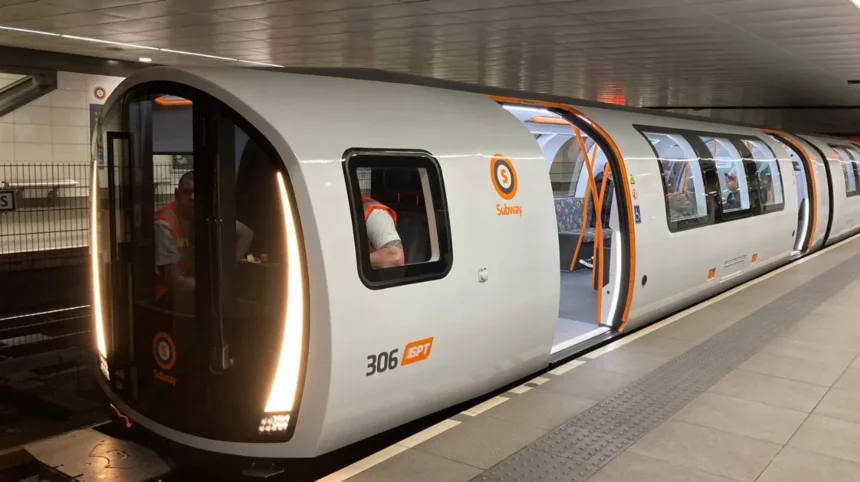
The network has recently undergone its third major multi-million-pound modernization program. This project has involved replacing the legacy rolling stock with custom-built four-car trains manufactured by Stadler, upgrading station infrastructure, introducing Smartcard ticketing, and installing half-height platform screen doors. The fleet transition culminated in mid-2024 when the historic legacy trains were fully retired, handing over all daily operations to the new modern fleet running out of the upgraded Broomloan depot.
Prediction: How Will This Development Affect Glasgow Commuters and Transit Users?
The swift clearance and restoration of the Glasgow Subway system prior to 08:00 prevented widespread ongoing disruption across the city’s broader transport network. However, thousands of morning commuters, students, and workers faced immediate short-term inconvenience, forcing many to seek alternative travel options such as local bus routes or taxi services during the early morning hours.
For daily passengers and the broader Glasgow traveling public, this development highlights the critical operational dependency on the Broomloan depot infrastructure. As SPT continues to test and implement advanced automated signaling and train control systems, operational reliability at the depot remains vital to avoiding single-point failures that can temporarily halt the entire circular underground network. While services have now normalized, passengers are advised by transit operators to check live travel monitors during peak hours in the event of residual service delays following early-morning disruptions.