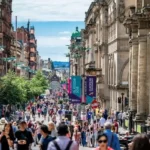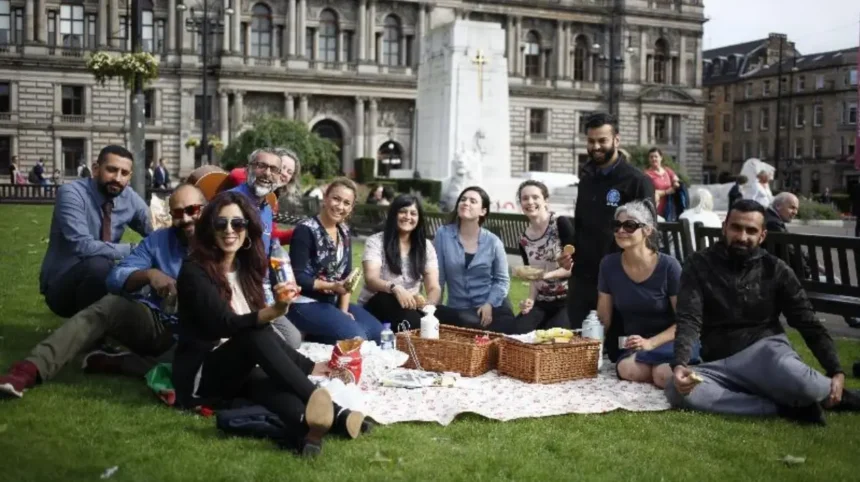
Glasgow has a large and diverse international population, supported by expat networks, university societies, integration organisations, cultural groups, libraries, language programmes and neighbourhood community projects. Scotland’s 2022 Census recorded 17.3% of Glasgow residents as belonging to an ethnic minority group, including Pakistani, African, Irish and Chinese communities.
- What makes Glasgow a strong city for international communities?
- What is the Glasgow InterNations community?
- Which nationality-based expat groups are available in Glasgow?
- Which Glasgow social groups are best for people learning English?
- Which Glasgow organisations support refugees and people seeking asylum?
- What international student communities are available in Glasgow?
- Which community groups help international women meet people in Glasgow?
- Where can international residents meet people outside dedicated expat groups?
- Which Glasgow neighbourhoods have strong community connections for newcomers?
- How should a newcomer choose the right Glasgow expat or social group?
- How do expat communities contribute to Glasgow’s wider social life?
- What is the long-term value of joining Glasgow international communities?
The city’s international social scene extends beyond traditional expatriate clubs. New residents can connect through nationality-based networks, professional communities, student organisations, English-language groups, sports activities, cultural associations and local volunteering. These different routes suit people at different stages of settling into Glasgow.
Scotland’s wider migration figures also show the scale of international movement. In 2022, 554,900 people living in Scotland were born outside the UK. Poland, India and Pakistan were the three most common overseas countries of birth.
For someone moving to Glasgow from abroad, the most useful community depends on the purpose of joining. An international professional can use an expat network. A university student can join a cultural society. A newcomer improving English can use ESOL or conversation groups. A refugee or asylum seeker can use specialist integration networks.
What makes Glasgow a strong city for international communities?
Glasgow combines a substantial international population with universities, cultural organisations, community networks and neighbourhood groups that create regular opportunities for newcomers to meet established residents and other people from overseas. This gives international residents several routes into social life rather than one central expat network.
Scotland’s Census 2022 recorded a significant increase in overseas-born residents across Scotland. The number of people born outside the UK reached 554,900, an increase of 185,600 since 2011. Migration also contributed to population growth and increased the proportion of younger adults in Scotland.
Glasgow reflects this broader demographic change. The 2022 Census recorded 17.3% of Glasgow’s population in an ethnic minority category. Pakistani residents represented 3.8% of the population, African residents 2.1%, Chinese residents 1.8% and White Irish residents 1.9%.
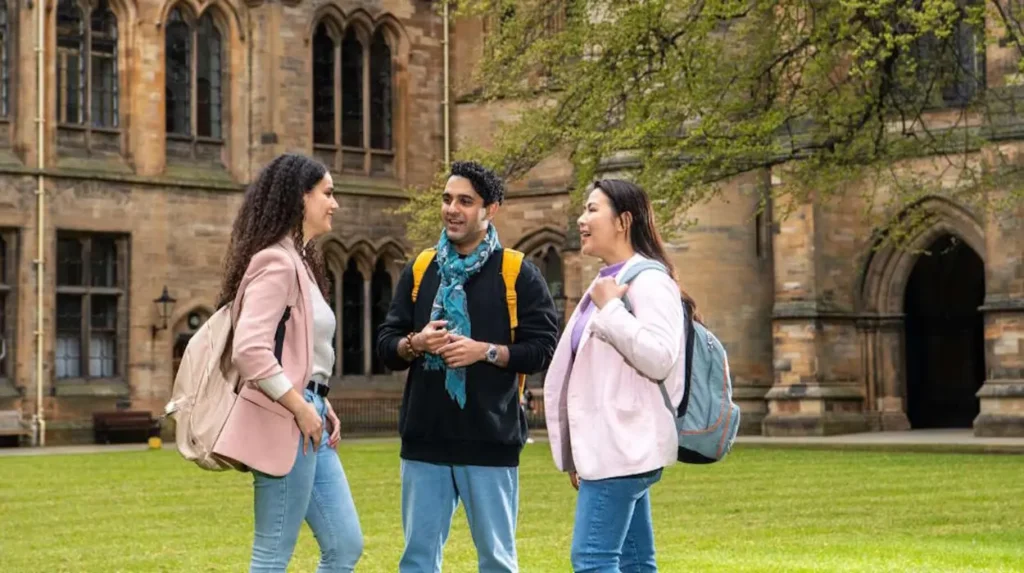
The city also has a large student population. International students form 15% of the University of Glasgow student population. The university supports the Glasgow University International Society, while its Students’ Representative Council provides language, cultural and country-based societies.
This combination creates several overlapping social environments. An international resident can participate in a nationality group while also joining a sports club, library group, professional event or university society.
What is the Glasgow InterNations community?
InterNations Glasgow is an international expatriate network that connects residents from different countries through online communities, social events and interest groups. Its Glasgow network lists thousands of members and provides nationality-focused and activity-based opportunities for meeting other international residents.
InterNations is one of the most recognisable dedicated expat platforms operating in Glasgow.
Its Glasgow community lists more than 6,900 members, three interest-based groups and regular monthly events on its current community page. The network covers people from numerous national backgrounds and supports social interaction alongside practical discussions about living in Glasgow.
The platform separates social connection into several formats. Members can participate in general international events, nationality-based communities and activity groups.
Examples include:
- Americans in Glasgow
- Indians in Glasgow
- Italians in Glasgow
- Spaniards in Glasgow
- Irish in Glasgow
- Australians in Glasgow
- Poles in Glasgow
- Germans in Glasgow
- Canadians in Glasgow
InterNations also promotes interest groups covering activities such as food, cultural events and outdoor activities. This structure is useful for people who want to meet others based on interests rather than nationality.
The size of nationality communities varies. For example, the platform currently lists hundreds of Spanish members and more than 100 Canadian members in its Glasgow network. These figures are platform membership figures rather than official population statistics.
Which nationality-based expat groups are available in Glasgow?
Glasgow has nationality-based communities covering European, Asian, North American, Latin American and other international backgrounds. Examples include Indian, Polish, Italian, Spanish, German, Canadian, American, Irish, Australian, Brazilian and Russian communities. These groups provide culturally familiar routes into wider Glasgow life.
Nationality groups are useful during the early stages of relocation because members often share experiences connected with language, food, cultural events, professional life and adapting to Scottish society.
InterNations currently lists communities for several nationalities in Glasgow. Its pages include Canadians, Spaniards, Brazilians, Russians and other international groups.
Nationality-based communities are not limited to online conversations. InterNations promotes in-person dinners, cultural activities, sightseeing, social gatherings and hobby events through its local network.
Glasgow also has community organisations organised around specific cultural identities. The Scottish Refugee Council’s New Scots Connect directory lists refugee-led and community organisations operating across the city.
Examples include Glasgow Afghan United and the Kurdish Women Community Group. Glasgow Afghan United works with people from more than 20 nationalities and uses sport, social activities, cultural celebrations and active citizenship to connect communities.
The Kurdish Women Community Group provides a peer-support environment for women from backgrounds including Iraq, Syria, Turkey and Iran. It also runs identity-based groups involving Tamil, Afghan and Sudanese communities.
These organisations demonstrate an important distinction. An expat community is not always organised around the term “expat”. Many international residents connect through cultural, refugee, language or neighbourhood organisations instead.
Which Glasgow social groups are best for people learning English?
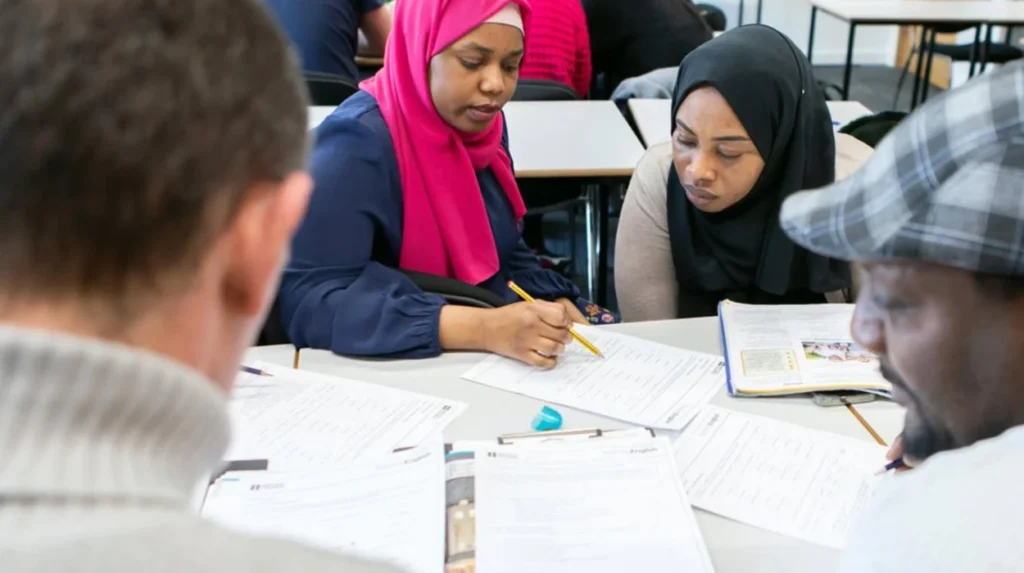
English-language and conversation groups provide structured opportunities for newcomers to practise communication while meeting Glasgow residents and other international participants. Examples include ESOL classes, conversation clubs, community learning programmes and integration networks such as Maryhill Integration Network.
ESOL means English for Speakers of Other Languages. Glasgow Life provides ESOL learning alongside adult education, digital skills, literacy and numeracy programmes. These services create opportunities for language development within community settings.
Maryhill Integration Network is particularly relevant to international newcomers. The grassroots organisation was established in 2001 and brings together people seeking asylum, refugees, migrants and established Glasgow residents.
Its programme includes ESOL classes, a conversation club, community choir, gardening club, family activities, women’s activities and men’s activities. It also provides advice and outreach services.
The social value of this structure is practical. Language learning takes place alongside repeated contact with other people. Regular attendance provides a routine for building local connections.
Libraries also provide accessible alternatives. Glasgow Life describes libraries as places where residents can socialise and connect with people who share their interests. Its libraries provide ESOL, literacy, digital skills and other learning opportunities.
Which Glasgow organisations support refugees and people seeking asylum?
Glasgow has an established network of integration organisations supporting refugees, asylum seekers and migrants through language learning, advice, social activities, community events and wellbeing programmes. Examples include Maryhill Integration Network, Govan Community Project and groups listed through Scottish Refugee Council’s New Scots Connect.
The Scottish Refugee Council operates the New Scots Connect Map, which allows people to search for local organisations by location and activity. Categories include advice, arts, befriending, children’s activities, employment support, ESOL, health and wellbeing, social activities, sports and volunteering.
Maryhill Integration Network is one of Glasgow’s established integration networks. Its weekly activities include social and cultural programmes, ESOL, gardening, family activities, conversation practice and community choir.
Govan Community Project supports diverse communities in Govan and across Glasgow, including refugees and people seeking asylum. Its services include advice, advocacy, ESOL classes, food support, a bike library and community activities. Its Cardonald community flat hosts English classes, social groups and a homework club.
The Scottish Refugee Council’s Glasgow directory also identifies Central and West Integration Network, North Glasgow Integration Network, Govanhill Baths Community Trust, ANYiSO and other organisations.
These groups are especially relevant for people whose relocation involves more than ordinary lifestyle adjustment. They combine social integration with practical support.
What international student communities are available in Glasgow?
International students can access university societies, cultural organisations, student associations, welcome events and country-based clubs across Glasgow. Examples include Glasgow University International Society, University of Glasgow cultural societies and Glasgow Caledonian University clubs and societies.
The University of Glasgow has a dedicated international student community. International students account for 15% of its student population. The university identifies the Glasgow University International Society as an independent, not-for-profit organisation open to British and international students.
The university’s Students’ Representative Council also supports clubs and societies based around languages, cultures and countries. This gives international students opportunities to connect with people who share their background while participating in the wider university community.
Glasgow Caledonian University also has a large international student environment. GCU states that its wider university community includes nearly 22,000 students from more than 130 countries across its campuses and partnerships. Its Students’ Association provides clubs, societies and activities.
Exchange students receive additional opportunities through welcome inductions, events and trips designed to help them meet other international and exchange students.
University societies are particularly useful because social interaction is built into existing student routines. Clubs can focus on culture, language, academic subjects, hobbies, charity work, sport or professional interests.
Which community groups help international women meet people in Glasgow?
International women can find social and support networks through integration organisations, women’s groups, cultural associations, university societies and local community projects. Examples include the Maryhill Integration Network Women’s Group and Kurdish Women Community Group, alongside wider multicultural organisations.
Women-specific groups provide a focused environment for social interaction and community participation.
Maryhill Integration Network includes a Women’s Group within its weekly programme. The organisation combines social activity with language learning, community events and advice services.
The Kurdish Women Community Group provides another example. It brings together women from Kurdish and wider refugee backgrounds and focuses on reducing isolation, sharing information, supporting wellbeing and developing connections with the local community.
The organisation also operates other identity-based groups involving Tamil, Afghan and Sudanese communities. These groups provide culturally familiar spaces while encouraging participants to build connections beyond their immediate community.
Women who arrive as international students also have access to university societies and student support services. University-based groups provide structured opportunities to meet people through academic, cultural and recreational activities.
Where can international residents meet people outside dedicated expat groups?
International residents can build social networks through Glasgow libraries, book groups, sports organisations, volunteering, community centres, cultural events and hobby clubs. Examples include Glasgow Libraries book groups, local community activities, cycling programmes and neighbourhood-based organisations.
Dedicated expat groups are only one part of Glasgow’s social infrastructure.
Glasgow Libraries provide book groups across different locations. These groups usually meet monthly to discuss selected books, with new members able to join. Glasgow Life describes the groups as opportunities to discover books and make new friends.
The library network also provides other community activities. Current programmes include book groups, health and wellbeing sessions, learning opportunities and local participation activities.
Sports provide another route into local social networks. The Scottish Refugee Council’s New Scots Connect directory includes sports and physical activity as one of its searchable categories. It also lists Cycling UK’s Connecting Communities Glasgow programme, which supports adults from different backgrounds and abilities.
Volunteering also provides a practical route to local connections. New Scots Connect specifically identifies volunteering as a category for finding community opportunities.
These activities are important because they connect international residents with Glasgow communities that are not specifically organised around migration.
Which Glasgow neighbourhoods have strong community connections for newcomers?
International residents can find community activity across Glasgow rather than in one dedicated expat district. Examples include Maryhill, Govan, Cardonald, Scotstoun, Govanhill, the city centre and university areas, each containing different organisations, learning programmes and social networks.
Glasgow’s community infrastructure is geographically distributed.
Maryhill is home to Maryhill Integration Network, which has operated since 2001. Its activities combine social, cultural, language and wellbeing programmes.
Govan and Cardonald are connected through Govan Community Project. Its central Govan office and Cardonald community flat provide advice, ESOL and social activities.
Scotstoun is associated with Kingsway Community Connections, where the Kurdish Women Community Group operates.
Other areas appear within the Scottish Refugee Council’s Glasgow directory, including Govanhill and communities across the city.
University areas also have dense networks of international students, student societies and cultural clubs.
This distribution means newcomers do not need to live in one specific neighbourhood to access an international social community.
How should a newcomer choose the right Glasgow expat or social group?
The most practical approach is to match the group with a specific purpose such as nationality, language learning, professional networking, university life, sport, volunteering or cultural activity. Examples include InterNations for expat networking, ESOL for language practice and integration networks for community support.
A nationality-based group suits someone seeking immediate cultural familiarity. InterNations provides communities for numerous nationalities and organises social events in Glasgow.
An ESOL or conversation group suits someone prioritising English communication. Glasgow Life provides ESOL and adult learning, while Maryhill Integration Network offers ESOL and conversation activities.
A university society suits students who want to combine social activity with education. The University of Glasgow and Glasgow Caledonian University both provide extensive society structures.
A refugee-led or integration organisation suits people who need community support alongside social opportunities. New Scots Connect provides a searchable directory covering Glasgow organisations and different types of support.
A library or hobby group suits residents who want to meet people without joining an explicitly international organisation. Glasgow Libraries provide book groups and other community programmes.
The key distinction is between identity-based communities and activity-based communities. Identity-based groups include nationality, cultural and language organisations. Activity-based groups include books, cycling, gardening, music, sports and volunteering.
Explore More Area Guide
How Friendly Are Glaswegians to International Newcomers?
Glasgow for Expats: Moving to Scotland Guide
How do expat communities contribute to Glasgow’s wider social life?
Expat and international communities strengthen Glasgow’s social connections by linking newcomers with cultural organisations, educational institutions, neighbourhood groups and established residents. Examples include international societies, integration networks, libraries, sports programmes, cultural groups and volunteering opportunities across the city.
Glasgow’s international community forms part of a wider demographic transformation across Scotland.
Between 2011 and 2022, the number of people living in Scotland who were born outside the UK increased by 185,600. The 2022 Census recorded 554,900 overseas-born residents.
The international population is also diverse in age and background. Around 35.3% of people born overseas and living in Scotland in 2022 arrived in the UK between ages 20 and 29. This pattern reflects the role of education and employment in international migration.
Glasgow’s social organisations respond to this diversity through different models. Universities focus on student integration. Integration networks support refugees, migrants and asylum seekers. Expat platforms organise international social events. Libraries and community centres provide neutral spaces for broader participation.
The result is a layered community structure rather than a single expat scene.
For a newcomer, this creates several routes into Glasgow life. The most effective route depends on whether the immediate need is friendship, language practice, cultural connection, professional networking, student life, volunteering or practical integration.
What is the long-term value of joining Glasgow international communities?
Joining an international community gives newcomers a structured route into local relationships, language practice, cultural activities and practical knowledge. Examples include recurring social events, ESOL classes, university societies, community volunteering, sports groups and cultural organisations that support longer-term settlement.
The value of these groups extends beyond initial introductions.
Regular activities create repeated contact. Language groups support communication. Sports and hobbies provide shared activities. Cultural associations preserve connections with home countries. University societies support international students during their studies. Integration organisations connect newcomers with local services and established communities.
Glasgow’s existing infrastructure provides opportunities at different levels of involvement. A newcomer can start with an international social event, progress into a hobby group and eventually participate in volunteering or community activity.
The city’s demographic profile supports this broad ecosystem. In 2022, 17.3% of Glasgow residents identified with an ethnic minority group, while Scotland’s overseas-born population had increased substantially since 2011.
The Scottish Refugee Council’s New Scots Connect directory also demonstrates the breadth of the integration sector, with searchable categories spanning social and cultural activities, ESOL, sports, employment, volunteering, arts and befriending.
For people moving to Glasgow from abroad, the strongest starting point is therefore a community that matches an immediate need. InterNations suits international networking. University societies suit students. ESOL and conversation groups suit language learners. Integration networks suit refugees, asylum seekers and migrants seeking community support. Libraries, sports and hobby groups provide wider opportunities to build local relationships.
Glasgow’s international social environment is consequently built from many connected communities rather than one central expat organisation.
What are the best expat communities in Glasgow?
InterNations Glasgow is a dedicated expat network offering international social events, nationality-based communities and interest groups. University societies and local integration organisations provide additional options.