Key Points
- The high-profile Glasgow Christmas festive experience, Elfingrove, has been officially scrapped just one day after tickets went on public sale.
- Event producer and discount deals website Itison announced the cancellation following a substantial two million pound investment planned for the festive overhaul.
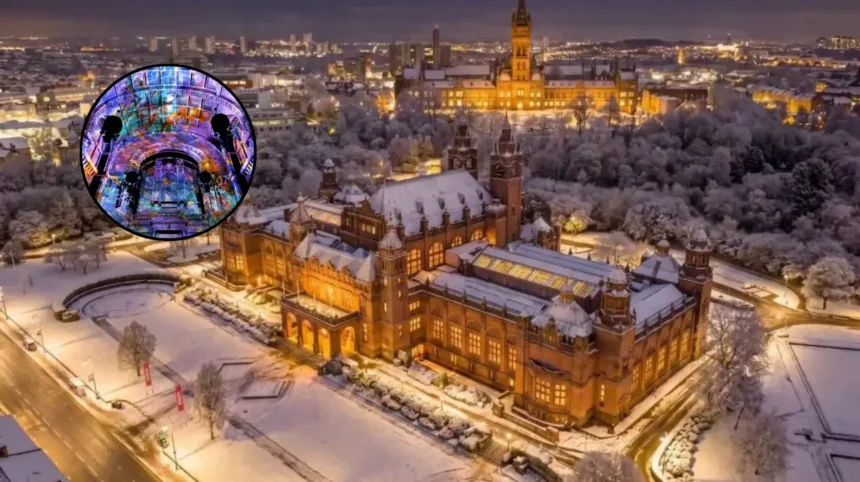
- The attraction was scheduled to transform the Centre Hall of the Kelvingrove Art Gallery and Museum into a grand railway station concept running from 26 November until 13 December.
- Organisers stated that the volume of early customer demand fell significantly short of the threshold required to confidently take the large-scale project forward.
- Itison confirmed that all customers who purchased tickets during the opening window will receive automatic full refunds processed within twenty-four hours.
- Representatives emphasised that as a small independent business rooted locally, leadership had to balance ambition with practical financial risk management.
Glasgow (Glasgow Express) September 17, 2026 — Organisers behind Glasgow’s flagship Christmas venture have pulled the plug on the multi-million pound attraction barely twenty-four hours after tickets were released to the public, citing a sharp shortfall in initial consumer uptake.
As reported by staff reporters at The Herald, the festive experience backed by a two million pound investment was set to make a triumphant return after a four-year hiatus. Plans for the seasonal showcase involved reimagining the Centre Hall of the historic Kelvingrove Art Gallery and Museum into an elaborate grand railway station. Visitors were promised an immersive journey through past, present, and future, accompanied by an outdoor Christmas village, the Snow Globe bar, and the Elfingrove Express miniature land train.
However, ticket sales launched on Wednesday, September 16, failed to generate the necessary momentum. Despite thousands of initial purchases from supportive patrons on the opening day, event producers concluded that the velocity of early engagement was simply too low to sustain a production of such magnitude safely.
What Did Organisers Say Regarding the Sudden Financial Decision?
Addressing the public through an official statement shared on social media platforms, representatives for the production team detailed the harsh economic realities governing large-scale seasonal attractions.
As detailed by regional correspondents at STV News, event promoters explained the rationale behind the abrupt cancellation, stating:
“We’ve worked incredibly hard over the last few years to create and launch something we believed would be special, and thousands of you bought tickets in the first day. Thank you – we genuinely appreciate the support.”
Elaborating further on the risk profile of the venture, the statement continued:
“Putting on major events of this scale is a huge financial risk and sadly the level of early demand is below what we need to confidently take the event forward. As a small independent business rooted right here in Glasgow, we have to be practical as well as ambitious.”
Organisers underscored that the choice to scrap the season was an incredibly difficult resolution for the entire team. They explicitly confirmed that the cancellation of Elfingrove does not impact any of the company’s separate upcoming corporate or entertainment projects across the region.
How Will Ticket Holders Receive Their Money Back?
With thousands of tickets already secured by eager festive shoppers during the brief twenty-four-hour sales window, attention immediately turned toward customer reimbursement.
According to local coverage by Glasgow Live, event leadership moved swiftly to reassure the public regarding financial protection. Management announced that every individual who purchased a ticket would be issued a full refund automatically without needing to submit manual claims or navigate complex customer service channels.
Processing for the automated refunds was scheduled to commence within twenty-four hours of the cancellation announcement, with buyers receiving direct electronic confirmation once transactions cleared. Organisers concluded their public announcements by expressing deep disappointment and issuing sincere apologies to everyone who had anticipated attending the West End attraction, while hinting that the team intends to explore future entertainment concepts down the line.
Background of the Particular Development
The sudden cancellation of Elfingrove highlights the volatile economic climate surrounding large-scale temporary leisure attractions in the United Kingdom. Historically, Elfingrove established itself as a major staple of Glasgow’s winter calendar, previously drawing hundreds of thousands of visitors to the Kelvingrove Art Gallery and Museum grounds. However, the event has faced persistent structural hurdles in recent years. In 2023, organisers similarly shelved the attraction, pointing to skyrocketing supply chain inflation and soaring infrastructure costs that they refused to pass directly onto financially squeezed consumers. The ambitious 2026 revival represented a major financial gamble—backed by a two million pound injection—intended to reinvent the format entirely. Instead, the swift retreat after a single day of sales underlines how tightening household discretionary spending and early booking hesitancy can immediately derail high-overhead ventures before they even break ground.
Prediction
This sudden development signals a growing caution among independent event promoters and consumers alike, directly impacting Glasgow residents, families, and local tourism stakeholders. For the general public and families who look forward to staple seasonal traditions in the West End, the cancellation removes a major festive option from the city’s winter lineup, putting additional strain on remaining holiday attractions to absorb high local demand. For local businesses, surrounding hospitality venues, and independent producers in Glasgow, this high-profile pullback serves as a stark warning regarding financial risk exposure. It suggests that consumers are delaying discretionary spending commitments further into the economic cycle, which may force future event organisers to adopt more conservative financial models, smaller scales, or later ticket-launch timelines to mitigate exposure against shifting consumer confidence.