
Key Points
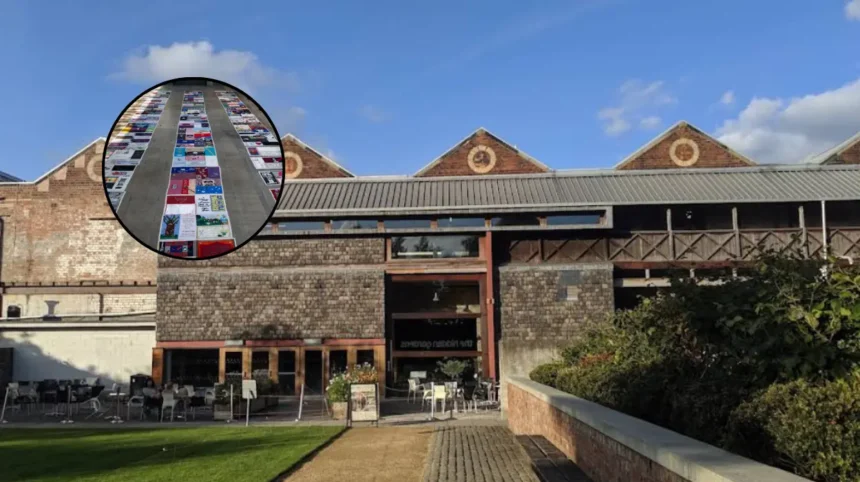
- The UK AIDS Memorial Quilt will be displayed in full for the first time in Scotland at Glasgow’s Tramway arts venue.
- The public exhibition will run from 12 September to 4 October 2026.
- The display follows a well-attended exhibition at Tate Modern in London and will include archival material, a documentary screening and a programme of public events.
- The quilt project began in the United States in 1985 through activist Cleve Jones. The UK section now commemorates more than 600 people who died from HIV and AIDS.
- The quilt consists of 335 individual panels arranged into larger blocks. Activist Ally Van Tillo coordinated the project in Scotland from the late 1980s, with Leith serving as its base during the 1990s.
Glasgow (Glasgow Express) August 24, 2026 – The UK AIDS Memorial Quilt is set to go on public display in its entirety for the first time in Scotland, hosted at the Tramway contemporary arts venue in Glasgow’s south side. Running from 12 September to 4 October 2026, the exhibition brings the complete collection of 335 handmade panels to a Scottish audience following a major, highly attended run at London’s Tate Modern. In addition to the physical textile display, the showcase will feature historical archival materials, an educational documentary film, and a series of public events including workshops, discussions, and live performances.
What is the history and significance of the UK AIDS Memorial Quilt?
The quilt represents a key component of what is recognised as the world’s largest community art project. The movement was originally launched in 1985 by activist Cleve Jones in the United States to highlight the human cost of the epidemic and protest the widespread social stigma that left many individuals to die in isolation.
The UK version of the initiative began taking shape shortly thereafter, commemorating more than 600 people across the United Kingdom who lost their lives to HIV- and AIDS-related illnesses.
Scottish activist Ally Van Tillo took on the role of coordinating the UK Quilt effort in the late 1980s. From 1989 and throughout the 1990s, the quilt was based in Leith, where it served as an active resource for bereavement support, processing loss, and public health education.
Each of the 335 individual panels—which are stitched together into larger fabric blocks—was designed and constructed by friends, lovers, or family members of the person being remembered. Together, the panels function both as personal memorials and as visual acts of political and social protest.
What events and activities are scheduled for the Glasgow display?
The upcoming run at Tramway incorporates a wider cultural and community programme alongside the static display. Highlights of the event line-up include a dedicated public conversation with project founder Cleve Jones, alongside discussions examining how Scottish theatre historically responded to the HIV/AIDS crisis.
The venue will also host a screening of the documentary film Choose Life: Edinburgh’s Battle Against AIDS, which explores the specific public health challenges and activist responses in east-central Scotland during the height of the epidemic.
Interactive workshops and performances will run throughout the three-week period to engage visitors with the historical and ongoing context of HIV activism.
Explore More Local Glasgow News
Home, Life & You LIVE returns for 2026 with Marie Kondo as Headline Speaker
Glasgow Named UK’s Third Most AI-Ready City | Glasgow 2026
Background of the particular development
The display of the UK AIDS Memorial Quilt at Tramway marks a significant return of the memorial’s physical management and focus to Scotland, where key coordination efforts took place during the late 20th century.
During the peak years of the epidemic in the 1980s and 1990s, Scotland—particularly Edinburgh and Glasgow—faced distinct public health challenges related to HIV transmission, which spurred localized activist networks and community-led support infrastructure.
Ally Van Tillo’s work in establishing the Leith base ensured that the UK Quilt remained tied to Scottish community initiatives, providing a physical space for grieving families and activists when official support systems were often limited.
The transition of the quilt from a localized support tool in the 1990s to major national institutions, such as the Tate Modern and now Tramway, reflects a broader shift toward preserving HIV/AIDS activism within official national social and cultural histories.
Prediction: How this development can affect the public and local communities
The full-scale exhibition of the UK AIDS Memorial Quilt in Glasgow is expected to impact several distinct groups across Scotland:
For individuals who lost partners, family members, or friends during the 1980s and 1990s, the exhibition provides a public space for collective remembrance and validation. The complete display of all 335 panels offers long-term activists and bereaved families confirmation that the lives lost and the struggles against historical social stigma remain recognised within mainstream Scottish cultural spaces.
For younger visitors and those with no direct memory of the early epidemic, the display serves an educational function.
By combining physical textiles with archival records, panel discussions, and documentary film, the event bridges historical memory with modern health literacy, contextualising how current medical advances in HIV treatment and prevention were preceded by community activism.
Hosting the full quilt at Tramway establishes a precedent for displaying large-scale community heritage and activist art within major Scottish public venues.
The inclusion of programming focused on Scottish theatre and local film documentation highlights the role of regional cultural institutions in addressing complex social histories, potentially encouraging further archival research and artistic responses to public health history in Scotland.