Key Points
- The Catholic Archdiocese of Glasgow has announced plans to close approximately two dozen churches and halve the number of parishes over the next five to ten years.
- The restructuring will affect Catholic communities across Glasgow and Dunbartonshire through parish mergers and church building closures, reducing parishes to around 40.
- Archbishop William Nolan stated in a letter on the Archdiocese website that the changes are driven by falling Mass attendance, demographic shifts, and a sharp shortage of priests.
- The number of active priests in the Archdiocese has decreased by a third in under five years, with only one priest currently under the age of 45 and the majority over 60.
- The proposals have received approval in principle from the Archbishop and the Council of Priests and will now undergo local consultation with parish and deanery pastoral councils.
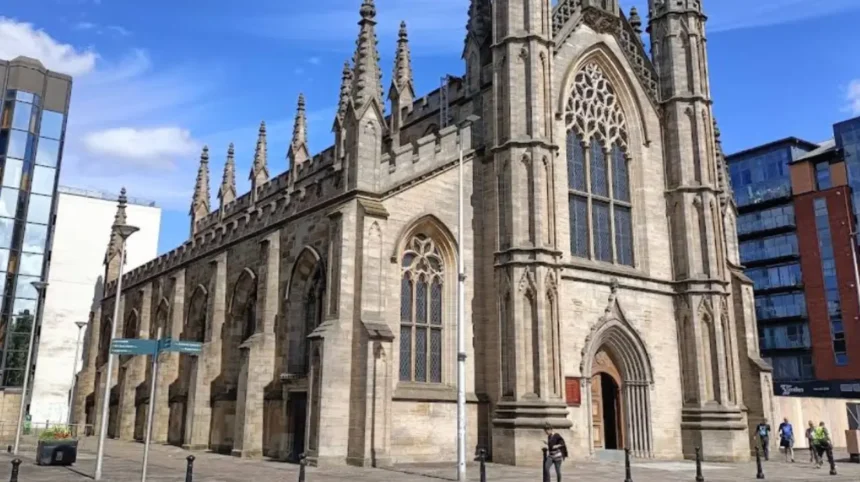
Glasgow (Glasgow Express) October 8, 2026 – The Catholic Archdiocese of Glasgow has initiated a major reorganisation that will see around two dozen churches close and the total number of parishes halved over the coming decade. Faced with dwindling Sunday congregations and a severe shortage of clergy, church leaders have confirmed that sweeping structural changes will impact communities throughout Glasgow and Dunbartonshire.
How is the declining attendance and priest shortage forcing parish closures?
The restructuring proposals aim to streamline operations, reducing the current parish count down to approximately 40 over the next five to ten years. In an official pastoral letter published on the Archdiocese of Glasgow website, Archbishop William Nolan outlined the stark realities compelling the leadership to take action.
Archbishop William stated that
“there are too many parishes but too few people, too many churches but too few priests.”
He further explained that compared to past eras when these ecclesiastical structures were established, Sunday Mass attendance has dropped significantly, with several of the largest church buildings currently situated in areas with the smallest residential populations.
The demographic crisis among the clergy has accelerated at a remarkable pace. Archbishop William revealed that the pool of active priests serving the Archdiocese has dropped by one-third during his tenure of less than five years. Compounding this challenge, only a single active priest is under the age of 45, while the vast majority have already passed their 60th birthdays. While acknowledging the vital contributions made by overseas clergy, the Archbishop noted that the local shortage would be far more critical without their ongoing support.
What is the consultation process and how will local communities be affected?
The comprehensive restructuring framework has already secured approval in principle from both Archbishop William and the Council of Priests. However, before any permanent closures or mergers take place, the proposals will undergo a detailed local consultation phase involving parish and deanery pastoral councils.
These upcoming changes represent one of the most substantial structural overhauls in the history of the local Church in Glasgow, directly impacting communities where specific parish churches have anchored family and spiritual life for generations. Recognising the emotional weight of these decisions, Archbishop William acknowledged that losing familiar places of worship will cause distress among local parishioners.
Archbishop William noted that
“our parishes and our churches hold great memories for us and are dear to our hearts, so any reduction in parishes and any closure of churches will be a painful experience.”
He added that the community “cannot avoid that pain, though, by not facing up to reality.”
Drawing an analogy to agricultural practices, the Archbishop likened the consolidation process to pruning a vine to foster new growth, suggesting that maintaining fewer physical assets can ultimately fortify the spiritual vitality of the remaining congregations. He concluded by urging local Catholics to support one another in prayer as difficult decisions regarding local parish futures are finalised.
Background of the particular development
The structural reorganisation announced by the Catholic Archdiocese of Glasgow mirrors wider secular and religious demographic trends observed across Western Europe and Scotland over recent decades. Traditional Christian denominations have experienced a steady decline in regular institutional participation, driven by shifting cultural norms, secularisation, and an aging demographic profile among lifelong churchgoers.
Concurrently, the Roman Catholic priesthood in Scotland, much like the clergy across the wider United Kingdom, has struggled with falling vocational numbers since the latter half of the 20th century. With fewer young men entering seminaries, dioceses across the country have increasingly relied on international priests from countries in Africa, Asia, and Eastern Europe to sustain basic sacramental ministry. The combination of hyper-concentrated urban infrastructure built for historical industrial populations and modern population shifts toward suburban areas left many urban dioceses maintaining oversized, under-occupied property portfolios that became financially and pastorally unsustainable.
Prediction
The planned closures and parish mergers are expected to significantly alter the religious landscape for Catholic parishioners, clergy members, and local communities across Glasgow and Dunbartonshire. For regular churchgoers, particularly elderly or immobile congregants, the consolidation may require travelling longer distances to attend weekly Mass, potentially weakening traditional community cohesion tied to hyper-local parishes.
For the remaining clergy, absorbing larger parish territories and managing multiple merged communities risks increasing burnout among an already aging priest workforce. Conversely, from an administrative and financial perspective, concentrating resources into fewer, more robust parish hubs could help stabilise diocesan finances, optimize pastoral outreach, and foster more vibrant, active multi-generational congregations in the long term.