Glasgow has an unusually strong live music identity. The city combines historic venues, grassroots clubs, major arenas, music education, festivals, record labels, professional orchestras and a large audience culture within a compact urban area. This infrastructure gives Glasgow a live music ecosystem that operates across multiple levels rather than depending on one major venue.
- Why does Glasgow have such a strong live music reputation?
- How did Glasgow become a major music city?
- Which Glasgow venues make the city’s live music ecosystem distinctive?
- Why are Glasgow’s grassroots music venues so important?
- How does Glasgow’s music economy support its live scene?
- Why does Glasgow produce and attract so many different types of music?
- How do Glasgow’s festivals strengthen its live music reputation?
- Why are Glasgow audiences considered important to the city’s music culture?
- Why does UNESCO City of Music status matter to Glasgow?
- What makes Glasgow different from other major UK music cities?
- Does Glasgow’s live music reputation have a future?
- What is the evidence behind Glasgow’s reputation as a leading live music city?
- Why is Glasgow one of the UK’s strongest live music destinations?
The city became the UK’s first UNESCO City of Music in 2008. UNESCO definesGlasgow as a major international musical centre and identifies it as Scotland’s musical capital. UNESCO also states that Glasgow has the largest music economy in the UK outside London, with more than half of Scotland’s music workforce based in the city.
Glasgow’s reputation is also reflected in external rankings. In 2024, research reported by Time Out placed Glasgow first in the world for live music, with almost 62 gigs per 100,000 residents and the highest number of music arenas per 100,000 people in the ranking, at 4.31. Glasgow was the only UK city in that study’s global top ten.
The important qualification is that there is no single permanent ranking that officially establishes Glasgow as the UK’s best live music city every year. Different organisations measure different factors. Time Out’s 2026 culture research, for example, identified Manchester as Britain’s best city for live music in its latest ranking.
Glasgow’s stronger and more defensible distinction is its long-standing position as one of Britain’s most important live music cities. Its UNESCO status, venue network, event frequency, music education infrastructure, artist development system and audience culture explain why the city repeatedly appears near the top of music-city comparisons.
Why does Glasgow have such a strong live music reputation?
Glasgow has a strong live music reputation because its music ecosystem combines historic venues, grassroots spaces, major arenas, festivals, orchestras, music education, artists, promoters and audiences within one city. UNESCO recognition since 2008 has formally established Glasgow as an international centre for music.
Glasgow’s music reputation is built on infrastructure rather than one successful genre. Rock, pop, electronic music, jazz, classical music, folk, Celtic music, country and experimental music all have established places within the city’s cultural landscape.
Glasgow Life states that the city hosts around 130 music events every week and describes Glasgow as Scotland’s busiest city for gigs. More than half a million people attend gigs in its iconic venues each year.
The city’s UNESCO designation reinforces this position. Glasgow joined the UNESCO Creative Cities Network as a City of Music in 2008. UNESCO describes music as an important part of Glasgow’s social and economic life, while identifying strong connections between music, education, tourism and social integration.
The density of activity is particularly important. A visitor does not need to travel across a large metropolitan region to access different levels of live music. Small clubs, traditional venues, concert halls and arena-scale performances operate within the same urban environment.
This creates a continuous pathway for audiences and performers. Emerging musicians can perform in small rooms before progressing to larger venues. Established Scottish artists can headline specialist venues or arenas. International touring artists can use Glasgow as a major Scottish stop.
The result is a music economy that supports both cultural participation and professional activity.
How did Glasgow become a major music city?
Glasgow became a major music city through decades of venue development, popular music growth, professional orchestras, music education and cultural investment. Its transformation accelerated through major cultural milestones, including European Capital of Culture status in 1990 and UNESCO City of Music recognition in 2008.
Glasgow’s musical history extends well beyond modern rock and pop. Traditional Scottish music, classical performance and popular entertainment have all contributed to the city’s cultural development.
One important historic institution is Glasgow City Halls, which dates to 1841. Glasgow Life identifies it as Glasgow’s oldest purpose-built concert hall. It remains a significant classical and contemporary music centre and is associated with the BBC Scottish Symphony Orchestra and other professional music organisations.
The Barrowland Ballroom provides another important historical connection. The venue opened in 1934 and developed into one of Glasgow’s best-known dance halls and music venues. VisitScotland identifies it as one of the city’s most popular and eclectic music venues.
Glasgow’s cultural transformation gained international attention in 1990, when the city became European Capital of Culture. UNESCO records this as an important point in Glasgow’s cultural and economic development. The event demonstrated the city’s ability to use culture as part of wider urban regeneration and international positioning.
The next major milestone arrived in 2008, when Glasgow became the first UK city to receive UNESCO City of Music status. The designation reflected an established music infrastructure rather than creating the reputation from scratch.
The city has therefore developed its music identity over several generations. Historic halls support classical performance. Long-established ballrooms support popular music. Independent venues develop emerging artists. Modern arenas accommodate international touring productions.
This layered history explains why Glasgow’s live music reputation remains resilient.
Which Glasgow venues make the city’s live music ecosystem distinctive?
Glasgow’s venue network covers the full performance scale, from intimate grassroots rooms to international arenas. Barrowland Ballroom, King Tut’s Wah Wah Hut, Glasgow Royal Concert Hall, City Halls and OVO Hydro represent different parts of this system and attract different audiences.
Barrowland Ballroom
The Barrowland Ballroom is one of Glasgow’s most recognisable music venues. It opened in 1934 and has developed a long association with popular music and touring artists. Its importance comes from its historical continuity and its position within Glasgow’s live music culture.
The venue demonstrates how a historic building can remain relevant within a modern touring ecosystem. Its identity is strongly associated with live performance rather than being a general-purpose entertainment facility.
King Tut’s Wah Wah Hut
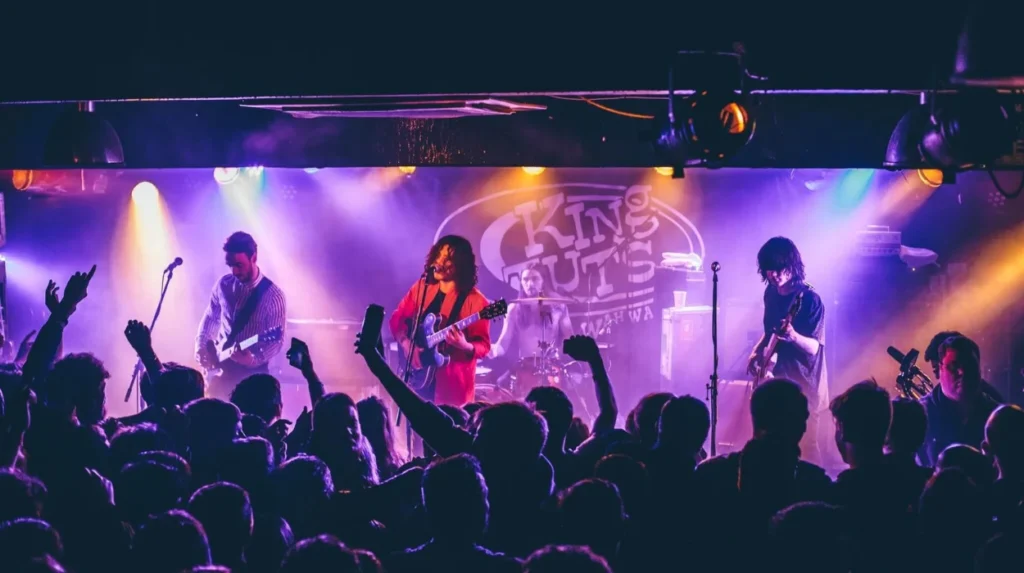
King Tut’s Wah Wah Hut is another major part of Glasgow’s grassroots music identity. VisitScotland describes the venue as being at the forefront of Scotland’s live music scene.
Its importance is linked to artist development. Smaller venues provide opportunities for emerging performers to build audiences, gain stage experience and attract industry attention.
This function is essential to a healthy music ecosystem. Major arenas depend on established performers, while emerging artists require smaller spaces to develop.
Glasgow Royal Concert Hall
The Glasgow Royal Concert Hall represents the city’s large-scale concert and orchestral infrastructure. Glasgow Life describes it as being at the heart of Glasgow’s UNESCO City of Music identity and as the home of the Royal Scottish National Orchestra.
Its programme connects Glasgow with classical music, orchestral performance and large-scale popular entertainment.
City Halls
City Halls provides a different part of the city’s musical infrastructure. Its history dates to 1841, and the venue continues to host classical and contemporary performances. Glasgow Life identifies its acoustics and long-running concert programme as key characteristics.
OVO Hydro
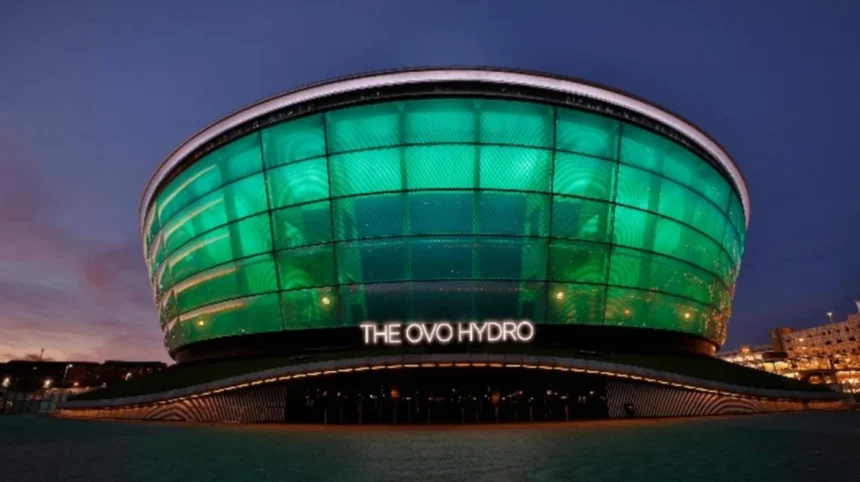
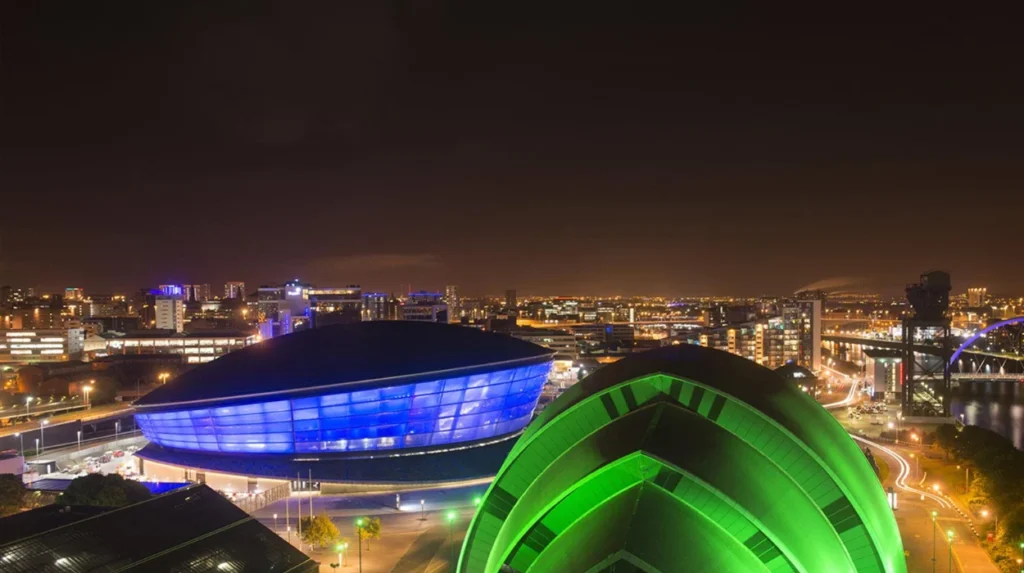
The OVO Hydro provides Glasgow with an international arena capable of hosting major touring productions. Glasgow’s cultural strategy identifies the arena as regularly ranking among the world’s busiest arenas.
The venue gives international artists a major Scottish performance destination. It also provides a large audience base for global tours that require substantial production infrastructure.
Together, these venues create a complete performance ladder. Glasgow therefore has infrastructure for emerging musicians, specialist audiences, established performers and global touring artists.
Why are Glasgow’s grassroots music venues so important?
Grassroots music venues are important because they develop emerging artists, provide affordable entry points for audiences, support local promoters and connect musicians with the wider industry. Glasgow’s grassroots network supplies the early-stage infrastructure required for artists to progress toward larger Scottish, UK and international stages.
Grassroots music venues are smaller performance spaces that generally operate below arena scale. Examples include specialist clubs, independent venues, small concert rooms and music-focused pubs.
Their economic importance is connected to artist development. A musician normally requires opportunities to perform before building a large touring audience. Small venues provide those opportunities.
Glasgow’s music ecosystem benefits from having several levels of performance infrastructure. A local artist can begin in an intimate room, progress to a larger independent venue and eventually perform at a major concert hall, festival or arena.
This system also benefits audiences. Smaller venues allow people to discover developing performers before they become major touring acts.
The Scottish Government has recognised the importance of grassroots venues. During the COVID-19 recovery period, the Scottish Government supported the Grassroots Music Venues Stabilisation Fund, administered through Creative Scotland, to help financially sustainable venues that developed new talent.
Earlier Scottish Government support also provided £2.2 million for 72 grassroots music venues across Scotland during the pandemic period. The funding recognised these venues as important spaces for developing and showcasing artistic talent.
Glasgow’s current cultural planning continues to recognise grassroots infrastructure. Its 2026–2030 night-time strategy proposes a UNESCO Music City ecosystem audit and a grassroots music venue support package. The objective is to identify provision, barriers, programming opportunities and venue support requirements.
This demonstrates an important point about Glasgow’s music reputation. The city does not depend exclusively on large commercial venues. Its musical strength depends on the relationship between grassroots spaces, artists, promoters, audiences and major institutions.
How does Glasgow’s music economy support its live scene?
Glasgow’s live music economy supports performers, venues, promoters, technicians, hospitality businesses, tourism operators, educators and creative organisations. Earlier Scottish Government research estimated £78.8 million in annual live music spending in Glasgow, generating £36.5 million in GVA and 2,450 full-time equivalent jobs.
Live music produces economic activity beyond ticket sales. Audiences spend money on transport, accommodation, food, drinks, retail and other leisure activities.
Music tourism therefore connects Glasgow’s cultural infrastructure with its visitor economy. Tourists visiting for concerts often use hotels, restaurants and transport services.
Scottish Government research cited in Scotland’s Culture Strategy estimated that £78.8 million was spent annually on live music in Glasgow, producing an estimated £36.5 million in Gross Value Added and supporting 2,450 full-time equivalent jobs.
Gross Value Added, or GVA, measures the value generated by economic activity after accounting for the cost of intermediate goods and services. It is widely used to assess the contribution of sectors to regional economies.
Music also supports wider creative industries. The Scottish Government reports that Scotland’s creative industries generated more than £5.7 billion for the Scottish economy annually, with 13,024 registered enterprises in December 2024 and around 90,000 employees. Music is one of the 16 industries included within this broader creative economy.
UNESCO provides further evidence of Glasgow’s sectoral concentration. It states that five of Scotland’s six largest music-industry employers are based in Glasgow and that more than half of Scotland’s music workforce is located in the city.
This concentration matters because a strong music industry requires more than performers. It requires producers, managers, promoters, sound engineers, lighting technicians, booking professionals, record companies, broadcasters, educators and venue operators.
Glasgow’s ecosystem includes many of these functions in the same urban economy.
Why does Glasgow produce and attract so many different types of music?
Glasgow supports diverse music because its infrastructure covers contemporary, classical, Celtic, country, electronic, rock, pop and other genres. Professional organisations, universities, specialist venues, festivals, clubs and independent promoters create multiple routes for musicians and audiences.
Genre diversity is one of Glasgow’s most important competitive advantages.
UNESCO identifies Glasgow’s musical strengths across rock and pop, classical music and electronica, while also recognising the city’s broader Celtic and country traditions.
This diversity is supported by specialist institutions.
Glasgow is home to the Royal Conservatoire of Scotland, one of the UK’s leading institutions for performing arts education. UNESCO identifies Glasgow as having Scotland’s highest density of higher education institutions offering music courses and the country’s largest population of music students.
The city also hosts major professional organisations. These include Scottish Opera, the Royal Scottish National Orchestra, BBC Scottish Symphony Orchestra, National Youth Orchestra of Scotland and Scottish Ensemble. Glasgow Life lists these organisations alongside major festivals such as Celtic Connections and TRNSMT.
This creates an unusually broad musical environment.
A visitor can experience orchestral performance at Glasgow Royal Concert Hall, traditional music through festival and folk programming, electronic music in specialist clubs, independent rock in grassroots venues and international pop at the OVO Hydro.
The result is not simply a high number of concerts. It is a broad musical supply covering different audiences and professional pathways.
How do Glasgow’s festivals strengthen its live music reputation?
Glasgow’s festivals strengthen its reputation by concentrating large audiences, international performers, emerging artists and specialist genres within the city’s existing venue network. Celtic Connections, TRNSMT and other programmes extend live music beyond individual concerts and create recurring annual reasons to visit Glasgow.
Festivals are an important part of Glasgow’s music calendar.
Celtic Connections focuses strongly on folk, roots and traditional music. It connects Glasgow with Scotland’s musical heritage while presenting contemporary performers and international collaborations.
TRNSMT provides a major contemporary music festival at Glasgow Green. It brings large audiences and nationally and internationally recognised artists into the city.
Festival programming increases the volume and visibility of live music. It also creates opportunities for local businesses, accommodation providers, hospitality operators, transport services and music professionals.
Glasgow’s festival infrastructure works alongside its permanent venues. This is significant because the city does not rely on festivals to create a temporary music identity. Festivals add scale to an established year-round ecosystem.
VisitScotland describes Glasgow as a city where music exists across major arena shows, intimate independent gigs and festival performances.
The combination of year-round concerts and recurring festivals strengthens Glasgow’s appeal to music tourists.
Why are Glasgow audiences considered important to the city’s music culture?
Glasgow audiences are central to the city’s music identity because live music depends on regular attendance, repeat participation and strong connections between performers and venues. Glasgow Life and VisitScotland both identify audience enthusiasm as a defining feature of the city’s internationally recognised music culture.
A live music ecosystem requires audiences as much as venues.
Glasgow has a large resident population, substantial student community and significant visitor economy. These groups create demand for different forms of live entertainment throughout the year.
Audience diversity also supports genre diversity. Classical concerts require a different audience base from electronic club nights, while festival audiences differ from people attending small independent gigs.
Glasgow’s music institutions therefore benefit from multiple audience segments.
Glasgow Life reports that more than 500,000 people attend gigs in the city’s iconic venues each year. The organisation also states that Glasgow hosts around 130 music events every week.
These figures illustrate the scale of participation.
The audience culture also has implications for touring decisions. Promoters and artists require reliable ticket demand when planning tours. A city with multiple venues and an established concert-going population becomes an important stop within touring schedules.
Glasgow’s location in Scotland reinforces this role. It is Scotland’s largest city and a major transport and economic centre, giving touring productions access to a substantial regional audience.
This combination of audience scale and venue variety strengthens Glasgow’s position within the UK touring circuit.
Why does UNESCO City of Music status matter to Glasgow?
UNESCO City of Music status matters because it formally recognises Glasgow’s music infrastructure, strengthens international cultural connections and supports the city’s use of music for education, tourism, participation and economic development. Glasgow joined the UNESCO Creative Cities Network in 2008.
UNESCO’s Creative Cities Network connects cities that identify creativity as an important part of economic and cultural development.
Glasgow became a Creative City of Music in 2008. UNESCO identifies the city as a major international musical centre and states that music has played an important historical role in Glasgow.
The designation has practical implications.
Glasgow’s UNESCO programme includes objectives involving music participation, youth engagement, international exchange, industry development and tourism.
The designation also gives Glasgow an international network. UNESCO Creative Cities exchange knowledge, develop partnerships and promote cultural cooperation.
Glasgow’s music identity therefore operates at local, national and international levels.
At local level, music supports participation and community activity. At national level, Glasgow functions as a major Scottish music hub. Internationally, UNESCO membership connects the city with other music-focused creative cities.
The designation does not itself prove that Glasgow is permanently Britain’s number-one music city. Rankings use different methodologies. UNESCO status instead provides a long-term institutional recognition of Glasgow’s music infrastructure.
That distinction is important for accurate SEO content. Glasgow’s strongest evidence comes from its sustained ecosystem and official recognition rather than an unsupported claim that one ranking applies permanently.
Explore more Area Guide
What Is Student Life Actually Like at the University of Glasgow
What Is It Like Raising Children in Glasgow West End vs the Southside?
What makes Glasgow different from other major UK music cities?
Glasgow differs from other UK music cities through the combination of venue density, UNESCO recognition, grassroots infrastructure, professional music organisations, music education, festivals and concentrated industry employment. London and Manchester offer larger markets, but Glasgow combines major scale with a compact and highly specialised music ecosystem.
The UK has several major music cities. London has the country’s largest cultural economy and extensive international touring infrastructure. Manchester has a major music history and a strong contemporary venue network. Liverpool has an internationally recognised musical heritage.
Glasgow’s distinction comes from the concentration of its music ecosystem.
UNESCO identifies Glasgow as the UK’s largest music economy outside London and states that five of Scotland’s six largest music-industry employers are based in the city. More than half of Scotland’s music workforce is also based in Glasgow.
The city’s relatively compact geography also supports venue connectivity. Major concert halls, grassroots venues, clubs, festivals and cultural institutions operate within a concentrated urban environment.
This makes Glasgow particularly strong for music tourism. Visitors can combine multiple musical experiences during a short stay.
The comparison also requires methodological accuracy. Rankings change according to the factors measured. Time Out’s 2026 research named Manchester Britain’s best city for live music, demonstrating that Glasgow’s reputation should not be presented as a permanent official UK ranking.
Glasgow’s stronger evergreen claim is that it consistently ranks among the UK’s leading live music cities and has received major international recognition.
Does Glasgow’s live music reputation have a future?
Glasgow’s live music future depends on protecting grassroots venues, sustaining artist development, maintaining audience access and supporting the wider music workforce. Current city planning recognises these requirements through proposals for a music ecosystem audit and targeted grassroots venue support.
Glasgow’s established reputation does not remove structural challenges.
Grassroots venues face financial pressure from operating costs, property pressures, changing consumer behaviour and the economics of live performance. These pressures affect the early stages of artist development.
The city has recognised this issue through its 2026–2030 night-time strategy. The strategy proposes a UNESCO Music City ecosystem audit to map music provision, identify barriers and examine opportunities for new venues and programming. It also proposes a grassroots music venue support package.
National policy also recognises pressure on Scotland’s musicians. In March 2026, the Scottish Government announced a £300,000 pilot rapid-response fund to help Scotland-based musicians with international touring costs including travel, freight and visa applications.
This support is relevant to Glasgow because the city contains a substantial proportion of Scotland’s music workforce.
Future competitiveness therefore depends on maintaining the complete music pipeline.
That pipeline begins with music education and emerging artists. It continues through rehearsal spaces, small venues, promoters and independent labels. It progresses to festivals, concert halls and larger venues. It also includes recording, management, broadcasting, touring and international connections.
Protecting each stage is necessary to preserve the city’s long-term reputation.
What is the evidence behind Glasgow’s reputation as a leading live music city?
The evidence includes UNESCO City of Music status since 2008, around 130 weekly music events, more than 500,000 annual gig attendances, major venue infrastructure, substantial music employment and international rankings that have placed Glasgow first globally for live music.
Several independent indicators support Glasgow’s status.
The first is institutional recognition. Glasgow became the UK’s first UNESCO City of Music in 2008.
The second is event density. Glasgow Life reports approximately 130 music events each week, making the city Scotland’s busiest for gigs.
The third is audience participation. Glasgow Life states that more than 500,000 people attend gigs in the city’s iconic venues annually.
The fourth is industry concentration. UNESCO identifies Glasgow as the UK’s largest music economy outside London and states that more than half of Scotland’s music workforce is located there.
The fifth is economic impact. Scottish Government research estimated £78.8 million in annual live music spending, £36.5 million in GVA and 2,450 full-time equivalent jobs in Glasgow.
The sixth is international ranking evidence. A 2024 study reported by Time Out ranked Glasgow as the world’s best city for live music, recording almost 62 gigs per 100,000 people and 4.31 music arenas per 100,000 people.
Taken together, these indicators provide a stronger evidence base than any single ranking.
Glasgow’s reputation rests on the depth of its ecosystem. Its venues, artists, audiences, education providers, festivals and music businesses reinforce one another.
Why is Glasgow one of the UK’s strongest live music destinations?
Glasgow is one of the UK’s strongest live music destinations because it combines historic venues, grassroots artist development, major arenas, festivals, professional orchestras, music education, international recognition and a large audience base. Its strength comes from the complete ecosystem rather than one venue or genre.
Glasgow’s live music reputation has developed over decades.
The city has historic concert infrastructure dating to the nineteenth century, established popular music venues dating to the twentieth century, modern arenas serving international tours and a continuing network of grassroots spaces.
Its music economy is also unusually concentrated. UNESCO identifies Glasgow as Scotland’s musical capital and the UK’s largest music economy outside London. More than half of Scotland’s music workforce is based in the city.
Its event frequency is another major strength. Around 130 music events take place each week according to Glasgow Life.
Its audience base supports the system. More than half a million people attend gigs at iconic Glasgow venues each year.
Its international standing is reinforced by UNESCO membership and external rankings. The 2024 Planet Cruise research reported by Time Out placed Glasgow first globally for live music, while later rankings demonstrate that the precise position changes according to methodology.
The most accurate conclusion is therefore not that Glasgow holds a permanent official title as the UK’s number-one live music city. The evidence shows something more durable: Glasgow is a leading British music city with an unusually complete live music ecosystem.
Its combination of grassroots venues, major concert halls, international arenas, festivals, music education, professional organisations, industry employment and committed audiences explains why Glasgow continues to attract major artists and music visitors.
For visitors, the result is a city where live music exists across the entire scale of performance. For musicians, it provides multiple stages of development. For the wider economy, it creates activity across tourism, hospitality and the creative industries.
That integrated structure is the central reason Glasgow remains one of the UK’s most important live music cities.
Why is Glasgow famous for live music?
Glasgow is famous for its dense live music network, historic venues, grassroots music scene, major arenas, festivals and UNESCO City of Music status. The city became the UK’s first UNESCO City of Music in 2008 and hosts around 130 music events each week.