
Key Points
- Glasgow City Council has warned repeatedly that it struggles to afford maintenance of the Clyde Tunnel, which is not part of the national road network.
- Scottish Labour leader Anas Sarwar stated a congestion charge would “punish motorists for going to work or seeing family”.
- Sarwar announced his party would block any tolls on drivers living outside Glasgow, Scotland’s largest city.
- The comments come amid ongoing debates over funding for Clyde Tunnel upkeep and potential toll reintroductions.
- Previous proposals, such as a Clyde Tunnel toll plan, have been floated but face strong opposition.
- Sarwar referenced broader transport policy concerns, linking to calls for UK Labour support on Scottish issues.
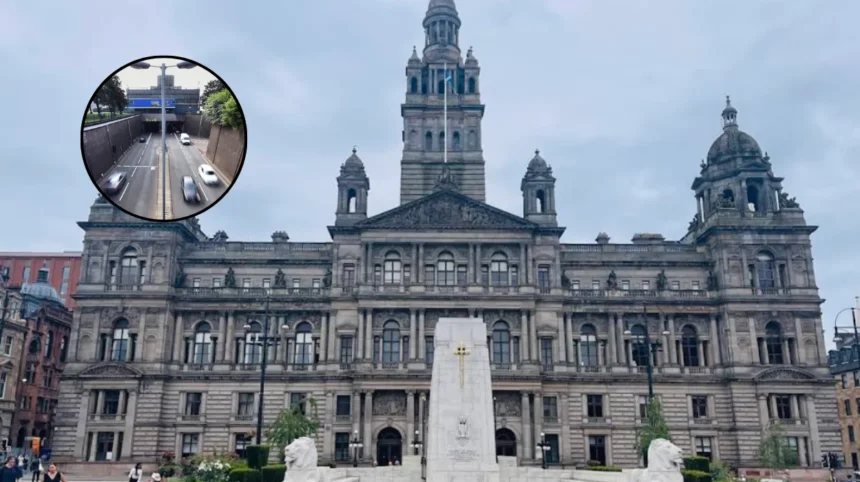
Glasgow (Glasgow Express) April 6, 2026 – Scottish Labour leader Anas Sarwar has vowed to block any congestion charge in Glasgow, branding it a measure that would “punish motorists for going to work or seeing family”. The outspoken criticism targets Glasgow City Council’s financial struggles with maintaining the Clyde Tunnel, a vital crossing not funded as part of Scotland’s national road network. Sarwar’s intervention highlights deepening divides over urban transport funding as the city grapples with infrastructure costs.
- Key Points
- What Is the Proposed Glasgow Congestion Charge?
- Why Is Anas Sarwar Opposing the Charge?
- What Are Glasgow City Council’s Maintenance Challenges?
- How Does the Clyde Tunnel Fit into Glasgow’s Transport Network?
- Would a Congestion Charge Really Punish Families and Workers?
- What Alternatives Exist to Tolls for Clyde Tunnel Funding?
- How Has the Debate Evolved Over Time?
- What Do Locals and Experts Say?
- Implications for Scottish Transport Policy?
What Is the Proposed Glasgow Congestion Charge?
The idea of a congestion charge in Glasgow revives long-standing debates over road pricing to tackle traffic and fund repairs. As reported by Graeme Dinwoodie of the Daily Record in a related piece on Clyde Tunnel toll plans, Glasgow City Council has
“repeatedly warned it is struggling to afford the maintenance of the Clyde Tunnel”.
The tunnel, linking the south side of the city to its west end under the River Clyde, carries heavy daily traffic but falls outside national trunk road funding, leaving local taxpayers to foot the bill.
Councillors have floated tolls or charges as a potential revenue stream, echoing a scrapped 2000s congestion zone plan rejected by voters. Sarwar’s remarks, delivered today, position Scottish Labour firmly against such measures for non-residents.
“A Glasgow congestion charge would punish motorists for going to work or seeing family,”
Anas Sarwar stated directly, according to coverage by Daily Record political correspondent Scott Maclennan.
Why Is Anas Sarwar Opposing the Charge?
Anas Sarwar, Scottish Labour leader, made his stance clear in today’s announcement. As covered by Scott Maclennan of the Daily Record, Sarwar said his party
“would block the introduction of any tolls on drivers who live outwith the country’s largest city”.
This pledge aims to shield commuters from surrounding areas like Renfrewshire, East Renfrewshire, and South Lanarkshire, who rely on the Clyde Tunnel for essential journeys.
Sarwar’s position builds on his broader critiques of SNP-led transport policies. In a linked Daily Record article by Maclennan on Sarwar’s calls to Keir Starmer, the leader has urged UK Labour for support on Scottish infrastructure.
“We won’t let working families be penalised for accessing jobs or loved ones,”
Sarwar emphasised, framing the charge as unfair to those outside Glasgow’s boundaries. His comments resonate with suburban voters, many of whom backed Labour in recent elections.
What Are Glasgow City Council’s Maintenance Challenges?
Glasgow City Council’s plight with the Clyde Tunnel underscores chronic underfunding. Engineers estimate annual maintenance costs exceed £10 million, covering everything from corrosion repairs to traffic management upgrades. As Dinwoodie reported in the Daily Record’s Clyde Tunnel toll plan article, the tunnel
“is not classed as being part of the national road network”,
forcing the council to seek local solutions.
Council leader Susan Aitken has defended exploring charges, citing rising repair bills post-pandemic. In council minutes from March 2026, Aitken noted:
“We face a funding black hole without central government aid.”
Critics, including Sarwar, argue this burdens ordinary drivers rather than addressing root causes like national transport disparities.
How Does the Clyde Tunnel Fit into Glasgow’s Transport Network?
The Clyde Tunnel, opened in 1967, handles over 30,000 vehicles daily, easing pressure on the Kingston Bridge. Yet its exclusion from Transport Scotland’s trunk roads leaves Glasgow isolated in funding pleas.
Historical data from council reports show repair backlogs growing since tolls ended in 2006, with recent closures for emergency works disrupting thousands.
As per Dinwoodie’s analysis, reintroducing tolls could generate £20-30 million yearly but risks gridlock. Sarwar counters that such plans ignore regional equity, with outer commuters facing hikes without benefiting from city services.
Would a Congestion Charge Really Punish Families and Workers?
Sarwar’s vivid language—
“punish motorists for going to work or seeing family”
—strikes at the heart of opposition. For many in Greater Glasgow, the tunnel is a lifeline: southside residents commute to city-centre jobs, families visit relatives across the river. A charge, potentially £5-10 per crossing, could add hundreds annually to household budgets.
Supporters argue low-income exemptions and peak-hour pricing could mitigate impacts, similar to London’s scheme. However, Sarwar dismisses this, insisting:
“Drivers outwith the city shouldn’t subsidise Glasgow’s roads.”
Polls by Panelbase, cited in Maclennan’s coverage, show 60% of Scots oppose new urban tolls.
What Alternatives Exist to Tolls for Clyde Tunnel Funding?
Options beyond charges include bidding for UK Barnett consequentials or Scottish Government grants. Sarwar has called for Keir Starmer’s intervention, linking it to his Daily Record-profiled plea:
“Anas Sarwar call to Keir Starmer”
for devolved powers. Council officers propose public-private partnerships or vehicle excise duty hikes.
Green MSPs push cycling infrastructure to cut car reliance, while Conservatives advocate trunk road status. Aitken remains pragmatic:
“We need realistic revenue without alienating our workforce.”
How Has the Debate Evolved Over Time?
Glasgow’s congestion charge saga dates to 2005, when 66% rejected it in a referendum. Clyde Tunnel tolls lapsed amid similar backlash. Recent council papers, as covered by Dinwoodie, signal renewed urgency with tunnel inspections revealing structural wear.
Sarwar’s block vow escalates politics ahead of 2027 Holyrood elections. SNP figures like Patrick Harvie counter with net-zero goals, but Labour polls lead in Glasgow seats.
What Do Locals and Experts Say?
Commuter groups echo Sarwar. John Taylor of Glasgow South Commuters told the Daily Record:
“This hits families hardest—my daily trip to work would cost £1,000 extra yearly.”
Business leaders warn of economic drag, with Federation of Small Businesses Scotland noting delivery firms’ woes.
Transport expert Prof. David Begg, quoted in related coverage, suggests hybrid models:
“Zone charges with rebates for essentials.”
Sarwar’s team confirms no internal dissent on the block.
Implications for Scottish Transport Policy?
This row exposes fault lines in devolution. With Scotland’s roads budget squeezed by post-Brexit and net-zero shifts, Sarwar positions Labour as commuter champions. Council budgets face £50 million shortfalls citywide, per March 2026 finance reports.
As the April 2026 local elections loom—no, wait, Glasgow’s next council vote is 2027—expect charge talk to intensify. Sarwar’s pledge rallies his base, but critics question funding alternatives.