Key Points
- Glasgow City Council has voted against granting the Freedom of the City to the Royal Regiment of Scotland.
- The vote came as the regiment marked its 20th anniversary.
- Labour councillors criticised the decision, saying Glasgow has moved out of step with other Scottish councils that have already awarded the honour.
- Reports say more than 20 local authorities across Scotland, including Edinburgh and Aberdeen, have already conferred the recognition on the regiment.
- The decision has prompted criticism from commentators and defence-focused outlets, with the issue presented as a significant civic and symbolic rejection.
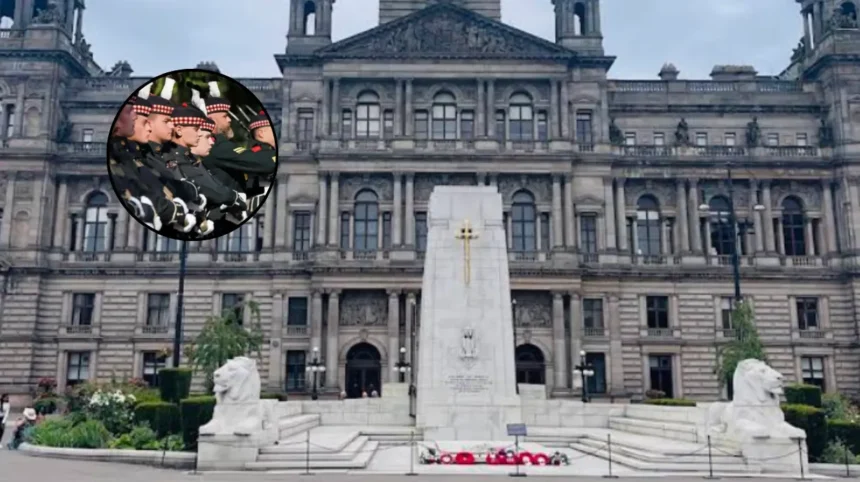
Glasgow City Council (Glasgow Express) May 16, 2026, has voted against granting the Freedom of the City to the Royal Regiment of Scotland, ending a motion that had been put forward to mark the regiment’s 20th anniversary.
As reported by the Glasgow Times, the council move followed opposition from SNP and Green councillors, who blocked the proposal.
The decision means Glasgow becomes the first council in Scotland to refuse the honour to the regiment, according to the reporting available in the published coverage.
Why was the motion controversial?
According to GB News, Labour councillors argued the refusal leaves Glasgow “completely out of step” with the rest of Scotland and breaks with generations of civic tradition in recognising military service.
The same reporting says the honour had already been awarded by more than 20 other councils, including Edinburgh and Aberdeen, which made Glasgow’s refusal stand out.
Coverage shared online by UK Defence Journal also described the decision as one that had drawn criticism from politicians across party lines.
Who brought forward the proposal?
As presented in the YouTube coverage summarising the debate, Glasgow Labour councillor James Adams brought the motion to City Council.
That same account said the proposal was framed as a recognition of the regiment’s service and sacrifices, along with Glasgow’s long-standing links with the armed forces.
The reporting also said the regiment’s 20th anniversary was used as a key reason for bringing the honour forward at this time.
What did supporters say?
In the available reporting, supporters of the motion said the regiment deserved civic recognition for its service and sacrifices.
Labour councillor James Adams said the decision left Glasgow out of step with the rest of the country and represented a break from civic tradition, according to the quoted remarks in the coverage.
He also said it was “frankly shameful” that SNP and Green councillors had blocked the honour in the regiment’s anniversary year.
What did opponents say?
The coverage says SNP Glasgow councillors argued the award was “inherently problematic”.
That position, as reported, formed the basis of their opposition to giving the regiment the Freedom of the City.
The published material available here does not set out the full detail of every councillor’s comments, but it does show that the motion was defeated after that political split.
How did other councils respond?
The reporting repeatedly notes that other Scottish councils had already granted the honour to the Royal Regiment of Scotland.
Edinburgh and Aberdeen were specifically mentioned among those local authorities that had already approved the recognition.
That wider pattern made Glasgow’s refusal more notable in the debate, because it placed the city at odds with the approach taken elsewhere.
Explore More Glasgow Council News
Tony Pearson Slams Glasgow Council Over Daughter’s Home Access, Milton 2026
Royal Regiment freedom honour blocked in Glasgow 2026
Why does the Freedom matter?
The Freedom of the City is described in the coverage as one of the highest civic honours a city can grant.
It is generally used to recognise exceptional service and sacrifice, which is why the decision attracted such strong reactions in this case.
In practical terms, the honour is symbolic, but in civic and military terms it carries clear public meaning and can be seen as a formal gesture of respect.
Background of this development
The Royal Regiment of Scotland was formed 20 years ago, and the anniversary appears to have been the immediate trigger for the motion in Glasgow.
The regiment’s link to civic honours is not new, as the Royal Marines were granted the Freedom of Glasgow in 2013, showing that the city has previously used the honour for military recognition.
This latest vote therefore sits within a broader tradition of Scottish councils using civic awards to acknowledge military units and their public service.
Prediction and impact
For Glasgow residents, this decision is likely to keep debate focused on the city’s relationship with the armed forces and on how civic honours should be awarded.
For the Royal Regiment of Scotland and its supporters, the refusal may be seen as a symbolic setback, even though it has no direct operational effect.
For councillors, the issue may continue to shape political argument around identity, tradition and how Glasgow chooses to represent itself in future honours decisions.