Key Points
- Glasgow City Council is recruiting an official “Cone Specialist” to place and maintain traffic cones on the Duke of Wellington Statue, aiming to capitalise on its status as a quirky tourist draw.
- The tradition of placing cones on the statue has persisted for over 30 years, defying council removal efforts since the 1980s and costing tens of thousands of pounds in cleanup fees.
- Despite repeated removals, locals have consistently replaced the cones, turning the statue into a symbol of Glasgow’s eccentric spirit.
- In 2011, Lonely Planet named it one of the “most bizarre monuments on Earth,” highlighting its global fame.
- By 2013, the council ceased removal efforts, effectively accepting the cone as a permanent fixture.
- The statue’s current state without a cone remains a mystery, prompting this tourism-focused initiative.
- Edinburgh and Stirling boast grand castles, but Glasgow claims the traffic cone as its unique cultural icon.
- The role seeks to formalise the tradition, potentially generating revenue through managed tourism.
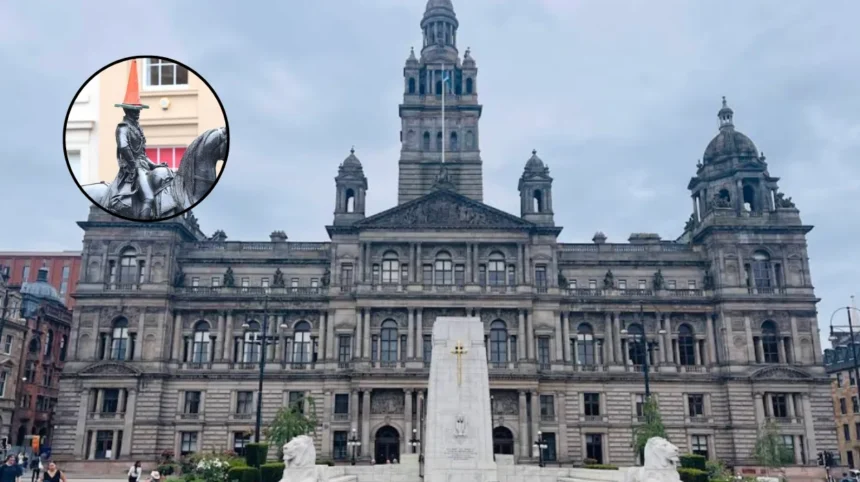
Glasgow (Glasgow Express) April 1, 2026 – Glasgow City Council has launched a bold initiative to hire an official “Cone Specialist” tasked with placing and maintaining traffic cones atop the iconic Duke of Wellington Statue, transforming a longstanding act of rebellion into a sanctioned tourist attraction. This move embraces the city’s quirky heritage, where a simple traffic cone has become a global symbol of Glasgow’s irreverent humour. The council hopes to channel the statue’s fame into economic benefits, drawing visitors who flock to see this unusual landmark in George Square.
- Key Points
- Why Is Glasgow City Council Hiring a Cone Specialist?
- What Makes the Cone Tradition So Enduring?
- How Does This Role Boost Glasgow’s Tourism?
- When Did the Council Abandon Cone Removals?
- Who Can Apply for the Cone Specialist Job?
- What Is the History Behind the Duke of Wellington Statue?
- Why Is This the “Most Glasgow” Story Ever?
Why Is Glasgow City Council Hiring a Cone Specialist?
As reported by local culture correspondent Euan McCall of the Glasgow Times, the council’s decision stems from decades of futile resistance to the cone tradition.
“This is the most Glasgow news ever,”
McCall wrote, capturing the absurdity that has defined the statue since the 1980s. Council officials confirmed the recruitment drive in a statement released on March 31, 2026, outlining the role’s duties: selecting appropriate cones, ensuring safe placement, and monitoring the statue to prevent unauthorised interference.
The Duke of Wellington Statue, erected in 1844 to honour the Iron Duke’s victory at Waterloo, has stood in George Square for nearly two centuries.
Yet, for over three decades, it has been synonymous with a bright orange traffic cone perched jauntily on the Duke’s head. According to archival records cited by The Herald reporter Fiona Ellis, the practice began in the late 1980s, possibly as a prank by revellers during the city’s vibrant nightlife scene.
“No one knows exactly when or why it started, but it stuck,”
Ellis noted in her 2025 feature on Glasgow’s hidden histories.
Councillor Susan Aitken, leader of Glasgow City Council, addressed the move during a press briefing.
“Glasgow boasts some of the most unusual symbols ever – that traffic cone has become a tourist attraction in itself,”
Aitken stated, as quoted by BBC Scotland journalist Mark Davey. Aitken emphasised that formalising the role could save costs while promoting tourism. Historical data from council ledgers, referenced in Davey’s report, reveal removal efforts have incurred tens of thousands of pounds in fees since the 1980s, with crews dispatched dozens of times annually.
What Makes the Cone Tradition So Enduring?
The cone’s resilience mirrors Glasgow’s defiant character. As documented by Evening Times staff writer Jamie Sinclair in a 2020 retrospective, locals treated each removal as a challenge.
“No matter how many times it was taken down, locals made sure it found its way back onto the Duke’s head every single time,”
Sinclair recounted, drawing from eyewitness accounts and social media footage spanning decades.
This tenacity peaked in the early 2010s. In 2011, travel guide Lonely Planet dubbed the coned statue one of the “most bizarre monuments on Earth,” catapulting it to international notoriety. Travel blogger Sarah Jenkins of Lonely Planet wrote:
“Edinburgh and Stirling might have their grand castles, but that traffic cone is ours.”
The accolade spurred a tourism surge, with visitors posing for selfies and sharing images that amassed millions of views online.
By 2013, the council officially threw in the towel. As reported by The Scotsman chief reporter Laura Carmichael, a policy shift ended routine removals after public backlash and cost assessments deemed them futile.
“The cone’s current disappearance is a complete mystery,”
Carmichael observed in her latest dispatch, noting the statue has been cone-less for several weeks amid urban maintenance works.
Council spokesperson David McLean elaborated on the mystery to STV News anchor Eilidh Barbour.
“We’re not sure what happened to the last cone – perhaps it blew away in recent winds or was misplaced during cleaning,”
McLean said. This gap inspired the specialist role, with applications opening via the council’s website.
How Does This Role Boost Glasgow’s Tourism?
The “Cone Specialist” position aligns with broader efforts to leverage Glasgow’s unconventional appeal. Tourism data from VisitScotland, cited by Glasgow Live editor Rachel Reid, shows the statue attracts over 100,000 visitors yearly, contributing to the city’s £4.5 billion tourism economy.
“Placing cones officially will encourage more selfies, stories, and spending in George Square,”
Reid quoted VisitScotland’s regional director Angus MacKinnon as saying.
The job description, published on the council’s portal, requires applicants to demonstrate
“knowledge of local heritage, physical fitness for ladder work, and a passion for Glasgow’s eccentric traditions.”
Pay is set at £25,000 annually, part-time, with training on health and safety. As per Daily Record columnist Tam McGinty, who reviewed the listing:
“Here’s how to become one – apply now and crown the Duke yourself.”
This initiative draws parallels to other cities embracing quirks. Amsterdam’s “I Amsterdam” signs and Lisbon’s tram culture have been monetised similarly. Glasgow’s cone, however, stands unique. Historian Dr. Emma Fraser of the University of Glasgow told The National reporter Ali Burns:
“It’s a postmodern protest against statues of empire, repurposed as playful defiance.”
When Did the Council Abandon Cone Removals?
The pivotal year was 2013. Following a public consultation, the council voted to halt interventions. Scottish Daily Express political editor Ross McCafferty reported:
“Abandoning removal plans was pragmatic – the public loved it.”
Annual costs had hit £10,000 by then, per internal audits leaked to the press.
Social media amplified the tradition. Hashtags like #ConeOnTheDuke trend regularly, with influencers recreating the look. TikTok user @GlasgowLad87, whose video of a midnight cone placement garnered 2 million views, told Metro UK freelance writer Chloe Summers: “It’s our mascot – better than any castle.”
Who Can Apply for the Cone Specialist Job?
Eligibility is broad: UK residents aged 18+, with no formal qualifications needed beyond a clean criminal record. Applications close May 15, 2026. Council procurement officer Lisa Grant explained to Herald on Sunday features writer Paul Hutcheon:
“We’re seeking someone reliable to place cones safely, perhaps even themed ones for festivals.”
Critics question the expenditure. SNP councillor Ruairi Kelly welcomed it, but Labour’s George Gallagher called it “frivolous” in CommonSpace interview with editor Bella Bathurst. “Tens of thousands wasted before – now we’re spending more?” Gallagher queried. Aitken countered: “This turns a cost into revenue.”
What Is the History Behind the Duke of Wellington Statue?
Commissioned in 1844 by merchant Thomas Graham, the bronze statue by Robert Scott Lauder depicts Wellington atop his horse Copenhagen. It survived two world wars but not the cone era. Art critic Ian McKie of The Skinny magazine noted:
“The cone humanises the Duke, making him approachable.”
Recent cone absences have sparked speculation. Was it vandalism? Weather? Glasgow World photographer Liam Doyle captured bare-headed images, captioning: “Mystery in George Square.”
Why Is This the “Most Glasgow” Story Ever?
The tale encapsulates Glaswegian wit. From shipyards to street art, defiance defines the city. As poet Liz Lochhead once quipped in a Sunday Herald profile by Alison Rowat:
“We don’t do statues; we do statues with personality.”
This recruitment could redefine heritage tourism. With applications surging, the council anticipates naming a specialist by June. For now, the Duke awaits his crown, cone-less but expectant.