Key Points
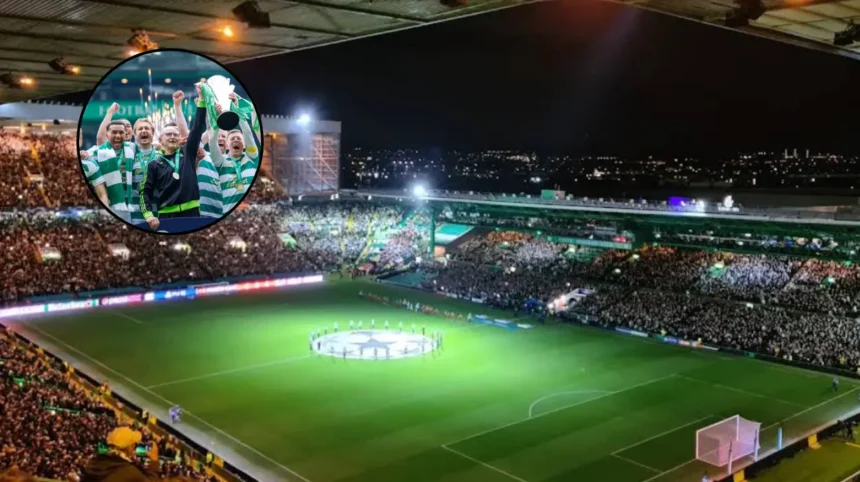
- Unusual Monday Opener: Reigning Scottish Premiership champions Celtic FC will launch their fifth consecutive title defence against Dundee at Celtic Park on Monday, 3 August 2026, at 7:30pm.
- Official Club Dissatisfaction: Celtic management officially branded the Monday scheduling as “disappointing” and confirmed they lobbied heavily against the decision.
- Policed Policing Constraints: Police Scotland forced the fixture change after declaring an inability to provide sufficient security personnel over the weekend of 1 and 2 August due to massive overlapping events in Glasgow.
- Major Event Congestion: The opening weekend clashes directly with the track cycling events for the 2026 Commonwealth Games at the nearby Sir Chris Hoy Velodrome, alongside major Calvin Harris concerts at Hampden Park.
- Television Company Exonerated: While the fixture will be broadcast live by Sky Sports in the United Kingdom and Ireland, the club explicitly confirmed that broadcasting networks were not to blame for the lack of a weekend slot.
- Travel Compromise Secured: Following discussions between Celtic, the Scottish Professional Football League (SPFL), and Sky Sports, the kick-off was brought forward from 8:00pm to 7:30pm to accommodate long-distance travelling supporters, especially those commuting from Ireland.
- Derby Highlights Revealed: The wider fixture release confirmed that the highly anticipated first Old Firm derby against Rangers will take place at Celtic Park on 20 September 2026.
Celtic FC (Glasgow express) June 18, 2026 — Celtic Football Club and the Scottish Professional Football League officially confirmed on Thursday, 18 June 2026, that the reigning champions will raise the traditional Scottish Premiership flag on the unusual evening of Monday, 3 August 2026, triggering widespread fan criticism and an extraordinary administrative dispute between the club and local authorities.
- Key Points
- Why Is Celtic’s Traditional Flag Day Being Held On A Monday Evening?
- What Efforts Were Made To Prevent This Scheduling Conflict?
- How Did Broadcast Partners And The SPFL Respond To Fan Concerns?
- What Other Key Match Dates Were Disclosed In The Full SPFL Fixture Release?
- Background of the Glasgow Event Congestion and Structural Policing Policies
- Prediction: How the Monday Scheduling and Broader Fixture List Will Impact Travelling Supporters and Stadium Operations
The historic opening fixture against Dundee at Parkhead, which marks the commencement of Celtic’s campaign for a fifth consecutive domestic league title, has been formally scheduled for a 7:30pm kick-off. This structural disruption to the traditional weekend football calendar was met with direct pushback from Celtic’s executive board, who openly condemned the constraints placed upon their matchday operations by external entities.
Why Is Celtic’s Traditional Flag Day Being Held On A Monday Evening?
The decision to shift the high-profile fixture from the standard opening weekend slots of Saturday or Sunday came directly from emergency logistics demands rather than broadcast television programming preferences. As reported by Blair Meikle, Sports Reporter for The Celtic Way, advance intelligence had circulated within Scottish football circles indicating that the Parkhead club would likely start their Premiership defence on a weekday evening because of extreme logistical gridlock inside the city of Glasgow.
The primary cause behind the scheduling anomaly is a severe drain on local security resources. Over the weekend of 1 and 2 August, Glasgow will simultaneously host the track cycling events for the 2026 Commonwealth Games at the Sir Chris Hoy Velodrome—situated directly across the road from Celtic Park—whilst pop icon and DJ Calvin Harris performs massive outdoor stadium concerts at Hampden Park.
An official statement issued by the board of Celtic Football Club on 18 June 2026 outlined the unavoidable reality of the situation, explaining:
“Celtic Football Club has been informed that its first match will be played on Monday, August 3, 2026, in the forthcoming league season. With the fixtures being officially released today, it is important that supporters are aware of this as early as possible and the background to this decision, which is outwith our control. Clearly, our priority will always be our supporters and, against any measure, staging the Champions Flag Day on a Monday evening is disappointing.”
What Efforts Were Made To Prevent This Scheduling Conflict?
According to details compiled by regional news outlets, Celtic executives launched exhaustive institutional appeals to reverse the weekend football blackout before accepting the final fixture grid. As reported by the Glasgow Times sports desk, club officials conducted multi-tiered negotiations with law enforcement and football governors to safeguard the interests of their match-going fan base.
In their formal dispatch to the public, the club’s communications team detailed the extent of their pushback against the ruling bodies, stating:
“We have made repeated representations to Police Scotland and to the SPFL to avoid this scheduling, however, surprisingly, we have been told that there is no choice owing to Police Scotland being unable to support the fixture on a weekend which coincides with other events.”
The absolute refusal of Police Scotland to grant a safety certificate for a weekend match at Celtic Park meant that the club’s only operational alternative to a Monday evening fixture would have been to forfeit their home-ground advantage entirely and play their opening match of the season away from home—a scenario that would have denied fans the opportunity to witness the flag-raising ceremony at Paradise.
How Did Broadcast Partners And The SPFL Respond To Fan Concerns?
As public anger began to mount online regarding the financial and practical implications for travelling season-ticket holders, club officials moved quickly to negotiate a marginal timing compromise with their corporate partners. Writing for the Associated Press (AP), sports journalists confirmed that the match will remain a cornerstone of national sports broadcasting but noted that television executives showed unusual flexibility during the scheduling fallout.
The club’s executive staff highlighted the outcome of these emergency talks with broadcasters, stating:
“Through positive dialogue with the SPFL and Sky Sports, however, it has been agreed that in recognition of the demands placed on our travelling supporters, particularly from Ireland, the kick off will be brought forward to the earlier time of 7.30pm from the previously designated 8pm start, something which is significant for travel connections.”
Despite securing a thirty-minute advancement to aid those racing for late-night ferries and flights across the Irish Sea, the Celtic hierarchy remained firm in their assessment that the civil authorities failed the footballing community. The club’s executive summary added:
“While it will never detract from the team’s phenomenal and most deserving achievement, we feel strongly that a weekend timing should have been facilitated in the interests of both teams, both sets of supporters and the status of the fixture. Regardless of these disappointing circumstances, we will still ensure that this is a very special day for our supporters as we celebrate our fifth consecutive Premiership title.”
What Other Key Match Dates Were Disclosed In The Full SPFL Fixture Release?
Beyond the immediate controversy surrounding Flag Day, the publication of the complete 2026/27 Scottish Premiership calendar has drawn intense analysis from national media outlets. As reported by The Herald Scotland, the highly anticipated calendar includes critical dates for the Old Firm derbies, which frequently dictate the eventual destination of the league trophy.
According to published league rosters, the initial Glasgow derby clash between Celtic and arch-rivals Rangers has been officially scheduled for Sunday, 20 September 2026, at Celtic Park, featuring a midday 12:00pm kick-off. The return fixture at Ibrox Stadium is locked in for the traditional New Year block on 2 January 2027, with a standard 3:00pm kick-off. A third confirmed derby before the league split will return to Celtic Park on 27 February 2027.
The release follows an extraordinary conclusion to the previous campaign, where, as reported by STV News, Celtic dramatically sealed the league crown on the final day of the season against Heart of Midlothian, capitalising on a 3-1 victory at Parkhead to deny the Edinburgh club a historic league triumph.
Background of the Glasgow Event Congestion and Structural Policing Policies
The logistical crisis that forced Celtic’s Flag Day onto a Monday evening stems from structural changes to Glasgow’s event hosting infrastructure and long-standing policing deployment frameworks. Over the last decade, Police Scotland has steadily adapted its risk-assessment models for large-scale public gatherings, implementing strict caps on the number of concurrent “Category A” events the force can safely monitor within a single municipal region.
The weekend of 1 and 2 August 2026 represents one of the densest operational challenges faced by the regional force since the 2014 Commonwealth Games. The Sir Chris Hoy Velodrome, located within the Emirates Arena complex, sits directly adjacent to Celtic Park in Glasgow’s East End. With thousands of international spectators, media personnel, and athletes descending on the immediate vicinity for track cycling finals, the geographical overlap creates an absolute bottleneck for transport networks and crowd separation.
Compounding this East End congestion, the deployment of hundreds of specialized public-order officers across the city at Hampden Park for the Calvin Harris concerts exhausted the available police reserves. Under modern sports ground safety legislation in Scotland, a high-attendance football match cannot legally proceed without a signed-off safety certificate from the local division commander. When Police Scotland formally declared they could not guarantee adequate staffing levels to safely separate rival fan bases and manage urban transit systems simultaneously, the SPFL was legally required to move the game outside of the weekend window.
Prediction: How the Monday Scheduling and Broader Fixture List Will Impact Travelling Supporters and Stadium Operations
The enforcement of a Monday evening kick-off will fundamentally alter matchday dynamics, placing a severe operational and financial burden directly upon Celtic’s extensive network of long-distance and international supporters. A substantial portion of Celtic’s core season-ticket base resides in the Republic of Ireland and Northern Ireland, with thousands making a weekly pilgrimage via short-haul flights or regional ferry crossings from Belfast and Dublin.
For these international fans, a weekend fixture allows for standard return travel within a 48-hour leisure window. Shifting the game to a Monday night at 7:30pm creates a logistical barrier; even with the thirty-minute concession to bring the match forward from 8:00pm, the final whistle will blow at approximately 9:20pm. This timing entirely eliminates the possibility of catching the final commercial flights or evening ferry departures back to Ireland. Consequently, hundreds of travelling fans will be forced to secure additional midweek annual leave from employment and incur unplanned costs for overnight accommodation in Glasgow.
Furthermore, local transport systems within Glasgow will face intense strain on Monday, 3 August. Unlike weekend matchdays where football crowds disperse when regular commuter traffic is light, the conclusion of the match will coincide directly with late-night urban transit cut-offs. Local hospitality businesses situated around the Gallowgate and London Road corridors are predicted to see a notable reduction in pre-match trading revenue, as regular working-day commitments will prevent domestic fans from arriving at the stadium precinct early, compressing the traditional multi-hour matchday experience into a strict, functional 90-minute window.