Key Points
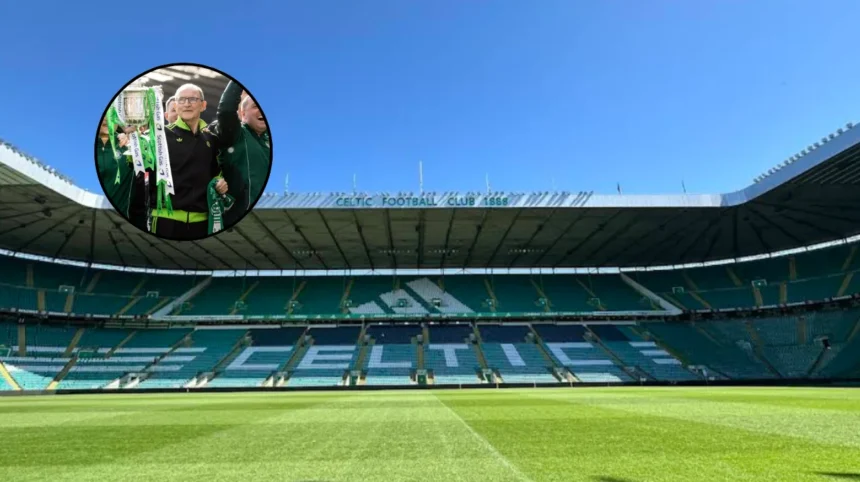
- Martin O’Neill has been appointed as the permanent manager of Celtic, signing a one-year contract with an option for an additional year.
- The 74-year-old Northern Irishman returned for two interim stints last season following the swift dismissal of Wilfried Nancy after 33 days.
- O’Neill guided Celtic to a dramatic Scottish Premiership title on the final day with a 3-1 victory over Heart of Midlothian.
- A week later, Celtic secured the domestic double by defeating Dunfermline Athletic to lift the Scottish Cup.
- The double marked O’Neill’s ninth major trophy across his two spells in charge at Parkhead.
- Board executives Dermot Desmond, Brian Wilson, and Michael Nicholson explicitly backed O’Neill to navigate upcoming domestic and European campaigns.
- The appointment follows significant fan pushback, with 67 prominent Celtic fan groups formally opposing the potential hiring of former striker Robbie Keane due to his managerial links with Israeli club Maccabi Tel Aviv.
Glasgow (Glasgow Express) June 11, 2026 –As reported by senior football correspondents for ESPN, Celtic Football Club has officially confirmed the permanent appointment of Martin O’Neill as first-team manager. The 74-year-old veteran has committed his immediate future to the Scottish Premiership champions by putting pen to paper on a one-year contract, which includes a club-held option to extend the agreement for a further season.
- Key Points
- How did Martin O’Neill guide Celtic to the domestic double last season?
- What major trophies has Martin O’Neill won across his career at Parkhead?
- What did Martin O’Neill say about his permanent return to the club?
- How has the Celtic hierarchy responded to the appointment?
- Why did Celtic fan groups protest against Robbie Keane’s potential appointment?
- Background of the Managerial Situation at Celtic
- Prediction: How O’Neill’s Permanent Appointment Will Affect Celtic Supporters
This permanent deal concludes a period of managerial instability at Parkhead and rewards the Northern Irishman for steadiness under intense competitive pressure during the closing stages of the previous campaign.
How did Martin O’Neill guide Celtic to the domestic double last season?
According to technical match reporting archived by ESPN, O’Neill returned to Parkhead for two distinct interim spells last season. His interventions were required on either side of a brief and tumultuous 33-day tenure under Wilfried Nancy, who was relieved of his duties by the board following an unsuccessful start. Under O’Neill’s experienced guidance, the Glasgow heavyweights staged a remarkable domestic recovery to overhaul Heart of Midlothian, a side that had led the league standings for a significant portion of the season.
Celtic clinched the Scottish Premiership title on the final day of the league season by securing a decisive 3-1 victory over Hearts at Celtic Park. Just seven days later, O’Neill’s squad completed a domestic double by defeating Dunfermline Athletic 3-1 in the Scottish Cup final, courtesy of goals from Daizen Maeda, Arne Engels, and Kelechi Iheanacho, rendering a late reply from Dunfermline’s Josh Cooper mere consolation.
What major trophies has Martin O’Neill won across his career at Parkhead?
Historical statistics maintained by individual club archivists reveal that the latest Scottish Cup success represents the ninth major trophy O’Neill has secured during his managerial career at Celtic. His highly decorated initial stint between 2000 and 2005 laid the foundation for this legacy.
Across his total time in the Parkhead dugout, the former Northern Ireland international has delivered three Scottish Premiership titles, three Scottish Cups, and a Scottish League Cup to the Celtic trophy room, cementing his status as one of the modern era’s most successful managers in Scottish football history.
What did Martin O’Neill say about his permanent return to the club?
As published in an official press release by Celtic Football Club, Martin O’Neill expressed his gratitude and continuous affection for the institution, stating:
“It is once again a great privilege for me to continue as Celtic manager. Last season will live long in all our memories and to be part of that success has in a big way whetted the appetite to work again for more days like those and bring our supporters those moments. Of course, none of this could have been achieved without the players and staff and I want to take this opportunity to thank them for bringing that level of focus, determination and talent to bear at the conclusion of the season to deliver the league and Cup double.
“I would particularly like to thank the Board for asking me back and giving me this opportunity again. We know of course that Celtic can never rest on past success so we are now aiming to drive forward together in the coming season as we aim to deliver again for the club and our fans. I thank our fans for their ongoing support, it means everything to us. I look forward to being back at Celtic Park next season when we will come together and we will strive again to bring our fans the success which that support deserves.”
How has the Celtic hierarchy responded to the appointment?
In corporate statements distributed to the media, Celtic’s principal shareholder, Dermot Desmond, strongly endorsed the continuation of O’Neill’s leadership, remarking:
“Time and time again Martin has shown his qualities and what he can bring to Celtic. We know he is a winner, we know what the club means to him and he continues to be the outstanding candidate to give us the best opportunity to realise our objectives. He knows the demands at Celtic and I know how determined he is again to bring success to the club and to our supporters. The club will support Martin fully again across the close season to make sure we are well prepared to achieve domestic success and compete on the European stage.”
Compounding this support, Celtic interim chairman Brian Wilson noted:
“I warmly welcome Martin’s re-appointment and look forward to more of the same leadership, inspiration and success he has delivered for the club. The achievements which he and the team secured in the season just gone have created a great platform for the one that lies ahead. This is the start of a busy summer and we will ensure that we are in the best possible position to compete, with Martin back at the helm.”
Furthermore, as outlined by Michael Nicholson, Celtic’s chief executive:
“We are really pleased to keep Martin as manager. His knowledge and experience proved vital to us last season and we know his leadership will be hugely important to us going forward. He is someone who continues to deliver, who knows how to win and a manager we have absolute confidence in to once again drive the team through the next period. We have important challenges ahead and the immediate priority of everyone at the club is to ensure we are ready to tackle these with confidence and deliver success again for our supporters.”
Why did Celtic fan groups protest against Robbie Keane’s potential appointment?
As reported in investigative pieces by investigative journalists for ESPN, the formalization of O’Neill’s contract took place against a backdrop of intense fan activism.
Prior to O’Neill’s confirmation, former Republic of Ireland and Celtic striker Robbie Keane had emerged as one of the primary betting favourites to fill the vacancy. However, this prospect generated widespread dissatisfaction among the club’s core supporter base.
A total of 67 distinct Celtic fan groups united to sign and publish a joint statement explicitly opposing any potential hiring of Keane.
The core of the supporters’ resistance stemmed directly from Keane’s previous managerial role with Israeli club Maccabi Tel Aviv, a connection that clashed heavily with the political and social stances held by prominent factions of the Celtic fanbase at Parkhead.
Background of the Managerial Situation at Celtic
The managerial landscape at Celtic Park over the past twelve months has been defined by rapid transitions and unexpected tactical interventions.
The hierarchy originally sought a long-term modern project by appointing Wilfried Nancy, but the operational relationship broke down irretrievably after a mere 33 days, forcing the board to seek immediate short-term stability.
They turned to Martin O’Neill, whose deep familiarity with the structural pressures of Glasgow football allowed him to stabilize a fracturing dressing room over two interim spells.
This managerial instability coincided with historical changes elsewhere in the football landscape, including the sudden retirement of veteran figures such as former Leicester City goalkeeper Kasper Schmeichel due to a severe shoulder injury, and a highly demanding international calendar that saw Scotland preparing for heavy competition at the 2026 FIFA World Cup. O’Neill’s ability to tune out external distractions allowed the club to salvage a season that originally looked destined to end in silverware for their domestic rivals.
Prediction: How O’Neill’s Permanent Appointment Will Affect Celtic Supporters
The formalization of Martin O’Neill’s tenure is expected to have a stabilizing, yet demanding impact on the Celtic supporters and the broader club ecosystem. For the match-going fans, the appointment guarantees immediate tactical continuity and a continuation of the pragmatic, winning football that delivered the double last May, cooling the administrative anxieties brought about by the brief Wilfried Nancy era.
Furthermore, by opting for O’Neill over Robbie Keane, the board has successfully bypassed a potentially explosive ideological conflict with its own fan groups, preserving stadium harmony ahead of a crucial campaign.
However, for a fanbase that increasingly benchmarks success against modern European standards, the reliance on a 74-year-old manager on a short-term deal suggests a focus on domestic safety rather than long-term systemic modernization.
While supporters can comfortably anticipate a fierce defense of their Scottish Premiership and Scottish Cup crowns, they must adjust to a summer transfer window geared toward immediate results rather than youth development, with the looming pressure of European group-stage football testing whether O’Neill’s traditional methods can still translate to continental success.