Key Points
- Unite Students has officially celebrated the ‘topping out’ of its £126 million Alexander Quay property in Glasgow, signifying the structural completion of the building.
- Located in Glasgow’s West End near the University of Glasgow, the 21-storey development will accommodate 934 student beds.
- The property is scheduled to open for the 2027/28 academic year and aims to relieve pressure on the local housing market.
- Built by lead contractor GRAHAM, the scheme revitalises a long-term brownfield site north of the River Clyde and targets a BREEAM Excellent sustainability rating.
- Amenities include a social marketplace café, study areas, a gym, a yoga room, screen rooms, and a garden room featuring a outdoor terrace.
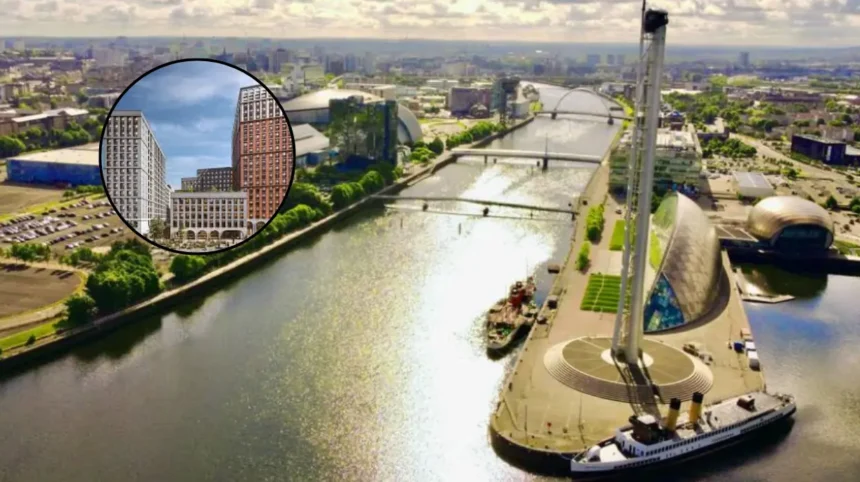
Glasgow (Glasgow Express) August 25, 2026 – As reported by Rose Moncur of The Herald, student accommodation provider Unite Students has officially reached the “topping out” milestone for its major £126 million Alexander Quay development in Glasgow’s West End, confirming the completion of the 21-storey structure’s physical frame. Formerly designated as the Central Quay site, the purpose-built student accommodation (PBSA) development will host 934 beds and is positioned near the University of Glasgow. The site is expected to open its doors to occupants at the beginning of the 2027/28 academic term.
What Are the Key Features and Facilities Included in the Project?
According to dynamic announcements from Unite Students and civil engineering firm GRAHAM, the 21-storey multi-use tower will deliver a varied assortment of room arrangements, comprising both private studios and cluster apartments catering to multiple pricing tiers. The building is engineered specifically to align with contemporary student life expectations.
The complex incorporates tailored communal facilities, including a social marketplace café, quiet study zones, fully equipped gymnasium spaces, a dedicated yoga room, digital screen viewing rooms, and an elevated garden room leading out to a open-air terrace. The project regenerates a previously vacant, disused brownfield parcel situated along the northern banks of the River Clyde. Additionally, project execution is designed to meet strict eco-friendly building benchmarks, aiming for a BREEAM Excellent sustainability score.
How Have Key Executives and Construction Leaders Reacted?
As reported by Rose Moncur of The Herald, Tom Brewerton, Group Development Director at Unite Students, expressed enthusiasm over the progress, stating:
“We’re excited to reach another important milestone at Alexander Quay and a step closer to next year’s completion. This new property will provide high quality, affordable accommodation in Glasgow, supporting the growth of our university partners. We’re continuing to take a disciplined approach to off campus development and accelerating our alignment with the UK’s strongest universities.”
In a parallel statement released by GRAHAM, Chris MacLeod, Director at GRAHAM, highlighted the wider urban benefits of the construction milestone, explaining:
“Reaching topping out at Alexander Quay marks significant structural progress on a scheme that will deliver 934 much-needed student beds in Glasgow. The development brings a long-disused brownfield site back into service, and its BREEAM Excellent target sets a high sustainability standard for the build. Once complete, Alexander Quay will serve both the city’s students and the people who live in the surrounding community.”
What Is the Background of Purpose-Built Student Accommodation in Glasgow?
Glasgow has faced significant structural pressures on its domestic housing supply over recent years, exacerbated by high demand for university education and a shortage of available rental housing stock. Major academic institutions in the city, such as the University of Glasgow, have historically seen high enrolment figures, which put stress on private rented sector (PRS) flats in areas like the West End and Finnieston.
In response, local authorities and private accommodation providers have increasingly focused on Purpose-Built Student Accommodation (PBSA) developments to aggregate student populations into managed facilities. By shifting students into purpose-built units like Alexander Quay, urban planners aim to reduce multi-occupancy conversions in residential streets, thereby returning traditional family homes and private apartments to local residents. Parent company Unite Group plc operates as the UK’s largest owner, manager, and developer of student accommodation, maintaining portfolio coverage of around 72,000 beds across 207 properties in 29 university towns and cities.
Explore More West End News
West End Beer Festival Returns to SWG3 Warehouse Finnieston 2026
Professor Green SWG3 Concert in West End Glasgow 2026
What Is the Future Outlook for Students, Local Families, and the Glasgow Housing Sector?
The structural completion of the 934-bed Alexander Quay project is anticipated to have noticeable knock-on effects across several distinct groups within Glasgow’s housing ecosystem:
- For University Students: The intake of 934 additional beds by late 2027 will expand the supply of dedicated student housing situated within proximity of higher education institutions. This may help mitigate the frantic search for housing that many students experience prior to the start of academic terms, while offering modern, secure environments with built-in amenities.
- For Local Families and Renters: The shift of up to 934 students out of standard residential streets into managed accommodation is intended to release traditional housing stock back into the private rental market. Over time, this rebalancing could ease price competition for tenancies in popular neighborhoods like the West End, providing local families and young professionals with wider accommodation choices.
- For the Local Urban Economy: The reactivation of a long-vacant brownfield parcel along the River Clyde serves as a catalyst for urban regeneration. Increased footfall from hundreds of residents is likely to support nearby retail businesses, transportation services, and hospitality venues along the riverfront corridor.