Key Points
- Twenty-year-old Matteullah Siddiqi has been sentenced to almost seven years in prison for exploiting a child to sell Class A drugs, in a landmark ruling under the Human Trafficking and Exploitation (Scotland) Act 2015.
- Siddiqi targeted a 14-year-old schoolboy after meeting him at a Glasgow games arcade, then coerced him into skipping school and staying in drug dens while packaging and distributing cocaine and heroin.
- Lord Scott sentenced Siddiqi to six years and nine months in custody, followed by two years of post-release supervision, at the High Court in Glasgow. The judge cited the serious mental trauma suffered by the victim.
- Siddiqi’s defence said he had previously been a victim of criminal exploitation, highlighting a pattern in which exploited young people can later become perpetrators.
- Police Scotland and prosecutors said the case sends a warning to criminal networks that use children to distribute drugs and reflects a greater focus on modern slavery charges in county lines operations.
Glasgow (Glasgow Express) August 25, 2026 — High Court in Glasgow, August 25, 2026 — A 20-year-old man has been sentenced to nearly seven years in prison after using human trafficking legislation to prosecute the criminal exploitation of a child forced to deal Class A drugs.
- Key Points
- How Was a 14-Year-Old Schoolboy Lured into Class A Drug Operations?
- What Did the Court Hear Regarding Victim Trauma and Defence Mitigation?
- What Was the Response from Law Enforcement and Statutory Agencies?
- Background of the Particular Development
- Impact and Future Outlook: How This Development Affects Stakeholders
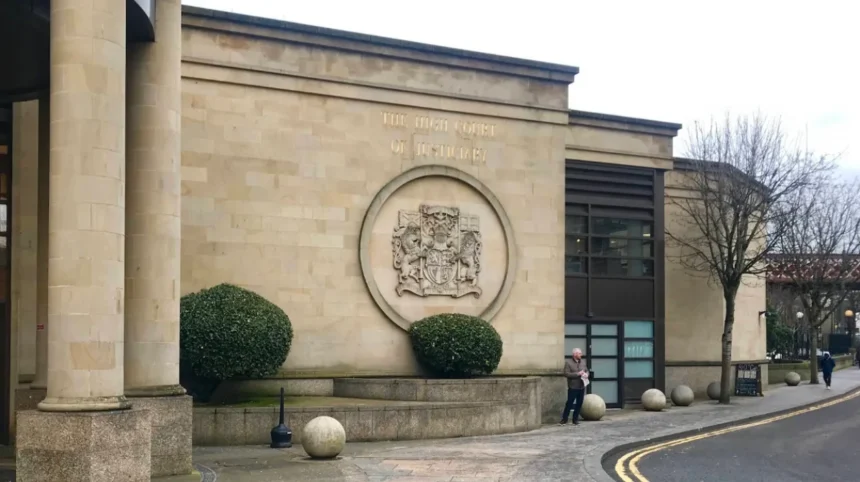
Matteullah Siddiqi appeared at the High Court in Glasgow, where presiding judge Lord Scott handed down a custodial sentence of six years and nine months, accompanied by an additional two-year extended supervision order upon release. Siddiqi admitted to an offense under Section 1 of the Human Trafficking and Exploitation (Scotland) Act 2015, alongside charges of being concerned in the supply of heroin and cocaine, and the aggravated assault of a police officer.
Prosecution advocates and senior investigating officers confirmed that this case represents the first successful conviction of its kind in Scotland, utilizing modern slavery and human trafficking statutes specifically to target county lines drug networks that recruit and control children.
How Was a 14-Year-Old Schoolboy Lured into Class A Drug Operations?
According to details outlined by Advocate Depute Jennifer Nicholson-White of the Crown Office and Procurator Fiscal Service (COPFS), Siddiqi initially targeted his 14-year-old victim during the summer school holidays. As reported by trial correspondents, Siddiqi approached the youngster at a games arcade in Glasgow’s St Enoch Centre and offered him an opportunity to “start making money”.
The court heard that although the boy initially refused after suspecting illicit involvement, Siddiqi systematically manipulated the child by convincing him that the earnings could help support his mother financially. Siddiqi provided the child with contact details via Instagram and subsequently supplied him with a dedicated mobile phone.
In mid-July, the victim lied to his mother, claiming he was attending an organized summer holiday camp. Instead, he was taken to a residential flat in Glasgow utilized as a illegal drug stash house. During this period, the boy was instructed on how to “bag up” crack cocaine. Advocate Depute Jennifer Nicholson-White detailed that Siddiqi, who was subject to an electronic tag monitoring curfew at the time, would only visit the flat for approximately two hours each day, leaving the child isolated while giving him £20 for daily food expenses.
The child was later moved via taxi to a dirty, rubbish-strewn property in Paisley, Renfrewshire. Reports presented in court indicated that the youngster was ordered to distribute “testers”—small sample packages of cocaine—to local substance abusers. Prosecutors stated that the child estimated Siddiqi’s operation generated approximately £700 daily in drug sales. The child was compelled to skip school and remain in squalid conditions until school staff noticed his unexplainable absence, initiating child protection protocols that led to his rescue.
What Did the Court Hear Regarding Victim Trauma and Defence Mitigation?
During sentencing proceedings, Lord Scott read directly from the victim impact statement submitted by the child’s family. Quoting the young boy’s words, Lord Scott highlighted the lasting psychological toll of the ordeal.
As recorded in court proceedings, Lord Scott stated to Siddiqi:
“I have seen the impact statement completed by your victim. He describes what happened as mentally traumatic for him and distressing for his family. He said: ‘I feel betrayed by an adult who I trusted, but who lured me into trouble’. What you did has damaged his confidence and his ability to trust and feel free. Commendably, he ends his statement by hoping lessons are learned to help protect children like him and, previously, like you from such exploitation.”
Defending solicitor-advocate Callum Hiller provided mitigation details, noting that Siddiqi’s criminal trajectory was itself shaped by severe past exploitation. As reported by legal journalists covering the hearing, Hiller told the court that Siddiqi had previously been referred to the National Referral Mechanism (NRM)—the UK government’s framework for identifying victims of human trafficking—after being coerced by an organized criminal gang.
As reported by Callum Hiller, defence counsel for Siddiqi stated:
“He was the victim of child exploitation and trafficking – one of the offences he finds himself now the perpetrator of. He has progressed to becoming the offender. He has expressed to me that he feels extremely sorry.”
The court noted that Siddiqi had five active bail orders at the time of the offences. Prosecutors also accepted a not guilty plea regarding allegations that Siddiqi had targeted a second teenage boy.
What Was the Response from Law Enforcement and Statutory Agencies?
Following the sentencing, senior officers from Police Scotland highlighted the collaborative effort between law enforcement, educational authorities, and social work departments that secured the conviction.
As reported in an official statement released by Detective Inspector Holly Swindells of Police Scotland:
“This conviction was the result of working with our partners in Education and Social Work and the dedicated work of our officers. Siddiqi preyed on his victim and exploited him into carrying out criminality on his behalf. What was most worrying about this offence was that the victim was a child. This conviction should be a warning to anyone involved in the exploitation of others that using others to carry out your crimes will not be tolerated.”
Detective Inspector Swindells added:
“We target those who abuse, control and exploit people and work with partners to bring offenders to justice, and to raise public awareness to help identify victims and ensure they get the support they need. I would urge anyone who has any knowledge about where these types of crimes are happening or who may be involved to get in touch with Police Scotland.”
Background of the Particular Development
The conviction of Matteullah Siddiqi under the Human Trafficking and Exploitation (Scotland) Act 2015 represents a legal milestone in how British prosecution services address child criminal exploitation (CCE). Historically, young individuals caught carrying, storing, or selling controlled drugs were primarily processed through the youth criminal justice system as drug offenders.
Passed by the Scottish Parliament, the 2015 Act introduced comprehensive statutory definitions for human trafficking and exploitation. Section 1 of the Act specifies that an offence is committed if a person recruits, transports, transfers, harbours, or receives another person with a view to that person being exploited. Crucially, under Scottish and UK anti-trafficking legal frameworks, a child cannot legally give consent to their own exploitation; proof of coercion, force, or deception is not legally required when the victim is under 18 years of age.
In recent years, law enforcement across the United Kingdom has increasingly recognized “county lines” drug distribution as a form of modern slavery. In these business models, urban criminal networks use dedicated mobile phone lines to organize the supply of Class A drugs to suburban, coastal, or rural areas, frequently relying on vulnerable juveniles to transport substances and collect cash. By utilizing human trafficking legislation rather than relying solely on Misuse of Drugs Act charges, prosecutors can secure sentences that reflect the severe violation of human rights and personal liberty inherent in grooming children for crime.
This conviction follows heightened scrutiny of youth exploitation in urban centers, including investigative coverage by BBC Scotland’s Disclosure program, which featured aspects of Siddiqi’s background and broader criminal networks operating across Glasgow and Renfrewshire.
Explore More Glasgow Crime News
Man Charged After St Enoch Centre Offensive Weapon Incident, Glasgow 2026
Two Charged Following Serious Assault Near Queen’s Park Glasgow 2026
Impact and Future Outlook: How This Development Affects Stakeholders
This landmark legal outcome is anticipated to have structural implications across legal, law enforcement, educational, and social care sectors.
For Organized Crime Networks and Drug Traffickers
The precedent established by this conviction alters the risk calculus for criminal operators who use minors as protective buffers against police intervention. Historically, gang leaders operated on the assumption that child couriers, if apprehended, would receive minor youth dispositions while keeping higher-tier organizers insulated from severe custody. The application of human trafficking statutes subjects offenders to lengthy prison sentences—up to life imprisonment under the 2015 Act—and triggers stringent post-release monitoring orders, such as Trafficking and Exploitation Prevention Orders (TEPOs).
For Vulnerable Young People and Victims of Exploitation
The successful prosecution reinforces the application of the non-prosecution principle for exploited youths. By formally categorizing minors involved in drug supply as victims of human trafficking rather than primary criminal conspirators, young individuals are far more likely to be directed toward protective social care interventions and the National Referral Mechanism (NRM). However, the case also underscores the critical need for early intervention strategies to break the cycle of “victim-to-perpetrator” transition identified in Siddiqi’s defence, ensuring young people previously exploited by gangs do not adopt predatory roles as they reach adulthood.
For Educational Institutions and Local Authorities
The intervention of school personnel was instrumental in uncovering the child’s whereabouts. This outcome will likely accelerate joint training initiatives across Scottish local authority schools, enabling educators and social workers to spot indicators of child criminal exploitation early—such as unexplained absences, possession of secondary mobile devices, or sudden changes in financial status—and coordinate directly with specialized police units.