Key Points
- First of Their Kind: Scotland’s first-ever staffed night bus “hubs” feature dedicated wardens and CCTV monitoring to support late-night commuters.
- Operating Hours: Street wardens will be stationed at key central locations from midnight until 4:00 am every Friday and Saturday night.
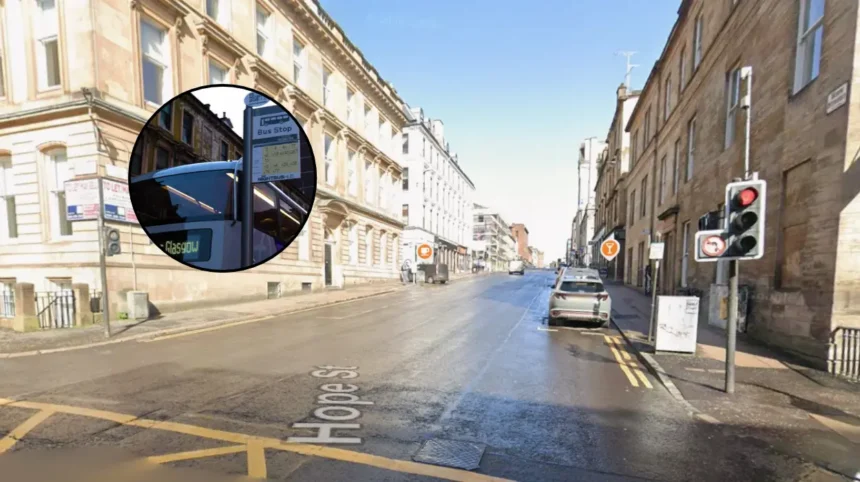
- Three Strategic Locations: The hubs have been set up at prominent city-centre stops located on Sauchiehall Street, Hope Street, and Union Street.
- Collaborative Support: The initiative is backed by Glasgow City Council, night bus operators First Bus and McGill’s, and business network Let’s Go Glasgow.
- Affordability and Concessions: Journeys are included in the £2 fare cap scheme, with free travel applicable for under-22s and over-60s holding valid National Entitlement Cards.
- Safety Integration: The scheme aligns with Police Scotland’s city-centre dispersal zone powers to curb anti-social behaviour and support the night-time economy.
Glasgow (Glasgow Express) October 22, 2026 – Scotland’s first staffed night bus hubs equipped with close-circuit television (CCTV) coverage and physical security wardens have been officially launched across Glasgow city centre to improve safety, encourage late-night public transport usage, and support the city’s night-time economy.
- Key Points
- How Will the New Staffed Night Bus Hubs Work in Glasgow City Centre?
- What Do Transport Officials and Business Leaders Say About the Safety Drive?
- Which Routes and Fares Are Covered Under the Night Bus Service?
- Background to the Glasgow Late-Night Transport Development
- Prediction: How Will This Development Affect Passengers, Hospitality Workers, and the Night-Time Economy?
The safety-focused initiative establishes three primary transport hubs located on Sauchiehall Street, Hope Street, and Union Street, which serve late-night passengers travelling on services operated by First Bus and McGill’s. Stationed on-site from midnight until 4:00 am on Friday and Saturday nights, trained wardens will provide visible reassurance, offer travel guidance, and assist revellers and late-shift workers heading home.
How Will the New Staffed Night Bus Hubs Work in Glasgow City Centre?
The new night bus hubs have been designed to remove uncertainty and enhance personal safety for late-night commuters navigating Glasgow’s city centre during peak weekend hours. Clearly signposted with high-visibility branding and improved lighting, each hub operates under continuous CCTV coverage.
The presence of physical wardens on the ground aims to create a welcoming, controlled environment for passengers queueing for late-night journeys. Transport providers and local governance partners hope the measures will encourage more individuals to choose public buses over private hires or walking alone late at night.
What Do Transport Officials and Business Leaders Say About the Safety Drive?
The collaborative rollout has drawn strong support from commercial operators, local authority representatives, and regional business groups.
As reported by Ross Hempseed of STV News, Graeme McFarlan, Commercial Director at McGill’s Group, stated that
“clearly signposted stops, with lighting and CCTV coverage, will help passengers feel more confident about using night buses and support the businesses and workers who keep Glasgow’s night-time economy moving.”
McFarlan further highlighted the financial incentives, noting that
“with the £2 fare cap now covering McGill’s Night Bus services, taking the bus home after a night out or a late shift is even more attractive.”
Expressing a similar perspective on operator cooperation, Ryan Sorley, Commercial Manager of First Bus in Glasgow, stated through Glasgow City Council reporting that
“the Night Bus Hubs are a brilliant addition to the city network. Welcoming features and on-street advice will further enhance the experience for customers and make buses the obvious choice for travelling home after a late night in the city.”
Sorley added that
“through working together in the Glasgow Bus Partnership, we are also supporting the hubs and simpler travel with ticket acceptance among other operators,”
while reminding passengers that
“our night services are included in the £2 fare cap and I would remind concessionary pass holders and those aged under 22 that they can travel free at all times of the day.”
Business leadership groups have also highlighted the direct economic and safety benefits for hospitality and shift staff. As reported by STV News, a spokesperson for the local business campaign Let’s Go Glasgow stated that
“for the businesses we represent, making sure people can enjoy Glasgow with confidence and get home easily at the end of the night really matters. That’s why Let’s Go Glasgow is supporting the wardens at the new Night Bus Hubs.”
The spokesperson added:
“Having visible, welcoming staff on the ground, alongside clear branding, will make the hubs easy to find and simple to use, taking the uncertainty out of the journey home. Better late-night transport is something our businesses have told us matters to them.”
Which Routes and Fares Are Covered Under the Night Bus Service?
The network serves multiple routes across Glasgow and neighbouring regions, extending outwards to East Kilbride, Hamilton, Motherwell, Paisley, Clydebank, and Drumchapel. Under the Glasgow Bus Partnership, passenger ticket acceptance has been streamlined across participating operators.
Fares on both McGill’s and First Bus night services remain capped under standard pricing guidelines:
- Single journey fares are capped at £2.00.
- Young people under 22 and senior citizens over 60 can travel free of charge using a valid National Entitlement Card (NEC).
- Standard First Bus tickets and Tap On, Tap Off contactless payments are accepted across night services.
Background to the Glasgow Late-Night Transport Development
Glasgow’s late-night public transport landscape has faced significant challenges and policy shifts over recent years. Following the COVID-19 pandemic, operator First Bus announced plans in mid-2023 to withdraw its night bus services due to low passenger numbers and rising operating costs. The announcement sparked widespread concern among hospitality workers, venue owners, trade unions, and women’s safety campaigners, who warned that removing late-night buses would leave shift workers stranded and compromise safety across the city centre.
In response to public backlash and political intervention, private operator McGill’s stepped in to establish a competing late-night network, while First Bus subsequently reversed its decision, agreeing to maintain modified night schedules. To unify regional public transport and address passenger feedback, stakeholders formed the Glasgow Bus Partnership.
The introduction of staffed hubs and CCTV monitoring represents a coordinated step by Glasgow City Council, police authorities, and transport operators to standardize late-night safety. This safety rollout coincides with Police Scotland extending its city-centre dispersal zone powers. The temporary legal measure allows police officers to order groups of two or more people to leave specific areas if their behaviour causes disturbance, serving as an active tool to reduce anti-social and violent incidents in commercial districts.
Prediction: How Will This Development Affect Passengers, Hospitality Workers, and the Night-Time Economy?
The launch of monitored night bus hubs is expected to yield measurable social and economic outcomes across Greater Glasgow:
- Enhanced Passenger Safety and Confidence: The physical presence of marshals alongside active CCTV monitoring will directly address long-standing safety concerns, particularly for women, lone commuters, and vulnerable revellers travelling home between midnight and 4:00 am.
- Economic Boost for Hospitality and Leisure: By providing reliable, low-cost transport options, night-time visitors will likely feel comfortable remaining in the city centre longer. This increased footfall directly benefits pubs, restaurants, theatres, and live music venues.
- Improved Working Conditions for Late-Shift Staff: Bar staff, security guards, healthcare workers, and venue teams who finish shifts in the early hours of the morning gain access to affordable, secure travel options, eliminating reliance on expensive private taxis or unsafe walking routes.
- Modal Shift to Public Transport: The combination of a £2 fare cap, free concessionary travel, cross-operator ticket integration, and designated safe zones will likely shift customer preference away from private vehicles and unregulated rideshares towards public buses, establishing a more sustainable infrastructure for Glasgow’s night-time transport.