Key Points
- Police Scotland Recovery: More than £20,000 worth of controlled drugs and illicit cash were allegedly seized during a targeted policing operation in Glasgow.
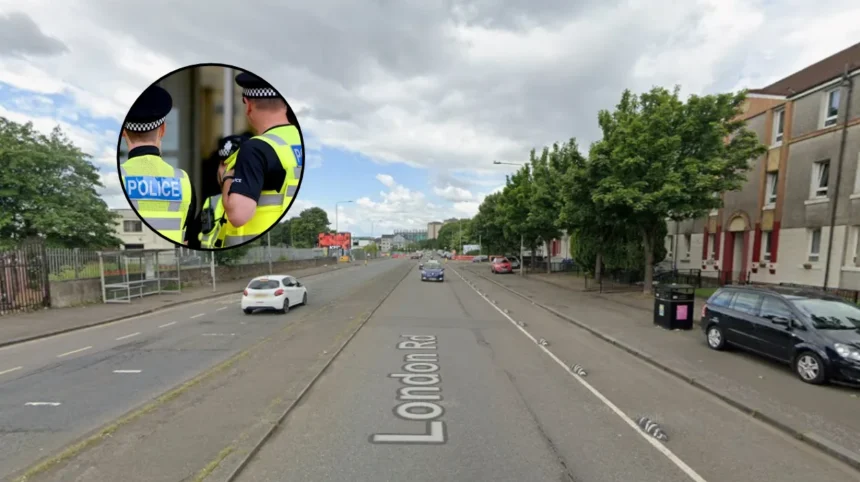
- Specialised Operation: The operation was carried out over a 10-day period by officers from the Local Problem-Solving Teams based at London Road.
- Proactive Measures: Enforcement activities involved a series of proactive stop-and-search actions alongside executed search warrants across local communities.
- Multiple Charges Filed: Six males have been charged with being concerned in the supply of Class A and Class B controlled drugs, while a total of seven individuals have been charged in connection with the overall recovery.
- Court Appearances: The charged individuals have been reported to the Procurator Fiscal, with further court proceedings anticipated in Glasgow.
Glasgow (Glasgow Express) October 22, 2026 – Seven individuals have been charged in connection with an intensive police operation that led to the recovery of more than £20,000 in controlled drugs and cash across Glasgow. Officers attached to the Local Problem-Solving Teams operating out of the London Road police station executed a series of targeted search warrants and proactive stop-and-search procedures over a 10-day period. The crackdown was specifically designed to disrupt illegal drug trafficking networks operating within local communities. As reported by law enforcement officials, six males face specific charges relating to being concerned in the supply of Class A and Class B controlled substances, with all seven individuals formally reported to the Procurator Fiscal.
What Led to the Police Operation at London Road?
The enforcement initiative was launched as part of Police Scotland’s ongoing strategy to tackle street-level drug dealing and organized crime networks in the east end of Glasgow. Over a 10-day enforcement window, officers from the London Road Local Problem-Solving Team deployed targeted intelligence to identify and disrupt active drug distribution routes.
During the multi-day crackdown, officers executed multiple search warrants at designated addresses and carried out strategic stop-and-search actions in high-priority areas. These proactive tactics yielded a combined recovery of illicit substances and cash valued in excess of £20,000.
Law enforcement representatives confirmed that the primary objective of these targeted operations is to reduce the harm caused by illegal substances in residential neighbourhoods, disrupt the financial revenue of criminal groups, and reassure local residents that community-reported concerns are actively investigated.
Who Has Been Charged in Connection With the Glasgow Seizure?
Following the 10-day operation, police confirmed that seven individuals in total were charged regarding the recovered cash and controlled substances. Among those apprehended, six males have been explicitly charged under the Misuse of Drugs Act 1971 for being concerned in the supply of Class A drugs—which typically include substances such as cocaine, heroin, and MDMA—and Class B drugs, such as cannabis and amphetamines.
A seventh individual was charged with linked offences arising from the same series of police actions. All seven individuals have been formally reported to the Procurator Fiscal, the public prosecution service for Scotland, which will determine the scheduling of court appearances and formal court proceedings in Glasgow.
Police Scotland reiterated that local officers will continue to utilise intelligence-led stop-and-search powers and court-sanctioned search warrants to curb illicit trade and dismantle illicit distribution channels throughout the city.
Background of the Glasgow Drug Enforcement Operations
Glasgow has historically remained a primary focal point for drug enforcement strategies in Scotland due to the presence of both localized distribution rings and wider organized crime networks. The establishment of localized policing teams, such as the Local Problem-Solving Teams based at London Road, reflects a structural shift toward community-focused proactive policing designed to address localized crime hotspots.
Under Scottish criminal law, the Misuse of Drugs Act 1971 categorizes controlled substances into Class A, B, and C based on their perceived harm, with offences involving “being concerned in the supply” carrying significant penalties upon conviction, including substantial custodial sentences. Operations involving stop-and-search tactics and warrant executions require strict evidentiary standards and operational oversight to ensure compliance with Scottish legal procedure.
In recent years, Police Scotland has increasingly emphasized intelligence-led operations that combine public reports, local officer surveillance, and multi-agency coordination to disrupt drug dealing networks before illicit profits can be reinvested into serious organized criminality.
Prediction: How Will This Development Affect Glasgow Communities and Local Stakeholders?
This major policing operation and subsequent court reporting will have direct and measurable impacts across several key groups within the affected areas:
- Local Residents and Neighbourhoods: For residents in Glasgow’s east end, the seizure of £20,000 in drugs and cash, combined with the removal of seven individuals from local supply chains, is likely to bring a immediate, short-term reduction in anti-social behaviour and visible street-level dealing. Visible enforcement activity also reinforces public confidence in local problem-solving policing units.
- Organized Criminal Networks: The disruption of local supply nodes forces criminal groups to absorb financial losses and re-evaluate their operational security. The loss of £20,000 in assets creates immediate cash-flow disruptions for low- to mid-level suppliers operating in the London Road policing sector.
- Judicial and Prosecution Systems: The referral of seven individuals to the Procurator Fiscal adds to the ongoing caseload of the Glasgow court system, requiring legal processing, pre-trial hearings, and evidentiary evaluations regarding the seized substances and cash under Scottish criminal law.
- Local Support Services and Health Networks: A reduction in local drug availability can lead to temporary shifts in demand for addiction support and harm-reduction services in the area, as service users may seek intervention or treatment during periods of disrupted supply.