Key Points
- Proposals suggest funding the restoration of the Charles Rennie Mackintosh building from three primary public, royal, and civic streams.
- The latest estimates place the current restoration cost at approximately £265 million, with projections reaching £300 million by the time physical work commences.
- Under the proposal, the Scottish Government and its major public bodies would contribute £100 million towards the project.
- Proponents suggest King Charles III contribute £100 million from royal assets, including the Duchy of Lancaster and the Privy Purse.
- The remaining £100 million would be raised through global fundraising, public subscription, and commercial partnerships across Glasgow.
Glasgow (Glasgow Express) August 25, 2026 – A funding proposal has emerged detailing a tripartite financial framework aimed at securing the £300 million required to fully restore Glasgow’s world-renowned Mackintosh building. Charles Rennie Mackintosh’s architectural masterpiece, situated in Glasgow city centre, remains one of the UK’s most celebrated cultural assets. However, following extensive structural damage caused by devastating fires, the project faces mounting financial requirements.
- Key Points
- What role is requested from the Scottish Government and public bodies?
- Should King Charles III contribute towards the restoration costs?
- How will global fundraising and commercial partners secure the final tranche?
- Background of the particular development
- Prediction: How this development can affect art students, Glasgow’s economy, and heritage conservation
While the latest official assessment from the Glasgow School of Art places the baseline restoration estimate at £265 million, architectural and financial projections indicate the final figure will reach approximately £300 million by the time physical reconstruction begins on site. To meet this substantial financial commitment without placing the entire burden on public taxation, a strategic proposal suggests dividing the capital requirements across three distinct £100 million funding channels.
As reported by architectural correspondents across national broadsheets, stakeholders have emphasised that the international stature of the Mackintosh building demands a multi-tiered funding strategy involving local government bodies, national arts institutions, the British Monarchy, and global private donors.
What role is requested from the Scottish Government and public bodies?
The first pillar of the proposed financial model calls for a direct £100 million commitment from the Scottish Government and its affiliated public and cultural sector partners. Under this mechanism, funding would be drawn in part from the administration’s fiscal reserves and budget allocations over consecutive financial cycles.
To distribute the capital burden across Scotland’s broader cultural and economic infrastructure, the proposal outlines joint contributions from a coalition of key public agencies. These include Historic Environment Scotland, VisitScotland, Creative Scotland, Scottish Enterprise, the Scottish Futures Trust, and the Scottish National Investment Bank.
Furthermore, civic institutions with direct stakes in the city’s heritage—specifically Glasgow City Council, the National Galleries of Scotland, and the Glasgow School of Art itself—would participate in the joint funding venture. Supporters of the initiative note that combining the resources of these entities ensures the restoration is treated as a priority for Scottish economic development, heritage conservation, and international tourism.
Should King Charles III contribute towards the restoration costs?
The second core component of the funding plan proposes a direct £100 million contribution from King Charles III, utilizing revenue generated through royal estates and private funds. Proponents highlight the King’s long-standing dedication to architectural conservation, historic preservation, and traditional craftsmanship as a natural alignment with the rescue of Mackintosh’s design.
Advocates suggest the financial contribution could be drawn from the revenues of the Duchy of Lancaster, the Privy Purse, or heritage-focused royal charitable foundations. The proposal underscores that a substantial royal contribution would signal strong commitment to preserving Scottish cultural heritage while accelerating momentum for international fundraising drives.
By involving the Sovereign directly, supporters argue the campaign would gain significant national visibility, drawing parallels to previous heritage restoration projects supported by royal patronage across the United Kingdom.
How will global fundraising and commercial partners secure the final tranche?
The final £100 million segment of the proposed £300 million strategy relies on a combined global fundraising campaign, public subscription drive, and commercial sponsorship network. Designed to reach international arts patrons, architectural trusts, and corporate sponsors, the campaign would aim to capitalise on the global acclaim of Charles Rennie Mackintosh’s work.
In addition to philanthropic foundations, local business networks and commercial entities across Glasgow would be invited to participate in sponsorship agreements and capital contributions. Proponents outline a structured public subscription model that would allow architectural enthusiasts worldwide to contribute directly to specific restoration elements, such as the famous timber library and bespoke ironwork.
By distributing the financial responsibility across public authorities, royal estates, and global private donors, project advocates argue the £300 million target can be achieved in a balanced manner that safeguards both public finances and the educational mission of the Glasgow School of Art.
Background of the particular development
The Mackintosh building, designed by celebrated architect Charles Rennie Mackintosh between 1897 and 1909, is widely regarded as an icon of modern architecture and the Arts and Crafts movement. The building served as the operational heart of the Glasgow School of Art for over a century, housing generations of artists, architects, and designers.
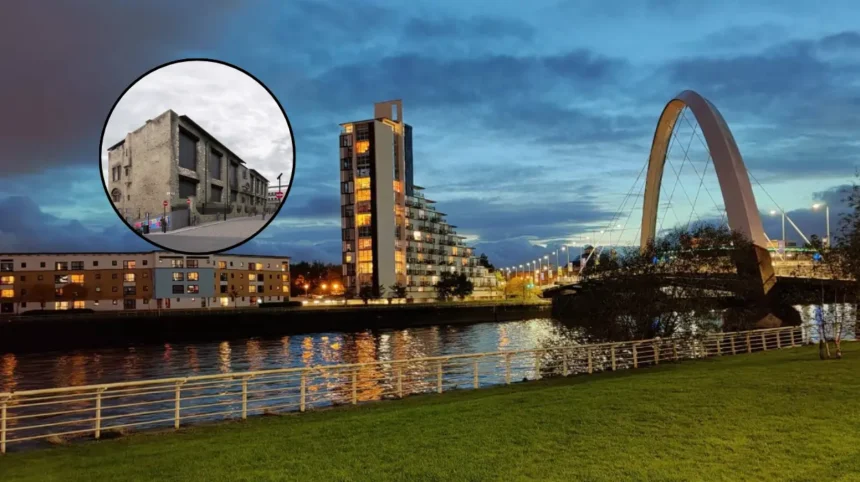
In May 2014, a fire broke out in the building, severely damaging the iconic library and upper floors. A painstaking restoration effort was subsequently launched to rebuild the destroyed sections. However, in June 2018, while the initial restoration was nearing completion, a second catastrophic fire swept through the structure, causing widespread structural collapse and leaving only the outer stone facade standing.
Following the 2018 blaze, extensive structural stabilization work was undertaken to secure the outer walls. The Glasgow School of Art board reaffirmed its commitment to a faithful “faithfully detailed” reconstruction of the Mackintosh building. In recent years, detailed business cases, environmental assessments, and cost estimations have been conducted, leading to the current £265 million baseline figure, which accounts for inflation, specialist artisan labor, and structural engineering requirements expected to total £300 million by the start of main construction.
Explore More Local Glasgow News
Matteo’s Opens New Major League Sub Spot on High Street Glasgow 2026
Armed Police Arrest Man After Castlemilk Drive Disturbance Glasgow 2026
Prediction: How this development can affect art students, Glasgow’s economy, and heritage conservation
If implemented, this £300 million funding structure will directly impact art students, the local economy of Glasgow, and the broader heritage conservation sector in several distinct ways:
- For Art Students and Academics: The full restoration of the Mackintosh building will restore world-class studio spaces designed specifically around natural light and collaborative working. Securing dedicated funding ensures that the Glasgow School of Art can proceed with reconstruction without diverting tuition revenues or academic budgets away from educational programs, staffing, and student facilities.
- For Glasgow’s Local Economy and Tourism: Establishing a clear financial roadmap for reconstruction accelerates the timeline for bringing the building back into public and academic use. The construction phase itself will generate specialized engineering and trade jobs within the city, while the eventual reopening will restore a major international cultural attraction, boosting local retail, hospitality, and tourism revenue in Glasgow city centre.
- For the Heritage and Conservation Sector: A successfully funded £300 million restoration utilizing traditional craft techniques will serve as a global benchmark for complex architectural recovery. The project will create training opportunities and apprenticeships in rare heritage skills—such as specialist stonemasonry, historic joinery, and stained-glass restoration—helping to sustain critical traditional building trades within the UK workforce.