Key Points
- Proposals by Wemyss Properties Ltd to demolish the B-listed Hillhead Baptist Church in Glasgow’s West Conservation Area and build 32 flats are recommended for approval by Glasgow City Council on 21 April 2026.
- The church, designed by Thomas Lennox Watson in 1883 in Greek revival style, has been vacant since 2004 (main hall) and 2017 (rest), listed on the Buildings at Risk Register since January 2023, with no internal structure remaining after roof removal.
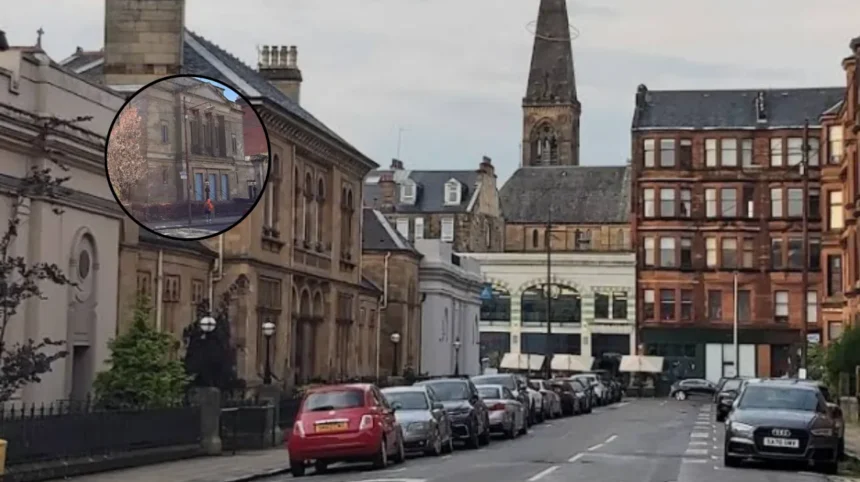
- Site located on corner of Cranworth Street and Cresswell Street, in established residential area near Partick/Byres Road Major Town Centre with high public transport access.
- New development: six-storey L-shaped block matching surrounding tenements, including penthouse level, landscaped garden, private gardens, Juliet balconies, and roof terraces.
- 332 objections citing dangerous ground conditions, excessive scale/height, overdevelopment, loss of community space, and neglect of the building.
- Planning report acknowledges detrimental impact on conservation area but cites failed prior retention attempts and prohibitive repair costs as justification; new design deemed suitable.
Glasgow (Glasgow Express) April 20, 2026 – Plans to demolish a B-listed building and replace it with a residential development of 32 flats have been recommended for approval by Glasgow City Council, despite receiving more than 300 objections from the public.
The proposals, submitted by Wemyss Properties Ltd, target the Hillhead Baptist Church located within the Glasgow West Conservation Area. This site sits on a corner plot at the western side of Cranworth Street and the southern side of Cresswell Street, in an established residential zone just outside the Partick/Byres Road Major Town Centre, benefiting from high public transport accessibility.
What is the History of Hillhead Baptist Church?
The church predates its neighbouring tenements, constructed in 1883 and designed by architect Thomas Lennox Watson in the Greek revival style. It includes an attached single-storey hall known as the Tryst, fronting Cresswell Street, and a three-storey caretaker’s house on Cranworth Street. The main church hall ceased operations in 2004, with the rest of the property becoming vacant by 2017. Since then, the building’s condition has steadily worsened.
By January 2023, the property was added to the Buildings at Risk Register and enclosed by protective hoardings. Following the removal of the roof, no internal structure remains, exacerbating its deterioration.
Why is Demolition Proposed for This Site?
The demolition aims to clear space for a new six-storey L-shaped residential block, comprising five storeys plus a rooftop penthouse level. This design seeks to align with the established building lines and aesthetics of the adjacent tenements on both Cresswell Street and Cranworth Street.
Additional features include a landscaped garden and amenity space at the southwest rear of the site. All ground-floor flats will feature private front garden space, with privacy strips in the rear courtyard for defensible space. Every property includes Juliet-style balconies, while two second-floor flats gain external balconies, and penthouse units access private roof terraces.
What Objections Have Been Raised Against the Plans?
The application drew 332 objections, highlighting concerns over dangerous ground conditions, the scale and height of the proposed building, overdevelopment of the plot, and the loss of community space. Objectors also pointed to the neglect and disrepair of the existing structure as evidence of poor stewardship.
The planning application report directly addresses these issues, stating:
“The loss of the listed building will regrettably have a detrimental impact on the Glasgow West Conservation Area and surrounding listed buildings.”
It further notes a history of failed development projects aimed at retaining the building, combined with supporting documents on the prohibitive costs of full or partial repair and retention, which underpin the applicant’s case that preservation is not viable.
Despite this, the report concludes:
“The proposed redevelopment is considered to be of a suitable standard of design, in keeping with the scale, design and materials of the surrounding area and as such will contribute positively to this part of the Conservation Area.”
What Happens Next in the Approval Process?
The plans are set to return to the Glasgow City Council planning committee meeting on Tuesday, 21 April 2026, where they are recommended for approval, subject to conditions and the signing of a legal agreement. This recommendation comes from council planning officers reviewing the full application.
No further details on the specific conditions or legal agreement have been outlined in the available documentation, but such requirements typically ensure compliance with design standards, conservation mitigation, and community benefits in sensitive areas like conservation zones.
Background of the Development
The Hillhead Baptist Church’s inclusion on the Buildings at Risk Register since January 2023 underscores a prolonged period of vacancy and decay, with protective measures like hoardings failing to halt structural decline. Prior attempts to repurpose or retain the building have not succeeded, as evidenced by the applicant’s submitted viability assessments showing repair costs as unfeasible. The site’s location in the Glasgow West Conservation Area imposes strict guidelines on any changes, prioritising harmony with the Victorian tenement character prevalent in the area. Wemyss Properties Ltd’s proposal emerges amid broader pressures in Glasgow for residential housing in accessible urban spots, balancing heritage loss against modern housing needs. The B-listing status requires demonstration that demolition serves public interest, a threshold the planning report deems met here due to the building’s irreparable state.
Prediction: How This Development Can Affect Local Residents
Approval of the demolition and 32-flat development could increase housing stock in a high-demand area near Partick and Byres Road, providing options for families and professionals given the site’s transport links. Local residents may experience short-term disruption from construction but gain from added amenity spaces like gardens and terraces, potentially enhancing the streetscape if the design matches tenement scales. However, the loss of the B-listed church could diminish the conservation area’s historical character, affecting those valuing heritage by removing a Greek revival landmark predating 1883 tenements. Objections over scale and overdevelopment suggest potential impacts on neighbouring properties’ light, privacy, and density, while ground condition concerns might necessitate remedial works during building. Community space loss could limit informal gathering spots, though new private gardens may offset this for future occupants. Overall, the shift prioritises viable residential use over a derelict structure, influencing residents through changed visual and functional dynamics in the locale.