Key Points
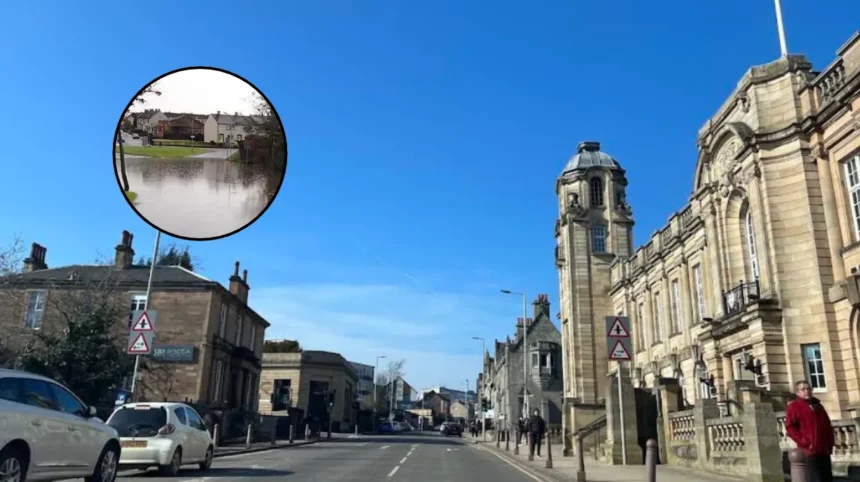
- Residents living in the Devonhill Avenue and High Parks Crescent areas of Hamilton have raised fresh concerns regarding severe recurring flooding during periods of intense rainfall.
- South Lanarkshire Council has attributed the main cause of the localized flooding to limitations within Scottish Water’s public sewer infrastructure network.
- Councillor Gavin Keatt, Scottish Labour member for Hamilton South, confirmed receiving multiple complaints from constituents living in the affected neighbourhood, locally known as ‘The Strawberry’.
- Local stakeholders and affected homeowners are demanding a coordinated strategy between South Lanarkshire Council and Scottish Water to deliver long-term drainage upgrades.
Hamilton (Glasgow Express) November 5, 2026 – Residents residing in a South Lanarkshire neighbourhood have raised urgent concerns regarding persistent, recurring flooding that has repeatedly impacted residential properties and roadways during periods of heavy downpours. South Lanarkshire Council officials have publicly clarified that the primary infrastructure failure causing these incidents is directly linked to capacity constraints within Scottish Water’s main sewer network serving the local catchment area.
The localized surface water and sewage surcharging have centered around Devonhill Avenue and High Parks Crescent in Hamilton, a location known locally to residents as ‘The Strawberry’. During recent heavy rainfall events, the surrounding drainage channels failed to clear surface runoff, resulting in water backing up into residential thoroughfares and creating localized hazards for householders and motorists.
As reported by political correspondents covering South Lanarkshire Council, Councillor Gavin Keatt, Scottish Labour representative for the Hamilton South ward, confirmed that numerous constituents had directly contacted him to express frustration over the ongoing infrastructure failures. Councillor Gavin Keatt stated that the repeated occurrence of surface flooding following intense rain events has created widespread anxiety among local families, who are calling for immediate structural interventions.
Why is the current drainage system failing during heavy rainfall?
The surface water challenges in Hamilton stem from the historical design of combined sewer networks across urbanized parts of central Scotland. During periods of exceptional precipitation, stormwater runoff rapidly enters the underground pipework, swamping the capacity of the hydraulic lines managed by Scottish Water. When the main network reaches total saturation, excess water forces its way back upward through road gullies, manhole covers, and domestic drainage points.
South Lanarkshire Council has maintained that while the local authority manages surface gullies along public highways, the main underground trunk infrastructure and downstream capacity remain the statutory operational responsibility of Scottish Water. Consequently, local council maintenance crews are unable to resolve the underlying root cause of the back-ups without major structural overhauls executed directly by the water utility authority.
Householders living throughout the affected street sectors near High Parks Crescent have reported that the frequency of these flooding episodes has accelerated over recent years, coinciding with an increase in localized storm intensity across the region.
What actions are local officials demanding from Scottish Water?
Representative leaders within the Hamilton South ward are urging a multi-agency response to investigate sewer flow rates, clear bottlenecks, and finance long-term civil engineering upgrades. Councillor Gavin Keatt indicated that formal representations are being made to Scottish Water executives to ensure the Devonhill Avenue and High Parks Crescent corridor is prioritized within upcoming capital investment cycles.
Local representatives are pushing for comprehensive flow monitoring investigations to determine whether localized silt accumulation, pipe collapse, or regional capacity deficits are the primary drivers of the surcharging. Until extensive capital improvement works are programmed, localized mitigation measures such as routine gully clearance and emergency pumping support remain the primary line of defense during acute weather alerts.
Background of the particular development
The residential sector encompassing Devonhill Avenue and High Parks Crescent—familiarly termed ‘The Strawberry’ by long-standing Hamilton residents—forms part of an established housing landscape within South Lanarkshire. Over recent decades, urban expansion across the wider Hamilton district has increased the total surface area of impermeable paving, asphalt roads, and rooflines. This increased urbanization directs greater volumes of surface runoff into regional watercourses and sewer grids that were originally designed for smaller population footprints.
Across Scotland, management of flooding risks falls under a shared statutory framework established by the Flood Risk Management (Scotland) Act. While local authorities hold duties regarding local road drainage and flood risk management planning, Scottish Water operates as the public utility owner responsible for public sewer networks and wastewater treatment systems. Historical disputes between council authorities and regional water bodies frequently arise over the boundary between surface runoff management and main line sewer surcharge, often leaving local communities caught between administrative frameworks while seeking remedial engineering work.
Prediction: How this development can affect the local residents
If structural enhancements to the sewer network around Devonhill Avenue and High Parks Crescent are delayed, local residents face compounding long-term risks across several distinct areas:
- Property Value and Marketability: Persistent surface water flooding can severely affect local property valuations. Householders seeking to sell homes in ‘The Strawberry’ neighbourhood may encounter difficulties securing buyers or obtaining standard structural surveys without comprehensive drainage guarantees.
- Insurance Premiums and Excesses: Repeated flood events frequently trigger insurance reassessments. Homeowners in the affected streets may face significantly elevated building and contents insurance premiums, higher excess thresholds, or potential exclusions for flood-related damage if the network remains vulnerable.
- Structural Damage and Public Health Risks: Uncontrolled sewer surcharging carries human health risks due to the potential presence of untreated wastewater in surface runoff. Prolonged waterlogging can also undermine foundations, erode driveway substrates, and damage private garden landscaping, leading to unrecoverable out-of-pocket repairs for property owners.
- Daily Commuting and Access Disruption: Recurring flooding across Devonhill Avenue and High Parks Crescent obstructs pedestrian footpaths and residential roads, restricting access for emergency services, local transport, and daily travel during severe weather conditions.