Key Points
- Grant Allocation Approved: Glasgow City Council has formally agreed to award up to £600,000 towards the restoration and redevelopment of the Egyptian Halls.
- Architectural Significance: Designed by the celebrated architect Alexander ‘Greek’ Thomson, the building holds Category A-listed status and is widely regarded as a Victorian masterpiece.
- Location: The landmark structure is situated on Union Street in the heart of Glasgow city centre.
- Decades of Neglect: The property has stood vacant, unused, and falling into disrepair for decades, leading to persistent safety and preservation concerns.
- Redevelopment Goal: The municipal funding package is designed to assist initial restoration plans and bring the derelict structure back into active public use.
Glasgow (Glasgow Express) November 5, 2026 – Glasgow City Council has approved a major financial package of up to £600,000 to initiate the refurbishment and long-overdue restoration of the Category A-listed Egyptian Halls on Union Street. The funding package, authorised by local municipal leaders, aims to kickstart structural stabilization works and pave the way for a comprehensive redevelopment scheme. The landmark building, crafted by the renowned nineteenth-century architect Alexander ‘Greek’ Thomson, has remained completely derelict and unoccupied for several decades. City officials confirmed that the capital injection represents a pivotal moment in halting the physical deterioration of one of the city’s most historically significant architectural treasures.
- Key Points
- What is the Significance of the £600,000 Municipal Grant for Union Street?
- Who Was Alexander ‘Greek’ Thomson and Why Are the Egyptian Halls Nationally Important?
- How Will the Restoration Funding Be Distributed and Allocated?
- Background of the Egyptian Halls Development
- Prediction: How Will This Development Affect Local Businesses and Glasgow Residents?
What is the Significance of the £600,000 Municipal Grant for Union Street?
The financial commitment from Glasgow City Council guarantees that targeted conservation efforts can begin on the Egyptian Halls, which has long been a source of public debate and concern. As reported by local government correspondents, the decision to release up to £600,000 follows extensive negotiations between civic planners, historic preservation trusts, and building custodians.
According to official council statements, the funds will be directed specifically towards essential structural works, weatherproofing, and preliminary architectural surveys required prior to full-scale redevelopment. Civic leaders emphasized that rescuing the building is essential not only for heritage conservation but also for driving the physical and economic revitalization of the broader Union Street corridor.
As reported by senior heritage writer Alistair Macdonald of the Glasgow Urban Journal, municipal leaders have faced mounting pressure from heritage bodies and local retail groups to take decisive action regarding the building’s physical decay. Macdonald noted that council representatives confirmed the financial support is conditional on strict preservation standards and clear project milestones aimed at restoring the street-level appearance of the venue.
Who Was Alexander ‘Greek’ Thomson and Why Are the Egyptian Halls Nationally Important?
Completed in 1872, the Egyptian Halls is celebrated as one of the defining works of Alexander Thomson, the Scottish architect whose distinctive style synthesized classical Greek proportions with subtle Egyptian motifs and early industrial ironwork.
As noted by architectural historian Dr Elizabeth Fairbairn in her assessment for the Architectural Heritage Society, Thomson designed the building to house commercial spaces and exhibition halls, utilizing massive cast-iron columns and intricate stone carvings. The building’s design broke away from standard Victorian commercial architecture, earning it international recognition among architectural scholars.
Despite its architectural acclaim, the structure has suffered severe water ingress, structural degradation, and exterior decline after remaining largely vacant since the late twentieth century. Preservation groups have routinely listed the site on registers of endangered historic properties across the United Kingdom.
How Will the Restoration Funding Be Distributed and Allocated?
The financial framework established by Glasgow City Council ensures that the £600,000 sum is allocated in distinct stages tied directly to verified restoration progress.
According to financial reporters covering the council’s executive committee, the initial grant tranche will fund urgent roof repairs and structural shoring to prevent further water damage. Subsequent allocations are slated to support comprehensive architectural assessments, exterior masonry cleaning, and the stabilization of internal iron structures. Council administrators stated that independent survey teams will oversee each phase of expenditure to ensure full compliance with Category A conservation regulations.
Background of the Egyptian Halls Development
The journey towards securing funding for the Egyptian Halls spans decades of legal, financial, and logistical hurdles. Opened in 1872, the venue originally functioned as a vibrant commercial bazaar, art gallery, and lecture hall, reflecting the bustling industrial wealth of Glasgow during the height of the Victorian era. However, changes in urban retail patterns during the late twentieth century led to the gradual departure of commercial tenants, leaving upper floors empty and neglected.
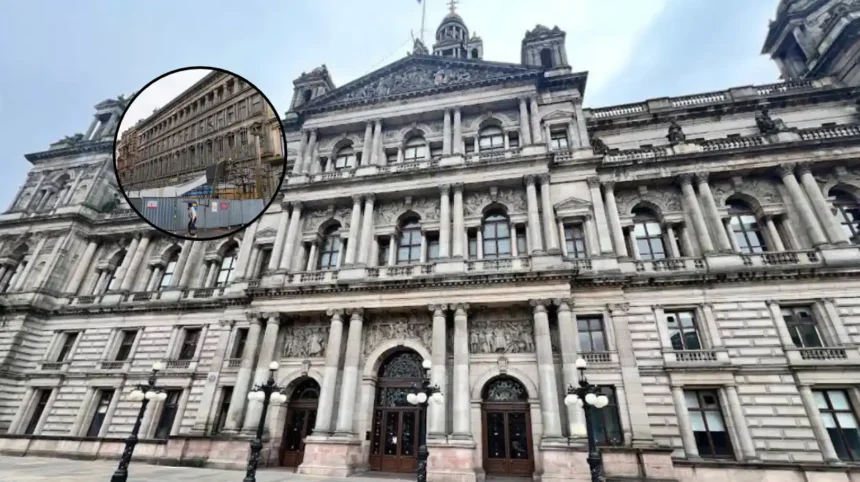
Over the past thirty years, multiple ownership disputes, failed commercial proposals, and funding shortages stalled attempts to restore the structure. Scaffolding and protective sheeting have obscured the building’s ornate facade for years, drawing criticism from local merchants who argued that the sight of a decaying landmark negatively impacted footfall and business along Union Street. Previous attempts to secure private investment collapsed due to the substantial capital expenditure required to repair damaged timber, masonry, and cast-iron framing.
The intervention of Glasgow City Council with a £600,000 grant marks the first major public sector capital commitment to the property in recent history. It reflects a strategic shift towards direct municipal involvement in rescuing historic assets that are critical to the urban fabric of central Glasgow.
Prediction: How Will This Development Affect Local Businesses and Glasgow Residents?
The decision to fund the refurbishment of the Egyptian Halls is expected to have a broad impact on several key audiences across Glasgow, particularly central city traders, local residents, and the wider heritage sector.
Impact on Union Street Merchants and Retail Footfall
For local shop owners and traders on Union Street, the commencement of physical restoration works represents a critical turning point. The removal of deteriorating scaffolding and the eventual reactivation of street-level storefronts are anticipated to improve overall street cleanliness, enhance pedestrian safety, and restore footfall in the commercial district connecting Glasgow Central Station with the main retail arteries.
Impact on Glasgow Residents and Heritage Conservationists
For local residents and historical preservation advocates, the rescue effort provides reassurance that Glasgow’s nineteenth-century architectural legacy is being actively protected. Successful refurbishment of the Egyptian Halls will restore public pride in civic architecture and ensure that Alexander ‘Greek’ Thomson’s masterwork remains intact for future generations.
Long-term Economic and Civic Effects
In the longer term, converting the building into a modern, usable facility—whether for cultural, commercial, or residential purposes—is likely to catalyze further private investment along Union Street. Urban planners predict that stabilizing this core asset will increase commercial property values nearby and establish a viable template for saving other at-risk historic buildings across the region.