

Key Points
- £28 million fuel expenditure: Glasgow City Council spent over £28 million on diesel and petrol for its fleet over the past five fiscal years.
- 1,893 operational vehicles: The council currently owns or operates 1,893 vehicles across its departments and council-owned companies.
- Low Emission Zone (LEZ) contrast: The significant fossil fuel spend comes despite the council introducing Scotland’s first Low Emission Zone and committing to ambitious climate targets.
- Net-zero goals in question: Environmental campaigners and opposition politicians have raised serious concerns regarding the pace of the local authority’s transition to a fully zero-emission fleet.
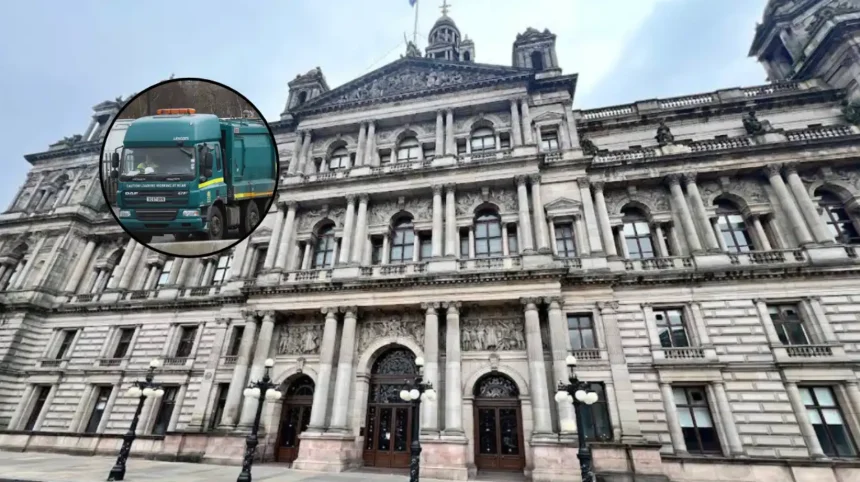
- Electric vehicle uptake: While EV integration has commenced across lighter council vehicles, heavy-duty operational vehicles like refuse collection trucks continue to rely heavily on conventional diesel fuel.
Glasgow Council (Glasgow Express) November 11, 2026 – Official figures obtained regarding municipal expenditure confirm that millions of pounds continue to be allocated to diesel and petrol as the council works to transition its transport infrastructure. The revelations come at a sensitive time for Glasgow, which has positioned itself as a leading eco-conscious city in Scotland following its hosting of the COP26 climate summit and the enforcement of strict emissions rules for private motorists.
- Key Points
- How much did Glasgow City Council spend on vehicle fuel over the past five years?
- Why are environmental groups raising concerns over the fleet expenditure?
- How is Glasgow City Council transitioning its 1,893 vehicles to zero emissions?
- What is the background to Glasgow City Council’s green targets?
- How will this development affect Glasgow taxpayers and local residents?
How much did Glasgow City Council spend on vehicle fuel over the past five years?
Data covering the last five financial years reveals that the council’s total expenditure on petrol and diesel exceeded £28 million. The council currently maintains an operational fleet of 1,893 vehicles. These vehicles service a wide array of public functions across the city, ranging from social care transport and parks maintenance to waste management and road repairs.
Despite ongoing municipal initiatives aimed at reducing carbon output, the financial commitments required to keep the conventional fleet operational remain substantial. The bulk of the multi-million-pound sum was directed towards diesel fuel, which powers the heavier operational transport necessary for daily city services.
Why are environmental groups raising concerns over the fleet expenditure?
The publication of these financial records has generated concern among climate campaigners and local political representatives, who argue that the scale of fuel spending sits uncomfortably alongside the city’s declared environmental ambitions. Glasgow City Council previously set a target to achieve net-zero carbon emissions across its operations, aiming to lead by example within the public sector in Scotland.
Critics highlight that while private vehicle owners face restrictions under the city’s Low Emission Zone (LEZ) schema—which penalises older, non-compliant vehicles entering the city centre—the municipal authority itself continues to operate a significant number of internal combustion engine vehicles. Concerns center on whether the council is decarbonising its fleet rapidly enough to meet its statutory climate targets and align with its public messaging on air quality improvement.
How is Glasgow City Council transitioning its 1,893 vehicles to zero emissions?
Glasgow City Council maintains that significant progress is underway to decarbonise its transport assets. The transition of lighter service vehicles, such as small vans and passenger cars, to electric alternatives is already taking place across several council departments.
However, replacing heavier operational assets presents technical and operational challenges. Heavy goods vehicles (HGVs), including specialized refuse collection lorries and winter gritting fleets, require specialized zero-emission alternatives that are significantly more expensive and rely on substantial grid infrastructure upgrades. Council officials point out that the commercial market for zero-emission heavy utility vehicles remains in a earlier stage of deployment compared to standard consumer electric vehicles, dictating the continued reliance on conventional fuels to maintain uninterrupted public services.
What is the background to Glasgow City Council’s green targets?
Background of the particular development
Glasgow City Council declared a climate emergency in May 2019, committing to make the city carbon neutral by 2030. As part of this overarching policy, the local authority published its Climate Emergency Implementation Plan, detailing actions across transport, energy, and land use to systematically reduce greenhouse gas emissions.
A central pillar of the city’s environmental strategy was the implementation of Scotland’s first Low Emission Zone (LEZ). Phase 1 applied specifically to local service buses, coming into effect at the end of 2018. Phase 2 expanded the scheme to cover all vehicles entering the designated city centre zone, enforcing strict emissions standards for both petrol and diesel engines from June 2023. Drivers of non-compliant vehicles incur financial penalties, a measure designed to improve ambient air quality and lower nitrogen dioxide levels in high-density urban areas.
Simultaneously, the council established targets to phase out petrol and diesel cars from its own municipal fleet, prioritizing the procurement of ultra-low emission vehicles (ULEVs). Despite these policies, the scale of existing municipal operations, supply chain constraints for specialized electric HGVs, and the capital expenditure required to install high-capacity charging infrastructure across council depots have prolonged the authority’s reliance on fossil fuels.
How will this development affect Glasgow taxpayers and local residents?
Prediction
The ongoing expenditure on traditional fossil fuels and the associated pace of fleet decarbonisation are likely to impact local residents and municipal stakeholders in several key ways:
- Financial pressures on local services: The council’s ongoing exposure to volatile global fuel markets means that significant budget allocations must remain dedicated to petrol and diesel purchases. Unanticipated spikes in fuel prices could place additional strain on the council’s revenue budget, potentially diverting capital away from other frontline public services or requiring further fiscal adjustments.
- Public scrutiny over enforcement and compliance: As residents and local businesses continue to navigate the financial implications of complying with Glasgow’s Low Emission Zone rules, public scrutiny regarding the council’s own fleet standards will intensify. Any perceived delay in the municipal fleet’s transition may lead to increased public demands for policy transparency and consistent application of environmental standards across both public and private sectors.
- Long-term infrastructure investment timing: To reduce the £28 million fuel burden, the council will need to accelerate capital spending on zero-emission fleet acquisitions and depot charging infrastructure. Taxpayers can anticipate future budget allocations shifting heavily toward upfront capital investments in electric and alternative-fuel technology, aimed at lowering long-term revenue expenditure on imported fossil fuels.


