Key Points
- Glasgow City Council has formally submitted a planning application to redevelop part of Garscadden House on Dalsetter Crescent into a new civic town hall and library for Drumchapel.
- The town hall and library development forms a central part of a broader Drumchapel town centre regeneration scheme backed by £15 million in UK Government funding.
- Structural plans detail a focus on renovating the west wing of Garscadden House alongside constructing a modern extension to serve as the main entrance.
- The project aims to consolidate essential civic, administrative, community, and support services into a single, accessible hub.
- Moving the existing local library from Hecla Avenue to Dalsetter Crescent will free up land at Hecla Square, paving the way for future residential housing development.
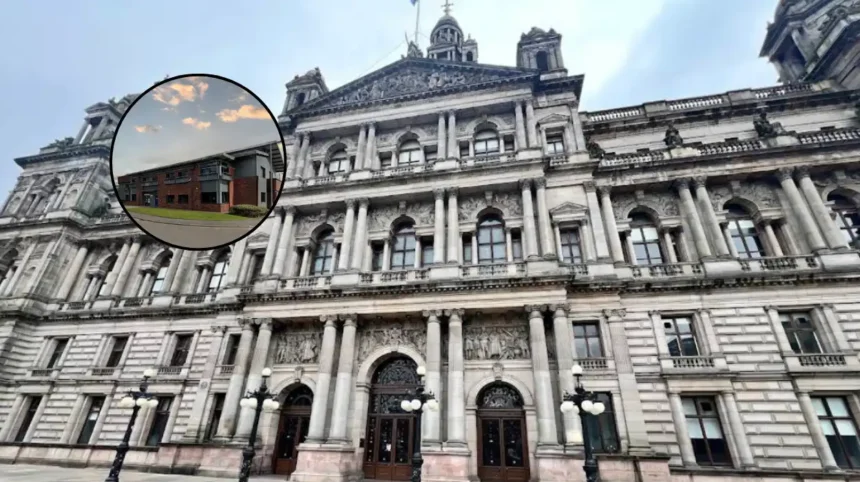
Glasgow (Glasgow Express) October 14, 2026 – Glasgow City Council has officially unveiled plans for the construction of a new town hall and integrated library facility in Drumchapel as part of an overarching town centre regeneration initiative. The local authority has submitted a formal planning application detailing the adaptive reuse and extension of Garscadden House on Dalsetter Crescent. Funded in part by a £15 million allocation from the UK Government, the project represents a major capital investment designed to modernize public service delivery, streamline civic access, and anchor wider physical and socio-economic improvements across the northwest Glasgow area.
- Key Points
- What Do the New Planning Applications Reveal About Garscadden House?
- How Does the Relocation Impact Hecla Avenue and Hecla Square?
- How Will the £15 Million Grant Be Utilized in the Wider Regeneration Scheme?
- Background of the Development
- Predictions: How Will This Development Affect Local Residents and Businesses?
What Do the New Planning Applications Reveal About Garscadden House?
According to official planning documents submitted by Glasgow City Council, the proposed redevelopment will center specifically on the west wing of Garscadden House. To accommodate the full scope of municipal and community operations, the proposal outlines a dedicated structural extension designed to function as the primary entrance to the complex.
The council’s planning submission emphasizes that the strategic rationale behind selecting Garscadden House is to integrate diverse public provisions under one roof. By establishing a unified community core, the development intends to consolidate civic administration, library resources, local support organizations, and public meeting spaces into a single location tailored to modern accessibility standards.
How Does the Relocation Impact Hecla Avenue and Hecla Square?
A key operational component of the council’s spatial strategy involves the relocation of the current Drumchapel Library service from its long-standing premises on Hecla Avenue over to the revamped facilities at Dalsetter Crescent.
By relocating the library to the new hub at Garscadden House, Glasgow City Council aims to vacate the Hecla Avenue footprint. The application outlines that releasing this site will unlock crucial land at Hecla Square, enabling subsequent residential redevelopment and supporting broader housing targets within the Drumchapel masterplan.
How Will the £15 Million Grant Be Utilized in the Wider Regeneration Scheme?
The establishment of the new town hall and library forms one pillar of a multi-million-pound investment strategy for Drumchapel. The £15 million grant awarded by the UK Government is earmarked for targeted interventions across the town centre.
Beyond public building enhancements, the funding framework encompasses public realm improvements, enhanced connectivity between commercial and residential zones, upgrade works on local infrastructure, and long-term land supply strategies aimed at attracting further public and private capital to the area.
Background of the Development
Drumchapel, situated in the north-west quadrant of Glasgow, was established post-World War II as one of the city’s major outer council housing estates designed to rehouse residents from inner-city tenement clearance zones. Over the decades, local advocacy groups and municipal authorities have continually sought targeted funding mechanisms to modernize public infrastructure and address long-standing economic and structural challenges.
The present regeneration scheme aligns with Glasgow City Council’s ongoing strategic vision for outer-estate town centres. The securing of the £15 million grant marked a critical milestone in unlocking capital works that had been under technical review. By relocating municipal assets such as the library, local planners are applying a integrated master-planning approach: utilizing public services as an anchor for footfall while simultaneously releasing surplus brownfield and civic plots, such as Hecla Square, for much-needed housing stock.
Predictions: How Will This Development Affect Local Residents and Businesses?
The multi-phase regeneration project is expected to bring several tangible shifts for residents, community groups, and local businesses in Drumchapel.
Impacts on Local Residents and Service Users
- Improved Service Integration: Residents will be able to access municipal services, library facilities, and community support teams within a single modernized building at Dalsetter Crescent, reducing the need to visit multiple sites.
- Enhanced Accessibility: Upgrades to Garscadden House, including a purpose-built main entrance, will improve access for individuals with mobility challenges compared to older, fragmented infrastructure.
- New Housing Opportunities: The future redevelopment of the Hecla Avenue library site at Hecla Square is expected to increase local housing availability, potentially providing modern social or affordable homes.
Impacts on Local Businesses and the Urban Centre
- Shift in Footfall Dynamics: Relocating public facilities from Hecla Avenue to Dalsetter Crescent will alter pedestrian movement, increasing daily footfall around Garscadden House and surrounding commercial premises.
- Long-term Economic Stimulus: The direct injection of £15 million in public investment signal stability to private developers and local vendors, encouraging further investment in retail and commercial services nearby.