
Key Points
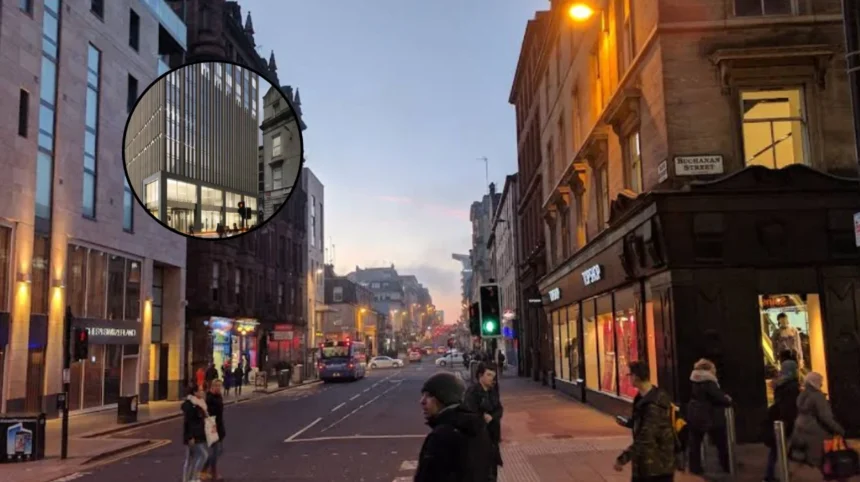
- An application has been submitted to Glasgow City Council seeking a time extension for a long-running hotel project at the corner of West Nile Street and Bath Street.
- The site was previously occupied by the Iron Horse pub, O Sole Mio restaurant and the Blue Lagoon chippy, all of which were part of the original redevelopment area.
- The latest application says Ruby Hotels has a strong interest in leasing a hotel on the land.
- George Capital received permission in 2020 for a 17-storey, 183-bed hotel, but the scheme has not yet been delivered.
- The original plans drew more than 400 objections and a petition with more than 2,000 signatures.
- O Sole Mio, opened in 1965 and described as Glasgow’s first Italian restaurant, closed in 2020 and later reopened on Bath Street.
- The Iron Horse dates back to 1872 and was widely known as one of the city centre’s long-standing pubs.
Glasgow (Glasgow Express) May 9, 2026 As reported by the latest application, Ruby Hotels has a “strong interest” in taking space on the site, which sits at the corner of West Nile Street and Bath Street. The application relates to a plot once occupied by the Iron Horse pub, O Sole Mio restaurant and the Blue Lagoon chippy, all of which became central to earlier debate over the scheme.
What has been submitted?
The new submission asks the council for a time extension on a project already approved for the site. The scheme was first granted permission in 2020 for a 17-storey hotel with 183 beds, although it has not yet been built. According to the planning material cited in the latest reporting, Ruby Hotels is now interested in leasing the hotel if the development goes ahead.
Who is Ruby Hotels?
Ruby Hotels is described in the planning update as a firm with 21 hotels across 14 countries. Independent industry material shows Ruby Hotels is an urban lifestyle brand that has expanded across Europe, and its network has continued to grow in recent years.
In this case, however, the key point is not a confirmed opening but the company’s stated interest in the Glasgow city centre site.
Why was the plan opposed?
The project was controversial from the start because it involved the loss of several familiar city centre businesses.
The Iron Horse dated from 1872, while O Sole Mio had opened in 1965 and had built up a long local following. More than 400 objections were lodged with the council, and a petition linked to the Iron Horse gathered more than 2,000 signatures.
What happened to the buildings?
The original approval covered demolition at the corner site to make way for the hotel. Reporting at the time said the buildings included the Iron Horse, O Sole Mio and the Blue Lagoon chippy, along with other properties in the block.
The site is now empty, and the latest planning material suggests the buildings could be demolished as part of the next stage of the wider project.
How did the original approval come about?
Glasgow City Council approved the hotel scheme in 2020 after the developer argued the project would bring regeneration to the area.
The development was backed by George Capital, with planning and design work led through professional consultants named in the reporting.
The original approval also included a rooftop restaurant and a ground-floor bar open to the public.
What is the wider context?
The corner of West Nile Street and Bath Street has been under discussion for years because it sits in a busy part of Glasgow city centre and falls within a conservation area.
The hotel plan has also been linked to a wider effort to bring new commercial activity to the block after the earlier businesses closed.
O Sole Mio later reopened at a different Bath Street location after its original premises were affected by the redevelopment plans.
Background of this development
The site’s recent history began when George Capital secured approval for a 17-storey, 183-bed hotel in 2020. The original scheme meant the loss of the Iron Horse, which dated from 1872, and O Sole Mio, which had been open since 1965.
The proposal prompted major local opposition, including hundreds of objections and a large petition, before planning permission was granted.
What could happen next?
If Glasgow City Council accepts the extension, the project could move a step closer to delivery after years of delay. For local residents and businesses, the development could reshape footfall in that part of the city centre by adding a hotel, bar and restaurant use to the site. For people attached to the lost venues, however, the project continues a change that has already altered a familiar corner of Glasgow.