Key Points
- A multi‑agency group in Glasgow has concluded that public transport after 6pm in the city centre is “not good enough” to support a modern nighttime economy.
- The group includes representatives from Glasgow City Council, nighttime businesses, police, and transport operators, and has identified several areas needing attention.
- Concerns centre on post‑6pm bus and train services, limited late‑night taxi and private hire availability, and perceptions of safety after dark.
- Glasgow has been pursuing a “Nightshift” vision to become more of a 24/7 city, with specific actions on transport, lighting, and protection of its music scene.
- Earlier setbacks included First Bus’s 2023 decision to scrap 11 night bus routes, later partially reversed after joint operation with McGill’s.
- Studies by Progressive Partnership and Glasgow Caledonian University’s Moffat Centre have highlighted lack of late‑night transport as a deterrent to city centre visits.
- Glasgow remains the only UK city with a cap on private hire cars, which business leaders argue limits late‑night travel options.
- The City Centre Task Force and a new Night‑Time Economy Commission are working on recommendations expected to include later and additional transport availability.
- Reports note post‑pandemic challenges such as reduced disposable income, growth in socialising at home, and concerns about high prices affecting footfall.
- The new commission aims to address safety perceptions, improve transport quality and quantity after 6pm, and enhance lighting in the city centre.
Glasgow (Glasgow Express) July 15, 2026 – Public transport after 6pm in Glasgow is not good enough to support a modern city centre nighttime economy, according to a recent assessment by a cross‑sector group working on the city’s “after dark” business strategy.
- Key Points
- Why is post‑6pm transport considered a bottleneck for Glasgow’s nighttime success?
- What specific transport issues have been identified?
- How have past transport setbacks shaped the current debate?
- What is the background to this development and how did it emerge?
- How could this development affect Glasgow residents, workers and nighttime businesses?
The finding marks a clear acknowledgement that, despite efforts to revive nightlife and hospitality following the pandemic, the current transport offer does not match what is needed for a thriving evening and night economy.
As reported by the Glasgow Times, the group, which includes representatives from the city council, nighttime economy businesses, police and transport operators, set out a number of areas that need attention to make the city centre more viable after dark.
The assessment is part of a broader push to create conditions for “after dark” businesses in the city centre to thrive and to deal with challenges they have faced since the Covid pandemic, as well as more recent cost of living and cost of doing business increases.
Why is post‑6pm transport considered a bottleneck for Glasgow’s nighttime success?
According to the Nightshift vision promoted by the city’s new night‑time economy commission, improving transport quality and quantity after 6pm is one of the core areas of action if Glasgow is to move towards becoming more of a 24‑hour city.
The strategy explicitly states that while there are “competing arguments” over taxi and private hire provision, it is
“clear for many the current system does not service the night‑time economy as well as it should”.
Studies commissioned by the council earlier pointed to a lack of late‑night transport options, including the availability of taxi and private hire cars, as a deterrent to people coming into the city centre later in the evening.
Business leaders have repeatedly argued that Glasgow’s transport network after 6pm compares poorly with other cities, with some hospitality leaders claiming that “other cities are 100 years ahead” and that Glasgow must match Manchester or Edinburgh to compete.
What specific transport issues have been identified?
The group’s work has highlighted several specific problems:
- Bus and train services: There are calls for an independent assessment of demand for night buses and a review of train services, with proposals that an extra service around 1am could serve a large proportion of users, particularly older people who do not want a very late night out.
- Taxis and private hire cars: Glasgow is the only city in the UK to operate a cap on private hire cars, with limits of 1,420 taxi licences and 3,450 private hire car licences, which business leaders argue is limiting options for late‑night visitors.
- Safety and perception: The Nightshift strategy also links transport to safety perceptions, suggesting that “unsafe” lanes could be targeted with a city‑centre‑wide programme using sound and light to create a “laneways trail”, in parallel with better lighting and protection of the city’s UNESCO‑recognised music scene.
How have past transport setbacks shaped the current debate?
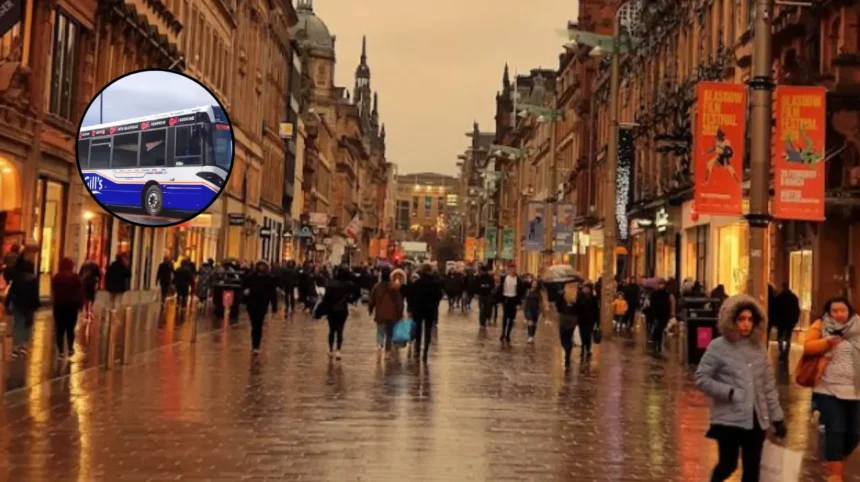
The current assessment builds on a series of earlier controversies. In 2023, First Bus announced it would scrap all 11 night bus routes in Glasgow at the end of the month, citing “not enough appetite” for the services and chronic driver shortages.
That decision sparked a wave of criticism from residents, councillors, and hospitality leaders, with some describing Glasgow’s public transport as “the worst it’s ever been”.
Following emergency talks between First Bus, McGill’s, SPT and Glasgow City Council, a deal was struck to reboot the after‑midnight routes, with nine of the 11 threatened services operated jointly:
First operating four routes between 12.45am and 3am on Friday and Saturday nights, and McGill’s taking on the other five.
While this was welcomed, officials stressed it must not be seen as a “job done” moment, as Glasgow’s night‑time economy remained under threat and in need of broader support.
Subsequent council reviews found that, while the number of licensed cabs remained similar to pre‑pandemic levels, there had been a drop in the availability of drivers, with many cabs previously used by two drivers now used by only one, and many drivers having retired or moved to new opportunities.
The council began offering around 250 more licences, though it noted it would take time to see if that had an impact.
What is the background to this development and how did it emerge?
The conclusion that post‑6pm transport in Glasgow is “not good enough” is the product of a multi‑year effort to assess and revitalise the city’s nighttime economy.
It stems from work by the City Centre Task Force, which in the wake of First Bus’s 2023 night‑bus controversy launched a review to clarify what is happening to Glasgow’s nightlife and to get to grips with issues relating to trains, buses, taxis and subway services.
That task force commissioned studies by market research agency Progressive Partnership and Glasgow Caledonian University’s Moffat Centre, which laid bare post‑Covid challenges including decline in city centre footfall, growth in socialising at home, impacts of reduced disposable income and perceptions of high prices. Those reports also highlighted lack of late‑night transport options, including taxi availability, as a key deterrent.
More recently, a new night‑time economy commission has taken up this work under a “Nightshift” vision, aiming to establish Glasgow as more of a 24‑hour city.
This vision includes improving safety perceptions, enhancing post‑6pm transport quality and quantity, providing more lighting and protecting the city’s UNESCO‑recognised music scene.
The commission’s group, which includes council, business, police and transport representatives, has now formalised the finding that current transport after 6pm does not meet the needs of a modern nighttime economy.
How could this development affect Glasgow residents, workers and nighttime businesses?
For nighttime businesses – bars, restaurants, clubs and music venues – the acknowledgement that transport after 6pm is inadequate creates both pressure and opportunity. On one hand, it validates long‑standing complaints from hospitality leaders that poor transport is deterring customers and limiting footfall.
On the other, it sets the stage for targeted interventions, such as reviews of taxi and private hire licensing, potential additional night bus services, and reviews of train timings, which could, if implemented, make it easier for people to stay out later and return home safely.
As noted by industry‑led groups, future recommendations are expected to include lobbying for additional and later transport availability, which could directly support revenue and staffing models for evening venues.
For residents and workers who rely on public transport, especially those with late shifts or those who use the city centre for evening socialising, the development could lead to more reliable and frequent options after 6pm. Proposals such as an extra service around 1am and reviews of train services are aimed at serving a large proportion of users, including older people who do not want a very late night out.
If the city moves to increase taxi and private hire capacity by reviewing licensing caps, this could also reduce waiting times and improve availability at peak times, addressing a primary issue identified as a lack of drivers rather than vehicles.
For the wider city economy and image, the move to confront transport shortcomings aligns with Glasgow’s ambition to compete with other UK cities as a night‑time destination. Hospitality leaders have argued that Glasgow must improve its night transport to be like Manchester or Edinburgh to compete.
If the recommendations from the Nightshift vision and the Night‑Time Economy Group are implemented, Glasgow could see improved footfall, longer stays in the city centre, and a stronger perception of safety and accessibility after dark, which in turn could support job creation and investment in the hospitality and cultural sectors.
However, the impact will depend on whether the identified areas of attention translate into concrete funding, operational changes and regulatory reform.
Without meaningful action on bus, train, taxi and private hire services, the current assessment risks remaining a statement of problem rather than a driver of improvement, leaving businesses and residents to continue facing the same transport constraints that have for years been described as a barrier to Glasgow’s nighttime economy.