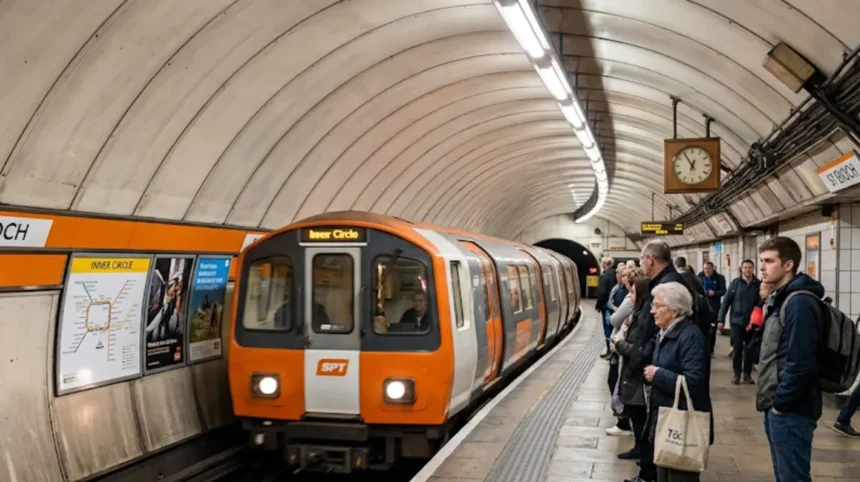
The “Clockwork Orange” is the colloquial name for the Glasgow Subway, Scotland’s only underground metro system, a compact 6.5-mile circular network with 15 stations that connects Glasgow’s city centre, West End, and Southside. The stops that actually matter depend on your purpose: tourists and city explorers should focus on Queen Street, St Enoch, and Hillhead; commuters and workers rely on St Enoch, Queen Street, Cowcaddens, and Ibrox for key employment and retail hubs.
- What is the Glasgow Subway and why is it called the Clockwork Orange?
- How does the Glasgow Subway network work and what are its core features?
- When did the Glasgow Subway open and how has it evolved over time?
- Which Glasgow Subway stops actually matter for tourists and visitors?
- Which Glasgow Subway stops actually matter for commuters and workers?
- How does the Glasgow Subway connect with other transport and city districts?
- What is the cultural significance of the Clockwork Orange in Glasgow?
What is the Glasgow Subway and why is it called the Clockwork Orange?
The Glasgow Subway is a 6.5-mile (10.4 km) circular underground railway with 15 stations, running on two parallel loops so one train goes clockwise and the other anticlockwise. It is called the “Clockwork Orange” because of its small orange trains and circular route, a nickname inspired by the title of the novel and film A Clockwork Orange, though the origin of the name is disputed and the term is used more by the press than by locals.
The Subway opened on 14 December 1896 and is the third-oldest underground public transport system in the world, after London and Budapest. It was built to relieve congested streets in a rapidly industrialising city, using the cut‑and‑cover method for much of its route and a simple circular design that remains the foundation of the system today.
Originally, the trains were not electric but cable‑haul: a continuous cable loop powered by stationary steam engines moved the trains along the tunnels. The tunnels are narrow, around 11 feet (3.4 m) wide, and the trains run on a 4‑foot (1.2 m) gauge, giving the system its distinctive compact character.
In 1935 the cable system was replaced with electric traction, bringing the Subway into line with modern metro systems and improving reliability and capacity. A major refurbishment in the 1970s closed the system for nearly three years; it reopened in 1980 with new rolling stock, upgraded stations and signalling, and the bright orange livery that cemented the “Clockwork Orange” nickname in popular use.
Locals traditionally call it the “Subway” rather than “Underground” or “Metro”, and the nickname “Clockwork Orange” is more common in media and tourism marketing than in everyday Glaswegian speech.
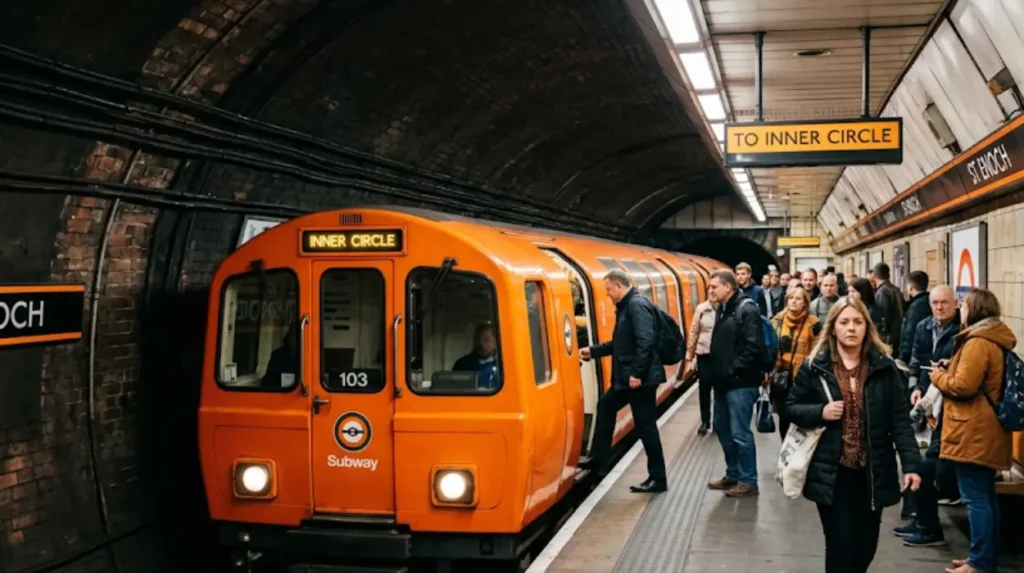
How does the Glasgow Subway network work and what are its core features?
The Glasgow Subway runs on a 6.5-mile circular route with 15 stations and two parallel tracks (inner and outer loops), allowing one service to run clockwise and the other anticlockwise. Trains are small, orange, and run on a 4‑foot gauge, with tunnel depths varying from about 2.1 m to 35 m below the surface.
The route starts south from Queen Street, passes the Merchant City, and crosses the River Clyde. At West Street it turns northwest, running roughly parallel to the river to Ibrox and Govan, then northeast across the river again towards Kelvinhall and Hillhead. From there it turns southeast, passing Kelvinbridge and Cowcaddens before heading south back to Queen Street, completing the circle.
Because there are two loops, passengers can choose direction by station: some stations have separate platforms for inner and outer tracks, while others serve both directions on one platform. The system does not have branch lines; all trains follow the same circular path, which makes the network simple but also limits flexibility.
The Subway’s small size and narrow trains mean journey times are short: a full circle typically takes around 20–25 minutes depending on timing and stops. This compact design is ideal for quick cross‑city trips but not for long‑distance commuting beyond the central area.
When did the Glasgow Subway open and how has it evolved over time?
The Glasgow Subway opened on 14 December 1896 as a cable‑haul underground railway with 15 stations and a 6.5‑mile circular route. It was electrified in 1935 and underwent a major refurbishment in the 1970s, reopening in 1980 with new trains, stations, and the orange livery that created the “Clockwork Orange” identity.
In its first year, the Subway carried over 9 million passengers, despite technical problems on opening day and initial public hesitation about the new underground trains. The system quickly became a point of pride for Glasgow, offering a modern transport option for workers and residents in a city that was expanding rapidly due to industrialisation and immigration.
The 1935 electrification replaced the cable‑haul system with electric trains, improving speed, reliability, and capacity while reducing maintenance costs associated with the worn cables. This change aligned the Subway with contemporary metro systems and allowed it to handle growing passenger demand more effectively.
The 1970s refurbishment was the most extensive modernisation in the Subway’s history. The system closed for nearly three years while stations, rolling stock, and signalling were upgraded. When it reopened in 1980, the new orange trains and updated infrastructure gave the network a fresh, modern identity and helped secure its long‑term role in Glasgow’s transport network.
Which Glasgow Subway stops actually matter for tourists and visitors?
For tourists, the most important Glasgow Subway stops are Queen Street, St Enoch, and Hillhead, because they provide access to the city centre shopping and cultural quarter, the railway network, and the university and West End attractions. Other useful tourist stops include Cowcaddens for nearby venues, and Kelvinbridge for proximity to parks and museums.
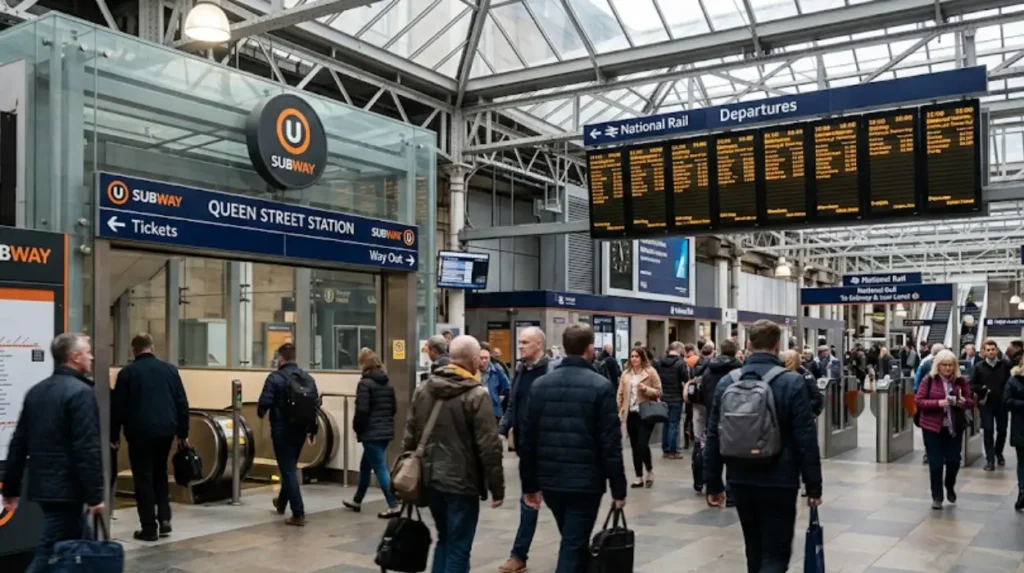
Queen Street is a key interchange point for visitors because it sits close to Glasgow’s main rail station, giving easy access to national and regional trains. From here, tourists can walk to principal shopping streets, museums, and the cultural core of the city, making it a practical starting or ending point for a day out.
St Enoch is equally vital for tourists because it connects directly to St Enoch Station and the large St Enoch Centre shopping complex. The stop is also close to the River Clyde, the SECC (Scottish Exhibition and Conference Centre) area, and several major hotels, so it serves as a primary hub for visitors arriving by train or staying in the city centre.
Hillhead is the main Subway gateway to the University of Glasgow, the Botanic Gardens, and the West End’s cultural and dining scene. Visitors using Hillhead can reach landmarks such as the Kelvingrove Museum (via a short walk or bus from nearby Kelvinbridge), the university campus, and the vibrant Byres Road area with its shops, cafes, and bars.
Kelvinbridge and adjacent areas are useful for visitors wanting access to Glasgow’s green spaces, including parts of the Forth and Clyde Canal corridor and proximity to Kelvingrove Park. While Kelvingrove Museum itself is not directly on the Subway line, Kelvinbridge and Hillhead are the closest stations and form the basis for most tourist routes into the West End.
For nightlife and entertainment, Cowcaddens and St Enoch are practical choices because they are close to major venues, bars, and clubs in the city centre and near the O2 Academy and other entertainment complexes. Tourists often use these stops to reach the central entertainment district without needing additional transport.
Which Glasgow Subway stops actually matter for commuters and workers?
For commuters and workers, the most important Glasgow Subway stops are St Enoch, Queen Street, Cowcaddens, and Ibrox, because they connect directly to the city’s main rail stations, central business districts, and major employment areas including retail, media, and sports venues.
St Enoch and Queen Street are critical commuter hubs because they sit adjacent to Glasgow’s two main railway stations (St Enoch Station and Queen Street Station). Workers travelling from surrounding towns and regions often use these stations to reach the city, then transfer to the Subway for quick access to offices in the Merchant City, Financial District, and surrounding commercial areas.
Cowcaddens is a key stop for people working in the city centre’s east side, including media and creative industries around the Glasgow Media City quarter and nearby office developments. It also serves residents of the east end who commute into central Glasgow, making it a high‑frequency stop during weekday peak hours.
Ibrox is essential for workers connected to Rangers Football Club and the surrounding stadium and entertainment complex, as well as for employees in industrial and logistics zones in the south‑west. The stop provides direct access to Ibrox Park and related facilities, and it is a major node for Southside commuters entering the city.
Govan and Partick (near Kelvinhall) matter for workers in local industry, education, and health sectors, including those employed at nearby hospitals, colleges, and business parks. Kelvinhall itself serves Partick and surrounding residential areas, making it a useful commuter stop for people living in the west and working in the city centre or at the SECC.
Explore More Area Guide
Best Lunch Spots Near Buchanan Street: Glasgow City Centre Guide
Where Can You Find the Best Late Night Takeaway in Glasgow?
How does the Glasgow Subway connect with other transport and city districts?
The Glasgow Subway connects the city centre, West End, and Southside through a circular route that crosses the River Clyde twice and links directly with major rail stations at Queen Street and St Enoch. It does not have branch lines, so all travel is along the 15‑station circle, but it provides quick access to key districts and complements bus and rail networks.
Queen Street and St Enoch are the principal integration points with the national rail network. Queen Street connects to Glasgow Queen Street railway station, serving routes to Edinburgh, the Highlands, and the north; St Enoch connects to St Enoch Station and provides access to the broader Southern and Western rail corridors.
The Subway’s route passes through the Merchant City, crosses the Clyde near West Street, and continues through Govan and Ibrox in the south‑west, then back across the river to the West End via Kelvinhall and Hillhead. This pattern ensures that the system links historic commercial areas, industrial zones, and university districts without requiring complex transfers.
Bus services in Glasgow are designed to complement the Subway, with many routes feeding into Subway stations and key stops such as St Enoch, Queen Street, and Hillhead. This integration allows commuters and visitors to combine rail, bus, and Subway travel for efficient cross‑city journeys, particularly where the Subway does not reach directly.
What is the cultural significance of the Clockwork Orange in Glasgow?
The Clockwork Orange is a cultural symbol of Glasgow’s industrial heritage and resilience, representing the city’s early engineering innovation and its ongoing role as a modern transport network. The nickname, inspired by A Clockwork Orange, has become part of Glasgow’s identity in tourism, media, and local culture, even though many locals simply call it the “Subway”.
Over more than 125 years, the Subway has been a lifeline for workers, residents, and visitors, shaping the way people move through the city and influencing the development of neighbourhoods along its route. Its compact, circular design and distinctive small orange trains have made it a recognizable feature of Glasgow’s urban landscape.
The system has inspired art, music, comedy, and literature, appearing in local stories, songs, and performances that reference its unique character and history. In tourism marketing and guidebooks, the “Clockwork Orange” label is used to evoke Glasgow’s quirky, innovative spirit and to distinguish the Subway from other underground systems in the UK and Europe.
For many Glaswegians, the Subway is less a novelty than a practical, everyday part of city life. It remains the only metro system in Scotland and continues to serve as a critical link between the city centre, West End, and Southside, underpinning the city’s transport network and community connectivity.