Key Points
- A collective of prominent Scottish theatre companies and artists has formally abandoned its proposal to take over Glasgow’s vacant Centre for Contemporary Arts (CCA) building.
- The consortium claimed that the bidding process managed by building owner Creative Scotland was “too heavily stacked” against non-profit and artist-led proposals.
- Former bidders expressed grave concern that the financial requirements set by the public funding body made it impossible for any arts organisation to acquire the property.
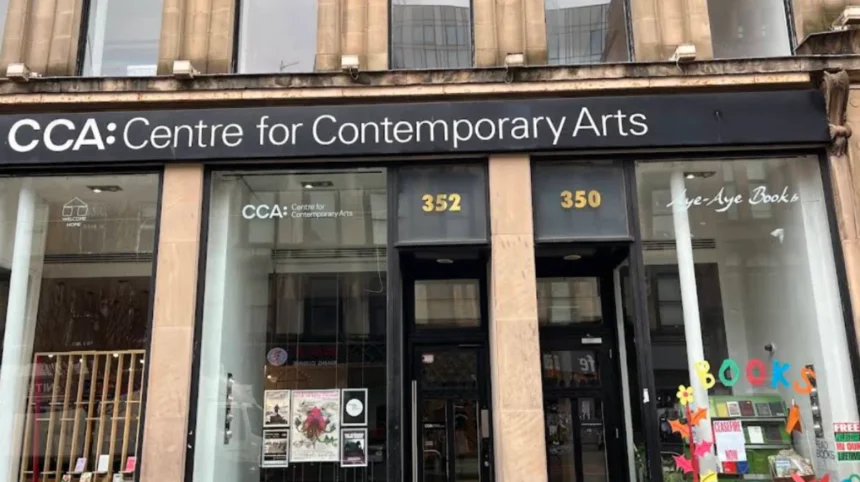
- The site at 350 Sauchiehall Street has remained vacant following the total financial collapse and liquidation of the venue in early 2026.
- Creative Scotland closed its expressions of interest window on 30 October 2026 and stated that submitted applications are currently being assessed to select preferred bidders.
Glasgow (Glasgow Express) November 3, 2026 – A major artist-led consortium comprising prominent Scottish theatre makers and performance companies has officially withdrawn its ambitious takeover bid for Glasgow’s defunct Centre for Contemporary Arts (CCA). The collective announced it has abandoned plans to redevelop the prominent Sauchiehall Street site after concluding that the procurement framework established by building owner Creative Scotland made it virtually impossible for an arts-focused bid to succeed.
As reported by Fergus Morgan of The Stage, the coalition had initially unveiled plans in July 2026 to transform the vacant building located at 350 Sauchiehall Street into a dedicated creation centre and artist-led destination for contemporary performance. However, the group confirmed that it pulled out prior to the bidding deadline, alleging that the selection process was “too heavily stacked” against creative organisations seeking to preserve the site as a public cultural asset.
Why Has The Artist-Led Takeover Bid Been Abandoned?
As reported by Brian Ferguson of The Scotsman, representatives from the former bidding group voiced sharp criticism over the commercial expectations placed on prospective buyers. The artist-led group stated that it struggled to see how any non-profit organisation intending to keep the building alive for performance and community use could realistically afford to purchase the property under Creative Scotland’s terms.
According to statements gathered across coverage in The Stage and The Scotsman, the collective expressed deep frustration that the selection criteria prioritised capital return over long-term cultural value. The decision marks a significant setback for grassroots arts advocates who had hoped to retain the historic city-centre building within Scotland’s creative sector following months of uncertainty regarding its future.
How Has Creative Scotland Responded To The Bidding Criticism?
Addressing the fallout from the collective’s departure, Creative Scotland defended its administrative procedures and confirmed that the initial window for proposals has officially closed.
As reported by Fergus Morgan of The Stage, a spokesperson for Creative Scotland stated that “the call for expressions of interest closed on 30th October, and applications are now being assessed”. The funding body further clarified that “preferred bidder(s) will then be invited to progress to the next stage, where their detailed business plans can be explored further before a final decision is reached”. Creative Scotland maintained that the process was structured to identify viable, long-term options for the venue.
Background Of The Centre For Contemporary Arts Development
The withdrawal of the takeover bid represents the latest chapter in a prolonged period of severe turbulence for the historic Glasgow venue. The site at 350 Sauchiehall Street originally traces its cultural heritage back to the Third Eye Centre, which was established in 1974 before officially re-emerging as the Centre for Contemporary Arts in 1992. For decades, the venue served as a multi-disciplinary hub hosting independent cinema, contemporary visual art, live theatre, literature events, and small local business tenants.
However, the venue suffered continuous operational disruptions over the past decade. Extended street closures caused by two catastrophic fires at the adjacent Glasgow School of Art severely restricted footfall and damaged trading income. Subsequent strain during the COVID-19 pandemic, coupled with internal operational conflicts and leadership churn, further destabilised the charity’s financial foundation.
As reported by Georgia Luckhurst of Arts Professional, the CCA secured multi-year funding approval from Creative Scotland after submitting comprehensive forward plans. Despite this funding support, the organisation encountered unsustainable liquidity problems and entered voluntary liquidation in January 2026, instantly ceasing all operations and making all staff members redundant. Ownership of the physical premises subsequently remained under Creative Scotland, which initiated the open call for expressions of interest to sell or transfer the site.
Prediction: How Will This Development Affect Scottish Arts and Local Communities?
The collapse of the artist-led bid is likely to have far-reaching implications for several key groups across the Scottish cultural ecosystem:
Impact On Independent Artists And Theatre Makers
The abandonment of the proposed creation centre removes a key prospective space for risk-taking, contemporary performance in Scotland’s largest city. Independent theatremakers, dancers, and technical practitioners will face a continued shortage of accessible, affordable development space within Glasgow city centre. Without an artist-led venue on Sauchiehall Street, local creatives must rely on increasingly stretched commercial or municipal spaces to develop and showcase new work.
Impact On The Local Sauchiehall Street Economy
For local residents, businesses, and visitors, the ongoing vacancy of 350 Sauchiehall Street prolongs the physical and commercial quietness of a major Glasgow thoroughfare. If Creative Scotland selects a commercial developer rather than a public-facing cultural provider, the street risks losing a historical community focal point that previously drew consistent footfall to nearby cafes, bars, and independent shops.
Impact On Public Funding Bodies And Arts Governance
This decision places intensified public and sector scrutiny on Creative Scotland. The inability of non-profit cultural organisations to compete within the current disposition framework will likely fuel ongoing debates regarding how public cultural assets are preserved during insolvency. Decision-makers will face continued pressure to demonstrate how future asset transfers balance financial returns against long-term civic and creative value.