Key Points
- Glasgow City Council has appointed architectural practice O’DonnellBrown to develop a concept design for the “meanwhile use” of the Union Street and Gordon Street fire site.
- The destroyed building was a Category B listed five-storey structure dating from 1851, originally designed by James Brown, and housed a wide range of businesses before the March fire.
- Demolition, scaffolding removal, site clearance, and stabilisation of gable walls are expected to complete later this month, with the site then handed over to the owners.
- Hoarding will be installed soon to dress the site before the meanwhile use is fitted, as part of a short-to-medium-term activation strategy.libguides.
- The RIBA Stage 2 concept design will be developed over the next three to four months, aiming to deliver a phased approach for activating the site over the next four years while long-term plans are developed.
- The design must respond to the site’s heritage setting, its importance, the owners’ requirements, and the intensity of pedestrian activity on Union Street.
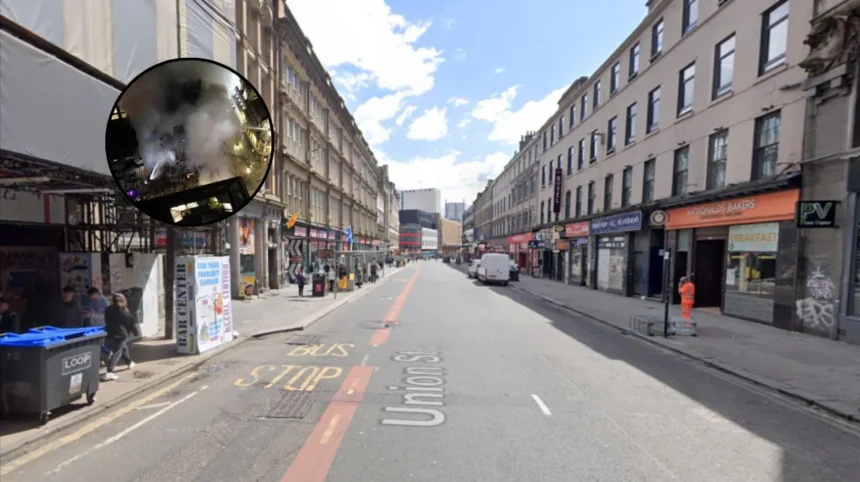
Glasgow (Glasgow Express) July 2, 2026 – Glasgow City Council has confirmed that the architectural practice O’DonnellBrown has been appointed to create a concept design for the meanwhile use of the site where a Category B listed building at the corner of Union Street and Gordon Street was destroyed by fire in March.
- Key Points
- Why Is Glasgow City Council Focusing on a Meanwhile Use for the Site?
- How Will O’DonnellBrown Develop the Concept Design?
- What Happens Next After the Concept Design Is Completed?
- Background: The Union Street and Gordon Street Fire and the Lost Building
- Prediction: How Could This Development Affect Glasgow Residents, Businesses, and Pedestrians?
- Impact on Nearby Businesses
- Impact on Residents and the Wider Community
The move marks a significant step in managing the aftermath of the blaze, which wiped out a notable example of Glasgow’s built heritage.
he building, dating from 1851 and designed by architect James Brown, housed a wide range of businesses at the time of the fire and had long been recognised as an important part of the city’s streetscape.
Demolition work, removal of scaffolding, clearance of the site, and stabilisation of the gable walls are expected to be completed later this month.
Once these tasks are finished, the site will be handed over to the owners. In the meantime, hoarding will be installed to dress the site and prepare it for the meanwhile use that will follow.
Why Is Glasgow City Council Focusing on a Meanwhile Use for the Site?
As reported by Glasgow City Council, the council’s decision to focus on a meanwhile use reflects a desire to avoid leaving the site idle for years while long-term redevelopment plans are developed.
Instead, the aim is to activate the site in the short to medium term—specifically over the next four years or so—using a phased approach that can be delivered quickly and adapted as circumstances change.
The council has stressed that the meanwhile use should respond to:
- The heritage setting of the site, given the loss of a listed building;
- The overall importance of the corner of Union Street and Gordon Street as a key location in the city;
- The intensity of pedestrian activity along Union Street, one of Glasgow’s main shopping and commercial arteries.ucm.
This approach is intended to keep the area active, safe, and visually considered, rather than allowing it to become a blank, unused gap that could detract from the surrounding environment.
How Will O’DonnellBrown Develop the Concept Design?
According to information provided by Glasgow City Council, O’DonnellBrown will work on a RIBA Stage 2 concept design over the next three to four months.
This stage of the design process typically involves developing a more detailed concept that can be used to test feasibility, explore options, and outline how the meanwhile use could be implemented in practice.
The resulting concept design is expected to:
- Provide a deliverable and phased approach to activating the site;
- Outline how the meanwhile use could evolve over time;
- Ensure that the design fits with the surrounding streetscape and heritage context; and
- Take into account practical constraints such as safety, access, and the need to manage high levels of pedestrian traffic.
The council has not yet disclosed specific details about what the meanwhile use might include, but it has indicated that the design will be developed with the aim of creating something that can be implemented relatively quickly and adapted as long-term aspirations for the site are refined.
What Happens Next After the Concept Design Is Completed?
Once the concept design is completed over the next three to four months, the next steps will depend on the owners’ decisions and any further input from the council and other stakeholders.
The council has indicated that the meanwhile use is intended to bridge the gap between the immediate aftermath of the fire and the eventual long-term redevelopment of the site.
In practical terms, this means that:
- The site will first be fully cleared and stabilised, with hoarding installed to dress the area;
- O’DonnellBrown’s concept design will then inform how the meanwhile use is planned and delivered;
- The meanwhile use will be rolled out in phases over the next four years or so, allowing for adjustments as needed; and
- Long-term plans for the site will continue to be developed separately, potentially leading to a more permanent redevelopment in the future.
The council has not specified whether there are any particular types of meanwhile use under consideration, such as cultural, retail, or community-based activities, but it has emphasised that the design must be sensitive to the site’s heritage and the high level of pedestrian activity on Union Street.
Background: The Union Street and Gordon Street Fire and the Lost Building
The building destroyed by fire in March was a Category B listed five-storey structure located at the corner of Union Street and Gordon Street in Glasgow.
It dated from 1851 and had been designed by the architect James Brown, making it a notable example of the city’s 19th-century built heritage.
At the time of the fire, the building contained a wide range of businesses, contributing to the vibrancy of the area.
The loss of the structure was widely reported in local media and recognised as a significant blow to Glasgow’s historic streetscape, particularly on Union Street, which remains one of the city’s primary commercial thoroughfares.
The fire led to extensive emergency work, followed by a prolonged period of demolition and site safety measures, including the installation of scaffolding and the stabilisation of remaining walls.
The council’s appointment of O’DonnellBrown now marks a transition from emergency response and cleanup to a more structured approach to managing the site in the interim period before any long-term redevelopment decision is made.
Prediction: How Could This Development Affect Glasgow Residents, Businesses, and Pedestrians?
For pedestrians using Union Street, the introduction of a meanwhile use could help maintain the sense of an active, occupied corner rather than a vacant, fenced-off gap. If the design successfully responds to the intensity of pedestrian activity, it may improve footfall and make the area feel more engaging, safer, and visually considered.
However, if the meanwhile use is poorly integrated or creates bottlenecks, it could disrupt pedestrian flow and negatively affect the experience of shoppers and passers-by.
The emphasis in the council’s statement on responding to pedestrian intensity suggests that the design team will be expected to test different layouts and access arrangements to minimise disruption.
Impact on Nearby Businesses
Nearby businesses on Union Street and Gordon Street could benefit from a meanwhile use that draws people back to the corner and keeps the area active.
A well-designed interim project might support local retail, hospitality, and service businesses by maintaining visibility and encouraging visits.
Conversely, if the meanwhile use is perceived as temporary, low-quality, or unattractive, it could fail to generate interest and might not deliver the expected boost to surrounding businesses.
The phased approach proposed by the council allows for adjustments, which could help refine the meanwhile use in response to feedback from local traders and users.
Impact on Residents and the Wider Community
For residents and the wider community, the meanwhile use could offer an opportunity to see the site used in a way that reflects local needs, whether through cultural, community, or creative activities.
If the design process involves consultation with local stakeholders, it could also build a sense of ownership and engagement around the site.
In the longer term, the meanwhile use is intended to run alongside the development of long-term aspirations for the site. If those long-term plans lead to a high-quality, sustainable redevelopment, the meanwhile period could act as a bridge that keeps the area alive and visible until that future vision is realised.
However, if long-term plans remain uncertain or delayed, the meanwhile use may need to extend beyond the initial four-year window, requiring furtheradaptation by O’DonnellBrown and the council.
Overall, the appointment of O’DonnellBrown and the focus on a meanwhile use represent a pragmatic attempt to manage the loss of a listed building while keeping the corner of Union Street and Gordon Street active, safe, and responsive to the needs of pedestrians, businesses, and the wider Glasgow community.