Key Points
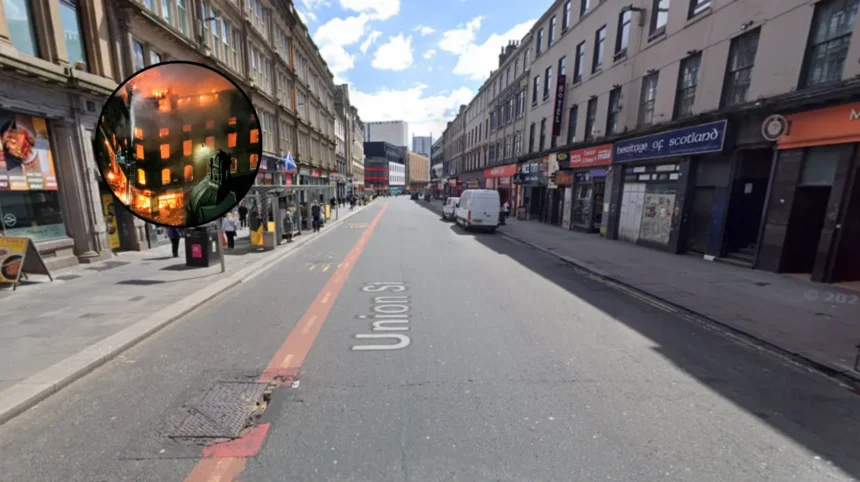
- A massive fire broke out in a vape shop on Union Street, Glasgow, on 8 March 2026, leading to the partial collapse of the historic Union Corner building at the junction with Gordon Street.
- The blaze prompted a street closure on Union Street and Gordon Street near Glasgow Central Station, which Glasgow City Council has confirmed will remain until early July 2026 for safety reasons.
- Stabilisation work is underway on a gable wall adjoining the Central Station Hotel, exposed by the collapse, to prevent further structural risks.
- Dozens of businesses were displaced, forcing them to seek new premises, with some reporting sales impacts due to the ongoing cordon.
- An eyewitness attempted to extinguish the initial flames but retreated after explosions; the Scottish Fire and Rescue Service dispatched six units.
- Glasgow City Council launched a fire recovery fund for affected businesses and noted an ongoing review that could allow some building access before July.
- The vape shop had no registration to sell vapes and was not paying business rates, as revealed by an investigation.
- Central Station was evacuated during the incident; a council information page provides updates on traffic, business support, and recovery.
Glasgow (Glasgow Express) April 24, 2026 – A cordon on Union Street and Gordon Street near Glasgow Central Station will remain in place until July due to ongoing stabilisation work on a wall adjoining the Central Station Hotel, the council has announced.
- Key Points
- What Caused the Union Street Fire in Glasgow?
- Why Is the Cordon on Union Street and Gordon Street Still in Place?
- How Has Glasgow City Council Responded to the Fire?
- What Is the Timeline for Reopening Union Street?
- Background of the Development
- Prediction: How This Development Can Affect Local Businesses and Commuters
What Caused the Union Street Fire in Glasgow?
The fire erupted in a vape shop at Union Street around 15:45 on Sunday, 8 March 2026. As reported by BBC News, the blaze ignited in the ground-floor premises and rapidly spread through the four-storey building at the Union Street-Gordon Street junction, adjacent to Glasgow Central Station.
Lamin Kongira, an eyewitness, told BBC Scotland News that he was passing by when a shopkeeper rushed out shouting about the fire. He returned with a fire extinguisher and tried to tackle the flames but heard two explosions from the vape shop, forcing him to flee. Kongira stated to the BBC:
“I believe the second explosion was responsible for the fire spreading to other areas of the building.”
The Scottish Fire and Rescue Service confirmed the fire started in the vape shop and dispatched six units to the scene. Videos shared on social media showed thick smoke pouring from the shop near a side entrance to the station. By evening, flames engulfed the entire structure, including the dome of the 19th-century B-listed Forsyth House next door, causing the front wall to partially collapse.
A Ferret investigation revealed the company behind the pop-up style vape shop had not registered to sell vapes at the premises and was not paying business rates.
Why Is the Cordon on Union Street and Gordon Street Still in Place?
Glasgow City Council stated the closures on Union Street and Gordon Street are enforced for safety until stabilisation of the exposed gable wall next to the Central Station Hotel is complete. A council spokesperson said:
“Until work is complete, the gable wall [is] in a precarious state, with the structure still at risk of additional collapse. This necessitates the continuation of current safety cordon on Union Street and Gordon Street to ensure the safety of the public and those working at the site. Progress on the stabilisation efforts will be continuously reviewed.”
Work to stabilise the wall began recently and is expected to take until early July 2026, according to a Glasgow City Council update on X. The council added that an ongoing review could permit access to some buildings before then.
The fire wrecked the historic Union Corner building, leaving dozens of businesses seeking new premises. Several affected enterprises have reported negative sales impacts from the closure.
How Has Glasgow City Council Responded to the Fire?
In response, the council established a fire recovery fund to support displaced businesses. An information page on the Glasgow City Council website offers updates on traffic and transport, business support, council services, and other fire impacts.
Glasgow Chamber of Commerce noted on LinkedIn that following the 8 March fire, the council’s page at glasgow.gov.uk provides ongoing details as recovery develops rapidly under council leadership.
Central Station was evacuated as the fire took hold several hours after it started just after 4pm on 8 March.
A preliminary multi-agency investigation into the cause began, as confirmed by the fire service.
What Is the Timeline for Reopening Union Street?
The local authority indicated stabilisation work on the gable wall exposed by the collapse is now underway, with full completion due by early July. A Facebook update from The Glasgow Patter suggested the street could remain closed until July or August 2026 while the council and partners conduct essential work.
Background of the Development
The Union Street area near Glasgow Central Station features historic architecture, including the B-listed Forsyth House from 1851, known for its iconic dome at the Union Street-Gordon Street corner. The Union Corner building housed various ground-floor retail, including the vape shop where the fire originated. The proximity to the busy Central Station underscores the high footfall and economic activity in the zone, making disruptions significant for local commerce and transport. Previous council responses to fires in the city centre have involved structural assessments to protect adjoining properties like the Central Station Hotel.
Prediction: How This Development Can Affect Local Businesses and Commuters
Local businesses displaced by the fire face prolonged relocation challenges until July, potentially extending revenue losses as they adapt to new sites amid the cordon. Commuters using Glasgow Central Station may encounter ongoing traffic diversions on Union Street and Gordon Street, increasing journey times during peak hours. Authorities’ review for earlier access could mitigate some impacts, but full stabilisation completion remains key to normalising the area for traders and travellers.