Key Points
- Robert Weir, 56, was sentenced to seven years and six months in prison at the High Court in Glasgow on Friday, 15 May 2026
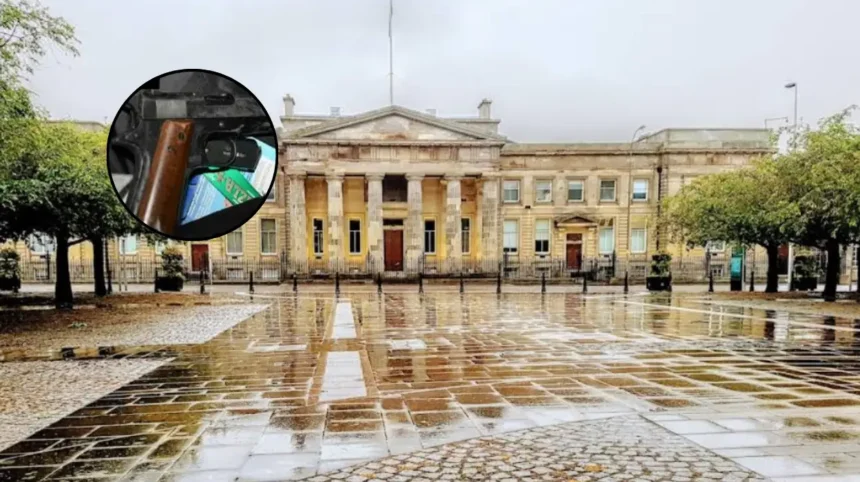
- Police discovered a cache of weapons in a shipping container Weir rented at Sandpoint Marina in Dumbarton in March 2025
- The weapons included a shortened, loaded Russian-made shotgun (16-bore), a loaded Japanese shotgun (12-bore), and two handguns with ammunition
- Weir pleaded guilty to multiple firearms offences at the High Court in Glasgow in March 2026
- He also admitted to possessing 1.7kg of cannabis with a street value of £17,202 at his home in Dumbarton
- Police found cannabis in four vacuum-sealed bags, digital scales, and two swords during a search of Weir’s home earlier on the day of the marina search
- Forensic analysis confirmed the Russian shotgun was in working order; Weir’s DNA was found on several weapons
- Prosecutor Sineidin Corrins of the Crown Office and Procurator Fiscal Service stated the weapons had “potential to cause significant harm”
- The Crown Office emphasized commitment to working with police to detect such crimes and prosecute responsible parties
- Sandpoint Marina is located in Dumbarton, West Central Scotland
Glasgow (Glasgow Express) May 16, 2026 – What prompted police to search the shipping container at Sandpoint Marina where foreign firearms were discovered? As reported by Lucinda Cameron of The Independent, police attended the storage unit after a search of Robert Weir’s home earlier on the same day found cannabis in four vacuum-sealed bags, digital scales, and two swords. Officers subsequently found the firearms when they searched the metal shipping container Weir was renting at Sandpoint Marina in Dumbarton.
- Key Points
- Which Weapons Did Police Discover in the Shipping Container?
- What Exactly Did Robert Weir Admit in Court?
- What Did the Prosecutor Say About the Severity of This Case?
- Where Were the Weapons Hidden and When Were They Found?
- How Long Was Weir Sentenced and What Offences Led to This Penalty?
- What Other Items Were Found During the Police Investigation?
- Why Does This Case Matter for Public Safety?
- Background of This Development
- How This Development Can Affect the Scottish Public and Maritime Storage Users
- How Might This Affect People Who Use Maritime Storage Containers?
- What Impact Does This Have on Drug and Firearms Enforcement Priorities?
Which Weapons Did Police Discover in the Shipping Container?
According to prosecutors, police found a shortened, loaded Russian-made shotgun and a loaded Japanese shotgun, along with two handguns with ammunition. The Crown Office stated that forensic analysis of the Russian shotgun showed it was in working order and designed to discharge 16-bore shotgun cartridges. The Japanese shotgun was constructed to discharge 12-bore cartridges and was constituted as a firearm.
As reported by Lucinda Cameron of The Independent, Weir’s DNA was found on a number of the weapons, prosecutors said. This forensic evidence helped establish Weir’s direct connection to the firearms he had concealed.
What Exactly Did Robert Weir Admit in Court?
Robert Weir, 56, admitted multiple firearms offences at the High Court in Glasgow in March 2026, according to prosecutors. As reported by the London Evening Standard, he also pleaded guilty to possessing 1.7kg of cannabis with a street value of £17,202 at his home.
The sentencing occurred at the High Court in Glasgow on Friday, 15 May 2026, where Weir received seven years and six months in prison, the Crown Office confirmed.
What Did the Prosecutor Say About the Severity of This Case?
Prosecutor Sineidin Corrins, of the Crown Office and Procurator Fiscal Service, made several key statements about the case. As reported by the London Evening Standard, Corrins stated:
“This was an important recovery of weapons that had the potential to cause significant harm”.
Corrins continued:
“These weapons have now been taken out of commission and Robert Weir will spend a lengthy time in prison as a consequence of his crimes”.
Adding further context, as reported by STV News, Corrins said:
“This case underlines our commitment to continue working with the police and other agencies to ensure that these crimes are detected and those responsible prosecuted using all measures at our disposal”.
Where Were the Weapons Hidden and When Were They Found?
The weapons were hidden in a metal shipping container that Weir rented at Sandpoint Marina in Dumbarton, West Central Scotland. Police found the weapons after searching the storage unit at Sandpoint Marina in Dumbarton in March 2025.
According to The Independent, the police search of the storage facility occurred at Sandpoint in Dumbarton in 2025, with the weapons discovered during that operation.
How Long Was Weir Sentenced and What Offences Led to This Penalty?
Weir was sentenced to seven years and six months in prison at the court on Friday, the Crown Office said. This lengthy sentence reflects the seriousness of multiple firearms offences combined with drug possession.
As reported by Lucinda Cameron of The Independent, Weir, aged 56, was sentenced following the police search that uncovered both the firearms at the marina and cannabis at his residence.
What Other Items Were Found During the Police Investigation?
Beyond the firearms and cannabis, police discovered additional items during their investigation. As reported by The Independent, cannabis was found in four vacuum-sealed bags at Weir’s home, along with digital scales and two swords.
The digital scales suggested possible drug distribution activity, while the two swords represented additional weapons in Weir’s possession, though these did not form part of the firearms offences for which he was sentenced.
Explore More Glasgow Crime News
Glasgow Man Sentenced for Teen Sexual Offence — Glasgow, 2026
Glasgow Trio Jailed 18 Years for Daniel Firebomb Attacks; Glasgow 2026
Why Does This Case Matter for Public Safety?
The case demonstrates the Crown Office’s commitment to removing dangerous weapons from circulation. As prosecutor Sineidin Corrins stated,
“This was an important recovery of weapons that had the potential to cause significant harm”.
The fact that the weapons were foreign-made (Russian and Japanese) and had been altered (the Russian shotgun was shortened) indicates sophisticated acquisition and modification that posed heightened risks.
The recovery of these weapons ensures they cannot be used in future crimes. As Corrins noted,
Background of This Development
This case emerged from a coordinated police operation in West Central Scotland that began with a residential search and expanded to a marina storage facility. Robert Weir, a 56-year-old man from Dumbarton, had rented a shipping container at Sandpoint Marina where he concealed multiple foreign-made firearms. The investigation started when police searched Weir’s home and discovered 1.7kg of cannabis in four vacuum-sealed bags, digital scales, and two swords.
Following the home search, officers proceeded to Sandpoint Marina in Dumbarton, where they searched the metal shipping container Weir was renting.
There, they discovered the cache of weapons: a shortened, loaded Russian-made shotgun designed for 16-bore cartridges, a loaded Japanese shotgun constructed for 12-bore cartridges, and two handguns with ammunition. Forensic analysis confirmed the Russian shotgun was functional, and Weir’s DNA was found on several weapons, establishing direct physical contact.
Weir pleaded guilty to multiple firearms offences and drug possession charges at the High Court in Glasgow in March 2026.
The Crown Office and Procurator Fiscal Service, through prosecutor Sineidin Corrins, emphasized the significance of removing these potentially harmful weapons from circulation. The sentencing on 15 May 2026 resulted in a seven-and-a-half-year prison term, reflecting the combined severity of firearms offences and drug possession with a street value exceeding £17,000.
How This Development Can Affect the Scottish Public and Maritime Storage Users
This development directly affects residents of Dumbarton and the wider West Central Scotland region by removing dangerous firearms from their communities. As prosecutor Sineidin Corrins stated, the weapons “had the potential to cause significant harm” before being recovered.
The seven-and-a-half-year sentence sends a clear message that concealing firearms in maritime storage facilities will result in substantial prison time.
For ordinary citizens living near Sandpoint Marina and other coastal storage facilities, this case demonstrates that police actively monitor and investigate suspicious storage activities. The successful prosecution reassures the public that weapons stockpiling will be detected and prosecuted vigorously.
How Might This Affect People Who Use Maritime Storage Containers?
Individuals who rent storage containers at marinas across Scotland should be aware that such facilities are not impervious to police investigation.
As this case shows, when police obtain reasonable grounds to search a storage unit, they will act decisively. Weir’s case began with a residential search that led directly to the marina investigation.
Users of maritime storage should understand that storing prohibited items, particularly firearms, carries severe criminal consequences. Weir’s DNA being found on the weapons demonstrated that forensic evidence can definitively link individuals to concealed firearms, making denials ineffective in court.
What Impact Does This Have on Drug and Firearms Enforcement Priorities?
The Crown Office’s statement emphasizes continued commitment to “working with the police and other agencies to ensure these crimes are detected and those responsible are prosecuted using all measures at our disposal”. This indicates that enforcement priorities will remain focused on detecting firearms and drug offences simultaneously, as they often occur together in criminal operations.