Key Points
- Amir Andakhsh, 39, exposed himself to ScotRail staff at Bellgrove station in Glasgow on 10 February 2026.
- The incident occurred amid increased staff presence due to disturbances on previous nights.
- Prosecutor Danielle McGuinness told the court that Andakhsh removed his clothing and exposed his genitals while shouting about CCTV.
- Staff warned him that body cameras were recording the incident.
- Police were called, and Andakhsh was later arrested.
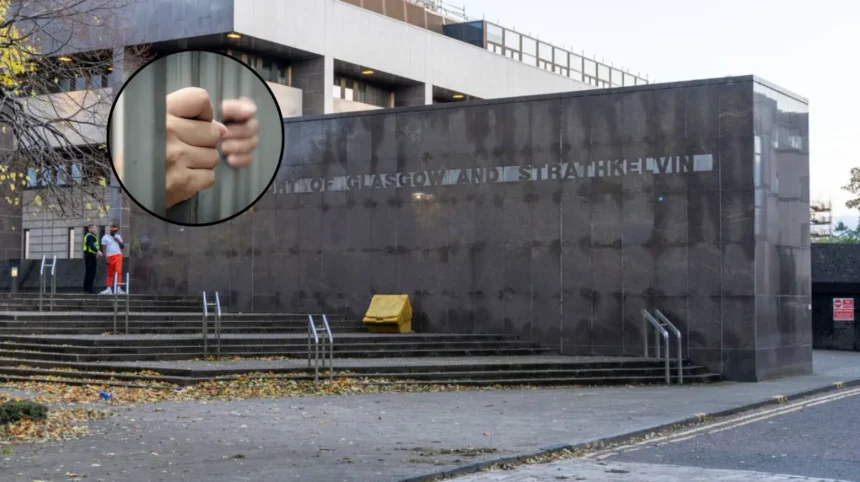
- He pleaded guilty to public indecency at Glasgow Sheriff Court.
- Defence solicitor Paul Langan said the act was a form of protest linked to homelessness and lack of benefits.
- Sheriff Andrew McIntyre ruled there was a “significant sexual element” to the offence.
- Andakhsh was jailed for 12 months and placed on the sex offenders register for 10 years.
Glasgow (Glasgow Express) May 11, 2026 –A man who claimed he exposed himself to ScotRail workers as a form of protest has been sentenced to 12 months in prison after an incident at a Glasgow railway station. The case, heard at Glasgow Sheriff Court, centred on behaviour described by the court as involving a “significant sexual element”, resulting in both a custodial sentence and long-term registration as a sex offender.
- Key Points
- What happened at Bellgrove station on February 10, 2026?
- How did ScotRail staff respond to the incident?
- What was said in court about Andakhsh’s behaviour?
- Why did the court impose a prison sentence and sex offender registration?
- How does Scottish law treat public indecency cases like this?
- What role did personal circumstances play in the case?
- Background: Public safety and staff protection on Scotland’s rail network
- Prediction: How could this case affect rail staff and public behaviour?
What happened at Bellgrove station on February 10, 2026?
The incident took place at Bellgrove train station in Glasgow on the evening of 10 February 2026, where additional ScotRail staff had been deployed following disturbances on previous nights.
As reported in court by prosecutor Danielle McGuinness, Andakhsh was present at the station behaving in a manner described as erratic and incoherent.
He was said to be “rambling in an incoherent manner” and speaking about topics including CCTV, Interpol, and football.
According to McGuinness, the situation escalated when Andakhsh removed his belt before pulling down his trousers and underwear, exposing his genitals in front of railway staff.
She told the court:
“Andakhsh took his belt off, pulled down his trousers and underwear then exposed his genitals. He continued to shout about CCTV.”
The exposure occurred in a public setting, in the presence of ScotRail employees who had been stationed there specifically to manage ongoing disturbances.
How did ScotRail staff respond to the incident?
Staff at the station responded by warning Andakhsh that their body-worn cameras were actively recording the incident.
The use of such cameras has become increasingly common among railway staff as part of wider safety measures.
Following the warning, Andakhsh pulled his trousers back up but continued to behave in a disoriented manner, reportedly continuing to ramble to himself.
The situation prompted staff to contact Police Scotland. Officers attended and subsequently arrested Andakhsh in connection with the incident.
The court heard that the presence of additional staff at Bellgrove station that evening was due to prior disturbances, although no further details of those earlier incidents were disclosed during proceedings.
What was said in court about Andakhsh’s behaviour?
At Glasgow Sheriff Court, Andakhsh pleaded guilty to a charge of public indecency.
Prosecutor Danielle McGuinness outlined the sequence of events and emphasised the nature of the exposure in a public environment, particularly in front of staff carrying out their duties.
The court also heard details about Andakhsh’s demeanour at the time, including his incoherent speech and references to surveillance-related themes.
In mitigation, defence solicitor Paul Langan provided context regarding his client’s personal circumstances.
As reported during the hearing, Langan stated:
“It was a form of protest and it did not last long.”
He further explained that Andakhsh had been experiencing hardship, adding:
“He was unhappy about his situation as he had become homeless and was not in receipt of benefits.”
Langan also addressed the nature of the act, stating:
“There were no remarks of a sexual nature.”
The defence position sought to frame the incident as an expression of frustration linked to personal and financial difficulties, rather than an act driven by sexual intent.
Why did the court impose a prison sentence and sex offender registration?
Despite the defence arguments, Sheriff Andrew McIntyre took a different view regarding the seriousness of the offence.
In delivering his decision, Sheriff McIntyre stated that there was a “significant sexual element” to the case. This assessment was central to the sentencing outcome.
The sheriff imposed a custodial sentence of 12 months’ imprisonment. In addition, Andakhsh was placed on the sex offenders register for a period of 10 years.
The decision to include registration reflects the court’s interpretation of the nature of the offence, particularly in relation to public exposure and its impact on those present.
The ruling indicates that, regardless of the stated motivation behind the act, the court considered the behaviour to meet the threshold for a sexual offence under relevant legal standards.
How does Scottish law treat public indecency cases like this?
Public indecency in Scotland is treated as a serious offence, particularly when it involves deliberate exposure in a public setting.
Cases are assessed based on factors including:
- The nature and context of the act.
- The presence of members of the public or workers.
- Whether the behaviour is deemed to have a sexual component.
- The impact on witnesses.
Where a court determines that an offence involves a sexual element, additional consequences may follow, including placement on the sex offenders register.
In this case, the sheriff’s finding of a “significant sexual element” led directly to the registration requirement, alongside the custodial sentence.
What role did personal circumstances play in the case?
The defence highlighted Andakhsh’s personal situation, including homelessness and lack of access to benefits, as contributing factors to his actions.
While such factors can be considered in mitigation, the court ultimately prioritised the nature of the offence and its classification under the law.
The court did not dispute the circumstances outlined by the defence but determined that they did not outweigh the seriousness of the conduct.
This reflects a broader legal approach in which personal hardship may be acknowledged but does not necessarily reduce the classification or consequences of certain offences.
Background: Public safety and staff protection on Scotland’s rail network
Railway operators in Scotland, including ScotRail, have in recent years increased safety measures for staff and passengers in response to incidents of antisocial behaviour.
These measures include:
- Deployment of additional staff at stations with recurring issues.
- Use of body-worn cameras by frontline workers.
- Closer coordination with Police Scotland.
Bellgrove station, where the incident occurred, had reportedly seen disturbances in the days leading up to 10 February 2026, prompting the presence of extra personnel.
Body-worn cameras, as referenced in this case, are intended to deter misconduct and provide evidence when incidents occur. Their use has become more widespread across transport networks in the UK.
Incidents involving public indecency, while less common than other forms of antisocial behaviour, are treated seriously due to their potential impact on staff and passengers.
Prediction: How could this case affect rail staff and public behaviour?
This case may reinforce existing approaches to staff safety and incident response across Scotland’s rail network.
For rail operators and staff:
- It underlines the importance of body-worn cameras as both a deterrent and evidential tool.
- It may support continued or increased staffing at stations with prior disturbances.
- It highlights the legal backing for taking firm action against disruptive behaviour.
For the public:
- The outcome demonstrates the legal consequences of public indecency, including custodial sentences and sex offender registration.
- It may act as a deterrent to similar conduct in public spaces, particularly in monitored environments such as transport hubs.
For individuals facing hardship:
- The case illustrates that personal circumstances, such as homelessness or lack of benefits, may be raised in court but do not negate accountability for criminal actions.
Overall, the development reflects an ongoing emphasis on maintaining safety and order within public transport settings, with courts prepared to impose significant penalties where offences are deemed to cross into sexual misconduct.