

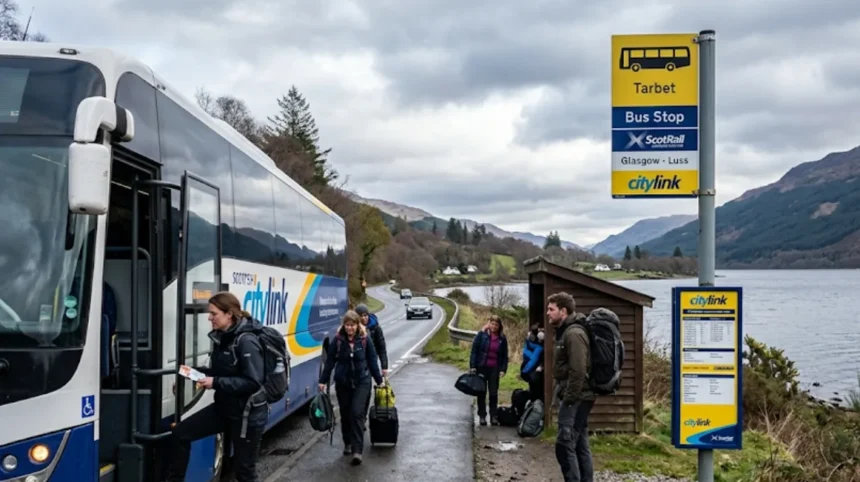
Loch Lomond and The Trossachs National Park represents a major geographical and ecological asset located in the southern highlands of Scotland. Spanning an area of 720 square miles, this destination contains the largest expanse of freshwater in Great Britain by surface area. Navigating from the city of Glasgow to this national park via public transit is a standard operational route managed by national rail and regional bus services.
Effective transit planning relies on understanding the infrastructure provided by the national rail operator, ScotRail, alongside regional coach networks like Scottish Citylink and First Greater Glasgow. Traveling without a personal motor vehicle requires choosing specific transport nodes depending on whether the target destination lies on the southern shore, eastern shore, or western shore of the loch.
What Is the Fastest Train Route From Glasgow to Loch Lomond?
The fastest train route runs directly from Glasgow Queen Street Low Level to Balloch station on the southern tip of the loch. This direct ScotRail service takes approximately 50 minutes and operates twice per hour throughout the standard weekly schedule.
ScotRail Infrastructure and Balloch Access
The low-level platforms at Glasgow Queen Street handle the direct commuter rail line to Balloch. Passengers board the northbound train, which travels along the North Clyde Line. The line covers a rail distance of 16 miles (26 kilometers) between the city center and the southern gateway of the national park.
The service does not require pre-booking or seat reservations. Tickets can be purchased via digital transit applications or directly at the station ticket machines on the day of travel. The rail line follows the path of the River Clyde before turning north at Dumbarton, passing through regional towns such as Bowling and Alexandria before terminating at Balloch.
Operational Timetables and Frequencies
Trains leave Glasgow Queen Street regularly beginning at approximately 05:33 on weekdays, with services continuing until 23:31 at night. This high frequency makes the southern shore highly accessible for day trips, commuting, and standard tourism extraction.
A standard return ticket from Glasgow Queen Street to Balloch costs between £8 and £16, depending on peak travel times and railcard discounts. Upon arrival at Balloch station, passengers find themselves 400 meters from the southern shore of Loch Lomond, the Balloch Castle Country Park, and local boat cruise operators.
How Do You Reach the Western and Northern Shores by Train?
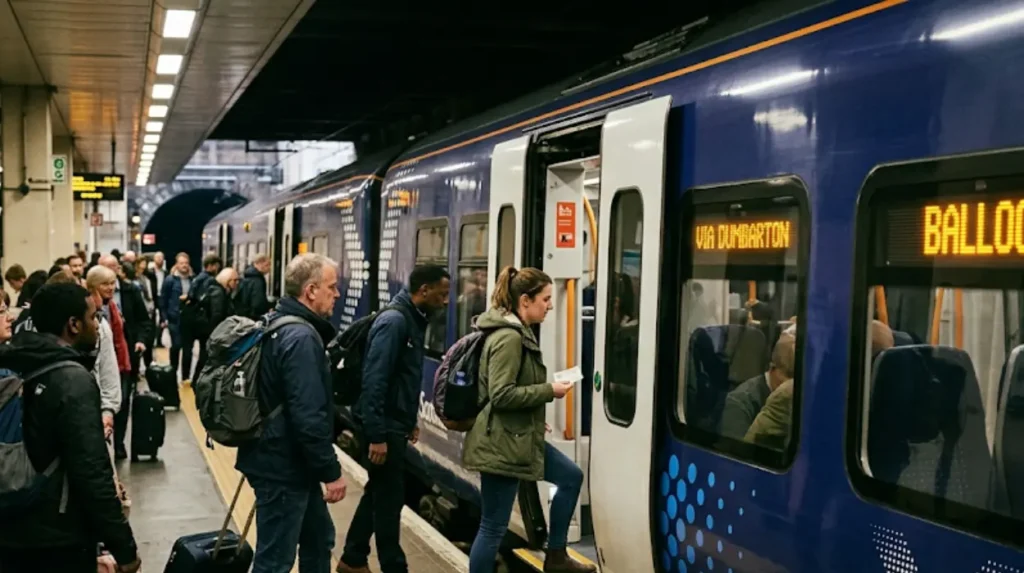
Passengers reach the western and northern shores by boarding the West Highland Line from Glasgow Queen Street Upper Level to Arrochar & Tarbet or Ardlui. This scenic rail journey operates multiple times daily, with travel times ranging between 80 and 95 minutes.
The West Highland Line Mechanism
The West Highland Line is a distinct piece of rail infrastructure separate from the local Balloch commuter line. This route uses diesel-powered sprinter trains designed for long-distance transit into the Scottish Highlands. Trains depart from the upper-level platforms of Glasgow Queen Street and head northwest via Helensburgh Upper.
The line follows the elevated contours of the western side of the loch, offering direct visual observation of the mountainous landscape. Because this is a long-distance route terminating at Oban or Fort William, the frequency is lower than the commuter line, averaging roughly four to five departures per day.
Specific Station Exit Points
The line provides two major drop-off points directly adjacent to the water on the western axis:
- Arrochar & Tarbet Station: Located 1.2 miles from the Tarbet pier, this station requires an 80-minute journey from Glasgow. It serves as a major connection point for western loch cruises and hikers accessing the Arrochar Alps mountain range.
- Ardlui Station: Situated at the far northern tip of Loch Lomond, this station requires a 95-minute journey. It places passengers directly next to the northern marina and provides an entry point for the wilder, more remote sections of the park.
Which Bus Options Connect Glasgow to Loch Lomond Villages?
Scottish Citylink operates long-distance coaches from Glasgow Buchanan Bus Station directly to western shore villages like Luss and Tarbet. These routes, primarily numbers 914, 915, and 916, take about 65 to 75 minutes and run on an hourly or bi-hourly basis.
Scottish Citylink Coach Routes
For individuals targeting the picturesque conservation village of Luss or the transit hub at Tarbet, long-distance coaches offer a direct alternative to rail travel. Coaches depart from Buchanan Bus Station in central Glasgow and utilize the main A82 trunk road to head north.
Route 915 serves as a core transit link connecting Glasgow to Skye via the western banks of Loch Lomond. The journey time to Luss is roughly 60 minutes, while reaching Tarbet takes 75 minutes. Because these coaches carry passengers heading far into the Highlands, purchasing tickets in advance via the Citylink website is highly recommended during summer peaks to guarantee a seat.
First Greater Glasgow Local Bus Options
Aside from long-distance coaches, local bus infrastructure provides a slower but highly cost-effective service. First Greater Glasgow operates the Service 1A and 1E routes, which travel from Glasgow city center through Clydebank and Dumbarton, eventually terminating at the Balloch bus stance.
While this service takes roughly 90 minutes to complete due to frequent localized stops, it offers an alternative during rail service disruptions or strikes. Additionally, newer zero-emission operators like Ember have introduced scheduled electric bus runs from Glasgow out toward the western corridors of the park.
How Do You Travel to the Eastern Shore and Balmaha Without a Car?
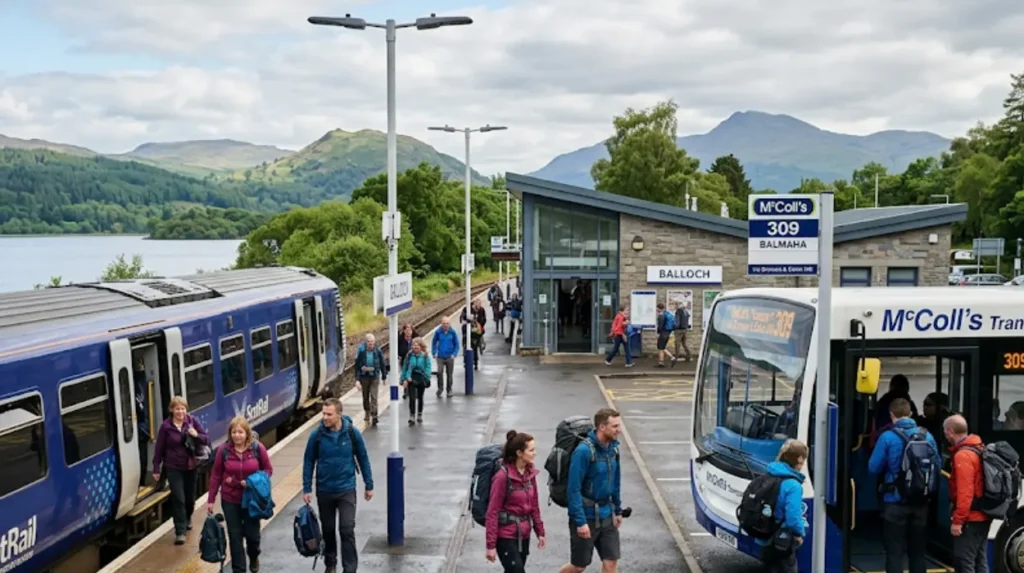
Reaching the eastern shore requires taking a ScotRail train from Glasgow to Balloch, followed by boarding the McColl’s 309 bus to Balmaha. The bus journey from Balloch takes 30 minutes, running through Drymen directly to the foot of Conic Hill.
Two-Step Transit Chain to Balmaha
The eastern edge of Loch Lomond, highlighted by the village of Balmaha and the mountain Ben Lomond, contains no direct rail links. Travelers must use a multi-modal transport strategy combining rail and regional bus services. The sequence begins with the standard 50-minute ScotRail train from Glasgow Queen Street Low Level to Balloch.
Upon exiting Balloch station, passengers walk 50 meters to the adjacent bus stance to catch the local 309 bus route operated by McColl’s Transport. This bus runs eastward through the historic village of Drymen before navigating the narrow road along the eastern edge of the water to arrive at Balmaha.
Accessing the West Highland Way and Ben Lomond
Balmaha serves as a primary access node for the West Highland Way, a world-famous 96-mile long-distance walking route that snakes along the entire eastern coastline of the loch. The 309 bus terminates at the Balmaha Visitor Centre, providing immediate pedestrian access to the Conic Hill hiking path.
For hikers targeting Ben Lomond—a 974-meter Munro mountain located further north at Rowardennan—the bus line does not extend to the trailhead. Travelers must either walk the remaining section along the West Highland Way path or utilize seasonal on-demand waterbus ferries crossing over from the western piers.
What On-Water Public Transport Options Are Available?
Seasonal waterbuses and ferry loops run by Cruise Loch Lomond and Sweeney’s Cruises connect the western, eastern, and southern shores seamlessly. These vessels link transit nodes like Balloch, Luss, Tarbet, Balmaha, and Rowardennan between April and October.
The Loch Lomond Waterbus Network
Waterbuses function as a key component of the rural transport strategy designed by the Loch Lomond & The Trossachs National Park Authority. Instead of traditional sightseeing tours, these scheduled water vessels operate as point-to-point ferry services, allowing car-free travelers to hop across the water between distinct villages.
For example, a visitor can take the train from Glasgow to Tarbet, walk to the pier, and board a waterbus crossing to Inversnaid or Rowardennan on the otherwise inaccessible northeastern shore. This connects the rail networks of the west directly to the trail networks of the east.
Planning Inter-Modal Connections
The waterbus network operates strictly on a seasonal basis, with timetables heavily concentrated between the Easter holidays in April and the end of October. Tickets can be purchased at the main piers in Balloch or Tarbet, or online via the respective cruise company portals.
Combining a morning train ticket, a local afternoon bus ride, and an evening waterbus trip allows travelers to execute a full, car-free circuit around the entire perimeter of the loch before returning to Glasgow city center by nightfall.