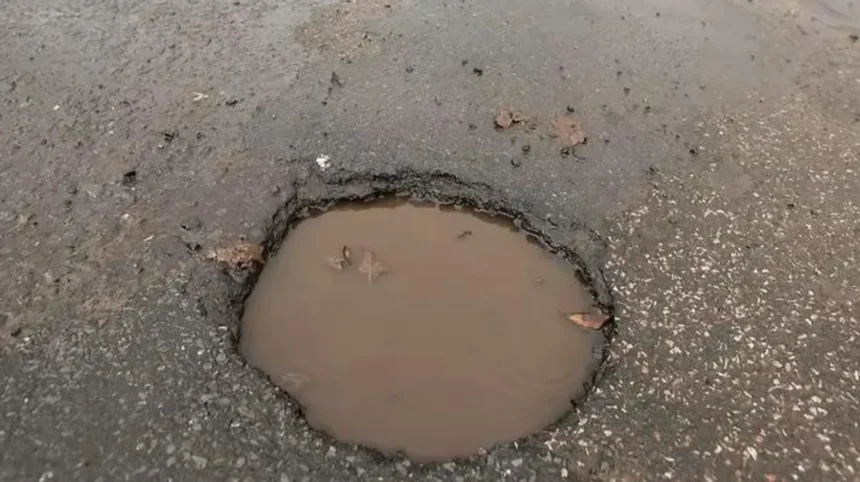
Potholes are a road safety issue for drivers, cyclists, motorcyclists and pedestrians across Glasgow. Reporting damaged road surfaces to the correct authority helps Glasgow City Council and Scotland’s trunk road operators identify hazards, assess repair priorities and maintain safer journeys. Residents can report potholes through the council’s reporting services, including the MyGlasgow app.
- What is a pothole and why is it a problem on Glasgow roads?
- How do you report a pothole in Glasgow?
- Which authority is responsible for potholes in Glasgow?
- What information should you include in a Glasgow pothole report?
- What happens after you report a pothole to Glasgow City Council?
- How quickly are potholes repaired in Glasgow?
- Can you report potholes on cycle lanes and residential streets?
- What should you do if a pothole damages your car in Glasgow?
- Can you claim compensation for pothole damage in Scotland?
- Why do potholes develop so frequently on roads?
- How can Glasgow residents help prevent pothole hazards?
- What should you do if a pothole remains unrepaired?
- How will road maintenance affect Glasgow’s future?
This guide explains how to report a pothole in Glasgow, what information to provide, which authority maintains different roads, what happens after a report and how to pursue a vehicle damage claim.
What is a pothole and why is it a problem on Glasgow roads?
A pothole is a hole or depression in a road surface caused by the breakdown of asphalt or other road materials. In Glasgow, potholes create hazards for road users, damage vehicles and require assessment by the authority responsible for maintaining the affected road.
A pothole develops when the road surface weakens and material breaks away. Water enters cracks in the surface, while repeated traffic loads place pressure on weakened areas. Changes in temperature and freeze-thaw cycles can accelerate the deterioration of damaged road surfaces.
Glasgow’s roads serve different types of traffic, including private cars, buses, delivery vehicles, emergency services and bicycles. Repeated heavy traffic increases stress on road surfaces, particularly where existing cracks, drainage problems or previous repairs have weakened the pavement.
A pothole can damage tyres, wheels, suspension components and steering systems. For cyclists and motorcyclists, a sudden impact or an unexpected manoeuvre to avoid a hole can cause a loss of control. Pedestrians also face risks when damaged carriageways affect crossings or when uneven surfaces develop near the edge of a road.
The Scottish Government recognises that deteriorating road conditions affect road safety, vehicle costs and the reliability of journeys. Its published information also distinguishes between local authority roads and the trunk road network, which operates under separate maintenance arrangements.
Reporting a defect provides the responsible authority with information about its location and condition. It also helps residents communicate safety concerns rather than assuming that a damaged section has already been identified.
How do you report a pothole in Glasgow?
Glasgow residents can report potholes using the MyGlasgow app or the relevant Glasgow City Council road fault reporting service. Provide the exact location, describe the defect and submit a photograph when safe. For trunk roads, contact Traffic Scotland instead.
The first step is to identify the location of the pothole and determine which organisation maintains the road. Most ordinary residential streets and local roads fall under the relevant local authority, while designated trunk roads and motorways are maintained through Scotland’s trunk road management arrangements.
When submitting a report, select the category that best describes the problem. Enter the road name, nearby junction or landmark, and the precise position of the pothole. Explain whether the defect affects a traffic lane, a cycle lane or an area close to a pedestrian crossing.
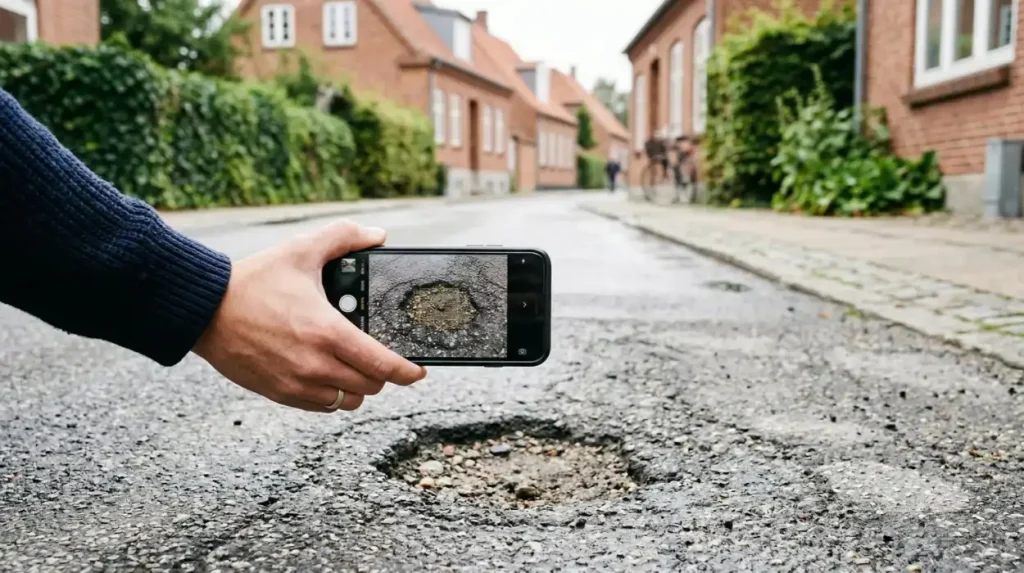
Include a photograph if the reporting service allows it and you can take one safely. Avoid standing in the carriageway or entering a live traffic lane to obtain evidence.
After submitting the report, keep any reference number or confirmation message. This information helps you follow up with the authority if the defect remains dangerous or requires further attention.
Which authority is responsible for potholes in Glasgow?
Glasgow City Council maintains most local roads within its administrative area. Transport Scotland oversees the trunk road network through operating companies, so the correct reporting route depends on the road’s classification and the organisation responsible for its maintenance.
Not every road in Glasgow is maintained by the same organisation. Identifying the responsible authority helps ensure that a pothole report reaches the team that can inspect the location and arrange appropriate action.
Glasgow City Council is the starting point for defects on council-maintained streets, residential roads and other local roads within the city. The council also deals with relevant road and pavement maintenance issues under its responsibilities.
Scotland’s trunk roads and motorways follow a separate system. Transport Scotland manages the trunk road network, with appointed operating companies carrying out inspection and maintenance work. Traffic Scotland provides a public contact route for reporting defects on this network.
For example, a pothole on a residential street in the West End should be reported through the appropriate Glasgow City Council service if the road is council-maintained. A defect on a motorway or a designated trunk road requires the relevant trunk road reporting route instead.
If you are unsure who maintains a particular road, consult the Scottish Government’s road and pavement guidance or the Traffic Scotland contact service. The relevant authority can clarify responsibility if the initial report reaches the wrong organisation.
What information should you include in a Glasgow pothole report?
A useful pothole report identifies the road, exact location, defect and potential safety risk. Include the nearest junction or landmark, the affected lane, an approximate description of the hole and photographs taken safely to help the responsible authority locate and assess the problem.
The quality of a report affects how easily a road maintenance team can find the defect. A report that simply states that a road has potholes gives less practical information than one identifying the precise location and the hazard.
Provide the street name and the nearest identifiable property, junction, crossing or landmark. If the road has multiple lanes, explain which lane contains the pothole and whether it lies near the kerb, the centre of the carriageway or a cycle lane.
Describe the visible condition without putting yourself at risk. Useful details include broken asphalt, a deep-looking hole, loose road material, standing water or a damaged surface that forces traffic to change direction.
A photograph can help communicate the condition of the road. Take pictures from a pavement or another safe position. Do not stop in a live lane, step into moving traffic or attempt to measure a pothole from an unsafe position.
If the defect creates an immediate danger, state the nature of that danger clearly. For example, explain if vehicles are swerving into another lane to avoid the hole or if the pothole presents a direct hazard to cyclists.
Before submitting the form, check that the location details are accurate. Save the report confirmation and any photographs. If the defect becomes substantially worse, provide an updated report with the new information.
What happens after you report a pothole to Glasgow City Council?
After a pothole report reaches the responsible authority, the information can be recorded and assessed to determine the defect’s location, condition and safety risk. The authority then decides what inspection or repair action is appropriate under its maintenance procedures and available resources.
A report does not automatically mean that a repair will take place immediately. Road authorities need to assess reported defects, prioritise safety risks and coordinate maintenance work across the road network.
The process generally involves several stages.
First, the authority receives the report and records the information provided. Accurate location details help staff identify the affected road section.
Second, the defect is assessed using the authority’s inspection and maintenance procedures. The assessment considers the condition of the road and the potential risk to road users. The response depends on the seriousness of the defect and the relevant maintenance standards.
Third, the authority determines what action is necessary. Depending on the circumstances, this can involve monitoring the defect, arranging a repair or taking action to reduce an immediate hazard.
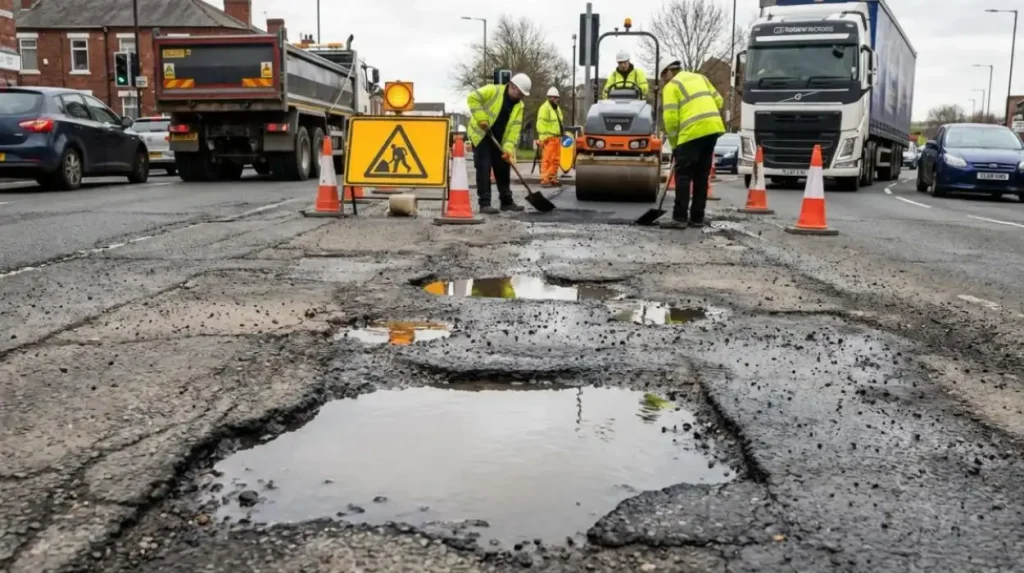
A temporary repair can make a road surface safer while a longer-term repair is arranged. A permanent repair or wider resurfacing project addresses the damaged surface more comprehensively, depending on the underlying condition.
Transport Scotland publishes information about its trunk road maintenance arrangements, including requirements for urgent defects. Its published guidance describes contractual arrangements for making Category 1 trunk road defects safe by 6am the following morning, with permanent repairs required within 28 days under the specified arrangements. These requirements apply to the relevant trunk road operating contracts and should not be treated as Glasgow City Council’s general repair timetable.
Residents should therefore avoid assuming that one repair deadline applies to every pothole in Glasgow. The applicable process depends on the road authority, the severity of the defect and the maintenance arrangements covering that location.
How quickly are potholes repaired in Glasgow?
The repair time for a Glasgow pothole depends on its severity, the risk to road users, the responsible authority and its maintenance procedures. A defect presenting an immediate hazard requires greater urgency than minor surface deterioration that poses a lower safety risk.
Road authorities prioritise maintenance because the condition of a road can vary considerably from one location to another. A small surface defect on a quiet street does not necessarily present the same level of danger as a substantial hole in a busy traffic lane.
The relevant authority assesses the defect and determines the appropriate response. Urgent hazards receive priority under the applicable procedures, while less serious defects can be scheduled alongside other maintenance work.
Several factors influence how quickly a repair takes place. These include the size and condition of the pothole, the location of the defect, traffic management requirements, weather conditions, the availability of repair teams and whether the road requires a temporary fix or more extensive work.
Residents should not interpret a reporting confirmation as a guaranteed repair date. If the defect remains dangerous, report the continuing problem and refer to the original report number. Explain any changes in its condition and provide updated photographs when it is safe to do so.
For trunk roads, Transport Scotland’s maintenance arrangements include specific response requirements for the most serious defects. Local authority roads operate under the relevant council’s inspection and repair procedures, so trunk road deadlines should not automatically be applied to local streets.
If a pothole presents an immediate danger to traffic, clearly communicate the urgency through the appropriate reporting channel rather than relying solely on a routine report.
Can you report potholes on cycle lanes and residential streets?
Yes, road defects on council-maintained residential streets and cycle lanes can be reported to the relevant local authority. Provide the exact location and explain how the damaged surface affects road users, including cyclists, motorists, pedestrians and people crossing the road.
Potholes do not occur only in the centre of a carriageway. They can develop near kerbs, at junctions, along cycle routes and where vehicles regularly turn or brake.
On residential streets, potholes can affect residents, delivery drivers, school transport and emergency vehicles. Repeated traffic movements and deterioration of the road surface can create defects that become more difficult to avoid as they worsen.
Cycle lanes require particular attention because cyclists have less protection from impacts than people travelling in cars. A hole, loose asphalt or broken road edge can force a cyclist to change direction suddenly. Where a defect affects a marked cycle lane, identify the lane and its position relative to the nearest junction or landmark.
Road surfaces near pedestrian crossings also deserve clear reporting. A defect in a traffic lane close to a crossing can affect vehicles approaching people on foot, while damage to a pavement or footway presents a different maintenance issue.
Glasgow’s reporting services provide routes for residents to raise local road and pavement concerns. The MyGlasgow app also lists potholes among the issues users can report.
Select the category that matches the problem. If the defect affects both a carriageway and a cycle lane, describe both impacts in the report so the authority receives a complete picture.
What should you do if a pothole damages your car in Glasgow?
If a Glasgow pothole damages your car, prioritise safety, document the damage and record the exact location of the incident. Contact your insurer when appropriate, retain repair estimates and receipts, and ask the organisation responsible for the road about its compensation claims procedure.
A pothole impact can damage tyres, wheels, suspension components and other vehicle parts. Some damage becomes apparent immediately, while other problems become noticeable during subsequent journeys.
Move to a safe location if you suspect damage. Do not continue driving if the vehicle is unsafe to operate. Arrange roadside assistance or recovery if necessary, particularly when a tyre has failed or steering and suspension problems affect control.
Record the date, approximate time, road name and direction of travel. Note the nearest junction, landmark or house number that identifies the location. Photograph the pothole and vehicle damage only when it is safe to do so.
Keep relevant evidence, including repair invoices, garage assessments, tyre replacement receipts and correspondence with the road authority. If a mechanic identifies damage consistent with a pothole impact, retain the written assessment.
Contact the authority responsible for the road to ask how to submit a claim. In Scotland, claims concerning most local roads should be directed to the relevant council. Claims involving trunk roads and motorways follow the procedures of the responsible trunk road operator.
A claim is not automatically successful because a vehicle has suffered damage after hitting a pothole. The authority or operator assesses the circumstances, available evidence and relevant legal responsibilities. Its decision depends on the specific facts of the incident.
Check your motor insurance policy as well. Comprehensive cover, breakdown assistance and other policy benefits differ between insurers. Notify your insurer in accordance with the terms of your policy, particularly if the damage requires a claim.
Can you claim compensation for pothole damage in Scotland?
Drivers in Scotland can submit a compensation claim to the organisation responsible for maintaining the road where the damage occurred. The outcome depends on the circumstances, supporting evidence and applicable legal duties; reimbursement is not guaranteed for every pothole-related incident.
The responsible authority is an important starting point because different organisations maintain local roads and the Scottish trunk road network.
For damage involving a council-maintained street in Glasgow, contact Glasgow City Council to establish its claims procedure. For a defect on a trunk road or motorway, identify the relevant operating company and follow its claims process. Transport Scotland’s guidance directs trunk road compensation enquiries to the responsible operating arrangements.
A claim should explain what happened and why you believe the road defect caused the damage. Relevant supporting information includes the precise location, incident date, photographs, vehicle inspection reports and evidence of the resulting costs.
The authority may consider its inspection records, previous reports, road maintenance history and the circumstances in which the incident occurred. The legal assessment depends on the facts and the duties applicable to the organisation responsible for that road.
A pothole report and a compensation claim serve different purposes. A report notifies the authority about a road defect and its potential danger. A compensation claim asks the responsible organisation to consider financial liability for a loss.
If you have already reported the pothole, include the earlier report reference in your correspondence. If you have not reported it, you can still contact the responsible organisation about the incident and ask how it handles claims.
Keep copies of every document you submit and record the dates of correspondence. If the claim is rejected, review the reasons given and consider obtaining independent legal advice about your options.
Why do potholes develop so frequently on roads?
Potholes develop when road surfaces deteriorate under traffic loads, water penetration, weather exposure and weaknesses in the underlying pavement. Cracks allow water to enter the surface, while repeated vehicle movements break down weakened materials until sections of asphalt or other road construction detach.
Road deterioration is a gradual process. A surface can begin with small cracks that are difficult to notice from a moving vehicle. As water enters those cracks and traffic repeatedly loads the area, the material can weaken further.
Water is an important factor because it can penetrate gaps in the road surface and affect underlying layers. During cold weather, freezing and thawing can contribute to the expansion of trapped water and the breakdown of weakened material.
Heavy traffic adds repeated pressure to damaged areas. Buses, lorries and other heavy vehicles place substantial loads on road surfaces, particularly where vehicles stop, turn or accelerate. Existing construction weaknesses and poor drainage can increase the likelihood of deterioration.
Road maintenance also involves decisions about whether to patch an isolated defect or repair a larger section. A small patch addresses the immediate hole, whereas extensive deterioration can require a more comprehensive resurfacing programme.
These processes are not unique to Glasgow. The Scottish Government has acknowledged concerns about deteriorating road conditions and their effects on road safety, vehicle damage and costs. It also notes that most roads in Glasgow and across Scotland are the responsibility of local authorities, each of which manages its own inspection and repair programmes.
Understanding these causes helps explain why reporting a pothole is useful even when the defect appears relatively small. Early notification gives the responsible authority information about developing road damage and its location.
How can Glasgow residents help prevent pothole hazards?
Glasgow residents can help reduce pothole-related risks by reporting road defects promptly, providing accurate location details and updating reports when conditions deteriorate. Clear reporting helps the responsible authority identify hazards, assess road conditions and prioritise maintenance for safer journeys.
Residents do not need to wait until a pothole becomes large before reporting it. A damaged road surface, loose material or a developing hole can be reported through the appropriate council or trunk road service.
The most useful actions are straightforward:
- Report newly identified potholes with accurate location information.
- Include photographs when they can be taken safely.
- Explain whether the defect affects cyclists, pedestrians or moving traffic.
- Keep the reference number for future correspondence.
- Submit an update if the condition becomes more dangerous.
Residents should not attempt to fill potholes themselves on public roads. Unauthorised repairs can create additional hazards and interfere with the road authority’s maintenance work.
People can also help by sharing accurate information with neighbours who encounter the same defect. However, each report should identify the actual location and condition rather than relying on vague descriptions of an entire street.
Repeated reporting is most useful when it adds relevant information, such as worsening damage or a newly identified safety concern. If an earlier report remains unresolved, provide its reference number when contacting the responsible authority again.
Explore More Area Guide
Glasgow Parking Charges: Complete Guide to Costs and Rules
Glasgow Free Parking Guide: Locations, Rules and Tips 2026
What should you do if a pothole remains unrepaired?
If a reported pothole remains unrepaired, contact the responsible authority again with the original reference number, the exact location and an update on its condition. Explain any continuing safety risks and request information about the report’s assessment or next steps.
A delay does not necessarily mean that the report has been ignored. The authority might need to inspect the location, arrange traffic management or schedule the repair according to its assessment and available resources.
Start by reviewing any confirmation or correspondence received after submitting the original report. Check whether it contains a reference number or instructions for providing further information.
If the defect remains dangerous, send an update through the same reporting service where possible. Explain whether the hole has widened, whether loose material has appeared or whether road users are having difficulty avoiding it.
If you submitted the report to the wrong organisation, contact the authority responsible for the road. Local roads and trunk roads follow different maintenance arrangements, so confirming responsibility can prevent further delays.
For trunk road concerns, Traffic Scotland provides a 24-hour customer care service on 0800 028 1414. For local roads, contact the relevant council.
If you remain dissatisfied with the handling of a council report, follow the council’s formal complaints procedure. Keep the original report, subsequent updates and any responses together so you can explain the history clearly.
How will road maintenance affect Glasgow’s future?
Glasgow’s future road conditions depend on effective inspections, timely defect reporting, appropriate repairs and longer-term maintenance planning. Local authorities and trunk road operators use separate maintenance arrangements, while residents provide additional information about defects that affect everyday journeys.
Road maintenance involves more than filling individual holes. Authorities must also consider drainage, surface deterioration, structural condition and the need to repair larger stretches of road before defects spread.
A temporary repair can address an immediate hazard, but a deteriorating road surface sometimes requires a more comprehensive intervention. Decisions depend on the condition of the road, engineering assessments, safety priorities and available funding.
The Scottish Government has acknowledged the importance of maintaining roads and the financial consequences of deteriorating surfaces. Its published information also confirms that local authorities manage the inspection and maintenance programmes for most roads in Glasgow and Scotland.
Residents contribute to this process by providing specific, reliable reports. Accurate information about a pothole’s position and condition helps the responsible authority understand the problem and decide what action is necessary.
For motorists, cyclists and pedestrians, the practical priority remains the same: report hazards promptly, use safe routes around defects and avoid dangerous manoeuvres. Where a defect presents an immediate threat, communicate the urgency through the appropriate authority or emergency channel.
Glasgow’s road maintenance system relies on the combination of official inspections, public reporting and planned repair work. Knowing how to report a pothole gives residents a direct way to raise concerns and support safer local roads.
How do I report a pothole in Glasgow?
You can report a pothole through the MyGlasgow app or Glasgow City Council’s official website. Provide the road name, exact location, a description of the damage and a photograph if it is safe to take one.