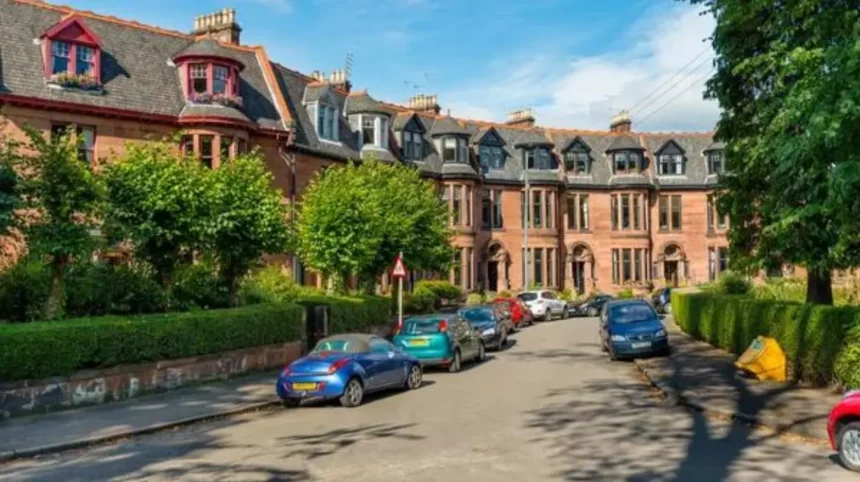
Glasgow is Scotland’s largest city and combines established residential neighbourhoods, extensive parks, schools, public transport and family services. The best Glasgow areas for families with children depend on school access, housing, green space, transport, childcare and everyday amenities rather than one universal ranking.
- Which Glasgow areas are best for families with children?
- What makes a Glasgow neighbourhood suitable for families?
- Is the West End of Glasgow good for families with children?
- Is Shawlands a good place for families?
- Is Pollokshields a good Glasgow area for families?
- Is Battlefield a good area for families with children?
- Is the Victoria Park area good for families?
- Is Dennistoun a good area for families?
- Is Pollok a good area for families with children?
- Are Bearsden and Newton Mearns good family areas near Glasgow?
- How important are schools when choosing a family area in Glasgow?
- Which Glasgow areas offer the best access to parks and outdoor space?
- How important is transport for families living in Glasgow?
- What should families check before moving to a Glasgow neighbourhood?
- How is Glasgow becoming more family-friendly in the future?
- Which Glasgow family area should you choose?
For families choosing where to live, neighbourhood structure matters. Glasgow contains dense inner-city districts alongside quieter suburban communities. Areas such as Hyndland, Jordanhill, Shawlands, Pollokshields, Battlefield, Victoria Park, Bearsden and Newton Mearns offer different combinations of schools, parks, housing and transport. Bearsden and Newton Mearns sit outside Glasgow City Council but form part of the wider Glasgow urban area and are frequently considered by families relocating to Greater Glasgow.
Family suitability also changes with a child’s age. A home that works well for toddlers needs convenient nurseries, playgrounds and short journeys. Families with older children often prioritise secondary schools, sports facilities, libraries, public transport and access to activities.
Which Glasgow areas are best for families with children?
The best Glasgow family areas combine strong school access, usable green space, reliable transport, family housing and everyday services. Hyndland, Jordanhill, Shawlands, Pollokshields, Battlefield and Victoria Park are established choices, while suburban options expand the choice further.
No single neighbourhood meets every family requirement. Glasgow’s residential areas have different housing types and urban environments.
The West End provides access to established schools, parks, cultural facilities and transport. Hyndland and Jordanhill are particularly well connected to central Glasgow through rail services and local bus routes. Kelvingrove Park and the River Kelvin provide significant outdoor space nearby.
The Southside has several family-oriented neighbourhoods. Shawlands provides shops, cafés, community facilities and transport connections. Pollokshields combines Victorian housing, parks and proximity to Pollok Country Park. Battlefield provides access to Queen’s Park and the amenities around Victoria Road and Battlefield Road.
The west and north-west also provide family housing around Victoria Park. The surrounding districts include Scotstoun, Jordanhill and Anniesland, with access to schools, recreation and rail services.
Glasgow City Council is also developing a stronger child-friendly planning approach. In September 2026, the council reaffirmed its ambition to make Glasgow a better place for children and families. Its programme includes safer walking routes, traffic calming, play streets, improved crossings, greener streets and family-friendly parks.
What makes a Glasgow neighbourhood suitable for families?
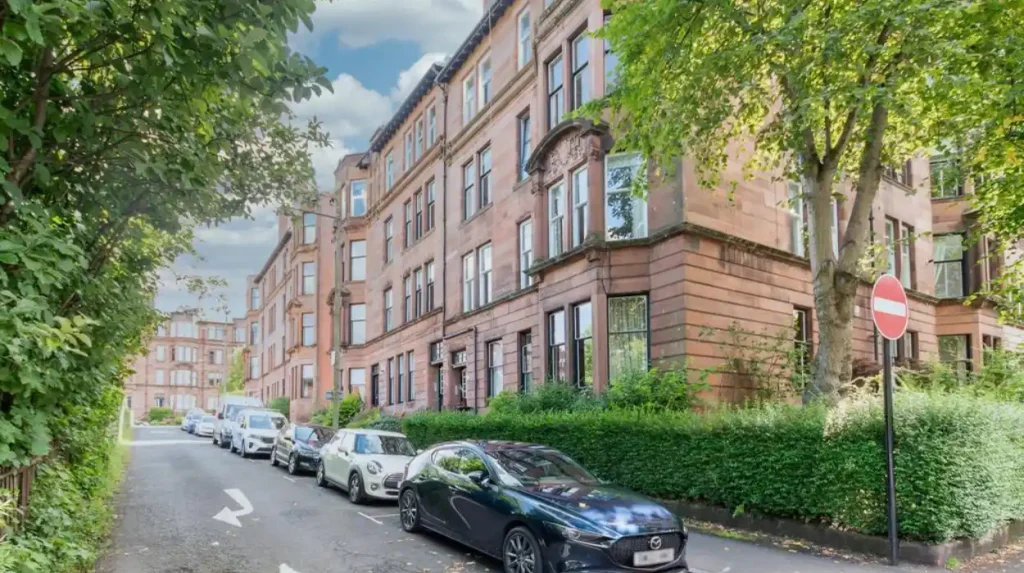
A family-friendly Glasgow neighbourhood provides practical access to schools, childcare, parks, healthcare, shops, public transport, recreation and safe walking routes. Housing quality, local services and the distance between daily destinations also determine how suitable an area is.
School access is one of the most important considerations. Families need to understand catchment arrangements before choosing a property. Glasgow City Council uses local catchment schools as the normal route for school admission, while parents can submit placing requests for other schools.
Early learning is another major consideration. Scotland uses the term Early Learning and Childcare, or ELC, for early-years education and care. ELC includes nurseries, family centres, nursery schools, childminders and playgroups.
Green space affects daily family life. Parks provide places for outdoor play, walking, cycling and informal recreation. Glasgow contains major parks including Kelvingrove Park, Queen’s Park, Bellahouston Park, Victoria Park and Pollok Country Park.
Transport also affects family routines. Rail stations and frequent bus corridors reduce dependence on private cars. Underground access is particularly useful in parts of the West End and Southside.
Housing type matters as children grow. Victorian and Edwardian terraces, traditional tenements, semi-detached houses and modern apartments create different levels of space, storage, gardens and maintenance.
Is the West End of Glasgow good for families with children?
Glasgow’s West End provides strong access to schools, parks, rail transport, cultural institutions, shops and family services. Hyndland, Jordanhill, Partick and surrounding districts combine established housing with convenient connections to central Glasgow.
The West End is one of Glasgow’s best-known residential districts. It extends across several neighbourhoods with different housing and transport characteristics.
Hyndland has traditional tenements, villas and established residential streets. It benefits from Hyndland railway station and proximity to schools, shops and local services.
Jordanhill has a strong family housing profile. The area contains a mixture of traditional properties and modern housing. Jordanhill railway station provides access towards Glasgow city centre and other destinations.
Partick provides a more urban environment. Partick Interchange combines rail, Underground and bus connections. The area also has supermarkets, shops, restaurants and community services.
Kelvingrove Park is an important outdoor asset for families in the West End. The park sits beside the River Kelvin and provides large open spaces, walking routes and access to cultural attractions.
The West End also contains the University of Glasgow and major cultural institutions. These facilities increase the concentration of museums, galleries and educational resources available to local residents.
Families should distinguish between individual streets rather than treating the entire West End as one housing market. Property type, school catchment and distance to transport vary considerably between neighbouring areas.
Is Shawlands a good place for families?
Shawlands is a major Southside neighbourhood with shops, schools, parks, community facilities and public transport. Its position near Queen’s Park gives families access to substantial green space while remaining connected to central Glasgow.
Shawlands sits around the busy corridor of Kilmarnock Road and Pollokshaws Road. The neighbourhood functions as a major Southside commercial centre.
Queen’s Park is one of its most important family assets. The park provides extensive outdoor space, walking routes, recreational facilities and views across Glasgow from higher ground.
Shawlands also has a broad range of everyday services. Families can access supermarkets, independent retailers, cafés, restaurants, professional services and community facilities without travelling into central Glasgow.
Rail transport is available through nearby stations including Shawlands and Crosshill. Bus services provide additional connections across the Southside and towards the city centre.
Housing includes traditional tenements, terraces and larger residential properties. This gives families different choices based on space and budget.
The neighbourhood is also close to other family-oriented Southside districts. Strathbungo, Pollokshields, Battlefield and Mount Florida provide additional housing and recreational options.
Shawlands is therefore particularly suitable for families who want a neighbourhood centre rather than a purely suburban environment.
Is Pollokshields a good Glasgow area for families?
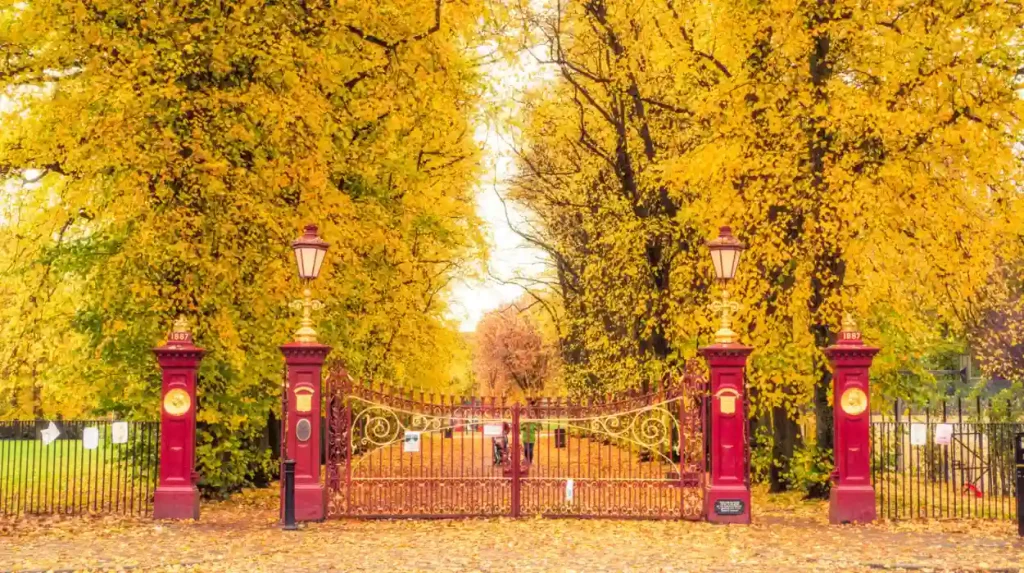
Pollokshields offers substantial green space, Victorian and Edwardian housing, rail connections and access to schools and community facilities. Its location between the city centre and Pollok Country Park gives families a strong combination of urban convenience and outdoor recreation.
Pollokshields is a historic Southside neighbourhood with distinctive residential architecture. The area contains large Victorian villas, traditional tenements and tree-lined streets.
Pollokshields is divided into areas with different character and housing patterns. Pollokshields West is particularly associated with large villas and established residential streets, while other sections have denser tenement housing.
Pollok Country Park is a major nearby destination. Glasgow City Council identifies it as Glasgow’s first and largest country park. It was designated by Scottish Natural Heritage in 1981. The park contains Pollok House, woodland, gardens, grazing land, the White Cart Water and Highland cattle.
The Burrell Collection is also located within Pollok Country Park. Its museum collection provides an educational and cultural resource for children and families.
Pollokshields has several railway connections, including Pollokshields East and Pollokshields West. Crosshill and Shawlands stations are also accessible from parts of the neighbourhood.
The area is particularly relevant for families seeking a larger traditional home within Glasgow rather than moving immediately to an outer suburb.
Is Battlefield a good area for families with children?
Battlefield is a Southside residential area centred on Victoria Road and close to Queen’s Park. Its traditional housing, local shops, schools, transport links and access to major green space make it practical for families seeking an established urban neighbourhood.
Battlefield is located between Shawlands, Mount Florida, Langside and Cathcart. The neighbourhood is closely connected with Queen’s Park.
Victoria Road provides many everyday services. The commercial street contains shops, cafés, restaurants and other businesses.
The surrounding residential streets include traditional tenements and period properties. These homes provide a different environment from newer suburban developments.
Queen’s Park is the principal outdoor resource. Families can use the park for walking, recreation and outdoor play.
Mount Florida railway station provides connections towards Glasgow Central and other destinations. Bus routes provide additional options for city travel.
Battlefield also benefits from proximity to Hampden Park. Scotland’s national football stadium is located in Mount Florida and hosts major sporting events.
Families considering Battlefield should check individual school catchments and property locations. The difference between a short walk and a longer journey can significantly affect school and childcare routines.
Is the Victoria Park area good for families?
Victoria Park and the surrounding west Glasgow neighbourhoods provide substantial green space, established housing, schools, local services and transport connections. Scotstoun, Jordanhill and Anniesland extend the family housing choice around this part of Glasgow.
Victoria Park is one of the major green spaces in west Glasgow. The surrounding area includes residential districts with access to schools, shops, recreational facilities and transport.
Scotstoun provides a mixture of traditional housing and modern residential development. It also has major sports facilities.
Jordanhill sits close to Victoria Park and has strong rail connectivity. The area includes family housing and access to schools.
Anniesland is another important residential and transport hub. Anniesland railway station provides rail connections, while Great Western Road provides a major east-west road corridor.
The wider Victoria Park area also benefits from proximity to the River Clyde and west Glasgow’s network of parks and recreational facilities.
The council continues to use local area partnerships to support neighbourhood infrastructure. Victoria Park Area Partnership remains an active local governance structure in 2026.
Families should evaluate the exact distance from their chosen home to schools, stations, parks and shops. Neighbourhood labels cover substantial areas and do not provide enough information by themselves.
Is Dennistoun a good area for families?
Dennistoun provides central-east Glasgow housing, local shops, schools, parks and strong transport connections. Its traditional tenements and proximity to the city centre suit families who prioritise accessibility and urban convenience over large suburban gardens.
Dennistoun is one of Glasgow’s established east-side neighbourhoods. Its position close to the city centre makes commuting relatively straightforward.
The area contains many traditional tenement buildings. These properties provide relatively spacious accommodation compared with some modern city-centre apartments.
Alexandra Park is a major green-space asset nearby. It provides open areas, walking routes and recreational space.
Dennistoun also benefits from local shops and food businesses. Duke Street forms an important commercial corridor.
Rail connections from Alexandra Parade and nearby stations provide access towards central Glasgow and the east.
The area has experienced substantial residential interest and regeneration. Its housing environment remains more urban than suburban.
Families choosing Dennistoun need to consider traffic, parking and property condition alongside proximity to amenities. Traditional tenements differ considerably in layout, maintenance and outdoor space.
Is Pollok a good area for families with children?
Pollok provides families with access to Pollok Country Park, schools, local services and established residential streets. Its location in south-west Glasgow gives residents more open space than many inner-city neighbourhoods while retaining access to city transport.
Pollok is closely associated with Pollok Country Park. The park is one of Glasgow’s most significant environmental and cultural assets.
The park covers a large landscape containing woodland, open grassland, historic buildings, watercourses and livestock. Glasgow City Council describes the park as an international tourist attraction.
Families can access the Burrell Collection and Pollok House alongside outdoor recreation. The park also supports walking and cycling.
The wider Pollok area includes established housing and local services. Cardonald and Crookston sit nearby and provide additional residential choices.
Glasgow City Council has also documented play areas, multi-purpose games courts and cycle facilities across the wider Cardonald area. National Cycle Route 7 connects parts of the area with Pollok Country Park and beyond.
Families seeking a larger house with access to extensive outdoor space should include Pollok and neighbouring districts in their search.
Are Bearsden and Newton Mearns good family areas near Glasgow?
Bearsden and Newton Mearns are outside Glasgow City Council but form established Greater Glasgow residential choices. They provide suburban housing, schools, green space and road connections for families who prioritise space and a lower-density environment.
Bearsden lies west of Glasgow and is administered by East Dunbartonshire Council. Newton Mearns lies south-west of Glasgow and is administered by East Renfrewshire Council.
These locations are therefore different from Glasgow City neighbourhoods. Their schools, council services, planning systems and property markets operate under different local authorities.
Bearsden contains a large suburban housing stock and established community facilities. Rail services provide connections towards Glasgow city centre.
Newton Mearns has extensive suburban housing and access to East Renfrewshire schools. The area connects to Glasgow through road and bus networks.
Families often consider these locations because they provide larger houses and suburban layouts. The trade-off involves longer journeys to central Glasgow for some residents.
School catchments require particular attention. A Glasgow postcode does not automatically provide access to a Glasgow City Council school, and the same principle applies to surrounding local authorities.
How important are schools when choosing a family area in Glasgow?
Schools are a central factor in choosing a Glasgow family neighbourhood because school admission normally relates to catchment areas. Families should verify the exact address, associated primary and secondary schools, denominational status and current admission rules before committing to a property.
Scotland’s education system has specific entry arrangements. Children generally start primary school between four-and-a-half and five-and-a-half years old. Primary education lasts seven years, from Primary 1 through Primary 7.
The Broad General Education runs from early learning through the end of S3. Scotland uses five curriculum levels: Early, First, Second, Third and Fourth.
Glasgow City Council operates catchment arrangements for local schools. Parents also have the right to make placing requests for other schools, subject to the applicable rules and availability of places.
This makes address verification essential.
A family should check the council’s current school information before buying or renting. School catchment boundaries can change through formal education planning processes.
Denominational education also matters. Glasgow has Roman Catholic schools alongside non-denominational schools. Families seeking a particular educational sector need to confirm the appropriate admission process.
School quality should therefore be assessed at the individual-school level rather than by assuming that an entire neighbourhood has identical educational provision.
Which Glasgow areas offer the best access to parks and outdoor space?
Pollok, Pollokshields, Shawlands, Battlefield, Victoria Park, the West End and south-west Glasgow provide strong access to major parks. Pollok Country Park, Queen’s Park, Kelvingrove Park and Victoria Park are particularly significant family recreation assets.
Green space is important because children need opportunities for outdoor play and physical activity. Parks also provide walking routes, informal recreation and community events.
Pollok Country Park is Glasgow’s largest country park and has exceptional landscape and heritage resources. The council identifies its woodland, gardens, pastures, water and historic buildings as important features.
Queen’s Park serves a large Southside population. It is particularly accessible from Shawlands, Battlefield, Strathbungo and Mount Florida.
Kelvingrove Park provides major open space in the West End. It is close to residential neighbourhoods including Kelvinbridge, Hillhead and Finnieston.
Victoria Park serves west Glasgow and provides a large recreational environment for surrounding communities.
Bellahouston Park provides another major green-space option in the south-west. The wider area includes sports and recreation facilities.
Glasgow City Council’s 2026 child-friendly programme places further emphasis on outdoor play. Its proposed Family Friendly Parks Framework focuses on features such as natural play, accessible toilets, seating, shelter, drinking water, play trails and outdoor learning.
How important is transport for families living in Glasgow?
Family transport works best when homes are close to schools, stations, bus corridors, parks and shops. Rail, Underground, bus, walking and cycling options reduce car dependence and simplify school runs, childcare journeys, work commutes and weekend activities.
Public transport is particularly useful for families with older children who become more independent.
The West End benefits from the Glasgow Subway and several railway stations. Partick is one of the strongest interchange locations because it combines different public transport modes.
The Southside has multiple railway stations connecting neighbourhoods such as Pollokshields, Shawlands, Crosshill and Mount Florida with Glasgow Central.
The north and east also have rail stations serving residential communities.
Walking distance is equally important. A house close to a school and park can reduce the number of daily journeys requiring a car.
Glasgow’s current child-friendly planning programme explicitly includes safer walking and wheeling routes, traffic calming, improved crossings and active travel investment.
Families should therefore evaluate transport at street level. A neighbourhood with a railway station is not automatically convenient if the property is far from the station or the journey requires difficult crossings.
What should families check before moving to a Glasgow neighbourhood?
Families should check school catchments, housing space, childcare, parks, transport, healthcare, shops, road conditions, parking and local services before choosing a Glasgow neighbourhood. The exact property address matters because services and catchment boundaries vary within each district.
The first check should be the school catchment. Families should identify both primary and secondary arrangements.
The second check should be childcare. ELC provision includes different types of settings, including nursery schools, family centres, private providers and childminders.
The third check should be outdoor space. Families should identify the nearest playground, park, sports facility and safe walking route.
Housing needs should be assessed according to family size. Younger families often prioritise gardens and storage. Families with teenagers often prioritise transport and access to independent activities.
Healthcare access is another practical consideration. Families should identify nearby GP practices, pharmacies, dental services and hospitals according to their requirements.
Transport should be evaluated at the times the family actually travels. A route that works at midday can have different conditions during school and commuter peaks.
Parking is particularly important in dense areas with traditional tenements. Families with young children often need convenient loading space for pushchairs, shopping and school equipment.
The most reliable decision process is therefore address-specific rather than based entirely on neighbourhood reputation.
Explore More Area Guide
Best Glasgow Areas Without a Car: Top Connected Neighbourhoods
Partick vs Finnieston: Glasgow West End Area Guide
How is Glasgow becoming more family-friendly in the future?
Glasgow is increasingly integrating children and families into planning, transport and public-space policy. Current council work focuses on child-friendly neighbourhoods, safer streets, outdoor play, green space, active travel, community connections and family-focused park improvements.
Glasgow City Council reaffirmed its ambition in September 2026 to become a Child Friendly City. The programme links child-friendly planning with the city’s development, transport and regeneration policies.
The council plans to assess future planning and regeneration projects through a family-friendly and child-friendly framework.
The programme includes safer crossings, traffic calming, play streets, street greening, seating and informal play opportunities. These measures focus on the everyday environments between homes, schools and community facilities.
The proposed Family Friendly Parks Framework is also significant. The council intends to improve access to natural play, accessible facilities, shelter, drinking water, play trails, community growing and outdoor learning.
This policy direction has long-term implications for Glasgow neighbourhoods.
Family suitability is increasingly connected to the quality of streets and public spaces rather than only the size of individual homes. Areas with better walking routes, accessible parks and strong community facilities can support children’s independence and family routines.
For families comparing Glasgow neighbourhoods, these developments make local planning policy an important part of long-term decision-making.
Which Glasgow family area should you choose?
The right Glasgow family area depends on the balance between schools, housing, transport, parks and services. West End neighbourhoods suit families prioritising connectivity and established amenities, while Southside and west Glasgow areas provide strong green-space and residential options.
Hyndland and Jordanhill suit families seeking West End amenities, established housing and rail connections.
Shawlands and Battlefield suit families seeking Southside community life, shops and proximity to Queen’s Park.
Pollokshields suits families prioritising traditional housing, transport and access to Pollok Country Park.
Victoria Park, Scotstoun and Anniesland provide strong west Glasgow alternatives with access to parks, schools and transport.
Pollok and the south-west provide greater access to extensive outdoor space, including Pollok Country Park.
Dennistoun suits families who prioritise city-centre proximity and urban convenience.
Bearsden and Newton Mearns provide wider Greater Glasgow alternatives for families seeking suburban housing and a lower-density environment. Their local authority arrangements differ from Glasgow City Council.
The strongest family decision combines neighbourhood research with property-specific checks. School catchment, exact transport distance, local parks, childcare availability and housing condition should all be verified before moving.
Glasgow’s continuing child-friendly planning programme also indicates a broader shift towards designing neighbourhoods around children’s mobility, outdoor play, accessibility and family life.
What are the best areas in Glasgow for families with children?
Hyndland, Jordanhill, Shawlands, Pollokshields, Battlefield, Victoria Park, Pollok and Dennistoun are strong family options. Each area offers different combinations of schools, parks, housing, transport and local amenities.