

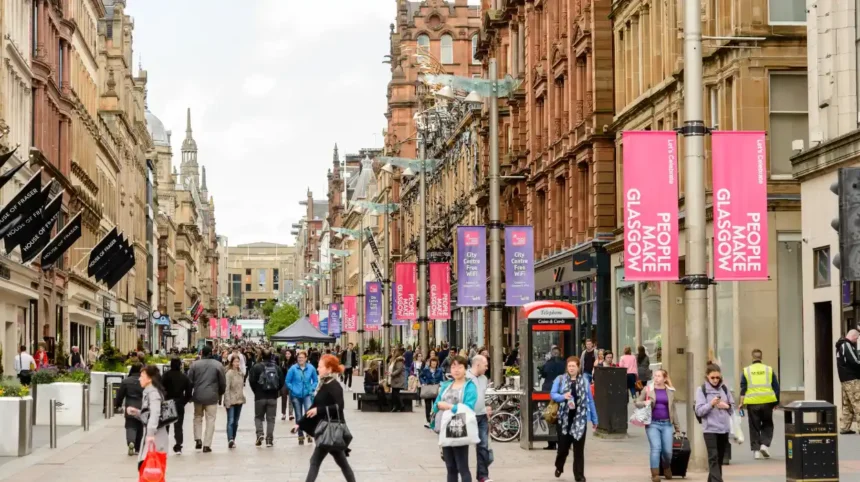
Glasgow City Centre is the commercial, cultural and transport core of Glasgow. It sits between the River Clyde and the city’s northern neighbourhoods and contains major employment areas, shopping streets, universities, cultural institutions, transport hubs and residential developments.
- What is Glasgow City Centre like for residents?
- How did Glasgow City Centre develop historically?
- What are the main advantages of living in Glasgow City Centre?
- How convenient is transport from Glasgow City Centre?
- Does living centrally make Glasgow easier to explore?
- Is Glasgow City Centre good for employment?
- What shopping and leisure facilities are available?
- What are the disadvantages of living in Glasgow City Centre?
- Is Glasgow City Centre noisy?
- Is parking difficult in Glasgow City Centre?
- Is city-centre housing expensive?
- How much does it cost to live in Glasgow City Centre?
- What types of homes are available in Glasgow City Centre?
- What are Glasgow tenements?
- What are modern central apartments like?
- Which central areas have different residential characters?
- Is Glasgow City Centre suitable for students and young professionals?
- Is Glasgow City Centre suitable for families?
- How does Glasgow City Centre compare with suburban Glasgow?
- What transport options are available without a car?
- What should you check before renting or buying in Glasgow City Centre?
- What is the overall cost-benefit of living in Glasgow City Centre?
- What is the future of living in Glasgow City Centre?
Living in Glasgow City Centre means having direct access to central services and public transport. The area includes districts and streets around Buchanan Street, Sauchiehall Street, Argyle Street, Merchant City, Trongate, Glasgow Green and the Clyde waterfront. Its housing stock ranges from traditional tenements to modern apartments.
The city centre has a long industrial, commercial and civic history. Modern residential life reflects Glasgow’s wider transition from an industrial city to a major service, education, retail and cultural economy.
What is Glasgow City Centre like for residents?
Glasgow City Centre is a compact urban district with extensive transport, employment, shopping, cultural and residential facilities. It suits people who prioritise central access, walking and public transport, while housing costs, noise and limited private parking remain important considerations.
Glasgow City Centre functions as the administrative and commercial heart of the city. Glasgow City Council identifies the city centre as a major strategic area for economic development, regeneration, housing and public activity.
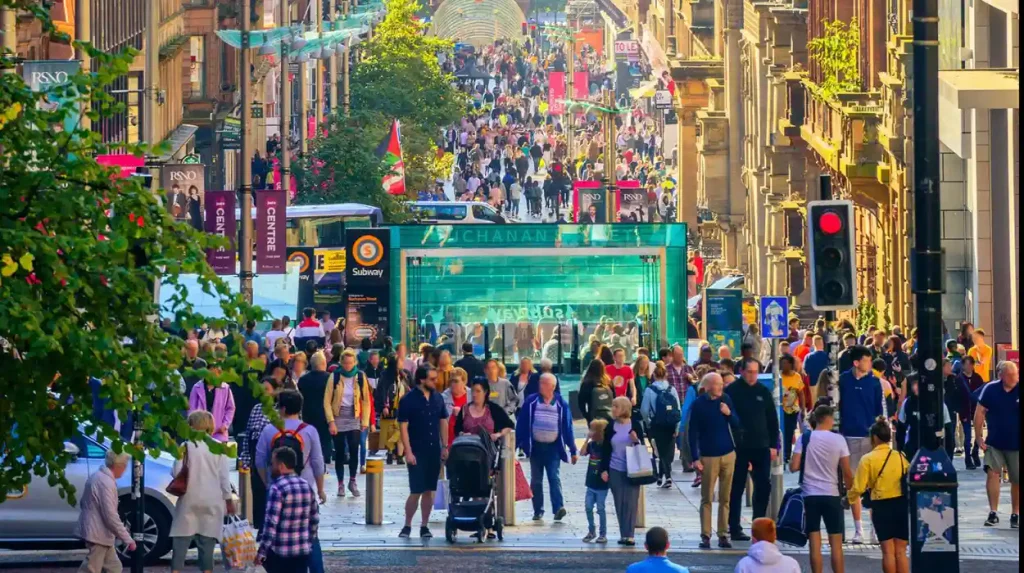
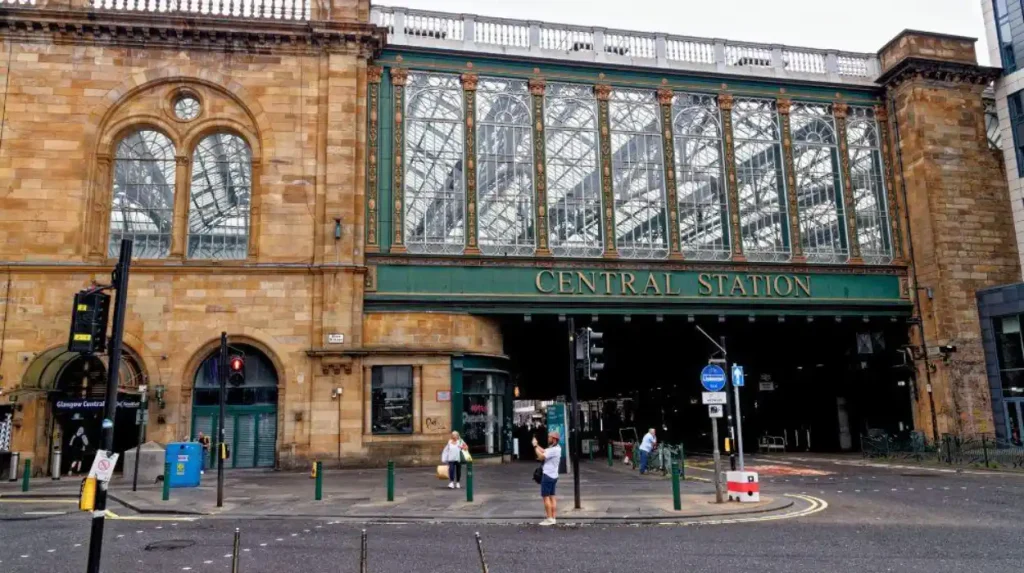
The central area contains major streets including Buchanan Street, Sauchiehall Street, Argyle Street, High Street and Trongate. Merchant City forms an important eastern part of the centre. The area around Glasgow Central Station forms a major southern transport and commercial zone.
Residential development has expanded the city centre population. Apartment buildings occupy former commercial, industrial and vacant sites. Traditional sandstone tenements also provide homes in areas immediately surrounding the commercial core.
The central location provides strong access to employment. Major employers operate across finance, professional services, retail, hospitality, education, technology, public administration and culture.
The city centre also provides access to major institutions. Glasgow Caledonian University sits on the northern edge of the centre. Strathclyde University occupies a large campus immediately east of the traditional commercial core.
For residents, the main distinction is between convenience and urban intensity. Central living reduces travel distances but places residents closer to traffic, nightlife, events, construction and commercial activity.
How did Glasgow City Centre develop historically?
Glasgow City Centre developed from the medieval settlement around Glasgow Cathedral and Glasgow Cross into an industrial-era commercial centre. Trade, tobacco, shipbuilding, manufacturing, railways and later services shaped its streets, buildings, institutions and modern economic role.
Glasgow began as a religious settlement associated with St Mungo and Glasgow Cathedral. The medieval settlement developed around the cathedral and the River Clyde.
The city expanded rapidly during the 18th and 19th centuries. Glasgow became a major trading centre connected to Atlantic commerce. Tobacco and sugar contributed substantially to the wealth of Glasgow merchants.
The Industrial Revolution transformed the city. Engineering, textiles, chemicals and shipbuilding expanded employment and population. The River Clyde became one of the world’s major shipbuilding centres.
Central Glasgow developed substantial commercial architecture during this period. Victorian and Edwardian buildings remain visible around George Square, Buchanan Street, Trongate and Merchant City.
Railway development transformed central accessibility. Glasgow Central Station opened in 1879, while Glasgow Queen Street Station opened in 1842. Both stations remain fundamental to the city’s transport network.
The 20th century brought major demographic and economic changes. Industrial decline reduced employment in traditional manufacturing and shipbuilding. Glasgow subsequently developed stronger service-sector, education, retail, tourism and cultural economies.
The city centre now combines historic buildings with modern residential and commercial development. This mixture explains the varied character of central housing.
What are the main advantages of living in Glasgow City Centre?
The main advantages are excellent public transport, short journeys, extensive employment access, major shopping facilities, cultural attractions, restaurants, universities and walkable streets. Central residents also benefit from proximity to rail stations and services across Greater Glasgow.
How convenient is transport from Glasgow City Centre?
Transport is one of the strongest benefits of central living. Glasgow Central and Glasgow Queen Street provide extensive rail connections.
Glasgow Central primarily serves routes across southern Scotland, including frequent services toward Paisley, Ayrshire, Lanarkshire and other destinations. It also provides major intercity services.
Glasgow Queen Street serves routes toward Edinburgh, Stirling, the Highlands and eastern Scotland.
The Glasgow Subway provides another central transport option. The Subway has 15 stations arranged around a circular route. Buchanan Street, St Enoch and Cowcaddens provide central access.
Local buses operate throughout the city centre and connect central streets with surrounding neighbourhoods. This reduces dependence on private cars.
Does living centrally make Glasgow easier to explore?
Central residents can reach many destinations on foot. Buchanan Street, George Square, Glasgow Green, Merchant City and the River Clyde are within walking distance of large parts of the central area.
Walking also provides direct access to shops, restaurants, cafés, cinemas, libraries and cultural venues.
Cycling infrastructure has expanded across Glasgow. The city has invested in active travel infrastructure as part of wider transport and climate strategies.
Is Glasgow City Centre good for employment?
Central Glasgow contains a large concentration of offices and commercial activity. Finance, professional services, retail, hospitality, technology and public-sector employment contribute to the central economy.
The location also provides access to major educational institutions. Strathclyde University and Glasgow Caledonian University are close to the central area.
This concentration reduces commuting requirements for people working in central Glasgow.
What shopping and leisure facilities are available?
Buchanan Street forms one of Scotland’s major shopping destinations. The Buchanan Galleries and surrounding retail streets add further commercial capacity.
Merchant City provides restaurants, bars, cafés, cultural venues and independent businesses. Glasgow Green provides a large urban green space immediately east of the central commercial area.
The city centre also contains major cultural institutions. These include the Gallery of Modern Art, Glasgow Royal Concert Hall, Theatre Royal and Glasgow Royal Concert Hall complex.
What are the disadvantages of living in Glasgow City Centre?
The main disadvantages are higher central housing costs, urban noise, traffic, nightlife activity, limited private parking, congestion and reduced residential privacy. Costs also vary considerably between modern developments, traditional tenements and premium central apartments.
Is Glasgow City Centre noisy?
Noise is a significant consideration for central residents. Commercial streets, restaurants, pubs, clubs, traffic and events generate activity throughout the week.
Night-time noise is more concentrated around entertainment districts. Properties near busy hospitality streets require careful assessment before renting or buying.
Building quality also affects noise transmission. Older tenements have different insulation standards from recently constructed apartment buildings.
Is parking difficult in Glasgow City Centre?
Private parking is more limited than in suburban Glasgow. Many central developments provide allocated spaces, but availability depends on the building.
On-street parking is controlled through Glasgow City Council’s parking restrictions and charging arrangements. Residents must check the specific parking zone and property arrangements.
A car-free lifestyle is therefore easier in the centre than in many outer neighbourhoods.
Is city-centre housing expensive?
Central housing costs vary by property type, location, size and building quality. New-build apartments often command different rents from older tenement properties.
The cost comparison should include council tax, utilities, service charges where applicable, parking and commuting.
Renting a property directly beside major commercial streets also has a different cost and lifestyle profile from renting in a quieter edge-of-centre neighbourhood.
How much does it cost to live in Glasgow City Centre?
The cost of living in Glasgow City Centre depends mainly on rent, property size, council tax, utilities, transport and lifestyle spending. Central housing generally carries a location premium, while walking and public transport can reduce commuting expenses.
Rent represents the largest housing expense for many residents. Prices vary by bedroom count, building type and exact location.
A studio or one-bedroom apartment generally costs less than larger two- or three-bedroom accommodation. Premium developments with concierge services, gyms, parking or river views typically have higher total occupancy costs.
Council tax is another recurring expense. Glasgow City Council sets council tax rates within Scotland’s local taxation system. Properties fall into valuation bands, with Band D used as the standard reference point.
Energy costs depend on property size, heating system, insulation, household usage and energy tariffs. Modern apartments with efficient heating and insulation have different energy requirements from older buildings.
Transport spending can be lower for central residents. Glasgow Subway, rail and bus services provide alternatives to daily car use.
Food costs depend heavily on shopping and dining habits. Central Glasgow provides supermarkets, convenience shops, cafés, restaurants and takeaway businesses. Eating out frequently produces a substantially higher monthly budget than preparing most meals at home.
Entertainment costs also vary. Cultural venues, cinemas, restaurants, nightlife and sporting events provide extensive choices, but frequent discretionary spending increases the overall cost of central living.
What types of homes are available in Glasgow City Centre?
Glasgow City Centre housing includes traditional tenement flats, converted historic properties, purpose-built apartments and modern residential developments. Property choice differs by neighbourhood, building age, floor area, amenities, parking and proximity to commercial streets.
What are Glasgow tenements?
Tenements are multi-storey residential buildings that form an important part of Glasgow’s architectural identity. Many were constructed during the 19th and early 20th centuries.
Traditional tenement flats often provide generous room sizes and high ceilings. They also contain communal stairwells and shared building structures.
Maintenance responsibilities differ between properties. Buyers and renters need to understand factors such as communal repairs, factoring arrangements and building insurance.
What are modern central apartments like?
Modern developments typically offer lift access, secure entrances and contemporary layouts. Some developments provide private parking, balconies, communal areas or concierge services.
These features can increase service charges for owners. Renters generally encounter these costs through the overall rental price rather than direct factor payments.
Which central areas have different residential characters?
Merchant City has a strong historic and cultural character with restaurants, cafés, apartments and converted commercial buildings.
The area around Glasgow Central has strong transport access and intensive commercial activity.
The High Street and Trongate areas combine historic buildings with newer residential schemes.
The western edge of the centre provides access toward Anderston and the Clyde waterfront. These areas include substantial modern apartment development.
Is Glasgow City Centre suitable for students and young professionals?
Glasgow City Centre suits students and young professionals because universities, workplaces, transport, shops, restaurants and entertainment venues are concentrated within a short distance. Housing choice ranges from private flats to purpose-built student accommodation near central campuses.
Students at the University of Strathclyde benefit from immediate proximity to central facilities. Glasgow Caledonian University is also close to the northern city centre.
The University of Glasgow is located in the West End rather than the city centre, but frequent public transport connects the two areas.
Young professionals often prioritise central housing because it reduces commuting time. The concentration of offices, restaurants, cultural venues and transport supports a highly connected lifestyle.
However, central accommodation requires careful consideration of noise, rental costs and apartment size. A cheaper flat farther from entertainment streets can provide a different residential experience while retaining central accessibility.
Is Glasgow City Centre suitable for families?
Glasgow City Centre can support families through nearby schools, parks, transport, healthcare and cultural facilities, but suburban neighbourhoods often provide larger homes, private gardens, quieter streets and easier parking for family households.
Glasgow Green provides substantial open space close to the eastern city centre. Residents also have access to parks and recreational areas in surrounding neighbourhoods.
Families living centrally need to assess school catchments rather than relying solely on postcode proximity. Scottish state education is organised through local authorities, with school admission arrangements determined by Glasgow City Council.
Housing size is another factor. Larger family apartments are less common than one- and two-bedroom city-centre flats.
The centre can therefore work well for families who prioritise transport and urban services. Families seeking gardens, larger properties and lower traffic exposure often look beyond the core.
How does Glasgow City Centre compare with suburban Glasgow?
Glasgow City Centre offers stronger transport access, employment proximity and urban amenities, while suburban areas generally provide more space, quieter streets, larger homes and easier parking. The best location depends on commuting needs, household size and housing budget.
The West End offers access to the University of Glasgow, Kelvingrove Park, restaurants and cultural venues. Areas such as Partick provide strong public transport connections.
The Southside includes neighbourhoods such as Shawlands, Strathbungo and Pollokshields. These areas combine local shopping, parks, restaurants and rail connections.
The East End includes districts such as Dennistoun, which provides relatively close access to the centre while retaining a distinct residential identity.
The city centre remains the strongest option for residents who value immediate access to central employment and services.
Suburban living provides a different cost and space profile. Larger homes, gardens and residential streets become more common as distance from the central core increases.
What transport options are available without a car?
Glasgow City Centre is one of the easiest parts of Glasgow for car-free living because rail, Subway and bus services converge in the central area. Walking also connects major commercial, cultural, educational and civic destinations.
Glasgow Central and Glasgow Queen Street provide national and regional rail connections.
The Subway provides rapid movement between central stations and surrounding districts. Its circular network connects the city centre with the West End and southern areas.
Buses provide additional coverage. Routes extend across Greater Glasgow and connect districts not directly served by rail or Subway.
Walking is practical for many daily journeys. The compact central street network places supermarkets, workplaces, educational institutions and leisure facilities close together.
Cycling provides another option. Glasgow’s active travel network continues to develop through council and regional transport programmes.
What should you check before renting or buying in Glasgow City Centre?
Before renting or buying, check the property’s exact location, building condition, noise exposure, council tax band, energy performance, service charges, parking arrangements, transport access and nearby development plans to understand the complete cost and living environment.
The exact street matters. A property close to a nightclub district has different noise exposure from one on a quieter residential street.
Building condition matters particularly in older tenements. Prospective buyers should examine communal repairs, roof condition, external masonry, factoring arrangements and planned maintenance.
Energy Performance Certificates provide information about energy efficiency. Buyers and renters should review the property’s EPC information where available.
Council tax banding affects recurring household expenditure. Scotland uses a banding system based on property values.
Transport proximity should be assessed according to actual walking distance. A property advertised as “central” can still sit several minutes from a major station.
Future development also matters. Construction projects, road changes, commercial redevelopment and new residential schemes can affect noise, access and the local environment.
Explore More Area Guide
Best Glasgow Areas for Students: Hillhead, Partick & Shawlands
Best Glasgow Family Areas for Children | Glasgow Guide
What is the overall cost-benefit of living in Glasgow City Centre?
Glasgow City Centre offers strong value for residents who use public transport, work centrally and prioritise access to services. Higher housing costs, noise and limited parking become more significant for residents seeking space, quiet or private car use.
The central location provides measurable practical benefits. Daily travel distances are shorter. Public transport options are extensive. Employment, education, shopping and culture are concentrated within a small geographic area.
The disadvantages relate mainly to urban density. Housing space can be limited. Central streets experience commercial and nighttime activity. Parking is more constrained than in suburban districts.
The financial calculation therefore depends on lifestyle. A resident who walks to work and uses public transport can reduce transport costs. A resident who requires a large home, private parking and frequent car journeys faces a different cost structure.
Glasgow City Centre remains a major residential growth area because the city continues to support urban regeneration, housing development, active travel and the reuse of underused central land.
For prospective residents, the strongest approach is to compare total monthly costs rather than rent alone. Housing, council tax, utilities, transport, parking and lifestyle spending together determine the real cost of central living.
What is the future of living in Glasgow City Centre?
The future of Glasgow City Centre is shaped by residential development, regeneration, active travel, public transport investment, heritage conservation and efforts to create a stronger mixed-use urban centre for residents, workers, students and visitors.
Glasgow’s city-centre strategy places emphasis on economic activity, residential development, public spaces and sustainable transport.
The expansion of city-centre housing changes the role of the central area. It is increasingly a residential district as well as a commercial destination.
Active travel infrastructure supports shorter journeys by walking and cycling. Public transport remains central to Glasgow’s wider transport strategy.
Heritage also remains important. Historic buildings and streets provide architectural continuity while new development introduces contemporary housing and commercial space.
The long-term direction is a more mixed-use city centre. Homes, offices, universities, retail, hospitality, culture and public spaces increasingly operate within the same urban area.
For residents, this means central Glasgow will continue to offer high accessibility and a dense range of services. The core trade-off remains consistent: convenience and connectivity come with the costs associated with urban density.
Is Glasgow City Centre a good place to live?
Yes. Glasgow City Centre is suitable for people who value public transport, employment access, shopping, restaurants, cultural attractions and short walking distances. It is particularly practical for students, young professionals and people working centrally.

