A missed bin collection can leave households with overflowing waste and disrupt local recycling services. Glasgow residents can report an uncollected bin directly to Glasgow City Council through its official online reporting system or the MyGlasgow app. Understanding the reporting process helps residents provide accurate information and avoid reporting a collection before the service day has ended.
- What counts as a missed bin collection in Glasgow?
- How do you report a missed bin collection to Glasgow City Council?
- When should you report a bin as missed?
- What information do you need to report a missed bin?
- How does the MyGlasgow app help report a missed collection?
- What should you check before reporting a missed bin?
- What happens after you report a missed bin collection?
- What should you do if your bin is still not collected?
- Can you leave extra rubbish beside an uncollected bin?
- Why do missed bin collections matter in Glasgow?
- How can Glasgow residents reduce the risk of collection problems?
- What is the best way to report a missed bin collection in Glasgow?
Glasgow City Council is the local authority responsible for household waste and recycling collections across the city. A missed collection occurs when a scheduled bin is not emptied after the expected collection period, despite being presented correctly for collection.
Scotland’s public information service, mygov.scot, directs residents to their local council for bin collection schedules and missed-bin reports.
What counts as a missed bin collection in Glasgow?
A missed bin collection occurs when Glasgow City Council does not empty an eligible household waste or recycling bin on its scheduled collection day after the collection service has had sufficient time to complete its route. Residents should first confirm their collection date and check that the bin was correctly presented.
A bin that remains full is not always classified immediately as a missed collection. Collection rounds operate throughout the day, and a vehicle can return later if a route experiences delays.
Before making a report, residents should confirm that the collection day is correct. They should also check whether the council has issued information about service disruption.
Common reasons for an uncollected bin include operational delays, vehicle problems, severe weather, blocked access and incorrectly presented waste. These reasons require different responses.
For example, a bin left inside a locked bin store cannot be emptied because collection staff cannot access it. A recycling bin containing unsuitable materials can also face a refused collection. A genuine missed collection occurs when the bin was available, accessible and suitable for collection but the scheduled service did not empty it.
The distinction is important because an accurate report gives the council the information needed to investigate the correct location and collection route.
How do you report a missed bin collection to Glasgow City Council?
Glasgow residents can report an eligible missed bin collection through Glasgow City Council’s official online missed-bin reporting form or by using the MyGlasgow mobile app, which sends the report to the relevant council service team for processing.
The online reporting route is the most direct method for recording a missed collection. Glasgow City Council operates an official digital form for missed-bin reports through its customer service system. The form is designed to identify the affected property and the relevant collection service.
The reporting process generally follows a clear sequence.
First, identify the property where the missed collection occurred. Use the correct address and postcode. This information connects the report to the correct collection route.
Second, identify the type of bin that was not emptied. Glasgow’s household waste and recycling system uses different containers and collection arrangements. Reporting the correct bin type prevents confusion between general waste and recycling services.
Third, provide accurate details about the collection. State the scheduled collection date and confirm that the bin was presented for the service.
Finally, submit the report and retain any confirmation or reference information provided by the system. A reference number creates a record of the request and is useful if further contact becomes necessary.
Residents should use the official Glasgow City Council reporting service rather than relying on social media posts or informal reports. The official system sends the information into the council’s service process.
When should you report a bin as missed?
Residents should report a missed collection only after allowing the scheduled collection day to finish and confirming that the bin has genuinely been missed, because collection vehicles can experience delays or return to complete interrupted routes.
Waste collection is an operational service that depends on routes, vehicles, staff and access conditions. A bin can remain unemptied during part of the day even though the collection route has not finished.
Waiting until the collection period has reasonably concluded helps prevent duplicate or premature reports.
Residents should also check whether a citywide disruption has affected the service. Severe weather, road closures and operational incidents can interrupt normal collection schedules.
A local housing association serving Glasgow residents advises allowing the scheduled uplift period to pass before reporting a missed collection and notes that weather and vehicle problems can affect collection services. Residents should rely on current Glasgow City Council guidance for the official reporting timetable.
Reporting promptly after confirming a genuine missed collection remains important. Waste can accumulate quickly, particularly in tenement properties and shared bin areas.
What information do you need to report a missed bin?
A missed-bin report requires accurate property and collection details, including the address, the affected bin or waste stream, and information about the scheduled collection, allowing Glasgow City Council to identify the correct location and service route.
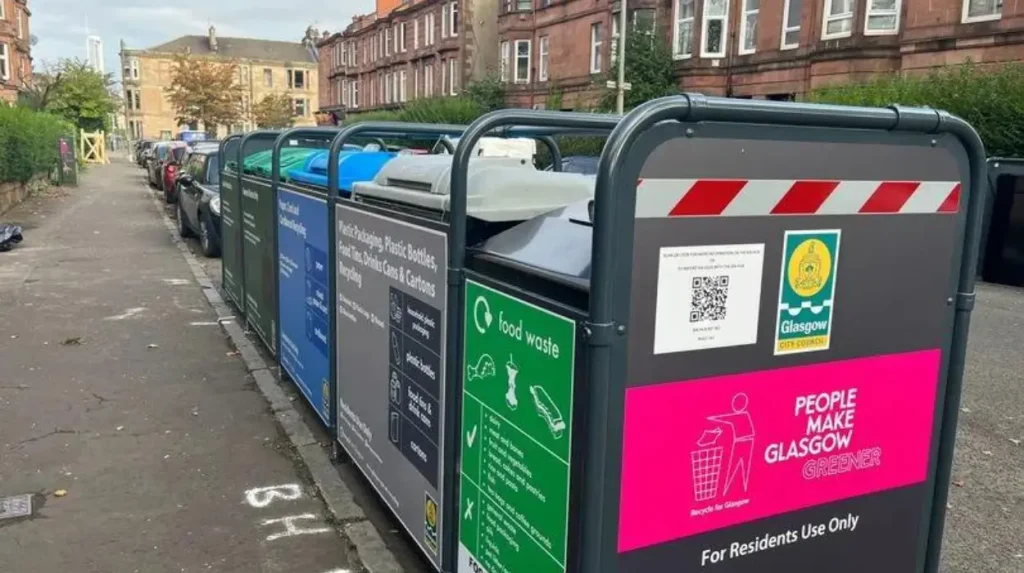
The address is the central piece of information. Glasgow contains a large number of flats, tenements and shared residential developments. A street name alone does not always identify the exact bins affected.
The bin type is also essential. General household waste and recyclable materials are handled through separate collection arrangements. For example, a resident reporting an uncollected general waste bin should not select a recycling category.
Residents should also check the physical condition of the bin and its surroundings before submitting a report. A clear description helps establish whether access or contamination affected the collection.
Useful details include whether:
- the bin was placed out for collection;
- the collection point was accessible;
- the bin lid was closed;
- the correct waste was placed inside the correct container; and
- other bins nearby were collected.
These details establish the difference between an individual collection problem and a wider route disruption.
The MyGlasgow app also supports the addition of location information and contextual evidence. Its published description states that users can submit reports, add photographs or other information, and receive updates through available notification methods.
How does the MyGlasgow app help report a missed collection?
The MyGlasgow app provides a mobile reporting channel that allows residents to select a missed-bin issue, provide location information and submit supporting details directly into Glasgow City Council’s issue-reporting process.
MyGlasgow is a mobile application associated with Glasgow City Council’s public reporting services. The app covers several local issues, including missed bin collections.
The reporting mechanism is designed around a simple process. The user selects an issue category, answers the required questions, provides relevant evidence or information, identifies the location and submits the report.
Location information is particularly useful in areas with shared bins. A tenement block can contain several waste containers serving many households. Accurate location details help distinguish one bin area from another.
The app also provides a way to review submitted reports and receive information about them through available communication channels. This creates a digital record that residents can use when monitoring an unresolved issue.
Residents should ensure that their report concerns a missed collection rather than another waste problem. Fly-tipping, bulky waste and damaged bins are separate issues and can require different council reporting processes.
What should you check before reporting a missed bin?
Before reporting a missed collection, residents should confirm the scheduled collection date, ensure the bin was accessible and correctly presented, check for service disruptions, and verify that the container contained the appropriate waste for that collection service.
Checking the collection date is the first step. A mistaken collection day creates unnecessary reports and delays.
The second step is access. Collection crews need a clear route to the bin. Parked vehicles, locked gates, construction work and obstructed bin stores can prevent a collection.
The third step is presentation. The bin should be available at the required collection location and ready for emptying.
The fourth step is waste quality. Recycling collections depend on residents separating materials correctly. Contamination occurs when unsuitable items enter a recycling container. A contaminated load can affect the recycling process and can result in collection difficulties.
Glasgow’s recycling guidance has changed over time as the city has developed its household recycling system. Residents should therefore check current council guidance for the waste streams accepted in each bin rather than relying on old instructions.
A Glasgow City Council recycling FAQ states that additional bags left beside household bins are not collected through the standard bin service and directs residents with excess waste towards appropriate waste-disposal services.
What happens after you report a missed bin collection?
After a missed-bin report is submitted, Glasgow City Council receives the information for assessment and service allocation, using the address, bin details and reported circumstances to determine the appropriate response to the collection issue.
Submitting a report does not automatically mean that a collection vehicle will arrive immediately. The council must first process the information and assess the operational circumstances.
The response depends on the cause of the missed collection.
A route-wide disruption affects several properties. For example, a vehicle breakdown can interrupt a collection round across multiple streets. The council can address this as an operational service issue.
An individual access problem affects a specific property or bin area. For example, a locked gate or blocked bin store requires the access issue to be resolved before a future collection.
A waste-quality problem relates to what was placed in the bin. In this situation, the resident must correct the contents or follow the relevant council instructions.
Digital reporting systems improve record keeping because each report enters a structured process. The MyGlasgow app states that submitted reports are routed to Glasgow City Council for processing and allocation to the relevant service delivery team.
Residents should keep a record of their submission and monitor official communications for updates.
What should you do if your bin is still not collected?
If an eligible bin remains uncollected after a missed-bin report, residents should retain their report reference, check for council service updates and follow up through the official Glasgow City Council contact channels with accurate details of the original request.
A follow-up should focus on facts. Provide the property address, the affected bin type, the original report date and any reference number.
Avoid submitting multiple reports for the same issue unless the council instructs otherwise. Duplicate reports can create unnecessary administrative work and do not replace a clear follow-up linked to the original case.
Shared properties require additional coordination. In a tenement, several residents can notice the same missed collection. One accurate report can establish the problem, while residents should monitor the official response.
If waste is creating a separate public-health or environmental problem, residents should use the appropriate council reporting route for that specific issue.
A missed collection and fly-tipping are different matters. Fly-tipping is the illegal disposal of waste and requires separate reporting. Bulky household items also require a dedicated collection or disposal arrangement.
Can you leave extra rubbish beside an uncollected bin?
Extra rubbish should not automatically be placed beside an uncollected household bin because standard collection arrangements do not necessarily include loose bags or additional waste, and residents should follow Glasgow City Council’s current guidance for excess household waste.
An overflowing bin creates a practical problem, but placing loose waste around a bin area can create further issues. Bags can split, attract pests and obstruct access to the collection point.
The correct response depends on the type and amount of excess waste.
Small amounts of household waste should be managed safely until the next authorised collection where possible. Recyclable materials should be separated according to the council’s current recycling guidance.
Large household items require a bulky waste service or another approved disposal method. Bulky waste includes items such as furniture and large domestic objects that do not belong in standard household bins.
Glasgow also has household waste recycling facilities for materials that require disposal outside ordinary kerbside collections. Residents should check current opening arrangements and accepted materials before travelling to a facility.
Correct disposal protects the collection system and reduces pressure on shared bin areas.
Why do missed bin collections matter in Glasgow?
Missed bin collections affect household hygiene, recycling performance and neighbourhood cleanliness, making prompt reporting important for individual residents and for Glasgow’s wider waste-management system, particularly in densely populated areas with shared waste facilities.
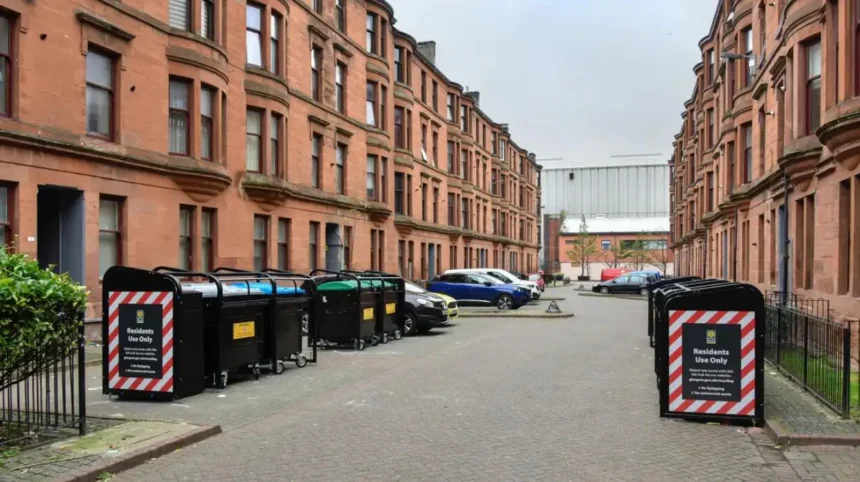
Glasgow has a diverse housing pattern that includes houses, flats and traditional tenements. Shared bin facilities serve multiple households in many neighbourhoods.
A single missed collection in a shared area can therefore affect a large number of residents.
Overflowing waste also creates environmental management challenges. Loose rubbish can spread into streets and back courts. Food waste can attract pests. Recycling materials placed in the wrong containers can contaminate otherwise recoverable resources.
Scotland’s waste policy places emphasis on reducing waste and increasing the reuse and recycling of materials. Effective household collections support these wider environmental objectives.
The importance of accurate reporting also appears in the scale of demand for urban waste services. Recent reporting based on council data highlighted tens of thousands of missed-bin reports in Glasgow during part of 2026, illustrating the operational significance of reliable reporting and collection systems.
Residents play a direct role by presenting bins correctly, reporting genuine missed collections and using the appropriate channel for other environmental problems.
Explore More Area Guide
What Goes in Glasgow Recycling Bins? Complete Guide
How to Check Your Glasgow Bin Collection Day
How can Glasgow residents reduce the risk of collection problems?
Residents can reduce avoidable collection problems by checking collection schedules, presenting the correct bin at the correct location, keeping access clear, separating recycling properly and using dedicated services for bulky items, excess waste and other non-standard materials.
Prevention starts with knowing the collection schedule. Residents should check official council information when moving home, changing accommodation or experiencing changes to local services.
Access is equally important. Shared bin stores need working access arrangements, and collection points should remain clear of vehicles and other obstructions.
Waste separation supports efficient recycling. Each household should follow the current guidance for general waste, recyclable materials and food waste where the service applies.
Landlords, property factors and housing associations also have responsibilities within shared residential settings. Residents should understand who manages the physical bin area while recognising that Glasgow City Council remains responsible for the public collection service in relevant locations.
A clear division of responsibilities helps resolve problems faster. For example, a council report addresses an uncollected bin, while a broken lock on a privately managed bin store can require action from the property manager.
What is the best way to report a missed bin collection in Glasgow?
The best reporting method is Glasgow City Council’s official missed-bin service or the MyGlasgow app, supported by accurate address and collection details, because these channels create a formal record and direct the issue into the relevant council service process.
The most effective report is accurate, timely and specific.
Check that the collection has genuinely been missed. Confirm the property address and identify the correct bin. Ensure that access and waste presentation did not cause the problem.
Then use the official council reporting channel and retain the submission details.
This process supports residents, collection teams and the wider city. It provides the council with usable information, helps identify route-level problems and gives households a formal record of their request.
Missed-bin reporting is therefore part of Glasgow’s wider waste-management system. Accurate reports help the council respond to service problems while correct waste presentation supports cleaner neighbourhoods and effective recycling.
For current collection schedules, reporting arrangements and service updates, residents should always check official Glasgow City Council information because operational procedures and collection services can change over time. Scotland’s mygov.scot service also directs residents to their local authority for current bin-day and missed-collection information.
How do I report a missed bin collection in Glasgow?
You can report a missed bin collection through the official Glasgow City Council online reporting service or the MyGlasgow app. Provide your address, the type of bin that was missed and the relevant collection details.