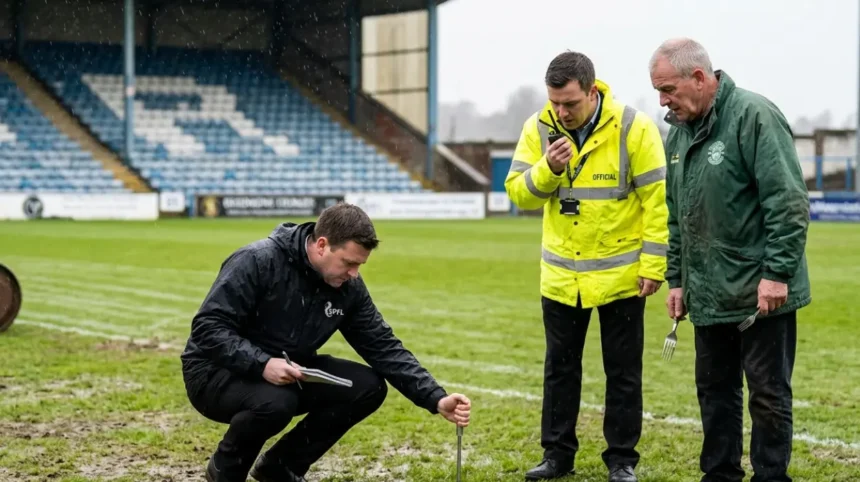
The most practical way to get SPFL pitch inspections in Glasgow is to contact the club, the match referee, and the league early, then monitor official club and SPFL announcements for inspection times and postponement decisions. In practice, the decision chain centers on local ground staff, the referee, and competition officials, with inspections often scheduled on the morning of a match when weather threatens playability.
- What is an SPFL pitch inspection in Glasgow?
- How do SPFL pitch inspections work?
- Who decides whether a Glasgow pitch is playable?
- What is the most practical way to request one in Glasgow?
- When are inspections usually scheduled?
- What conditions trigger an inspection?
- What should clubs and supporters do before a possible inspection?
- How often do Glasgow pitch inspections happen in winter?
- What examples show the process in practice?
- Why does the process matter for Glasgow football?
- What is the best practical checklist for Glasgow clubs?
What is an SPFL pitch inspection in Glasgow?
An SPFL pitch inspection is a formal check of a football pitch’s safety and playability before a match, usually triggered by weather, drainage problems, freezing, or surface damage. In Glasgow, the inspection process serves the same purpose as elsewhere in Scotland: confirming whether the referee can safely start or continue the game.
The Scottish Professional Football League covers the top men’s professional leagues in Scotland, and its matchday operations depend on conditions at the stadium rather than on a generic citywide standard. A pitch inspection is not a cosmetic review. It is a practical decision point about player safety, ball movement, and whether a surface is fit for competitive football.
In winter, inspections become common because frost, snow, and waterlogging disrupt match preparation. Recent SPFL reporting shows inspections scheduled for multiple fixtures when freezing weather affects several grounds at once, with some matches already postponed before inspections even take place. Glasgow clubs follow the same general pattern, although each venue makes decisions based on its own surface and local conditions.
How do SPFL pitch inspections work?
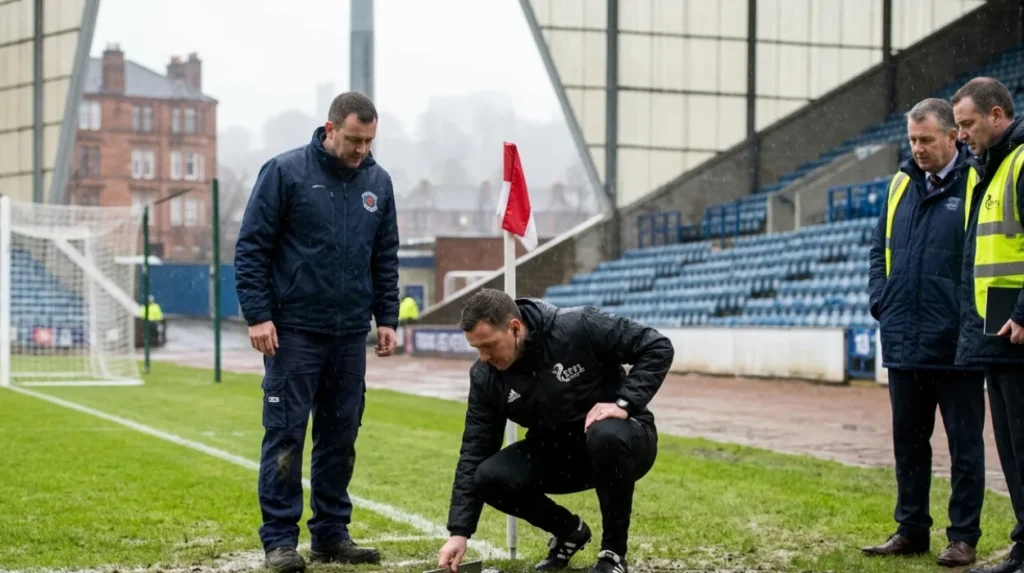
SPFL pitch inspections work through a simple process: the club identifies a risk, the league and referee are informed, an inspection time is set, and the referee or match official makes the final call. The exact timing depends on weather, travel, and the fixture schedule, but the logic stays consistent across Scottish football.
A club usually raises the issue first when heavy rain, frost, snow, or a frozen sub-surface makes the pitch doubtful. The SPFL then announces the inspection or postponement, and the referee retains the authority to decide on the day if the pitch remains playable after a positive inspection. That separation matters because a surface can improve or deteriorate quickly in Glasgow’s climate.
Morning inspections are common for weekend fixtures, while midweek matches can require same-day checks. West Dunbartonshire Council’s published rules reflect this wider Scottish pattern by stating that grass pitch inspections take place on Friday mornings before weekend games, and midweek games are subject to morning inspection on the day. That model shows how local authorities and football organizers use inspections as a scheduled control mechanism rather than an emergency-only step.
Who decides whether a Glasgow pitch is playable?
The referee makes the final matchday decision, but the club, stadium staff, and league officials all contribute to the inspection process. A pitch can receive a positive pre-match inspection and still be rejected later if conditions worsen before kickoff.
The club manages the stadium, prepares the surface, and asks for an inspection when needed. Grounds staff clear standing water, protect the pitch where possible, and assess whether the surface supports safe play. The referee then evaluates the pitch against match standards, including footing, ball roll, drainage, frozen areas, and any unsafe patches.
This system protects against poor judgment and false confidence. A pitch can look acceptable from the stands while still failing on traction, soft spots, or ice below the surface. That is why local football bodies keep the referee as the decisive authority on the day. In practice, the most useful “way to get” an inspection is to understand that the process exists to support an official decision, not a supporter request.
What is the most practical way to request one in Glasgow?
The most practical route is to contact the club’s operations team, stadium manager, or matchday secretary as soon as a weather risk appears, then follow official club channels for updates. In Glasgow, direct club communication is more effective than informal messages because the club controls the stadium and coordinates with league officials.
A supporter or visiting team does not normally arrange a formal SPFL inspection alone. The request usually starts inside the club, where staff monitor the pitch and decide whether conditions justify escalation. From there, the club informs the relevant football authorities and awaits a referee inspection time or a postponement notice.
For practical action, use this sequence:
- Contact the club office or matchday operations team.
- Ask whether the pitch has been assessed internally.
- Check whether an official inspection has been requested.
- Follow the club website and social media for the inspection time.
- Wait for the referee’s final decision on the day.
That sequence reflects how inspections are publicly handled in Scottish football. Clubs often announce them quickly when a fixture is at risk, as seen in SPFL and club updates that specify the scheduled time and the match affected.
When are inspections usually scheduled?
Inspections are usually scheduled on the morning of the match, or on the Friday before a weekend fixture, when weather conditions are most current and most reliable. This timing reduces the chance of an inaccurate decision caused by improving or worsening conditions overnight.
Published Scottish football examples show morning inspections at specific times such as 09:30, 10:30, and 11:00 when weather threatens multiple games. Local authority pitch rules also show a Friday-morning inspection model for weekend football, with same-day checks for midweek games. The timing reflects a balance between certainty and practicality.
For Glasgow fixtures, early communication matters because weather can change fast. A pitch that is frozen at dawn can thaw by midday, and a pitch that drains well in daylight can still fail after more rain. Morning inspection windows therefore provide the most realistic conditions for a matchday call.
What conditions trigger an inspection?
The main triggers are freezing temperatures, snow, ice, waterlogging, heavy rainfall, and general surface damage that affects safety or ball movement. These are the same factors that repeatedly disrupt SPFL fixtures across Scotland, including games postponed because of snow and ice.
Waterlogging is a major issue because saturated ground prevents proper footing and makes the surface unsafe. Freezing conditions create a different risk, because a pitch can appear firm while hiding dangerous icy patches underneath. Snow often creates a direct postponement problem because it affects both the playing surface and access to the stadium.
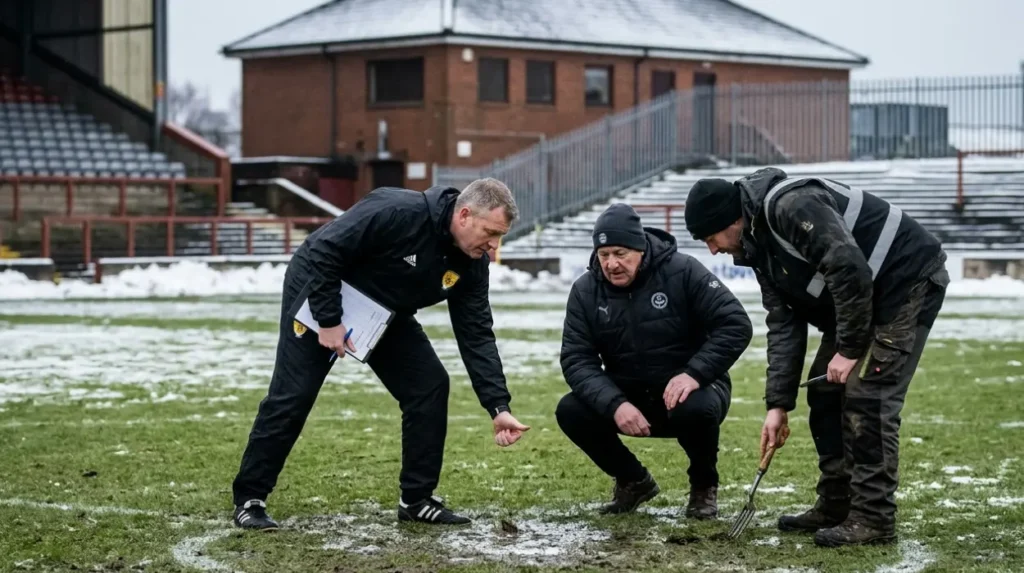
A second trigger is localized surface damage. Even without severe weather, repeated use, poor drainage, or winter wear can leave the pitch uneven or unstable. That is why inspections examine more than visible grass coverage. They assess whether the field remains fit for competitive play in real match conditions.
What should clubs and supporters do before a possible inspection?
Clubs should inspect the surface early, protect it overnight, and communicate quickly. Supporters should rely on official club and SPFL updates rather than rumors or social media speculation. Clear communication reduces confusion and limits unnecessary travel.
Clubs typically use pitch covers, drainage checks, and groundskeeping work to improve the chance of play. Recent SPFL club announcements have referred to pitch protection covers already being in place before a scheduled inspection, which shows how preparation begins before the formal assessment. That preparation matters because an inspection is only useful if the surface has been given a fair chance to recover.
Supporters should check official updates because postponement decisions can arrive early or at short notice. SPFL news frequently lists games that are already off due to weather, along with further inspections planned for the same weekend. Official channels provide the only reliable status for travel and attendance planning.
How often do Glasgow pitch inspections happen in winter?
Glasgow pitch inspections become more frequent in late autumn and winter, when frost, rain, and snow make grass surfaces harder to maintain. Scottish football regularly reports inspection chains and postponements during cold snaps, especially when several fixtures across the country are affected at once.
The city’s climate adds pressure because temperatures can shift quickly, and persistent rain can saturate pitches that already suffered from earlier use. When this happens, clubs must decide whether the surface will recover by kickoff or whether a formal inspection is required. If the game is part of a crowded fixture calendar, the timing becomes even more important.
A practical takeaway is that winter inspections are not unusual or exceptional. They are a normal part of match planning in Scottish football, especially when lower temperatures and heavier rainfall coincide with packed schedules. That makes early monitoring essential for Glasgow clubs and supporters alike.
What examples show the process in practice?
Recent Scottish football examples show inspections being set at specific times, with some games postponed before or after checks because of snow, ice, or waterlogging. These examples demonstrate how the system works under real matchday pressure.
SPFL reporting has listed multiple fixtures with morning inspections scheduled before kickoff, including games in the Championship, League 1, and League 2. In another case, the league announced inspections ahead of evening games, showing that the process also applies to midweek scheduling. These examples show that the inspection timetable follows the fixture rather than a fixed national clock.
Club announcements also show that teams often issue their own updates. A club can confirm a pitch inspection time after contacting the SPFL, which then informs the wider matchday audience. That is the clearest practical route in Glasgow: club first, league second, referee final.
Why does the process matter for Glasgow football?
The inspection process protects safety, preserves fairness, and reduces avoidable travel for players, staff, and supporters. It also gives clubs a structured way to manage weather disruption in a city where winter conditions affect grassroots and professional football alike.
Safety is the strongest reason. A poor surface increases the risk of slips, awkward landings, and uncontrolled movement. Fairness is the second reason, because one team should not gain an artificial advantage from conditions that stop normal football from being played. Travel efficiency is the third reason, because early inspection and clear communication stop unnecessary journeys to a fixture that will not go ahead.
There is also a wider operational impact. Postponements affect ticketing, staffing, stewarding, broadcast planning, and fixture congestion later in the season. When several SPFL games are postponed together because of weather, the league calendar absorbs the disruption across multiple dates. For Glasgow clubs, that makes pitch inspections a central part of football operations rather than a minor administrative detail.
What is the best practical checklist for Glasgow clubs?
The best checklist is early monitoring, fast internal assessment, prompt contact with the league, clear public updates, and strict reliance on the referee’s final decision. That process is simple, repeatable, and aligned with how Scottish football already handles weather disruption.
What is an SPFL pitch inspection?
An SPFL pitch inspection is an official check to decide whether a football pitch is safe and playable before a match.