First Bus Glasgow provides local and regional bus services connecting Glasgow city centre with residential neighbourhoods, shopping destinations, hospitals, transport hubs and surrounding towns. Passengers can use the network for commuting, education, shopping, airport connections and leisure travel. Understanding First Bus Glasgow routes, ticket options, fares and timetables helps residents and visitors plan journeys efficiently.
- What Is First Bus Glasgow and How Does Its Network Work?
- Which First Bus Routes Operate Across Glasgow?
- Which routes connect Glasgow’s west and north-west?
- Which routes serve Glasgow’s south side?
- Which routes serve the east side and surrounding towns?
- How Can Passengers Find First Bus Glasgow Timetables?
- How Much Do First Bus Glasgow Tickets Cost?
- Are return tickets and day tickets different from single fares?
- Do First Bus Glasgow fares vary by passenger type?
- How Can Passengers Buy First Bus Glasgow Tickets?
- How Can Passengers Plan a First Bus Journey Across Glasgow?
- How should passengers plan connections with trains and the Subway?
- What should passengers check before leaving home?
- Where Can Passengers Find First Bus Glasgow Route Maps?
- Does First Bus Glasgow Operate Night Buses?
- How Can Passengers Check First Bus Glasgow Service Disruptions?
- Is First Bus Glasgow Suitable for Airport Travel?
- What Accessibility and Travel Assistance Does First Bus Glasgow Provide?
- How Can Students and Young People Travel on First Bus Glasgow?
- How Can Passengers Make First Bus Glasgow Journeys More Efficient?
- Where Can Passengers Find Official First Bus Glasgow Information?
The operator’s official Greater Glasgow website provides route maps, journey-planning tools, service timetables and ticket information. Passengers can search by route number, town or bus stop to find the relevant service and check departure times.
What Is First Bus Glasgow and How Does Its Network Work?
First Bus Glasgow is a local bus network operated by First Bus across Greater Glasgow and surrounding communities. It connects residential areas with the city centre, employment locations, hospitals, retail destinations and transport interchanges through scheduled services and dedicated travel options.
First Bus is a major UK bus operator. Its Greater Glasgow operation serves passengers travelling within Glasgow and to locations across the wider metropolitan area. The network includes standard local buses, selected express services and night buses, depending on the route and operating schedule.
A bus route follows a defined path between its starting point and destination. Along the way, it serves designated bus stops where passengers board and leave the vehicle. Each route has a service number, published timetable and list of principal stops.
Glasgow’s bus network complements other public transport options, including ScotRail trains and the Glasgow Subway. Buses provide connections to neighbourhoods and destinations that are not directly served by railway stations.
The network is relevant to several types of passengers. Commuters travel between residential districts and workplaces, students travel to educational institutions, and visitors use buses to reach shopping streets, cultural attractions and accommodation.
First Bus services operate according to individual schedules. The precise route, stopping pattern and frequency depend on the service number and day of travel. Passengers should therefore consult the current timetable rather than rely on general assumptions about service frequency.
The official First Bus Greater Glasgow website is the primary source for route information, fares and travel updates.
Which First Bus Routes Operate Across Glasgow?
First Bus operates routes linking Glasgow city centre with districts such as Drumchapel, Partick, Shawlands, Castlemilk, Easterhouse, Clydebank and East Kilbride. Each route serves a defined corridor, with its stops and operating days published in the official timetable.
The network covers both central Glasgow and outlying communities. Route numbers identify individual services, while lettered variants and express designations distinguish services with different stopping patterns or destinations.
Examples from the published Greater Glasgow timetable illustrate the network’s geographical coverage.
Which routes connect Glasgow’s west and north-west?
Services 1 and 1A connect Dumbarton and surrounding communities with Clydebank, Scotstoun and Glasgow. Route 1C serves Drumchapel, Garscadden, Scotstoun and Glasgow. These services provide connections between residential areas in the west and the city.
Route 2 links Faifley and Clydebank with Partick, Glasgow city centre, Parkhead, Shettleston and Baillieston. Its route crosses several parts of the urban area, making it relevant to passengers travelling between western and eastern districts.
Which routes serve Glasgow’s south side?
Route 3 connects Drumchapel, Partick and Charing Cross with the city centre, Shawlands, Silverburn, Crookston and Govan. Route 5 links Castlemilk and Croftfoot with Victoria Road and the city centre.
Route 10 serves Silverburn, Corkerhill and Ibrox before reaching Glasgow city centre. These services connect residential districts with shopping destinations and central employment areas.
Which routes serve the east side and surrounding towns?
Route 18 and its 18A variant connect Glasgow with Bridgeton, Rutherglen, Burnside, Cathkin and East Kilbride. Route 19 links the city centre with Royston Road, Millerston, Craigend, Glasgow Fort and Easterhouse.
Regional services also connect Glasgow with locations across Lanarkshire and other neighbouring communities. The exact destination list and stopping pattern depend on the route and variant.
Passengers should confirm the destination displayed on the bus and check the official route map before travelling. Two services with similar numbers do not necessarily follow identical routes.
How Can Passengers Find First Bus Glasgow Timetables?
Passengers can find First Bus Glasgow timetables through the operator’s official website by entering a route number, town or bus stop name. They then select the relevant service and travel day to check scheduled departures and principal stops.
The official First Bus timetables page provides a searchable directory of services. It includes timetable information for weekdays, Saturdays and Sundays where applicable. Published timetables can also be viewed or printed in PDF format.
The search process is straightforward. A passenger travelling from Shawlands to the city centre can search for a relevant route, inspect its stops and select the timetable for the intended day.
Timetables list scheduled departure times at principal stops. Some routes require passengers to scroll further through the timetable to find return journeys or additional destination details.
Passengers should check the validity date shown on the timetable. A schedule marked as valid until further notice remains subject to subsequent service changes, diversions and operator announcements.
How do weekday and weekend timetables differ?
Weekday services often follow different schedules from Saturday and Sunday services. The difference depends on passenger demand, operating hours and the specific route.
A service that runs frequently during weekday commuting periods does not necessarily maintain the same frequency on Sundays. Some services also have limited evening or weekend operating hours.
Passengers travelling early in the morning, late at night or on public holidays should check the relevant date and operating period. This is particularly important when travelling to work, attending an appointment or connecting with a train.
How can passengers check a specific bus stop?
Passengers can enter a stop name or use the operator’s journey-planning tools to identify relevant services. They should verify the direction of travel because the same road can have separate stops for buses travelling in opposite directions.
Checking the destination and stop sequence helps prevent boarding a bus that travels along a familiar road but does not reach the required location.
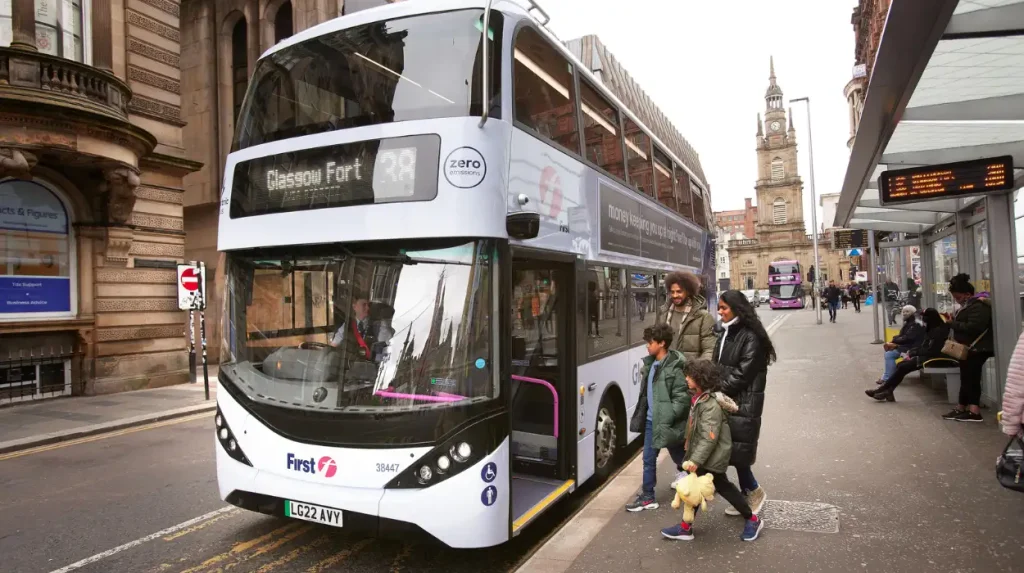
How Much Do First Bus Glasgow Tickets Cost?
From 7 September 2026, First Bus introduced a £2 cap on single fares across Glasgow and surrounding areas. The cap applies to eligible single journeys, regardless of journey distance, including journeys beginning on Glasgow Airport Express services.
The £2 single-fare cap is an important part of the current Glasgow ticketing offer. It gives passengers a clear maximum price for an eligible single journey on First Bus services covered by the scheme.
For example, a passenger travelling from a residential neighbourhood into Glasgow city centre pays no more than £2 for an eligible single journey. A passenger travelling farther across the covered network also benefits from the cap.
The scheme applies to single fares rather than automatically setting every ticket type at £2. Day tickets, multi-day tickets, bundles and other products have separate prices and conditions.
Passengers should distinguish between the price of one journey and the price of unlimited travel over a specified period. Someone making several trips in one day should compare the current day-ticket price with the total cost of individual single fares.
The official First Bus £2 fare cap page provides information about the scheme and its coverage. Ticket conditions and product prices should be checked before purchase because fares can change.
Are return tickets and day tickets different from single fares?
A single ticket covers one journey under its stated conditions. A day ticket provides travel for the applicable period and within the relevant area or network, subject to the ticket’s terms.
Passengers planning several journeys should compare available ticket products rather than assume the single-fare cap is the cheapest option for every travel pattern.
For example, a visitor making a morning journey into the city centre, an afternoon trip to another district and an evening return should calculate the cost of separate single tickets and compare it with an eligible day ticket.
The correct choice depends on the number of journeys, the travel area and the products currently offered.
Do First Bus Glasgow fares vary by passenger type?
First Bus provides dedicated ticket information for students, young people, children and passengers eligible for concessionary travel. The applicable discount or entitlement depends on the product and eligibility rules.
Scotland’s National Entitlement Card scheme provides free bus travel to eligible groups, including qualifying older people, disabled people and eligible young people. Passengers must meet the scheme’s requirements and use a valid card in accordance with its conditions.
Young passengers should check the relevant Scottish Government guidance and First Bus ticket conditions rather than assume that every age group receives the same fare.
How Can Passengers Buy First Bus Glasgow Tickets?
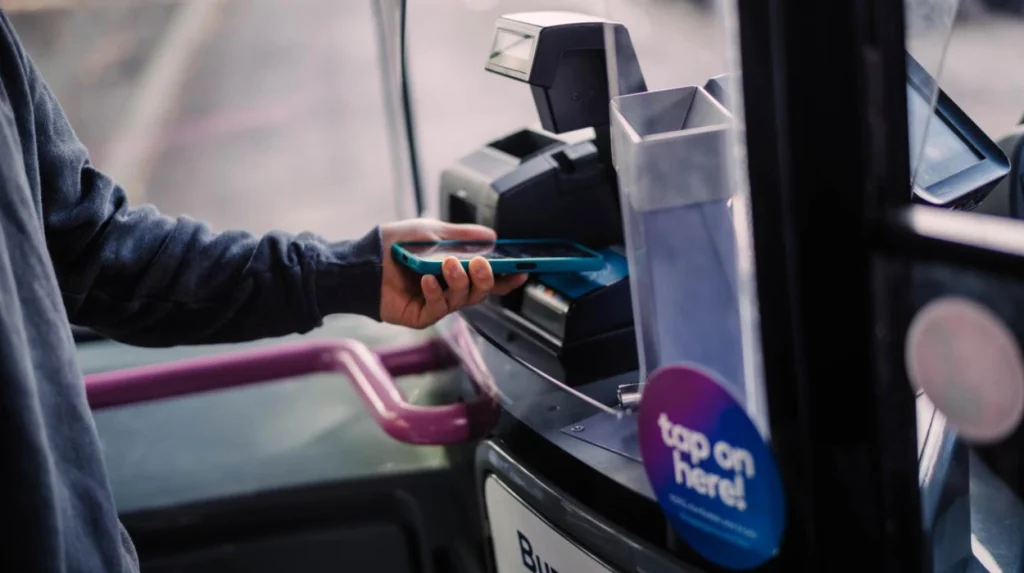
Passengers can purchase First Bus Glasgow tickets through the First Bus app and other authorised sales channels, with available options depending on the ticket type. Contactless payment is also available on supported services, subject to the operator’s current payment instructions.
The First Bus app supports journey planning and digital ticketing. It allows passengers to review available ticket products and purchase eligible tickets on a mobile device.
Digital tickets help passengers prepare before reaching the bus stop. Passengers should check the ticket’s activation requirements and validity period before travelling. A ticket that requires activation should be activated according to the instructions provided by the operator.
Contactless payments provide another way to pay for eligible journeys. Passengers should follow the payment instructions displayed on the vehicle or published by First Bus. They should also check whether their selected payment method supports the fare or ticket product they intend to purchase.
Can passengers pay by card on the bus?
Contactless card payments are supported on First Bus services offering this facility. Passengers should follow the instructions for purchasing a single fare and check the applicable payment process before boarding.
The £2 single-fare cap introduced in September 2026 makes the cost of eligible single journeys more predictable. However, passengers should still select the correct ticket type and confirm the fare shown during the transaction.
Should passengers buy tickets before boarding?
Buying a digital ticket before boarding helps passengers prepare for their journey. Passengers using contactless payment should follow the operator’s instructions at the point of purchase.
Ticket validity rules differ between products. Passengers should not assume that purchasing a ticket automatically activates it or that every digital ticket permits immediate boarding.
The safest approach is to read the ticket conditions, confirm its validity and have the required payment method ready before the bus arrives.
How Can Passengers Plan a First Bus Journey Across Glasgow?
Passengers can plan a First Bus journey by identifying their starting point, destination, nearest stops and preferred arrival time. They should compare available routes, check scheduled departures, select a suitable ticket and review travel alerts before leaving.
Journey planning begins with the destination. A passenger travelling to Glasgow city centre needs to identify a suitable stop near the final destination, rather than selecting a bus simply because it reaches the city centre.
The next step is to find a route serving both the starting area and the destination. The official network maps show how routes connect different parts of Greater Glasgow. The timetable then confirms the service’s operating day and scheduled departure times.
For example, someone travelling from Castlemilk to the city centre can investigate route 5. A passenger travelling from Shawlands towards Silverburn can check route 3 and its stopping pattern. These examples demonstrate how route numbers help narrow the search.
Passengers travelling to hospitals, universities or shopping centres should check the nearest appropriate stop and allow time to walk from the stop to the final destination.
How should passengers plan connections with trains and the Subway?
Passengers connecting with ScotRail or the Glasgow Subway should allow enough time to walk between stops and stations. The necessary transfer time depends on the interchange, walking distance and time of day.
A bus arriving shortly before a train departure creates a risk of missing the connection if traffic delays the journey. Allowing additional time provides a buffer for road congestion, busy stops and changes in service conditions.
Passengers travelling to Glasgow Central or Glasgow Queen Street should confirm which station their train uses. The two main railway stations serve different routes, and the correct destination depends on the planned rail journey.
What should passengers check before leaving home?
Passengers should verify the service number, direction of travel, departure time and stop location. They should also check whether a diversion or temporary stop closure affects the journey.
For time-sensitive appointments, passengers should plan an earlier departure where practical. This is especially relevant for hospital appointments, job interviews, examinations and airport connections.
Where Can Passengers Find First Bus Glasgow Route Maps?
First Bus publishes Greater Glasgow network maps to help passengers understand route coverage, identify connections and plan journeys. The maps show how individual services link Glasgow with surrounding communities, while route-specific timetables provide detailed departure information.
The official First Bus network maps page provides access to Glasgow network maps and additional maps for areas such as Dumbarton, Kirkintilloch and Lanarkshire. It also includes information about the night bus network and selected transport locations.
A network map is useful when passengers know their general destination but are unfamiliar with the available routes. It provides a broader view of the service network than an individual timetable.
A timetable is more suitable for checking the scheduled departure from a particular stop. Using both resources helps passengers understand where a route travels and when a bus is scheduled to arrive.
Passengers should use the latest available map because route coverage and stopping patterns change over time. An older map found through a third-party website does not necessarily represent the current network.
How do route maps help visitors to Glasgow?
Visitors can use route maps to identify services linking their accommodation with the city centre, shopping areas and other destinations. They can also compare direct routes with journeys that require a transfer.
For instance, a visitor staying in the west of Glasgow can examine routes serving Partick and the city centre before choosing the most suitable stop. Someone travelling towards Glasgow Fort can check services serving Easterhouse and the surrounding area.
The route map identifies the general service corridor. The timetable confirms the specific service and operating time.
Does First Bus Glasgow Operate Night Buses?
First Bus operates designated night bus services on selected routes in Greater Glasgow. These services provide overnight transport on their published operating days, but availability, departure times and destinations vary by route and timetable.
Night buses serve passengers travelling outside standard daytime operating hours. Their users include late-shift workers, people returning from evening activities and passengers travelling during periods when daytime services have finished.
The official First Bus network maps include a dedicated night bus network map. Passengers should consult this resource and the current timetable to identify routes that operate at the required time.
A route that operates during the day does not automatically operate overnight. Night services can use different route numbers, stopping patterns or operating schedules.
How can passengers check the last bus?
Passengers should search for their route and select the correct travel day. They should inspect the final scheduled departure from the stop where they intend to board.
Checking only the departure from the route’s starting point is insufficient. A bus reaches intermediate stops later, and the last departure from one stop differs from the last departure at another.
Passengers travelling late at night should also confirm the direction of travel and the final destination shown on the service. This prevents confusion between outward and return journeys.
How Can Passengers Check First Bus Glasgow Service Disruptions?
Passengers can check First Bus Glasgow service disruptions through the operator’s official travel information and timetable pages. They should review notices about diversions, road closures, stop changes and timetable amendments before travelling, particularly when reaching a destination at a fixed time.
Bus services operate on public roads and are affected by traffic conditions, roadworks, accidents and temporary restrictions. A diversion changes the normal route, while a stop closure requires passengers to use an alternative boarding point.
The First Bus website publishes travel information alongside its route and timetable resources. Passengers should review relevant notices before starting a journey.
For example, roadworks near a city-centre street can affect several services that use the same road. A passenger who checks only the standard route map can miss a temporary change affecting the intended stop.
What should passengers do when a bus stop is closed?
Passengers should read the notice explaining the closure and identify the replacement stop. They should confirm that the alternative stop serves the correct direction and route.
Where a diversion affects the journey, passengers should allow additional time and recheck the scheduled service. If the available information is unclear, the operator’s customer information channels provide the appropriate route for further guidance.
Passengers should not rely exclusively on old screenshots, saved timetables or information posted by unrelated third parties. Current operator notices provide the most relevant information about temporary changes.
Is First Bus Glasgow Suitable for Airport Travel?
First Bus provides airport-related travel options in Greater Glasgow, including Glasgow Airport Express services. Passengers should check the current airport route, stop locations, ticket conditions and departure times before travelling to Glasgow Airport.
Glasgow Airport is located west of the city centre. Bus services provide an important transport option for passengers travelling between the airport, Glasgow and surrounding areas.
The First Bus network maps include airport connections, and the operator’s published fare-cap information confirms that eligible single journeys on Glasgow Airport Express are included in the £2 cap introduced on 7 September 2026.
Airport passengers should distinguish between the airport express service and ordinary local bus routes. Their stopping patterns, journey times and service arrangements differ.
How early should passengers leave for Glasgow Airport?
Passengers should work backwards from their flight’s check-in and boarding requirements. They should allow sufficient time for the bus journey, possible traffic delays, airport check-in and security procedures.
A scheduled bus departure does not guarantee an exact arrival time because road conditions affect journey duration. Travellers with early-morning flights should confirm the first available service and check whether it operates on the intended day.
Passengers should also review the airline’s instructions for check-in deadlines, baggage drop and boarding. These requirements determine how much time they need at the airport before departure.
What Accessibility and Travel Assistance Does First Bus Glasgow Provide?
Passengers requiring travel assistance should consult First Bus accessibility information before travelling. They should check the facilities available on their intended service, communicate specific assistance requirements where necessary and confirm arrangements for boarding, mobility equipment and accessible journey planning.
Accessibility affects how passengers select a route, reach a bus stop and board a vehicle. Relevant considerations include step-free access, space for wheelchairs, priority seating and the distance between the stop and the final destination.
The operator provides passenger information and additional travel guidance through its official Greater Glasgow website. Passengers who require specific assistance should consult the relevant guidance rather than assume that every journey has identical facilities.
People travelling with mobility equipment should confirm the applicable space and boarding arrangements. Passengers with visual, hearing or other access requirements should review the available support information before setting out.
Accessible travel planning also involves the surrounding street environment. A bus service can serve a destination even when the pavement, crossing or route from the stop presents a separate accessibility challenge.
Passengers should therefore consider the entire journey, from their starting point to the final entrance, when selecting a suitable route.
How Can Students and Young People Travel on First Bus Glasgow?
Students and young people can use First Bus Glasgow services for travel to schools, colleges, universities and other destinations. Available ticket products depend on age, eligibility, journey requirements and current operator conditions, while qualifying passengers can access Scotland’s applicable concessionary travel scheme.
Glasgow’s bus network connects residential areas with educational destinations and the city centre. Services such as routes 3, 5 and 18 illustrate the network’s links between neighbourhoods and central transport and employment areas. The most suitable route depends on the passenger’s home location and educational institution.
Young passengers should check the current First Bus student and young-person ticket information before purchasing a ticket. Eligibility requirements and product conditions determine which fares are available.
Scotland’s Young Persons’ (Under 22s) Free Bus Travel scheme provides eligible young people aged 5 to 21 with free bus travel on participating services, subject to the scheme’s rules and use of a valid National Entitlement Card or other accepted scheme credential.
Students outside the eligible age range should compare the operator’s available student products with standard fares. A discounted ticket does not automatically apply to every student or every journey.
For regular travel, students should compare the total cost of their expected journeys with available ticket products. They should also check timetable changes during weekends, holidays and examination periods.
Explore More Area Guide
Glasgow Bus Prices and Tickets: 2026 Fare Guide
Glasgow Public Transport: Complete Guide to Travel Options
How Can Passengers Make First Bus Glasgow Journeys More Efficient?
Passengers can improve journey planning by checking current timetables, choosing the correct stop, preparing a valid ticket and reviewing service alerts before departure. Comparing single fares with day tickets also helps travellers select an option suited to their planned journeys.
Reliable bus travel begins with accurate information. Passengers who verify their route and departure time reduce the risk of waiting at the wrong stop or boarding a service travelling in the opposite direction.
For regular commuters, checking the weekday timetable helps establish a consistent departure routine. Occasional travellers should confirm the schedule each time, especially when travelling on Sundays, public holidays or late in the evening.
Passengers making several trips should compare available fares. The £2 single-fare cap provides a clear reference point for eligible single journeys, but other ticket products have their own prices and validity rules.
Digital journey planning is useful when travelling to an unfamiliar destination. A passenger can check the route map, inspect the timetable and identify a suitable stop before leaving home.
Travellers should also allow additional time for important appointments. Traffic delays and temporary road restrictions can affect bus journey times even when the scheduled service is operating.
Where Can Passengers Find Official First Bus Glasgow Information?
The official First Bus Greater Glasgow website is the main source for current route maps, bus timetables, ticket information and travel notices. Passengers should use these resources to verify service details before travelling rather than rely on outdated third-party information.
These resources support different parts of the journey. Network maps explain geographical coverage, timetables show scheduled departures, and ticket pages explain applicable fares and conditions.
Passengers should check the date on published information and review the latest service notices before departure. This is particularly important when travelling to Glasgow Airport, connecting with trains, attending appointments or using overnight services.
First Bus Glasgow provides connections across the city and neighbouring communities through local, regional and selected express services. By checking the correct route, confirming departure times, understanding ticket conditions and reviewing travel updates, passengers can plan journeys that suit their destinations and travel requirements.
What is First Bus Glasgow?
First Bus Glasgow is a bus network serving Glasgow and surrounding communities. It connects residential areas with the city centre, shopping destinations, hospitals, educational institutions and transport hubs.