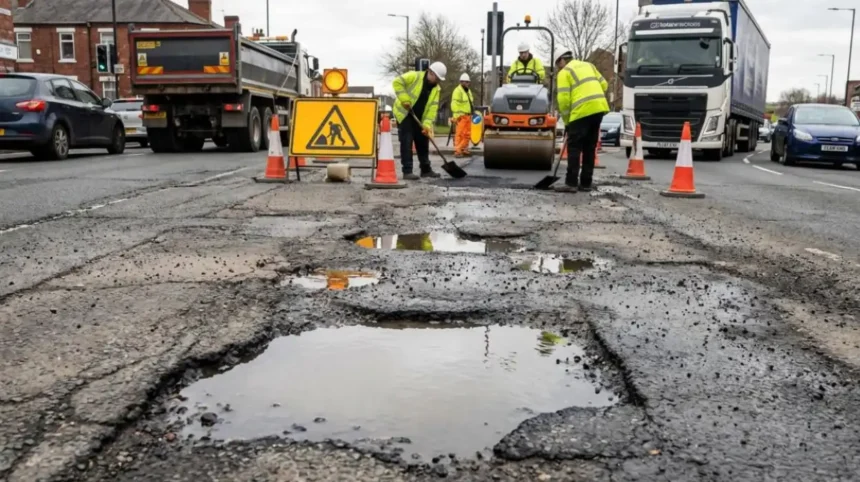
Reporting a pothole in Glasgow helps Glasgow City Council identify dangerous road defects, arrange inspections and prioritise repairs. Residents, drivers, cyclists and pedestrians can report damaged road surfaces through the council’s official reporting service.
- Why Should You Report a Pothole in Glasgow?
- Who Is Responsible for Repairing Potholes in Glasgow?
- How Do You Report a Pothole to Glasgow City Council?
- Step 1: Open the Council Reporting Service
- Step 2: Identify the Exact Location
- Step 3: Describe the Pothole
- Step 4: Attach Photographs
- Step 5: Submit the Report
- What Information Should You Include When Reporting a Glasgow Pothole?
- Exact Street Name and Location
- Pothole Size and Depth
- Traffic and Pedestrian Risks
- Photographic Evidence
- Date and Time
- What Happens After You Report a Pothole in Glasgow?
- How Quickly Does Glasgow City Council Repair Potholes?
- How Do You Report Potholes on Glasgow’s M8, M74 and M77?
- Reporting a Pothole on the M8
- Reporting a Pothole on the M74
- Reporting a Pothole on the M77
- Traffic Scotland Contact Details
- Can You Report a Pothole Using the MyGlasgow App?
- Can You Claim Compensation for Vehicle Damage Caused by a Glasgow Pothole?
- What Evidence Do You Need?
- How Do You Submit a Claim?
- Is Compensation Guaranteed?
- Should You Contact Your Insurance Company?
- What Should Cyclists and Pedestrians Do About Dangerous Potholes in Glasgow?
- Why Do Potholes Develop on Glasgow Roads?
- What Do Glasgow’s Road Condition Statistics Reveal About Potholes?
- What Can Glasgow Residents Do If a Reported Pothole Remains Unrepaired?
- Check the Original Report
- Submit an Updated Report
- Contact the Council
- Use the Formal Complaints Procedure
- How Can Better Pothole Reporting Improve Glasgow’s Roads?
The correct reporting process depends on who maintains the road. Glasgow City Council maintains most local roads, while Transport Scotland manages the trunk road network through contracted operating companies.
This guide explains how to report a pothole, what information to provide, how the council handles complaints, which organisation is responsible and what to do if a pothole damages your vehicle.
Why Should You Report a Pothole in Glasgow?
Reporting a pothole helps Glasgow City Council identify road damage, assess public safety risks and organise necessary repairs. Early reporting reduces the risk of vehicle damage, cycling accidents, pedestrian injuries and further deterioration of the road surface.
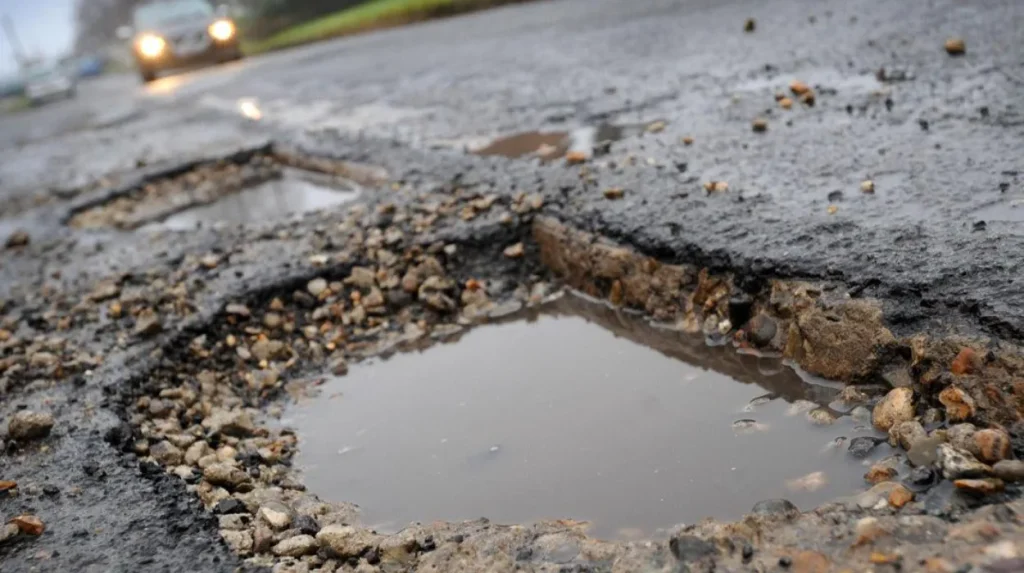
A pothole is a hole or depression in a road surface that develops when the road material breaks down. It often begins with a small crack that allows water to enter the underlying layers of the carriageway.
Glasgow experiences regular rainfall, temperature changes and periods of freezing weather. These conditions contribute to road deterioration. Water enters small cracks, freezes and expands, weakening the surrounding asphalt. Passing vehicles apply pressure to the weakened surface, causing pieces of material to break away.
Heavy traffic also contributes to road damage. Buses, delivery vehicles, commercial lorries and private cars place repeated pressure on road surfaces throughout the city.
A pothole presents several safety risks:
- Vehicle damage: Deep potholes damage tyres, wheels, suspension systems and steering components.
- Cyclist safety: Cyclists face a greater risk of losing control when they encounter unexpected holes.
- Pedestrian safety: Damaged road edges and standing water create additional hazards for people crossing streets.
- Traffic disruption: Drivers slow down or change lanes to avoid damaged sections of roads.
- Further road deterioration: Water entering an existing pothole weakens the surrounding road structure.
Reporting a pothole gives the responsible authority an opportunity to investigate the defect and determine the appropriate maintenance response.
Glasgow City Council has stated that its road network covers nearly 2,000 kilometres. Maintaining this extensive network requires routine inspections, public reporting and prioritisation based on safety risks.
Who Is Responsible for Repairing Potholes in Glasgow?
Glasgow City Council maintains most local roads within the city, including residential streets and neighbourhood routes. Transport Scotland manages designated trunk roads and motorways through operating companies such as Amey and other contracted maintenance providers.
Understanding road ownership is important because reporting a pothole to the wrong organisation can delay its assessment.
Scotland divides public road responsibilities between local authorities and the Scottish Government.
Glasgow City Council
Glasgow City Council is the local roads authority responsible for maintaining most roads and pavements within its administrative boundaries.
Its responsibilities include:
- Residential streets, such as roads in Shawlands and Dennistoun.
- Local shopping streets, such as routes around Byres Road.
- Neighbourhood roads in areas including Partick, Maryhill and Pollokshields.
- Local carriageways connecting residential communities.
- Public footways and associated road infrastructure.
Residents should report defects on these roads directly to Glasgow City Council.
Transport Scotland
Transport Scotland is an executive agency of the Scottish Government. It manages Scotland’s trunk road network on behalf of Scottish Ministers.
The network includes strategic routes that connect major cities, towns, ports and transport facilities.
Examples of important Glasgow routes include the M8 and sections of the M74 and M77. However, responsibility for individual sections depends on the official trunk road designation.
Transport Scotland uses contracted operating companies to inspect and maintain these routes.
Private Roads
Some roads are privately maintained rather than adopted by the local authority.
A private road is a road for which maintenance responsibility rests with its owner or another responsible private organisation.
Examples include certain private residential developments, private access roads and privately managed commercial premises.
If a pothole appears on a private road, residents should contact the property owner, management company or organisation responsible for its maintenance.
The Scottish Government confirms that local authorities maintain most roads, while Transport Scotland manages the designated trunk road network.
How Do You Report a Pothole to Glasgow City Council?
You can report a pothole to Glasgow City Council through its online Roads and Lighting Faults reporting service. Provide the road name, precise location, description of the damage and supporting photographs when safe. Keep the submitted report reference for future correspondence.
Official reporting service
The council’s Roads and Lighting Faults (RALF) service allows members of the public to report defects affecting roads and associated infrastructure.
You can access the reporting service here:
The reporting process involves several straightforward steps.
Step 1: Open the Council Reporting Service
Visit the official Glasgow City Council RALF reporting page.
Find the option for reporting a road fault or defect. Select the relevant category for the pothole or damaged carriageway.
Step 2: Identify the Exact Location
Enter the road name and the nearest identifiable location.
For example, if you find a pothole on a residential street in Partick, provide the street name and the nearest junction, building or landmark.
Accurate location information helps council officers find the defect without unnecessary delays.
Step 3: Describe the Pothole
Explain the condition of the road surface.
Include relevant information such as:
- Approximate pothole dimensions.
- Whether the hole contains standing water.
- Whether the defect is close to a junction.
- Whether cyclists or pedestrians face an additional hazard.
- Whether the pothole affects one or several traffic lanes.
Do not enter the carriageway to measure the hole.
Step 4: Attach Photographs
Photographs provide useful supporting information when reporting a road defect.
Take pictures from a safe position, such as a pavement or another location away from moving traffic.
A photograph should show the damaged road surface and enough surrounding detail to identify its location.
Never stand in a live traffic lane to take pictures.
Step 5: Submit the Report
Review the information before submitting the report.
Keep any confirmation or reference number provided by the reporting system. This information helps when following up with the council.
Glasgow’s historical Roads and Lighting Faults documentation describes RALF as a reporting system for defects affecting roads, pavements, cycleways, drainage, street lighting and other infrastructure.
What Information Should You Include When Reporting a Glasgow Pothole?
A useful pothole report includes the exact road location, nearby landmarks, the visible condition of the road, the approximate size of the defect and any immediate safety concerns. Clear photographs and contact details also help the authority assess the report.
Providing accurate information improves the quality of a report. It also helps inspectors distinguish between individual defects and larger areas of road deterioration.
Exact Street Name and Location
Always provide the full street name.
If the road is long, identify the nearest junction, property number or landmark.
For example, a report about a pothole on Great Western Road should specify the affected section rather than simply naming the entire road.
Pothole Size and Depth
Describe the visible dimensions of the pothole.
A useful description identifies whether the defect is small and shallow or large and deep.
You do not need to measure the pothole yourself. Road inspectors assess its dimensions and condition using the relevant inspection procedures.
Traffic and Pedestrian Risks
Explain how the defect affects road users.
A pothole near a pedestrian crossing presents different risks from a small defect in a low-traffic residential street.
Mention whether the defect affects cyclists, buses, motorcycles or pedestrians.
Photographic Evidence
Photographs should show the pothole from a safe position.
Include the surrounding road markings, kerbs or identifiable landmarks where possible.
These details help establish the location and condition of the defect.
Date and Time
Include the date you discovered the pothole.
If the defect has changed significantly, explain when you first noticed it and whether it has become larger or deeper.
This information helps create a useful record of the problem.
What Happens After You Report a Pothole in Glasgow?
After receiving a pothole report, Glasgow City Council records the information and assesses the reported defect through its roads maintenance procedures. Inspectors consider its location, condition and potential danger before determining the appropriate response and repair priority.
A public report is an important source of information for the council’s maintenance teams.
However, submitting a report does not automatically mean that a repair takes place immediately.
The council follows a risk-based approach to road maintenance. This means that defects presenting greater risks receive greater attention than minor surface deterioration.
Initial Report Assessment
The first stage involves recording the submitted information.
The council needs to understand where the defect is located and what type of road problem has been reported.
The information helps the relevant service delivery team identify the issue and determine the next steps.
Road Inspection
An inspection allows council officers to assess the actual condition of the road.
Inspectors consider the depth, dimensions, position and surrounding condition of the pothole.
They also consider road classification and traffic conditions.
Risk Classification
The inspection process determines the seriousness of the defect.
A large pothole in a busy road or near a pedestrian crossing presents different safety concerns from minor deterioration on a lightly used street.
The council’s Road Safety Inspection and Repair Manual establishes a risk-based framework for identifying defects and determining suitable responses.
Repair Decision
Following assessment, the council determines the appropriate maintenance action.
This can involve an immediate safety measure, temporary repair, permanent pothole repair or inclusion in wider resurfacing work.
Monitoring and Follow-Up
Some defects require further monitoring.
If a pothole deteriorates after the original report, residents should submit an updated report with the latest information.
An earlier report does not guarantee that the road remains in the same condition.
How Quickly Does Glasgow City Council Repair Potholes?
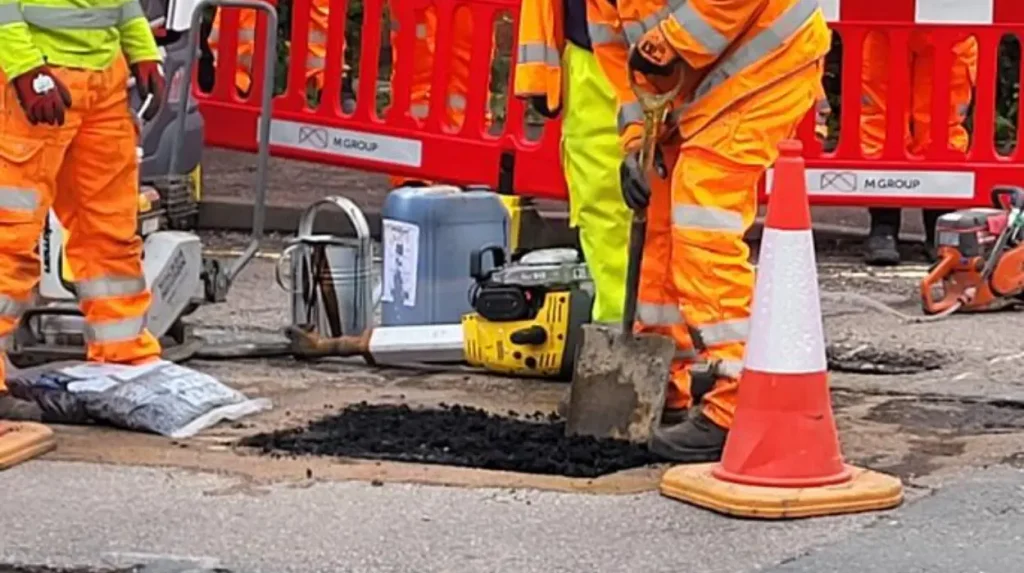
Glasgow City Council prioritises pothole repairs according to the level of risk to road users. Dangerous defects receive greater attention than minor surface damage. Repair timing depends on inspection findings, road conditions, available resources and the work required.
There is no single guaranteed repair deadline for every pothole reported in Glasgow.
The council uses its Road Safety Inspection and Repair Policy to assess defects and determine appropriate responses.
High-Risk Road Defects
High-risk defects require urgent attention because they present a significant danger to road users.
Examples include:
- Deep potholes in busy traffic lanes.
- Severe road damage near pedestrian crossings.
- Large holes that create hazards for cyclists.
- Carriageway collapses that affect vehicle safety.
Depending on the circumstances, the council can arrange temporary repairs or other measures to make the location safe.
Medium-Risk Defects
Medium-risk defects require attention but do not necessarily present an immediate danger.
Examples include deteriorating road surfaces on residential streets, developing potholes and damaged sections of carriageway away from major pedestrian crossing points.
The council assesses these defects and determines an appropriate repair programme.
Lower-Risk Defects
Minor surface deterioration receives a lower priority when it does not present a significant immediate safety risk.
Examples include shallow surface damage and small areas of asphalt deterioration.
These defects remain relevant because water penetration and repeated traffic pressure can cause further deterioration.
Why Repair Times Differ
Several factors influence repair schedules.
The location of the pothole, the volume of traffic, its dimensions, weather conditions and the availability of maintenance teams all affect the response.
A temporary repair also does not necessarily mean that the permanent repair has been completed.
Residents should therefore avoid assuming that every reported pothole will be repaired within a fixed number of days.
How Do You Report Potholes on Glasgow’s M8, M74 and M77?
Potholes on designated trunk roads and motorways should be reported to Transport Scotland’s road maintenance network rather than Glasgow City Council. Traffic Scotland operates a 24-hour customer careline on 0800 028 1414 for reporting road defects.
Glasgow contains several strategic transport routes that form part of Scotland’s trunk road network.
These routes carry significant volumes of local, regional and long-distance traffic.
The reporting procedure differs from the process for local residential streets.
Reporting a Pothole on the M8
The M8 connects Glasgow with other major Scottish destinations, including Edinburgh.
Its central Glasgow section carries substantial commuter, commercial and public transport traffic.
Road defects on designated M8 trunk road sections should be reported through Traffic Scotland.
Reporting a Pothole on the M74
The M74 provides an important connection between Glasgow and destinations in southern Scotland and England.
If you identify a pothole on a section maintained through the trunk road network, contact the relevant operating company.
Reporting a Pothole on the M77
The M77 connects Glasgow with communities towards East Renfrewshire and Ayrshire.
Designated trunk road sections are maintained through Transport Scotland’s contracted arrangements.
Traffic Scotland Contact Details
Traffic Scotland Customer Careline
For non-urgent trunk road defects, motorists can also contact Traffic Scotland by email.
Do not stop on a motorway to photograph or inspect a pothole. Report its location using safe observations and available road information.
Transport Scotland confirms that the trunk road network is maintained through operating companies, including Amey and BEAR Scotland. Transport Scotland+2
Can You Report a Pothole Using the MyGlasgow App?
The MyGlasgow mobile application provides another way to report potholes and other council service problems. Users can select a fault category, provide its location, attach photographs or videos and submit the information for council assessment.
The MyGlasgow app connects residents with Glasgow City Council services.
It provides a mobile reporting option for people who prefer using a smartphone rather than accessing a council website.
How the App Works
The reporting process involves selecting the relevant service category and entering information about the problem.
Users can provide photographs, videos and location information through the application.
The app also supports location identification through Google Maps integration.
After submission, the report is routed to Glasgow City Council for processing and allocation to the relevant service delivery team.
What Other Problems Can You Report?
The application supports several council-related reporting categories.
Examples include:
- Potholes and road defects.
- Broken street lights.
- Fly-tipping and illegal waste disposal.
- Graffiti and fly-posting.
- Dog fouling.
- Missed bin collections.
The MyGlasgow application also provides reporting updates through supported notifications, including SMS, push notifications and email.
Its Google Play listing describes these reporting and tracking functions and identifies potholes as one of the reportable issues.
Residents should check the current availability of the application through their device’s official app store.
Can You Claim Compensation for Vehicle Damage Caused by a Glasgow Pothole?
Drivers whose vehicles suffer damage from a Glasgow pothole can contact the organisation responsible for maintaining the road and ask about making a compensation claim. Payment is not automatic. The responsible authority assesses evidence, maintenance records and potential negligence.
A pothole can cause expensive vehicle damage.
Common problems include damaged tyres, cracked alloy wheels, suspension damage and steering problems.
Drivers who believe a road defect caused their vehicle damage should preserve relevant evidence.
What Evidence Do You Need?
Useful supporting evidence includes:
- Photographs of the vehicle damage.
- Photographs of the pothole, taken safely.
- The road name and precise incident location.
- The date and approximate time of the incident.
- Repair invoices and estimates.
- Vehicle inspection reports.
- Details of any witnesses.
A mechanic’s report can help establish the nature and likely cause of the damage.
How Do You Submit a Claim?
First, identify the organisation responsible for maintaining the road.
For an ordinary local road, contact Glasgow City Council and ask about its third-party liability claims procedure.
For a trunk road or motorway, contact the appropriate Transport Scotland operating company.
Provide a clear explanation of the incident and supporting evidence.
The responsible organisation investigates the circumstances before reaching a decision.
Is Compensation Guaranteed?
No. A pothole-related vehicle damage claim does not automatically establish legal liability.
The claimant generally needs to demonstrate that the responsible organisation failed to meet its legal maintenance obligations and that this failure caused the damage.
The investigation considers relevant inspection records, previous reports, maintenance activity and the condition of the road.
The Roads (Scotland) Act 1984 establishes important road maintenance responsibilities, while the legal assessment of an individual claim depends on the circumstances and applicable statutory duties.
Should You Contact Your Insurance Company?
Drivers should also contact their motor insurer if the vehicle has suffered significant damage.
An insurance policy can provide an alternative route for dealing with repair costs, depending on its terms and excess.
Keep all repair invoices and supporting documents.
For further guidance, the UK Government explains how vehicle damage claims are directed to the responsible road authority in Scotland.
What Should Cyclists and Pedestrians Do About Dangerous Potholes in Glasgow?
Cyclists and pedestrians should report potholes that create immediate safety risks, particularly near junctions, crossings, cycle routes and busy footways. They should avoid dangerous road sections where possible and never enter moving traffic to inspect or photograph defects.
Potholes affect more than motorists.
Cyclists and pedestrians are particularly vulnerable because they have less physical protection when encountering damaged road surfaces.
Risks for Cyclists
A cyclist can lose balance when a wheel enters a deep pothole.
The risk increases when the defect is difficult to see because of rainwater, poor lighting or surrounding traffic.
Cyclists should report damaged surfaces on cycle routes and roads used by bicycles.
Examples include defects on routes through the city centre, along Great Western Road and in residential cycling areas.
Risks for Pedestrians
Potholes and damaged surfaces can also affect pedestrian safety.
Road-edge deterioration, uneven surfaces and damaged crossing areas create additional hazards.
Pedestrians should report defects near locations such as:
- Pedestrian crossings.
- Bus stops.
- School entrances.
- Hospital access roads.
- Busy shopping streets.
What Should You Do if a Pothole Presents Immediate Danger?
Keep a safe distance from the damaged area.
Do not attempt to fill the pothole yourself or place objects in the carriageway.
Report the defect to the responsible authority as soon as it is safe to do so.
For an immediate threat involving a serious road emergency, contact Police Scotland through 999.
Why Do Potholes Develop on Glasgow Roads?
Potholes develop when water enters cracks in road surfaces, weakens underlying materials and combines with repeated traffic pressure. Freeze-thaw weather conditions, drainage problems, ageing asphalt and heavy vehicles accelerate the deterioration of roads across Glasgow.
Understanding pothole formation helps explain why regular inspections and maintenance are important.
Water Penetration
Water is one of the main contributors to road deterioration.
Small cracks allow rainwater to penetrate asphalt and reach the underlying road structure.
Over time, water weakens the materials supporting the road surface.
Freeze-Thaw Conditions
During cold weather, water trapped inside road cracks freezes and expands.
When temperatures rise, the ice melts and leaves additional space within the weakened structure.
Repeated freezing and thawing contribute to the breakdown of road materials.
Heavy Traffic
Glasgow’s roads carry private vehicles, buses, delivery vans and commercial lorries.
Repeated vehicle movements create pressure on road surfaces.
This pressure accelerates deterioration when the underlying road structure is already weakened.
Drainage Problems
Poor drainage allows water to accumulate on or beneath the carriageway.
Blocked drains and damaged gullies can increase the amount of water affecting road surfaces.
Reporting drainage faults alongside potholes helps the council identify related maintenance problems.
Ageing Road Surfaces
Road materials gradually deteriorate through regular use and environmental exposure.
Older surfaces develop cracks and structural weaknesses that require maintenance.
When deterioration becomes extensive, resurfacing offers a more comprehensive solution than repairing individual potholes.
Transport Scotland identifies reactive maintenance, drainage maintenance and programmed resurfacing as important parts of its trunk road asset management approach.
What Do Glasgow’s Road Condition Statistics Reveal About Potholes?
Glasgow City Council maintains nearly 2,000 kilometres of urban roads. Its reported Scottish Road Maintenance Condition Survey 2024 results showed that 70.8% of city roads were in acceptable condition, compared with the Scottish average of 65.9%.
Road condition statistics provide useful context for understanding the scale of maintenance across Glasgow.
According to a Glasgow City Council response published in its committee records, the Scottish Road Maintenance Condition Survey 2024 identified the following results:
Source: Scottish Road Maintenance Condition Survey 2024, as reported by Glasgow City Council. These figures measure roads classified as being in acceptable condition, not the percentage of potholes repaired.
The figures show that Glasgow performed 4.9 percentage points above the Scottish average in the reported survey.
However, acceptable overall road condition does not mean that every street is free from potholes.
The council also highlighted the challenges of maintaining nearly 2,000 kilometres of urban roads under regular traffic pressure.
A separate council response published in 2026 referred to more than 9,200 open pothole reports. This figure represents a reported backlog snapshot rather than a confirmed count of unrepaired potholes across every road in Glasgow. Asked by: Councillor Paul Ca
These figures demonstrate why public reporting remains important.
Residents provide additional information about defects that develop between scheduled inspections.
Explore More Area Guide
How to Report Fly-Tipping in Glasgow: Council Guide
Glasgow Bulky Waste Collection: Booking, Charges and Rules
What Can Glasgow Residents Do If a Reported Pothole Remains Unrepaired?
Residents should retain their original reporting reference, check the status of their request and contact Glasgow City Council again if the defect remains dangerous or deteriorates. Updated photographs and precise location details help the council reassess the problem.
A pothole report does not always lead to an immediate repair.
Some defects require further inspection, while others are scheduled according to their assessed risk.
Residents can take several practical steps when a reported problem remains unresolved.
Check the Original Report
Keep the confirmation details from the original submission.
Use the council’s customer portal to access available request-tracking services.
Submit an Updated Report
If the pothole becomes larger or creates a new safety risk, submit an updated report.
Include the original reference number where possible.
Explain how the condition has changed since the first report.
Contact the Council
If the reporting service does not resolve the problem, contact the council through its official customer service channels.
Explain the date of the original report and provide the reference number.
Ask whether the defect has been inspected and whether further action is scheduled.
Use the Formal Complaints Procedure
If the council’s handling of the report remains unsatisfactory, residents can use its formal complaints procedure.
A complaint should explain what happened, when the original report was submitted and why the response remains unsatisfactory.
The Scottish Road Works Commissioner also explains that road authorities retain responsibility for maintenance decisions on the roads they manage.
How Can Better Pothole Reporting Improve Glasgow’s Roads?
Consistent pothole reporting helps Glasgow identify recurring road defects, understand local maintenance requirements and prioritise repairs according to safety risks. Accurate public reports also support inspection planning, infrastructure management and safer journeys for motorists, cyclists and pedestrians.
Effective road maintenance depends on identifying problems before they become more serious.
Public reporting complements the council’s routine inspection programme by providing additional information about road conditions.
Earlier Identification of Road Damage
Residents and regular road users often notice changes in road conditions during everyday journeys.
Reporting new defects provides the council with information that supports further assessment.
Better Maintenance Priorities
Accurate reports help identify locations where defects affect road safety.
The information supports decisions about urgent repairs, temporary measures and longer-term maintenance.
Safer Transport Routes
Repairing dangerous potholes improves the condition of roads used by different transport groups.
Examples include bus routes, residential streets, commercial delivery routes and local cycling connections.
Long-Term Infrastructure Planning
Repeated reports about the same location can indicate a wider road surface problem.
In these situations, engineers can assess whether individual repairs are sufficient or whether resurfacing is more appropriate.
Public Participation
Road maintenance is a shared public concern.
Residents, local businesses, cyclists and motorists all contribute to identifying problems across the city.
Reporting defects through the correct channels helps Glasgow City Council and Transport Scotland maintain their respective road networks.
Reporting a pothole in Glasgow is an important step towards safer roads and better infrastructure maintenance. Residents should use Glasgow City Council’s RALF reporting service for local roads and contact Traffic Scotland on 0800 028 1414 for defects on designated trunk roads and motorways.
Providing accurate locations, descriptions and photographs helps the responsible authority assess road defects and determine the appropriate response.
Glasgow’s nearly 2,000-kilometre road network requires ongoing inspection, maintenance and public cooperation. Reporting potholes promptly helps identify dangerous locations, supports repair priorities and contributes to safer journeys throughout the city.
Who is responsible for fixing potholes in Glasgow?
Glasgow City Council maintains most local roads, residential streets and pavements. Transport Scotland manages designated trunk roads and motorways, including relevant sections of the M8, M74 and M77.