Key Points
- Over 83% of respondents in a Glasgow public consultation supported making card payments mandatory for taxi drivers.
- The consultation ran from 4 February to 1 June, gathering a total of 1,666 responses from members of the public and licence holders.
- Nearly 78% of all participants strongly agreed with introducing compulsory credit and debit card facilities.
- Councillors on the Glasgow Licensing Committee will meet on Wednesday to determine whether new licence conditions should be imposed.
- Proposed conditions would leave the cash payment option fully available for passengers who prefer it.
- Opponents highlighted equipment costs, transaction fees, potential network outages, and fears over reduced tipping.
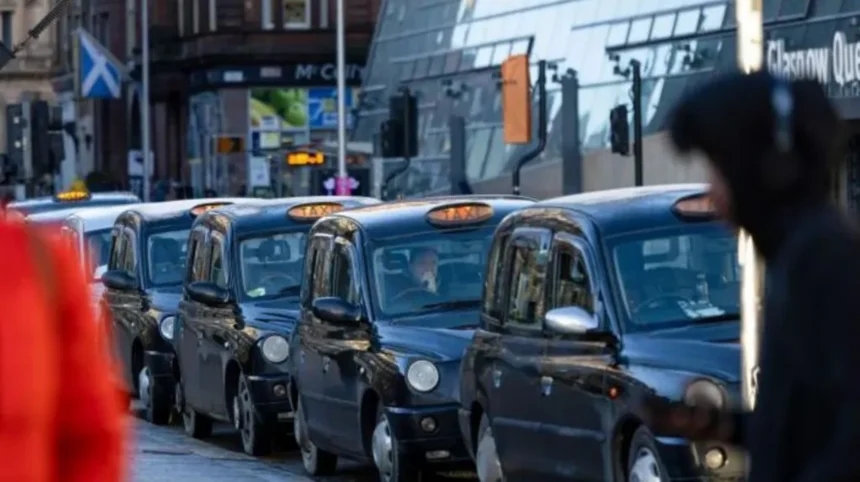
Glasgow (Glasgow Express) November 9, 2026 — Taxi drivers across Glasgow could soon be required to accept card payments after more than 80% of participants in a recent public consultation backed the proposal. The city’s licensing committee initiated the consultation process earlier this year to evaluate whether accepting credit and debit cards should become a mandatory condition for holding a taxi driver licence. A formal report prepared for councillors reveals that 83.16% of total respondents supported the introduction of mandatory card acceptance, prompting the committee to consider formal updates to local taxi licensing rules.
The consultation collected 1,666 total responses, comprising nearly 1,200 contributions from members of the public and just over 250 from licensed taxi drivers. Out of all participants, 99% answered the specific question regarding the extent to which they agreed or disagreed with compulsory card payments. Nearly 78% of respondents strongly agreed with the requirement, while over 5% indicated that they tended to agree. Conversely, almost 11% of participants strongly disagreed with the proposed change, and 3.6% noted that they tended to disagree.
At present, Glasgow taxi drivers operate without any statutory or licensing obligation to accept electronic card transactions, though several operators have installed payment card readers voluntarily to meet changing consumer habits. Councillors serving on the licensing committee are scheduled to convene on Wednesday to debate the findings and vote on whether to draft new licence conditions. According to the official report delivered to committee members, if the condition is approved, cash will remain a valid payment method for any passenger who wishes to use it.
Why Is Glasgow Considering Mandatory Card Payments for Taxis?
Glasgow City Council launched the formal review after receiving an influx of queries from local residents and visitors regarding card acceptance. Officials within the council’s licensing team noted that the initial consultation proposal was approved in December following recurring feedback from both passengers and taxi operators who reported an increasing frequency of customers asking to pay via contactless or card methods prior to entering vehicles.
Supporters of the initiative stated during the consultation period, which ran from 4 February to 1 June, that consumer purchasing habits have shifted dramatically toward cashless transactions. Members of the public who backed the mandate argued that modern passengers expect non-cash payment options as a standard service. Proponents also highlighted that mandatory card acceptance would streamline taxi rank operations, shorten waiting times, eliminate unnecessary detours to automated teller machines, and improve the overall transport infrastructure of the city.
What Concerns Have Been Raised by Taxi Drivers?
Opponents of the proposed mandate, including independent licence holders, expressed reservations regarding the financial and operational burdens of mandatory card readers. Drivers who disagreed with the proposal emphasized that as self-employed sole traders, they ought to retain autonomy over their preferred business operations and payment collection methods.
Critical feedback gathered during the consultation focused on several technical and practical obstacles:
- Equipment and Transaction Costs: Drivers without existing card terminals will be forced to purchase dedicated hardware and absorb processing fees or percentage deductions on every fare.
- Network Reliability and Outages: Technical failures, signal dropouts in dead zones, or broader payment network outages could leave drivers unable to process fares at the point of delivery.
- Declined Cards and Fare Evasion: Drivers expressed concern over instances where a passenger’s card is declined at the conclusion of a journey, leaving the driver without immediate recourse.
- Tipping Reductions: Several respondents noted that digital card payments frequently lead to lower gratuity rates compared to cash transactions.
- Enforcement Challenges: Concerns were raised that reluctant drivers might falsely claim hardware malfunction to avoid accepting card payments.
The licensing committee’s upcoming meeting will consider potential operational safeguards to address these issues, including rules surrounding network downtime protocol, receipt issuance requirements, and the establishment of an implementation period to allow drivers sufficient time to acquire compliant hardware.
Background of Glasgow’s Taxi Licensing Framework
The debate over digital payment integration in Glasgow’s taxi fleet follows years of gradual shift within the UK transport sector toward cashless commerce. Historically, traditional hackney carriages and private hire vehicles operated exclusively on cash systems, with drivers managing their own float and paying out-of-pocket for vehicle upkeep.
As digital payments, mobile banking, and contactless technology became ubiquitous across UK retail and hospitality sectors, municipal councils across Britain began re-evaluating local taxi licensing bylaws. Cities such as London, Edinburgh, and Newcastle previously introduced mandatory card reader rules for licensed taxis to standardize service standards and cater to domestic and international travelers.
Glasgow City Council’s licensing department initially left card acceptance to individual driver discretion. While major booking apps and larger fleet operators adopted in-cab payment systems independently over recent years, a significant proportion of independent drivers continued to operate cash-only vehicles. Public feedback submitted to the council throughout the post-pandemic period accelerated administrative calls for a unified municipal standard, leading directly to the December authorization of the public consultation.
Predictions: How Will This Decision Impact Passengers and Drivers?
If the licensing committee votes to institute compulsory card payments on Wednesday, the decision will generate distinct practical outcomes for both passengers and taxi operators across Glasgow.
Impact on Passengers
For the traveling public, tourists, and nighttime commuters, the implementation of mandatory card payments will enhance convenience and safety. Passengers will no longer need to check with drivers prior to starting a trip or search for cash machines late at night. The change is expected to reduce friction at major transport hubs, such as Glasgow Central and Queen Street stations, by expediting passenger departures from taxi ranks. Furthermore, standardizing card payments provides greater accessibility for visitors accustomed to digital-first transit systems.
Impact on Taxi Drivers and Industry Operators
For licensed taxi drivers, the transition introduces mandatory upfront costs for card terminal hardware alongside ongoing transaction processing deductions. Independent operators will need to adapt their daily financial management to account for delayed bank settlements rather than immediate cash liquidity. However, accepting electronic payments may also expand overall customer volume by capturing business from cash-free passengers who currently bypass cash-only taxis. If the committee incorporates clear guidelines addressing equipment malfunction and network outages, it will mitigate operational risks for drivers while establishing a modernized standard across Glasgow’s transport network.