Key Points
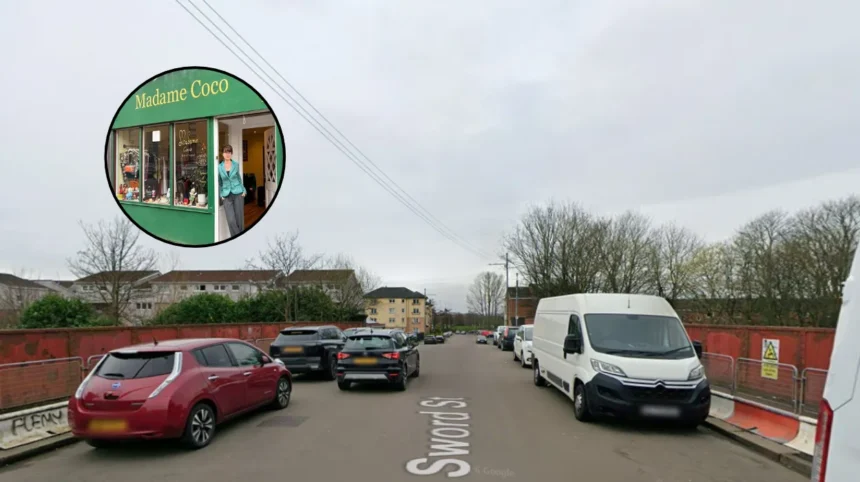
- Personal stylist Ewelina Piotrowska has relocated her boutique, Madame Coco, to a larger premises on Sword Street in Dennistoun, Glasgow.
- The business expanded into the new location after outgrowing its original site on Hillfoot Street, which was established two years ago.
- Piotrowska is urging more independent retailers to set up shop in Dennistoun to turn the neighbourhood into a vibrant shopping hub.
- Madame Coco offers a curated mixture of handpicked, cleaned, and prepared vintage garments alongside modern fashion accessories.
- The owner highlights the historic architecture, independent business community, and unique character of the East End as key factors for local retail growth.
Dennistoun (Glasgow Express) November 9, 2026 — A personal stylist and independent retailer has issued a call for more small businesses to set up shop in Glasgow’s East End to help convert the local neighbourhood into a major retail destination. Ewelina Piotrowska, the founder of Madame Coco, believes that Dennistoun possesses the necessary infrastructure, architectural character, and community spirit to establish itself as a thriving hub for independent commerce. The call comes as her vintage and modern fashion store officially transitions into a larger retail premises situated on Sword Street, following a period of sustained growth that saw the business outgrow its initial footprint on Hillfoot Street.
- Key Points
- Why is Madame Coco Relocating within Glasgow’s East End?
- What Makes Dennistoun an Ideal Location for Independent Businesses?
- How Does Madame Coco Source and Prepare Its Fashion Collection?
- What is the Vision for the Future of Retail in Glasgow’s East End?
- Background of the Particular Development
- Prediction: How This Development Can Affect Independent Retailers and the Local Community
Piotrowska launched Madame Coco two years ago with a focus on quality control and curated fashion offerings. The transition to the expanded location on Sword Street provides additional floor area to showcase a broader range of pre-loved clothing and accessories. Under the store’s operating model, every vintage item is individually handpicked, cleaned, and restored prior to being put on display for public sale.
According to Piotrowska, the decision to secure a larger footprint within Dennistoun was driven by both practical requirements for space and a broader strategy aimed at elevating the profile of the surrounding commercial district. She stated that the move represents more than just a physical expansion for her brand, framing it as an investment in an area that holds substantial commercial potential.
The expansion highlights an ongoing period of evolution for Dennistoun’s local economy, which has increasingly attracted independent operators, food venues, and creative ventures over recent years. Retailers operating within the district point to the historic tenements, strong community ties, and lower relative operational overheads compared to Glasgow city centre as key drivers attracting new enterprise to the region.
Why is Madame Coco Relocating within Glasgow’s East End?
The relocation of Madame Coco from Hillfoot Street to Sword Street was prompted by the retail operation exceeding the capacity of its original location. Founded two years ago by Piotrowska, the business built its client base through personal styling services paired with a specific inventory of vintage and contemporary pieces. As footfall and stock volume increased over the initial 24 months of operation, the original space on Hillfoot Street could no longer accommodate the growing inventory or the volume of customer traffic.
The newly acquired venue on Sword Street provides increased floor space, allowing the retailer to display a wider array of garments, footwear, and accessories. According to Piotrowska, the additional physical capacity allows the business to scale its operations while maintaining its core practice of inspecting, laundering, and preparing every individual piece of pre-loved clothing before it reaches the retail floor.
The move keeps the business rooted within Dennistoun, reflecting the owner’s strategic decision to remain in Glasgow’s East End rather than seeking space within the city centre or West End. Piotrowska noted that staying in the local area enables the shop to retain its existing customer base while contributing directly to the commercial footprint of the neighbourhood.
What Makes Dennistoun an Ideal Location for Independent Businesses?
Dennistoun features a distinct urban landscape defined by Victorian sandstone tenements, wide residential avenues, and established commercial thoroughfares. Business operators in the district cite this historic architecture alongside a strong sense of local community as prime factors supporting independent trade.
Piotrowska noted that the physical layout and history of the area provide a unique backdrop that sets it apart from standardized shopping precincts. The presence of established local cafes, artisanal eateries, and specialist services has built a foundation for foot traffic, but retailers argue that the area requires a higher concentration of retail storefronts to create a complete destination for shoppers.
By attracting additional independent fashion, homeware, and specialty stores, local trading groups suggest that Dennistoun could build a self-sustaining retail ecosystem. This would encourage residents to spend locally while drawing visitors from across Greater Glasgow and beyond, building on the neighbourhood’s growing reputation as a cultural and creative district.
How Does Madame Coco Source and Prepare Its Fashion Collection?
The commercial model of Madame Coco relies on a highly selective procurement process designed to differentiate its stock from standard high-street fast fashion and general second-hand outlets. Personal stylist and founder Ewelina Piotrowska individually selects each item included in the store’s catalogue.
The preparation process involves a strict multi-step workflow before any item is introduced to the sales floor:
- Selection: Garments are individually handpicked based on design quality, fabric integrity, historic relevance, and contemporary styling potential.
- Restoration and Cleaning: Each pre-loved item undergoes professional laundering, steaming, or specialized cleaning to return the fabric to optimal condition.
- Quality Inspection: Fastenings, seams, linings, and hems are thoroughly inspected to ensure the item meets strict retail standards.
- Curation: Selected vintage items are paired alongside complementary modern fashion accessories to offer complete outfit styling options for customers.
This methodical intake process limits inventory throughput compared to mass-market retailers, but it ensures that all items displayed on the Sword Street sales floor meet specific standards for durability and appearance.
What is the Vision for the Future of Retail in Glasgow’s East End?
The wider vision advocated by local business owners involves establishing Dennistoun as a primary alternative to central shopping districts. Traders argue that the growth of independent enterprise in the East End helps diversify the city’s overall retail landscape, offering consumers distinct choices centered on sustainability, vintage sourcing, and personal customer service.
Piotrowska emphasized that for the neighbourhood to achieve its full potential as a shopping destination, a critical mass of diverse retail businesses must open in close proximity to one another. A denser network of shops creates shared footfall, where customers visiting one boutique naturally frequent neighbouring establishments, cafes, and services.
Community leaders and traders continue to encourage prospective entrepreneurs to consider the East End for new ventures. They point to the area’s rich social history, strong residential population, and supportive network of existing independent business owners as strong fundamentals for long-term commercial success.
Background of the Particular Development
Dennistoun, situated directly east of Glasgow city centre, was originally planned and developed in the late 19th century by Alexander Dennistoun as a middle-class residential suburb. Characterized by its gridiron street pattern, grand sandstone tenements, and proximity to Alexandra Park, the area historically maintained a strong residential identity distinct from the industrial zones that surrounded it. Over the late 20th and early 21st centuries, the demographic and economic profile of the East End underwent significant structural changes, leading to shifts in local commercial activity.
In recent years, Dennistoun has experienced a commercial revival driven largely by urban regeneration, affordable commercial rents relative to Glasgow’s West End, and an influx of students, artists, and young professionals. The neighbourhood gained international recognition in 2020 when it was named one of the world’s coolest neighbourhoods by global media outlets, highlighting its array of independent cafes, art galleries, and community-led initiatives. This public recognition accelerated commercial interest in main thoroughfares such as Duke Street, Alexandra Parade, and connecting streets like Hillfoot Street and Sword Street.
The expansion of Madame Coco reflects a broader structural trend within the retail sector toward sustainable fashion and circular economy principles. Vintage and pre-loved clothing stores have seen increased consumer demand across the United Kingdom as shoppers increasingly prioritize environmental sustainability and individual style over mass-produced garments. Within Glasgow, this trend has historically been concentrated in the West End around areas like Byers Road and vintage hubs in the city centre. The growth of specialist boutiques like Madame Coco on Sword Street marks a clear geographic shift, demonstrating that high-value niche retail can thrive within the East End’s evolving commercial landscape.
Prediction: How This Development Can Affect Independent Retailers and the Local Community
The relocation and expansion of Madame Coco, combined with the call for increased retail investment, is likely to trigger several measurable outcomes for local traders, residents, property owners, and the broader East End economy.
For prospective and existing independent retailers, the successful expansion of a niche business onto Sword Street serves as a proof-of-concept for commercial viability outside traditional high streets. As Madame Coco attracts dedicated footfall for personal styling and vintage fashion, neighbouring businesses are likely to experience positive economic spillovers. If additional independent shops answer the call to open in Dennistoun, the area could reach a tipping point where it becomes a recognized retail destination. This cluster effect would increase dwell time and overall consumer spending across the district, benefiting local food, beverage, and service providers.
For the local residential community, a surge in independent retail development offers both opportunities and commercial shifts. An increase in active storefronts improves street-level vitality, enhances local amenities, and creates localized employment opportunities. Residents gain direct access to specialized goods and services without needing to travel to the city centre. However, as Dennistoun’s commercial profile rises, demand for commercial space is expected to increase. This could lead to upward pressure on commercial rents, potentially making it more challenging for early-stage startup ventures to secure affordable leases on primary streets in the long term. Overall, the trend points toward sustained commercial growth, further cementing Dennistoun’s position as a core hub for Glasgow’s independent business community.