Key Points
- Scottish Cup Stadium Bans Pending: Both Rangers and Celtic have presented their appeals to a Scottish Football Association (SFA) appellate tribunal regarding orders to play their next home Scottish Cup fixtures behind closed doors.
- Financial Penalties Contested: Alongside the spectator bans, both Glasgow clubs are challenging £100,000 fines handed down by the governing body.
- Disorder at Ibrox Stadium: The disciplinary measures stem from pitch invasions, missile throwing, and clashes between rival supporters following Celtic’s penalty shoot-out win at Ibrox in last season’s Scottish Cup quarter-final.
- Injuries and Mass Arrests: Multiple police officers sustained injuries during the unrest, with 43 arrests confirmed by 24 August.
- Independent Review Findings: A July report authored by Mark Blackbourne concluded that the incident narrowly missed escalating into a violent mass confrontation, citing operational and structural failings by both clubs and the SFA.
- Suspended Measures and Away Ban: Both clubs face suspended second-match stadium bans for any further crowd misconduct, while away fans have already been barred from all SPFL Old Firm derbies for the current season.
Glasgow (Glasgow Express) October 27, 2026 – Scottish Premiership giants Rangers Football Club and Celtic Football Club are awaiting the formal verdict of a Scottish Football Association (SFA) appellate tribunal after contesting severe disciplinary sanctions, including mandatory closed-doors home fixtures and substantial financial penalties, triggered by widespread spectator disorder at Ibrox Stadium.
- Key Points
- What Led to the Initial Scottish FA Sanctions Against Rangers and Celtic?
- What Were the Key Findings of the Independent Blackbourne Review?
- How Have Derby Restrictions Already Changed for the Current Season?
- Background of the Old Firm Disciplinary Development
- Prediction: How Will the Appeal Decision Impact Football Stakeholders?
The two Glasgow institutions presented their legal and procedural arguments before an independent judicial panel on Monday. The appellate body has subsequently retired to deliberate on whether to uphold, reduce, or set aside the original sanctions imposed by the governing body’s Judicial Panel Disciplinary Tribunal.
As reported by staff writers of the BBC, the tribunal panel is currently considering the formal submissions from both legal teams, with an official announcement expected once deliberations are fully concluded.
What Led to the Initial Scottish FA Sanctions Against Rangers and Celtic?
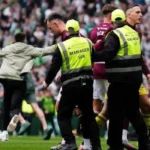
The disciplinary proceedings originate from the volatile aftermath of last season’s Scottish Cup quarter-final tie hosted at Ibrox Stadium. Following Celtic’s victory via a penalty shoot-out, supporters from both clubs breached security perimeters and invaded the playing surface, leading to direct physical confrontations between opposing groups.
During the sustained pitch unrest, pyrotechnics, fireworks, and dangerous missiles were launched across the pitch and towards opposing spectator sections. Law enforcement personnel and matchday stewards attempting to restore order were subjected to violence, resulting in physical injuries to several attending police officers. As reported by law enforcement correspondents of the Scottish media, authorities confirmed that 43 individuals had been arrested in connection with the post-match violence by 24 August.
Following an investigative hearing into the incident in late August, the SFA Judicial Panel determined that both clubs had failed to ensure the proper management and safety standards required under judicial rules regarding spectator conduct. Consequently, each club was ordered to play their next scheduled home fixture in the Scottish Cup inside an empty stadium without fans, alongside a £100,000 financial fine. Furthermore, the tribunal attached a suspended sanction, warning Rangers and Celtic that any future instances of unacceptable supporter conduct would immediately trigger a second home match behind closed doors.
What Were the Key Findings of the Independent Blackbourne Review?
Prior to the SFA’s formal disciplinary ruling in late August, an extensive independent safety and security review was commissioned to examine the systemic causes of the Ibrox stadium breakdown. Published in July, the comprehensive inquiry was led by independent security expert Mark Blackbourne.
As reported by investigative journalists covering the inquiry, Mark Blackbourne concluded in his published report that the scenes at Ibrox Stadium had come within a very small margin of escalating into a full-scale, violent mass confrontation across the pitch.
The Blackbourne review outlined specific operational failings on the part of both Rangers and Celtic regarding stewarding deployments, perimeter containment, and supporter monitoring. In addition to assigning accountability to the individual clubs, the report directly criticised the Scottish Football Association for historically failing to enforce a sufficiently robust stance on recurring crowd disorder within Scottish professional football. The review urged governance bodies to adopt strict liability frameworks and decisive punitive measures to prevent future escalations.
How Have Derby Restrictions Already Changed for the Current Season?
The ongoing appellate process takes place against a backdrop of heightened security measures already implemented across Scottish football to manage the Old Firm rivalry.
Following consultations between governance figures, local authorities, and club executives in September, a formal agreement was reached to prohibit away supporters from attending any Old Firm derby fixtures across all Scottish Professional Football League (SPFL) competitions throughout the current season.
This reciprocal away-fan ban was introduced as an immediate preventative measure to de-escalate tensions and mitigate security risks in domestic league encounters while broader structural reviews into fan safety remain active.
Background of the Old Firm Disciplinary Development
The Old Firm derby between Rangers and Celtic represents one of the most historical, intensely contested, and high-profile rivalries in global sport. While the fixture generates substantial commercial revenue and intense sporting interest, it has periodically been marred by issues surrounding spectator control, sectarian tensions, and stadium safety.
Historically, the Scottish Football Association and the Scottish Professional Football League have faced public and political scrutiny regarding their handling of spectator misconduct. For several seasons, football governance bodies in Scotland have operated under rulebooks that require proof of club negligence before financial or operational penalties are applied, rather than automatic strict liability rules seen in certain UEFA competitions.
The post-match events of last season’s Scottish Cup quarter-final represented one of the most severe public breakdowns of stadium order at a major Scottish fixture in recent years. The injuries sustained by police officers and the public visibility of the pitch invasion prompted renewed demands from civic leaders, police authorities, and independent safety auditors for firm regulatory intervention.
The decision by the SFA in late August to issue mandatory closed-doors matches alongside £100,000 fines marked a noticeable shift toward harsher punitive measures. The subsequent legal challenge lodged by both Rangers and Celtic highlights the tension between governing bodies seeking to establish strong deterrents against crowd violence and member clubs seeking to defend their operational records and commercial interests.
Prediction: How Will the Appeal Decision Impact Football Stakeholders?
The forthcoming verdict from the Scottish FA appellate tribunal will carry significant immediate and long-term implications for football clubs, supporters, governing bodies, and public safety authorities across Scotland.
Financial and Operational Impact on the Clubs
Should the appellate tribunal uphold the original sanctions, both Rangers and Celtic will incur substantial financial losses. Beyond the direct £100,000 cash fines, operating a domestic cup fixture behind closed doors eliminates matchday ticket sales, hospitality revenues, catering income, and merchandise turnover. For fixtures hosted at high-capacity venues such as Ibrox Stadium (capacity over 50,000) or Celtic Park (capacity over 60,000), total lost revenue from a single closed-door fixture can exceed seven figures. Furthermore, the presence of a suspended second-match ban places both clubs under strict operational risk for subsequent cup ties.
Implications for Supporters and Matchday Experience
For match-going supporters, an upheld stadium ban denies season ticket holders and general spectators the opportunity to attend official fixtures, penalising the broader fanbase for the actions of a violent minority. If the tribunal instead overturns or reduces the stadium closures to conditional fines or restricted section closures, it may alleviate supporter frustration but could risk backlash from public safety bodies advocating for strict deterrence.
Precedent for Scottish Football Governance and Safety
The tribunal’s final ruling will set a critical precedent for how football governance in Scotland manages crowd disorder in the future. Upholding the full penalty would signal a permanent transition toward zero-tolerance enforcement by the SFA, placing immense pressure on all member clubs to fundamentally overhaul matchday stewarding, access control, and supporter policing. Conversely, any significant reduction of the punishment could invite renewed criticism from independent oversight groups and law enforcement agencies regarding the governance of safety standards within the Scottish game.