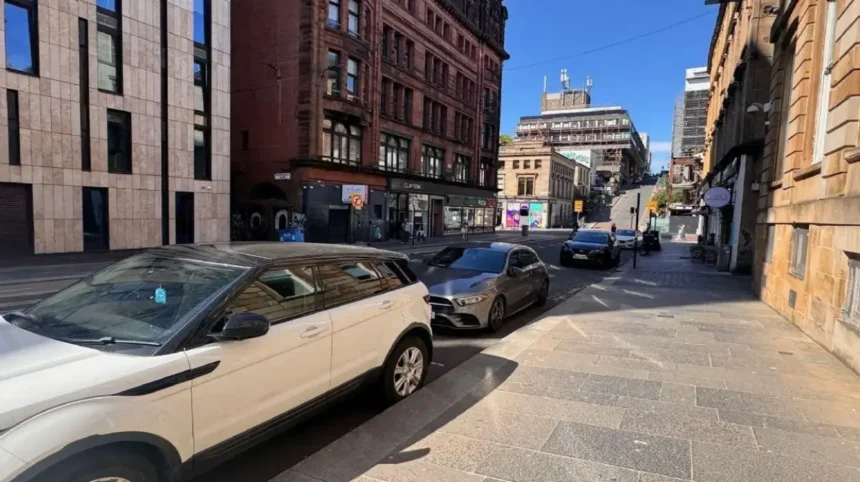
Free parking in Glasgow is available on some unrestricted residential streets and during specified free-parking periods in selected parking bays. Availability depends on the street, time, signage and local restrictions. Drivers must check the signs before leaving their vehicles.
- Which Glasgow Streets Offer Free Parking?
- Can you park for free in Glasgow’s residential areas?
- Are residential streets near Glasgow city centre free?
- When Is Street Parking Free in Glasgow?
- Is parking free in Glasgow after 6 pm?
- Is parking free in Glasgow on Sundays?
- Is parking free on public holidays?
- Where Can You Park for Free Near Glasgow City Centre?
- Where can you park near Buchanan Street?
- Where can you park near Glasgow Central Station?
- Where can you park near Glasgow Queen Street Station?
- Does Glasgow Have Free Park-and-Ride Parking?
- Is Shields Road Subway car park free?
- Are Bridge Street and Kelvinbridge park-and-ride facilities free?
- Which railway stations offer park-and-ride facilities?
- How Do Glasgow’s Controlled Parking Zones Work?
- What is a controlled parking zone?
- What is a restricted parking zone?
- Can visitors park in residents-only bays?
- What Parking Restrictions Should Drivers Check in Glasgow?
- Can you park on double yellow lines in Glasgow?
- Can you park on the pavement?
- Can you park across a driveway?
- What happens if you park illegally?
- How Can You Find Free Parking in Glasgow Before Travelling?
- How can you check parking charges online?
- Are parking apps reliable for finding free spaces?
- How should you plan a free-parking search?
- Is Free Parking in Glasgow Suitable for All-Day Visits?
- What Is the Best Way to Avoid Parking Charges in Glasgow?
Glasgow, Scotland’s largest city, has a combination of residential streets, commercial districts, shopping areas, public facilities and controlled parking zones. These locations operate under different parking arrangements. A street that offers free parking outside restricted hours does not necessarily provide free parking throughout the day.
The most practical starting point is Glasgow City Council’s official parking information. The council publishes information about controlled parking zones, restricted parking zones, parking charges and enforcement. Its guidance helps drivers identify where restrictions apply before beginning their journey.
What does free parking mean in Glasgow?
Free parking means leaving a vehicle in a legally permitted parking location without paying a parking charge for the period concerned. This includes an unrestricted street space or a marked bay during its designated free-parking period.
Free parking does not automatically mean unlimited parking. A location can have a maximum stay, a residents-only restriction, a loading restriction or a prohibition that applies during specific hours. Drivers must follow every applicable condition.
For example, a parking bay that becomes free after 6 pm still requires drivers to check its maximum stay and any overnight restrictions. The same principle applies to Sundays and public holidays.
Which Glasgow Streets Offer Free Parking?
Some residential streets outside controlled parking restrictions offer free parking, provided the vehicle is parked legally and does not obstruct access. Availability varies by location, and drivers must check street signs, road markings and restrictions before parking.
Residential streets offer one of the main opportunities to find free on-street parking in Glasgow. However, the presence of houses, flats or driveways does not guarantee that a street has unrestricted parking.
Areas farther from busy commercial centres are worth checking because parking controls are often concentrated around locations with high demand. Drivers should still verify the rules for the exact road rather than assume that an entire neighbourhood has free parking.
Can you park for free in Glasgow’s residential areas?
Residential streets can provide free parking where no charge, permit requirement or time restriction applies. A vehicle must remain within a lawful parking position and leave driveways, junctions, pedestrian crossings and access routes clear.
Before parking, check for signs indicating a controlled parking zone, permit-holder bay, shared-use bay or other restriction. A shared-use bay, for example, can permit different categories of users under specific conditions rather than offering unrestricted parking.
Parking outside someone’s home is not automatically prohibited simply because the property belongs to another person. However, blocking a driveway, obstructing the pavement or creating a road safety hazard can lead to enforcement.
Drivers visiting areas such as Dennistoun, Partick, Shawlands and the West End should check the specific street. Parking rules vary between individual roads and sections of the same road.
Are residential streets near Glasgow city centre free?
Residential streets near Glasgow city centre do not provide a reliable guarantee of free parking. Many central and inner-city locations have controlled parking, permit arrangements or other restrictions because demand for kerbside space is high.
Areas around Garnethill, Cowcaddens, Tradeston and the edges of the city centre require particular attention to local signage. Some spaces are reserved for permit holders, while others operate under paid parking rules during specified hours.
Drivers seeking free parking near the centre should compare the walking distance with the cost of an authorised parking facility. Parking farther away and continuing by public transport can provide a more predictable option than searching for an unrestricted central space.
When Is Street Parking Free in Glasgow?
Street parking in Glasgow is free only when the applicable parking rules permit it without payment. Certain paid bays have free periods outside their charging hours, but the exact times, maximum stay and restrictions depend on the individual parking location.
Some Glasgow parking locations charge during the day and provide free parking overnight. Others apply charges across much of the week or retain restrictions during periods when payment is not required.
Drivers must distinguish between a parking charge and a parking prohibition. The end of paid hours does not automatically cancel every other restriction displayed on the signs.
Is parking free in Glasgow after 6 pm?
Some Glasgow parking bays offer free parking after their published charging hours, including locations where charging ends in the evening. However, 6 pm is not a universal end time for every street or car park.
For example, a Glasgow City Council parking listing on RingGo for George Street and the inner zone has displayed a charging period from 9:15 am to 4:14 pm and free parking from 6 pm to 8 am. The listing also specifies a two-hour maximum stay and a 30-minute no-return period. These conditions demonstrate why drivers must check the exact location rather than apply one schedule to the whole city.
The period between the end of charging and the start of any overnight restriction must also be checked. Parking outside the permitted hours can result in a penalty even when no payment is due.
Is parking free in Glasgow on Sundays?
Sunday parking depends on the location and the restrictions in force. Some bays provide free parking on Sundays, while other locations have charging periods or restrictions that apply throughout the week.
Drivers should read the complete sign, including any days of the week and time ranges. A sign showing Monday to Saturday restrictions does not establish the rules for every nearby street.
Sunday visitors to shopping districts, museums, restaurants and public attractions should check official parking information before travelling. Special events, temporary traffic orders and roadworks can also change normal parking arrangements.
Is parking free on public holidays?
Public holiday parking rules depend on the individual parking location and the wording of its signs. A public holiday does not automatically suspend every parking charge, permit requirement or restriction in Glasgow.
Drivers should check whether a sign specifies bank holidays, public holidays or particular days of the week. Where the sign does not clearly establish an exemption, the safest approach is to consult Glasgow City Council’s current guidance.
This is particularly important around major events, busy shopping periods and central locations where traffic management arrangements can change.
Where Can You Park for Free Near Glasgow City Centre?
Free parking near Glasgow city centre depends on finding a legal space outside applicable charging and permit restrictions. Residential streets away from the busiest central roads are worth checking, but drivers must confirm local rules and account for the walking distance.
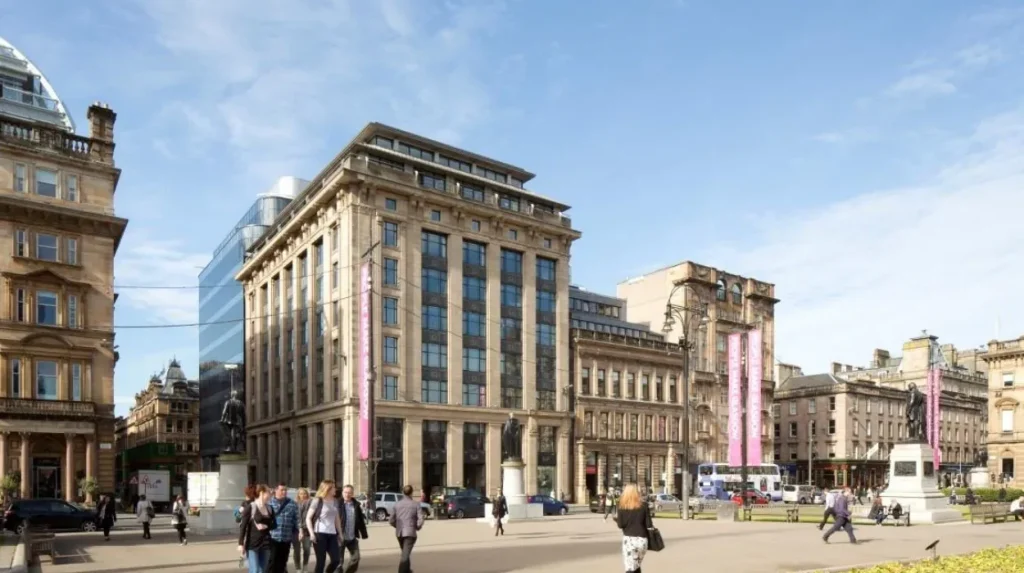
Central Glasgow contains major destinations such as Buchanan Street, George Square, Glasgow Central Station and Glasgow Queen Street Station. These destinations attract commuters, shoppers, visitors and business travellers, creating substantial demand for parking.
The closer a driver gets to a major destination, the more important it becomes to check restrictions carefully. Free parking is not guaranteed simply because a space appears empty or a parking meter is absent.
Where can you park near Buchanan Street?
Buchanan Street is a central shopping destination, and parking directly on or near the busiest pedestrianised sections is not a practical assumption. Drivers should identify an authorised parking facility or a permitted street bay outside restricted sections.
Cowcaddens and parts of the surrounding inner-city area are possible starting points for checking parking options, depending on the destination and current restrictions. A driver should compare the distance to Buchanan Street with the cost of parking and any public transport fare.
Pedestrianised areas and restricted access roads require particular attention. A space that looks accessible on a map does not necessarily permit general vehicle access.
Where can you park near Glasgow Central Station?
Glasgow Central Station sits in a busy commercial area with significant traffic and parking demand. Free on-street parking immediately outside the station should not be assumed.
Drivers can check surrounding streets for legal spaces during permitted periods. However, restrictions, loading bays, taxi facilities, bus stops and controlled parking areas limit the places where a vehicle can be left.
For longer visits, a designated car park or a park-and-ride facility outside the busiest central streets provides a more dependable plan. The best option depends on the length of the stay, the number of passengers and the destination beyond the station.
Where can you park near Glasgow Queen Street Station?
Glasgow Queen Street Station is close to George Square, Buchanan Street and major city-centre attractions. This central location makes unrestricted free parking difficult to rely on.
Drivers should inspect the parking conditions on surrounding streets and check the rules for any marked bay. A free period on one street does not establish the same conditions on an adjacent road.
For a short visit, compare the walking distance from a legal parking space with the cost of a designated facility. For a full day, a station car park or park-and-ride arrangement can reduce the uncertainty associated with central street parking.
Does Glasgow Have Free Park-and-Ride Parking?
Glasgow has park-and-ride facilities that allow drivers to leave their cars and continue by public transport, but the main Subway car parks operated by Strathclyde Partnership for Transport are not generally free. Drivers should check current charges before using these facilities.
Park and ride is a transport arrangement that combines car parking with a bus, train or Subway journey. It reduces the need to drive into congested central streets and provides access to public transport for the final part of a journey.
Strathclyde Partnership for Transport (SPT) operates Subway parking facilities at Bridge Street, Kelvinbridge and Shields Road. ScotRail operates parking at many railway stations across the wider region. These facilities have different operating arrangements and prices.
Official information is available through the SPT park-and-ride service.
Is Shields Road Subway car park free?
Shields Road Subway car park is a paid parking facility rather than a general free car park. SPT lists more than 800 spaces there, making it a substantial option for drivers travelling towards central Glasgow.
According to SPT’s published parking information, parking-only charges include £3.20 for up to two hours and £8.15 for all-day parking. The combined all-day parking and return Subway journey is also listed at £8.15. Drivers should verify the latest prices before travelling.
The advantage is access to the Subway network without having to drive through the central area. The disadvantage for visitors seeking entirely free parking is that a charge applies.
Are Bridge Street and Kelvinbridge park-and-ride facilities free?
Bridge Street and Kelvinbridge are not general free-parking alternatives. SPT lists both as paid car parks serving Subway passengers and drivers who use the facilities for parking only.
Bridge Street is useful for destinations around the south side of the city centre. Kelvinbridge serves the western side of Glasgow, including parts of the West End.
Drivers should review the current parking tariff, Subway operating hours and permitted stay before choosing either facility. Overnight parking is not generally available at all Subway car parks; SPT specifically identifies Shields Road as the location permitting overnight parking.
Which railway stations offer park-and-ride facilities?
Several railway stations in and around Glasgow have car parks, but availability, charges and operating conditions differ by station. Examples include Glasgow Central, Glasgow Queen Street, Easterhouse and Scotstounhill, as well as stations in neighbouring council areas.
ScotRail provides information about station facilities and parking. Drivers should check whether a particular station car park charges for parking, whether spaces are available and whether any restrictions apply.
The presence of a railway station car park does not mean that parking is free. A free space on an adjacent public road is a separate matter and must be assessed under local parking rules.
How Do Glasgow’s Controlled Parking Zones Work?
A controlled parking zone is an area where parking restrictions apply to manage demand and improve access. Glasgow uses controlled parking zones, restricted parking zones and other designated restrictions, with rules that depend on the location and the signs displayed.
Glasgow City Council manages parking controls on many public streets. These controls support access for residents, businesses, deliveries, visitors and other road users.
A controlled parking zone can include paid bays, permit-holder spaces and shared-use spaces. Drivers must identify the rules for the specific bay rather than assume that every space inside the zone has identical conditions.
What is a controlled parking zone?
A controlled parking zone, commonly abbreviated to CPZ, is an area in which parking restrictions operate according to designated rules and hours. Entry signs indicate that drivers need to pay attention to the applicable parking controls.
Within a zone, individual bays can have different purposes. Some are for permit holders, some allow paid visitor parking and others are reserved for specific activities.
A driver who finds an empty bay must still confirm that their vehicle qualifies to use it. An available space is not necessarily a legally available space for every driver.
What is a restricted parking zone?
A restricted parking zone, or RPZ, is an area where parking restrictions are indicated by zone-entry signs and supporting signs or markings. These arrangements differ from conventional streets where every individual restriction is necessarily marked in the same way.
Drivers should read the entry signs and any additional restrictions before stopping. They should not assume that the absence of a familiar painted bay marking means parking is permitted.
Glasgow City Council provides information about restricted parking zones and other parking controls through its official parking service.
Can visitors park in residents-only bays?
Visitors cannot automatically use a residents-only parking bay simply because it is empty. Access depends on the bay’s terms, the permit rules and any visitor parking arrangements available for the relevant zone.
Some locations have shared-use arrangements that permit both authorised permit holders and paying visitors. Other spaces are reserved for specific permit categories or vehicles.
Drivers should check whether a visitor permit, payment or another form of authorisation is required. Parking without the necessary permission can result in a penalty.
What Parking Restrictions Should Drivers Check in Glasgow?
Drivers should check parking signs, road markings, permitted hours, maximum stays and access restrictions before leaving a vehicle. Glasgow enforces parking rules that address unauthorised parking, obstruction and restrictions designed to protect road users and maintain access.
Parking regulations are not limited to charging. A driver can be prohibited from parking even where no fee is displayed, and a paid parking ticket does not authorise stopping in a prohibited location.
Can you park on double yellow lines in Glasgow?
Double yellow lines generally indicate that waiting is prohibited at all times, subject to applicable legal exceptions. Drivers must check any nearby signs and the relevant rules before stopping.
A free-parking search does not justify parking on double yellow lines. These restrictions help maintain traffic flow, visibility and access for emergency vehicles and other road users.
Single yellow lines generally indicate waiting restrictions during specified periods. The exact times depend on the applicable signs or zone rules.
Can you park on the pavement?
Drivers must not assume that pavement parking is permitted in Glasgow. Scotland introduced statutory pavement-parking prohibitions under the Transport (Scotland) Act 2019, with enforcement provisions coming into effect in 2023.
The legislation introduced restrictions on pavement parking, double parking and parking at dropped kerbs, subject to the relevant exemptions and enforcement rules. Drivers should consult Glasgow City Council for current local guidance.
Pavement parking can obstruct pedestrians, wheelchair users, people with pushchairs and people with visual impairments. A vehicle should not be left in a position that blocks pedestrian access.
Can you park across a driveway?
Drivers should not block a driveway or obstruct access to a property. Even where a road has no parking charges, the position of the vehicle and the nature of the obstruction remain important.
Parking across a dropped kerb can also fall within specific enforcement rules. Drivers should keep access points clear and select another space if the vehicle would prevent residents or other authorised users from entering or leaving a property.
What happens if you park illegally?
Illegal parking can result in a penalty charge notice or other enforcement action, depending on the restriction and the circumstances. The exact penalty and payment procedure depend on the relevant enforcement rules.
Drivers should check the issuing authority’s instructions if they receive a penalty. Glasgow City Council provides information about parking enforcement, payments and how to challenge a notice.
The most reliable way to avoid a penalty is to confirm the applicable restriction before leaving the vehicle and to return before any maximum stay expires.
How Can You Find Free Parking in Glasgow Before Travelling?
Drivers can identify potential free parking by checking Glasgow City Council’s parking information, reading location-specific signs and confirming current charges through official parking services. Planning ahead helps reduce unnecessary driving and avoids relying on outdated online recommendations.
Parking conditions change as councils update restrictions, introduce temporary traffic arrangements and manage roadworks. Information published for one street or one date does not necessarily apply to another location.
How can you check parking charges online?
Start with Glasgow City Council’s official parking information. Check the relevant zone, parking location and restrictions before travelling.
For council-operated on-street parking, RingGo provides a location-based parking service that displays details for participating spaces. Drivers should use the exact location or code rather than rely on a broad search for a neighbourhood.
SPT provides separate information for its Subway car parks. ScotRail provides station-specific information for railway parking.
Are parking apps reliable for finding free spaces?
Parking apps can help drivers locate spaces, identify charges and understand operating hours. However, their information should be checked against official signs and current local rules.
An app showing a zero charge during a particular period does not necessarily confirm that parking is unlimited. A maximum stay, no-return period or permit restriction can still apply.
Drivers should also be cautious with old blog posts and social media recommendations. Parking rules and charges change, so an unverified claim that a street is free all day is not sufficient evidence.
How should you plan a free-parking search?
Begin by identifying the destination and the time the vehicle will arrive. Check the parking restrictions in the surrounding streets and determine whether the permitted free period covers the entire visit.
Next, establish a backup option. A paid car park or park-and-ride facility prevents a driver from having to continue searching when no suitable free space is available.
For a long visit, compare the cost of parking with the time and travel costs associated with parking farther away. For a short visit, the closest legal space can be more practical even when it carries a charge.
Explore More Area Guide
Glasgow LEZ Explained: Rules, Fines and Boundary Map
Glasgow LEZ: Which Cars Are Allowed in 2026?
Is Free Parking in Glasgow Suitable for All-Day Visits?
Free parking can suit all-day visits when a legal space has no charge and no restrictive maximum stay. Drivers should confirm that the space permits the full duration, including any restrictions that begin later in the day or overnight.
All-day parking requires more careful checking than a short stop. A space that is free for one or two hours does not provide free all-day parking, even if the driver does not need to pay during the initial period.
The same principle applies to residents-only spaces and permit bays. A visitor must comply with the bay’s conditions for the whole period that the vehicle remains parked.
Is free parking practical for shopping trips?
Free parking can be practical for shopping trips when a permitted space is available within a reasonable walking distance. However, central shopping streets often have restrictions, short-stay bays and high demand.
Drivers visiting Buchanan Street, the St Enoch area or other central retail destinations should compare street parking with nearby car parks. A designated facility offers clearer information about its charges and permitted duration.
Shopping centres outside the centre also have their own parking terms. A car park associated with a retail business is not automatically free for every visitor or for an unlimited period.
Is free parking practical for commuters?
Commuters benefit from predictable parking arrangements because they often leave their vehicles for several hours. A genuinely unrestricted street space can reduce costs, but the driver must verify the full permitted duration and any local conditions.
Park and ride can be a more dependable alternative for regular journeys. SPT offers parking at selected Subway stations, while ScotRail operates parking at many railway stations.
Although these facilities are generally paid, their combined transport options can reduce the need to drive into central Glasgow. Drivers should compare the total daily cost with the time and expense of searching for a free street space.
What Is the Best Way to Avoid Parking Charges in Glasgow?
The most effective way to avoid parking charges is to identify a legally unrestricted space or a confirmed free-parking period before travelling. Drivers should compare the walking distance, maximum stay and restrictions against the length of their visit.
Free parking in Glasgow depends on the exact location and time. Residential streets outside controlled zones can offer opportunities, while some paid bays become free outside their charging hours. Neither arrangement guarantees that a space will be available when a driver arrives.
Drivers should use official council information, verify signs at the location and avoid treating park-and-ride facilities as automatically free. SPT’s main Subway car parks have published charges, while railway station car parks operate under their own terms.
The key rule is straightforward: free parking is only useful when it is legal for the entire period required. Checking the restrictions before travelling helps drivers avoid penalties, unnecessary delays and unexpected parking costs.
Where can I park for free in Glasgow?
Free parking is available on some unrestricted residential streets and in designated bays during free-parking periods. Always check local signs, road markings, permit requirements and maximum-stay limits before leaving your vehicle.