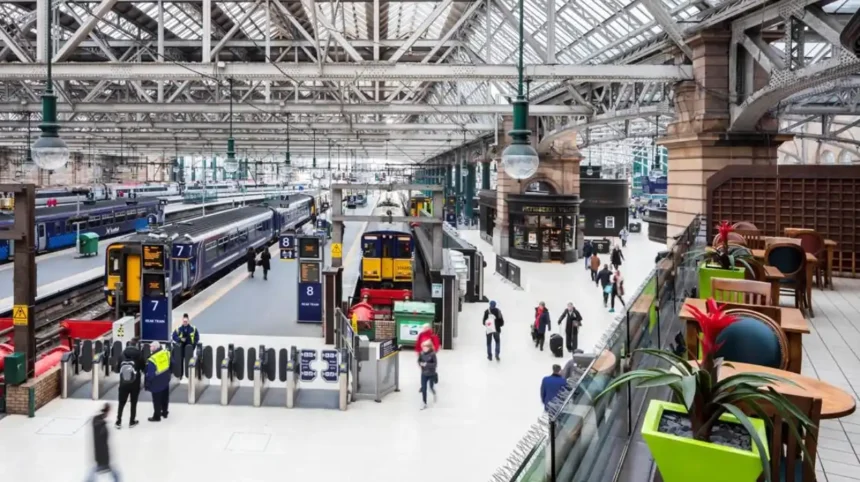
Glasgow has an extensive railway network connecting the city centre with surrounding communities, Scotland’s major cities, and destinations across the United Kingdom. This guide covers Glasgow’s main railway stations, their history, services, accessibility, ticketing, connections, and practical travel information.
- What are the main train stations in Glasgow?
- How did Glasgow’s railway stations develop historically?
- What is the difference between Glasgow Central and Queen Street stations?
- Which Glasgow train stations serve local neighbourhoods?
- Which stations are useful in central and western Glasgow?
- Which stations serve southern Glasgow?
- Which stations serve northern and eastern Glasgow?
- How can passengers travel between Glasgow and other Scottish cities?
- How do trains connect Glasgow with Edinburgh?
- How do trains connect Glasgow with the Highlands?
- How do trains connect Glasgow with Ayrshire and the west coast?
- How do trains connect Glasgow with England?
- How do Glasgow train tickets and fares work?
- What accessibility facilities are available at Glasgow train stations?
- How do passengers connect Glasgow train stations with buses and the Subway?
- What facilities and services can passengers expect at Glasgow stations?
- What should passengers know about luggage and bicycles?
- Where can passengers find live departure information?
- Which Glasgow train stations are best for commuters and visitors?
- How can travellers plan a reliable journey through Glasgow’s railway network?
What are the main train stations in Glasgow?
Glasgow’s railway network centres on Glasgow Central and Glasgow Queen Street, which serve different regional and national routes. Other important stations include Partick, Charing Cross, Argyle Street, Exhibition Centre, and Mount Florida, connecting residential districts, business areas, universities, and visitor attractions.
Glasgow is Scotland’s largest city and a major railway hub. Its stations support daily commuting, intercity travel, shopping trips, university journeys, and connections to Scotland’s west coast.
The city’s railway network operates through two principal city-centre terminals:
- Glasgow Central: The principal station for trains to destinations including Edinburgh via Shotts, Paisley, Ayr, and the south of England.
- Glasgow Queen Street: The principal station for services to Edinburgh via Falkirk High, Stirling, Perth, Inverness, and northern Scotland.
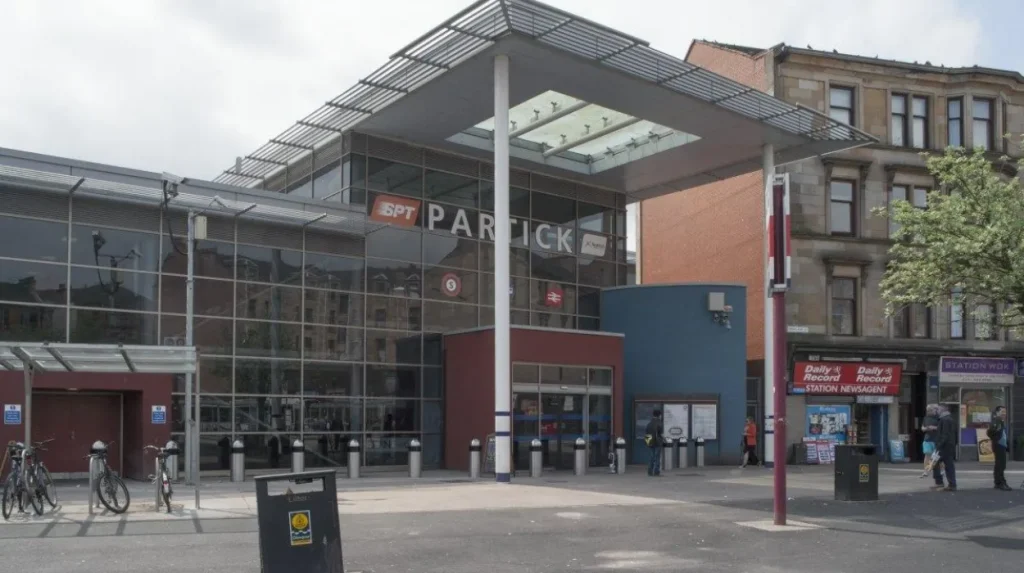
Other stations serve local travel across Glasgow’s north, south, east, and west. Partick provides an interchange with the Glasgow Subway, while Charing Cross serves the western city centre.
The best station depends on the destination, train operator, and departure time. Checking the exact departure station before travelling prevents unnecessary journeys across the city centre.
How did Glasgow’s railway stations develop historically?
Glasgow’s railway stations developed during the nineteenth century as industrial growth increased demand for passenger and freight transport. Glasgow Central opened in 1879, followed by its Low Level station in 1896, while railway expansion connected the growing city with surrounding industrial communities.
Railways transformed Glasgow during the Industrial Revolution. The city’s shipbuilding, manufacturing, textile industries, and expanding population generated substantial demand for reliable transport.
Glasgow Central was established by the Caledonian Railway Company. Its opening brought railway services closer to the commercial centre and improved access across the River Clyde.
Network Rail’s historical account records several important milestones. Central opened in 1879 with eight platforms. Its Low Level station opened in 1896, and major expansion between 1899 and 1905 increased capacity to accommodate rising passenger numbers. The Low Level platforms closed in 1964 and reopened in 1979.
Glasgow Queen Street developed as the other major city-centre terminal, serving routes towards central and northern Scotland. Its position near George Square made it convenient for business districts and commercial destinations.
The railway network subsequently evolved through electrification, signalling improvements, station refurbishment, and the development of integrated urban transport. Today, Glasgow’s historic railway infrastructure supports both long-distance journeys and frequent suburban services.
What is the difference between Glasgow Central and Queen Street stations?
Glasgow Central primarily serves southern and western Scotland, the West Coast Main Line, and destinations in England. Glasgow Queen Street primarily serves Edinburgh via Falkirk High, Stirling, Perth, and northern Scotland, making the correct station essential when planning journeys.
The two stations are close to one another but operate different route networks. They are not interchangeable for every journey.
Glasgow Central
- Located on Gordon Street.
- Serves routes to Paisley, Ayr, Inverclyde, and destinations in southern Scotland.
- Operates long-distance services towards London and other English destinations.
- Includes High Level and Low Level platforms.
- Located beside George Square.
- Serves Edinburgh via Falkirk High.
- Connects Glasgow with Stirling, Perth, and Inverness.
- Provides access to the North Clyde suburban network through its Low Level platforms.
Network Rail identifies Central as Scotland’s busiest railway station. Its extensive platforms and routes accommodate intercity and commuter traffic.
Queen Street is particularly useful for passengers travelling to Edinburgh on the main route via Falkirk High. Passengers travelling to Edinburgh via Shotts generally use Glasgow Central instead.
Before setting off, check the station name printed on the ticket or displayed in the journey planner. Allow additional time when changing between the two terminals, especially when carrying luggage or travelling with children.
Which Glasgow train stations serve local neighbourhoods?
Glasgow’s suburban railway stations connect neighbourhoods with the city centre and surrounding towns. Stations such as Partick, Charing Cross, Mount Florida, Pollokshaws West, and Anniesland serve different corridors, giving commuters and visitors alternatives to driving across busy urban roads.
The suburban network operates across multiple railway corridors. Each station serves a particular neighbourhood and connects passengers with employment centres, shopping areas, educational institutions, and leisure destinations.
Which stations are useful in central and western Glasgow?
Partick is an important interchange between rail services and the Glasgow Subway. It is useful for passengers travelling towards the West End, university districts, and western residential areas.
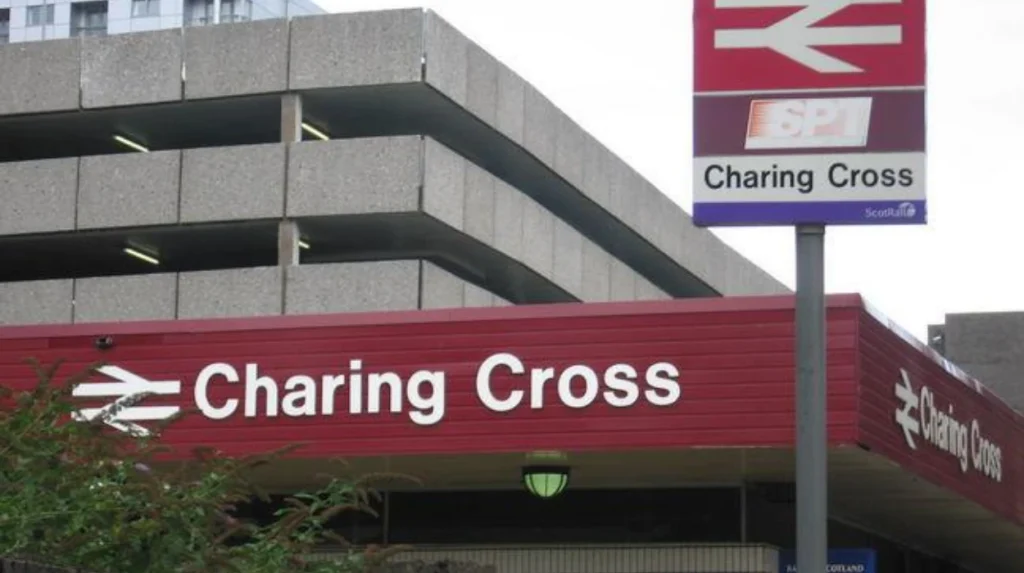
Charing Cross serves the western edge of Glasgow city centre. Its location is practical for offices, hotels, and destinations around Sauchiehall Street.
Exhibition Centre serves the SEC campus, which includes the OVO Hydro, SEC Armadillo, and exhibition and conference facilities. Event visitors should check train times before and after large concerts or exhibitions.
Argyle Street is a convenient city-centre station for shopping and commercial areas near the River Clyde.
Which stations serve southern Glasgow?
Mount Florida provides access to Hampden Park, Scotland’s national football stadium. It is particularly relevant for football matches and major events.
Pollokshaws West serves the Pollokshaws area and provides access to Pollok Country Park, subject to the walking route selected.
Queens Park serves the south-side neighbourhood around Queen’s Park and Victoria Road. Its services connect residential communities with central Glasgow.
Which stations serve northern and eastern Glasgow?
Anniesland is useful for residential areas in north-west Glasgow and connections towards surrounding districts.
Maryhill serves communities around Maryhill and the northern part of the city.
Alexandra Parade provides rail access to parts of the east end, while Duke Street serves residential and commercial areas further east.
Train frequency, operating hours, and direct connections differ by route. Passengers should confirm their destination and interchange requirements using the official ScotRail journey planner.
How can passengers travel between Glasgow and other Scottish cities?
Glasgow’s main stations connect passengers with major Scottish destinations, including Edinburgh, Stirling, Perth, Dundee, Aberdeen, Inverness, Ayr, and Oban. The best route depends on the destination, timetable, and whether the journey requires a change between services.
Rail travel from Glasgow supports business trips, tourism, education, and regional commuting. The two main terminals provide access to different parts of Scotland’s railway network.
How do trains connect Glasgow with Edinburgh?
Glasgow and Edinburgh have multiple rail connections. The main route via Falkirk High normally departs from Queen Street, while services via Shotts generally depart from Central.
Passengers should compare journey times and departure stations before booking. The quickest service depends on the selected route and timetable.
How do trains connect Glasgow with the Highlands?
Queen Street provides access to routes towards Stirling, Perth, and Inverness. Some Highland journeys require a change of train, depending on the destination and departure time.
Passengers travelling to Fort William and Mallaig should check the available route carefully. These destinations are served by the West Highland Line, with journeys typically starting at Queen Street.
How do trains connect Glasgow with Ayrshire and the west coast?
Central serves railway routes towards Paisley, Ayr, and other communities in western and south-western Scotland. Services also connect with destinations around Inverclyde, including Greenock and Gourock.
For coastal journeys, passengers should check whether the selected service terminates at the required station or continues to another destination.
How do trains connect Glasgow with England?
Glasgow Central provides access to long-distance routes on the West Coast Main Line. Services connect the city with destinations including Carlisle, Preston, Manchester, Birmingham, and London, although the precise stopping pattern varies by train.
Advance tickets, off-peak fares, and flexible tickets have different conditions. Checking the operator and ticket restrictions before departure helps avoid unnecessary costs.
How do Glasgow train tickets and fares work?
Train fares in Glasgow depend on the route, travel date, departure time, ticket type, and passenger eligibility. Travellers can compare available fares through ScotRail and National Rail, then choose an appropriate ticket for single journeys, returns, regular commuting, or eligible discounted travel.
Rail tickets are issued under different conditions. The cheapest available option is not always suitable for passengers who need flexibility or plan to travel at busy times.
Common ticket types include:
- Single tickets: Cover travel in one direction between the specified stations.
- Return tickets: Cover an outward journey and a return journey under the ticket’s conditions.
- Advance tickets: Usually offer a lower fare for a specific train, with restrictions on changing the journey.
- Season tickets: Support regular commuting over a defined period.
- Railcard-discounted tickets: Offer savings to eligible passengers travelling under the relevant Railcard rules.
Prices vary by route and date, so a single fare figure cannot represent all Glasgow journeys. Compare the total cost for the intended itinerary before buying.
Passengers should also confirm whether the ticket covers the exact departure and arrival stations. A ticket to Glasgow Central does not automatically mean that every journey from Queen Street is valid under the same conditions.
The official ScotRail website provides timetable and ticket information for Scottish rail services. National Rail provides broader journey-planning and station information.
What accessibility facilities are available at Glasgow train stations?
Accessibility varies by Glasgow railway station and platform. Glasgow Queen Street provides step-free access to all platforms, while passengers using Glasgow Central should check current lift availability and the route between High Level and Low Level services before travelling.
Accessible facilities help passengers with mobility impairments, luggage, pushchairs, and other travel needs. However, station accessibility is not identical across the network.
National Rail lists lifts, accessible toilets, staff assistance, and step-free access at Queen Street. Facilities include accessible ticket machines, waiting areas, and passenger information systems.
At Glasgow Central, passengers should check the latest station notices for lift and escalator availability. Temporary equipment failures affect the route between platforms and different station levels.
Passengers requiring assistance should arrange Passenger Assistance in advance where possible. Assistance helps with station navigation, boarding and leaving trains, and changing between services.
Before travel, confirm:
- Whether every platform on the journey has step-free access.
- Whether lifts are operating normally.
- The availability of accessible toilets and waiting facilities.
- Where staff assistance is provided.
- Whether the destination station has a suitable accessible exit.
Do not assume that a station with step-free access has a step-free route to every nearby street or connecting transport service. Check the full journey, including interchanges.
How do passengers connect Glasgow train stations with buses and the Subway?
Glasgow’s railway stations connect with local buses, taxis, walking routes, and the Glasgow Subway at selected locations. Partick is a major rail-to-Subway interchange, while Central and Queen Street provide access to city-centre bus services and onward connections across Glasgow.
Glasgow’s transport network combines heavy rail with local public transport. This allows passengers to complete journeys that begin or end outside walking distance of a railway station.
The Glasgow Subway serves the city centre and several West End and south-side locations. Partick is particularly useful because passengers can change between Subway and rail services at the same interchange.
Glasgow Central and Queen Street are within walking distance of one another, but passengers transferring between them should account for pedestrian crossings, luggage, weather, and the time required to locate the correct platform.
Buses offer connections to neighbourhoods that do not have a nearby railway station. Buchanan Bus Station is an important hub for intercity and regional coach services, particularly for passengers continuing journeys beyond the local rail network.
Taxis and private-hire vehicles provide another option for late-night travel, luggage-heavy journeys, and destinations with limited public transport connections. Pick-up points differ by station and can change during station works.
For an efficient transfer, passengers should:
- Check the arrival and departure stations before leaving.
- Review the walking route or onward transport connection.
- Allow extra time for a separate ticket, platform change, or interchange.
- Confirm the final service of the day when travelling late.
These steps are especially important for passengers arriving in Glasgow for concerts, football matches, conferences, or onward journeys to rural destinations.
What facilities and services can passengers expect at Glasgow stations?
Glasgow’s principal railway stations provide passenger information, ticket facilities, waiting areas, and connections to local transport. Glasgow Central and Queen Street have extensive facilities, while smaller suburban stations offer more limited services, so passengers should check individual station details.
Station facilities depend on passenger demand, available space, staffing, and the station operator. Large terminals generally provide more services than smaller suburban stops.
At Queen Street, National Rail lists ticket offices, ticket machines, shops, refreshments, seating, public Wi-Fi, accessible toilets, and customer information facilities.
Glasgow Central has a large concourse and facilities supporting long-distance and local passengers. Its High Level and Low Level sections serve different routes, so passengers should follow departure screens and platform announcements.
Smaller stations have a different purpose. Some provide ticket machines, passenger information screens, help points, and bicycle storage without staffed ticket offices or extensive retail facilities.
What should passengers know about luggage and bicycles?
Passengers travelling with luggage should consider the distance between entrances, concourses, and platforms. Large terminals can become busy during peak commuting periods and major events.
Bicycle facilities differ by station. Check station storage information and the relevant train operator’s bicycle policy before travelling with a full-size bicycle. Reservations or restrictions apply to some services.
Where can passengers find live departure information?
The National Rail website and ScotRail journey planner provide train times, platform information, service updates, and station details. Electronic departure boards and public announcements provide updates inside stations.
Passengers should check live information shortly before departure because engineering works, disruption, and operational changes affect the timetable.
Explore More Area Guide
McGill’s Buses Glasgow: Routes, Tickets & Timetables Guide
First Bus Glasgow: Routes, Tickets and Timetables Guide
Which Glasgow train stations are best for commuters and visitors?
The best Glasgow railway station depends on the destination rather than a single overall ranking. Central suits many southern and western routes, Queen Street serves Edinburgh and northern Scotland, and suburban stations such as Partick and Exhibition Centre offer convenient access to specific neighbourhoods and attractions.
Commuters benefit from selecting a station close to both their home and workplace. Visitors benefit from choosing the station that minimises transfers and walking distances.
The best choice still depends on the actual service. Not every train stops at every station, and some journeys require a change.
Visitors attending major events should plan their return journey before arriving. Large crowds can increase demand for trains and taxis, while late-night services operate according to published timetables rather than event finishing times.
Commuters should compare departure frequency, interchange requirements, walking time, and ticket cost. A station closer to home is not automatically the quickest option if its service runs less frequently.
How can travellers plan a reliable journey through Glasgow’s railway network?
A reliable Glasgow train journey starts with confirming the correct station, checking live departures, choosing a suitable ticket, and reviewing interchange and accessibility requirements. Passengers should allow additional time for busy periods, planned engineering works, and connections between separate city-centre terminals.
Railway journeys involve more than selecting a departure time. The station, route, ticket restrictions, and onward transport all affect the total journey.
Start with the official ScotRail or National Rail journey planner. Enter the exact origin and destination rather than using “Glasgow” alone, particularly when the journey involves Central or Queen Street.
Check the timetable on the day of travel. Weekend engineering work and service alterations can change stopping patterns, journey times, and replacement transport arrangements.
Passengers connecting from an airport, coach, or another train should allow a reasonable transfer margin. Separate tickets and delayed services create additional risks when a connection is tightly timed.
For international visitors and first-time users, station signage and electronic displays help identify the correct platform. Ask station staff for assistance when a route or platform change is unclear.
Glasgow’s railway stations remain important to the city’s future transport needs. Their role includes supporting employment, tourism, education, major events, and lower-car travel. Continued improvements to accessibility, passenger information, and railway infrastructure are central to making the network easier to use.
For the most accurate journey information, consult ScotRail and National Rail before departure. Their live updates and station-specific information provide the best basis for planning a journey across Glasgow and the wider Scottish railway network.
What are the main train stations in Glasgow?
Glasgow Central and Glasgow Queen Street are the two main railway stations in Glasgow. Central serves routes towards southern and western Scotland and England, while Queen Street serves Edinburgh via Falkirk High and destinations in central and northern Scotland.