- Overcrowding Pressures: Glasgow’s Victorian-era HMP Barlinnie may remain operational even after the opening of its replacement, HMP Glasgow, due to historic high numbers in Scotland’s prison population.
- Escalating Costs and Delays: The replacement facility, HMP Glasgow, is currently budgeted at £1 billion—more than double its initial £400 million estimate—and is not expected to open until 2028, years behind the original schedule.
- Government Stance: Cabinet Secretary for Justice Neil Gray confirmed to the Scottish Parliament’s Criminal Justice Committee that closing Barlinnie remains the “current intention”, declining to offer an absolute guarantee.
- Staffing Concerns: Insiders within the Scottish Prison Service (SPS) warn that retaining both facilities, even temporarily as a last resort, would present severe staffing logistical challenges.
- Political Pressure: Opposition figures, including Scottish Conservative justice spokesman Stephen Kerr, have urged ministers to consider all capacity options, including modular units and keeping Barlinnie open, to prevent further early releases of offenders.
- Heritage Status: HMP Barlinnie received Category A listed status from Historic Environment Scotland in December 2025, raising questions over its future redevelopment, museum potential, and the handling of unmarked graves on the grounds.
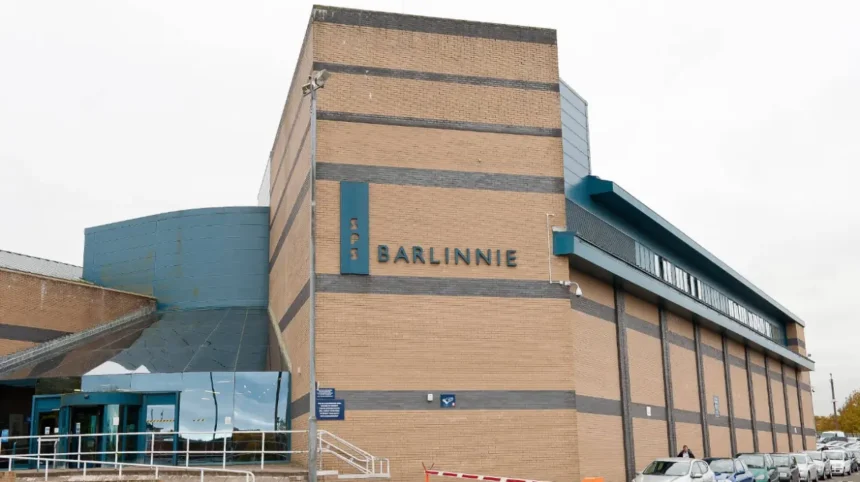
Glasgow (Glasgow Express) October 12, 2026 – Glasgow’s historic HMP Barlinnie may remain in operation following the opening of the new £1 billion HMP Glasgow, as ministers and prison authorities grapple with record levels of overcrowding across the Scottish penal estate. The Victorian-era facility in Riddrie, which was originally slated for complete closure upon the commissioning of its modern successor, could be retained in the short term as a measure of last resort to accommodate surging inmate numbers.
- Will Glasgow’s Historic HMP Barlinnie Remain Open Despite a £1bn Replacement Being Built?
- What Are Politicians and Prison Officials Saying About Scotland’s Overcrowding Emergency?
- What Challenges Surround the Future of the Barlinnie Site and Infrastructure?
- Background of the Development
- Prediction: How This Development Can Affect the Particular Audience
Will Glasgow’s Historic HMP Barlinnie Remain Open Despite a £1bn Replacement Being Built?
The long-standing policy to decommission HMP Barlinnie upon the completion of HMP Glasgow has come under renewed scrutiny following parliamentary testimony and statements from government officials. The new facility, situated across the M8 motorway from the current site, is designed to provide fit-for-purpose, modern accommodation aimed at transforming rehabilitation. However, construction of HMP Glasgow has faced substantial delays and budget expansions, with costs rising from an original estimate of £400 million to approximately £1 billion, and completion pushed back to 2028.
Media coverage across Scotland has highlighted growing discussions within the Scottish Prison Service (SPS) regarding the feasibility of keeping portions of Barlinnie operational alongside the new facility.
When questioned at a meeting of the Scottish Parliament’s Criminal Justice Committee on whether he could be “absolutely clear that when HMP Glasgow becomes operational, HMP Barlinnie will close for good”, Cabinet Secretary for Justice Neil Gray stated that “That is the current intention.” Observers noted that the Cabinet Secretary stopped short of delivering an unconditional guarantee that the gates of the 144-year-old institution would be locked permanently upon HMP Glasgow’s opening.
As reported by journalists covering the Scottish Daily Mail, an insider within the Scottish Prison Service explained that
“The line is there are no ‘current’ plans for Barlinnie to be kept open – emphasising ‘current’ – in case it has to be kept running in the short term, as a last resort. A difficulty would be ensuring that we had enough staff to keep the two prisons running.”
What Are Politicians and Prison Officials Saying About Scotland’s Overcrowding Emergency?
The debate occurs against a backdrop of persistent high capacity across Scottish penal institutions. Despite multiple emergency early release schemes enacted by the Scottish Government in recent years, the inmate population has continued its upward trajectory. Official figures recorded 8,241 prisoners in custody in June this year, a figure higher than the population registered prior to the commencement of the latest emergency early release initiatives.
Political responses to the potential retention of Barlinnie have underlined the tension between infrastructure delivery and public safety. As reported by reporters for the Scottish Daily Mail, Scottish Conservative justice spokesman Stephen Kerr stated that
“The SNP must look at every option to expand prison capacity, including temporary modular prisons and keeping Barlinnie open. The public should not be asked to accept criminals being released early because the SNP failed to deliver the prison capacity that Scotland needs.”
In response to inquiries regarding the future of the estate, an official spokesperson for the Scottish Prison Service reiterated the formal objective of the project, stating:
“As confirmed by the Cabinet Secretary, the intention is for HMP Barlinnie to close. HMP Glasgow has been designed to deliver fit-for-purpose, safe and secure accommodation and will have a transformative impact in how we support and rehabilitate people.”
What Challenges Surround the Future of the Barlinnie Site and Infrastructure?
Decommissioning or partially retaining HMP Barlinnie involves complex infrastructural and heritage considerations. In December 2025, Historic Environment Scotland granted Category A listed status to the complex, recognizing its architectural and historical significance as one of Scotland’s most notable Victorian penal establishments.
This heritage designation imposes strict statutory protections on the buildings, complicating any future redevelopment proposals once the facility eventually ceases operational use. Community campaigners and heritage groups have suggested that elements of the Victorian complex could be repurposed into a museum or cultural center.
Furthermore, the site contains unmarked burial grounds belonging to individuals executed on the premises during its operating history, adding further sensitivity to any long-term land use, sale, or structural alteration plans. Deferring the closure of Barlinnie would temporarily postpone decisions regarding the preservation and management of these historic grounds.
Background of the Development
HMP Barlinnie opened in 1880 in the east end of Glasgow, designed by Major General Thomas Bernard Collinson to replace the old Glasgow City Bridewell. Designed under the Victorian “telephone-pole” layout with five major accommodation blocks (A to E), it rapidly grew to become Scotland’s largest prison, holding at times significantly more than its designed capacity.
Over the decades, Barlinnie became synonymous with the history of Scottish criminal justice. It was the site of 10 executions by hanging between 1946 and 1960 before the abolition of capital punishment in the United Kingdom. In the late 20th century, the prison gained international attention for its Special Unit, established in 1973, which pioneered art therapy and alternative approaches to the rehabilitation of violent offenders, counting figures such as Jimmy Boyle among its participants.
By the early 2000s, structural degradation, outdated Victorian plumbing, and chronic overcrowding led successive administrations to conclude that Barlinnie was no longer suitable for 21st-century penal management. Plans for its replacement were formally announced by the Scottish Government, with a initial budget of £400 million and a planned completion date in the mid-2020s. However, supply chain disruptions, planning complexity, and cost inflation saw the budget for HMP Glasgow rise to £1 billion, with the target opening date shifted to 2028.
Concurrently, Scotland’s prison population reached historically high levels during the mid-2020s, driven by increases in remand populations, longer sentences for violent and sexual offenses, and court backlogs. To alleviate overcrowding, ministers implemented emergency early release provisions under legislative powers. Despite these measures, population levels rapidly rebounded, creating the operational dilemma currently facing the Scottish Prison Service regarding whether legacy facilities can be retired as planned.
Prediction: How This Development Can Affect the Particular Audience
The potential decision to retain HMP Barlinnie alongside the new HMP Glasgow will directly affect several key groups:
1. Prison Staff and Trade Unions
For prison officers and operational personnel represented by unions such as the Scottish Prison Officers Association (SPOA), keeping both facilities open would exacerbate severe staffing pressures. Managing two large-scale sites across the M8 motorway would require a significant expansion of frontline personnel, potentially leading to increased overtime demands, staff burnout, and operational strain if recruitment targets are not met.
2. Inmate Population and Families
For individuals in custody and their families, the dual operation of facilities impacts living conditions and access to rehabilitation services. While HMP Glasgow is designed with modern medical, educational, and visiting facilities, any inmates retained in older sections of Barlinnie would remain in Victorian-era conditions. Conversely, maintaining additional operational capacity could help reduce overall density across the estate, potentially easing safety risks associated with severe overcrowding.
3. Local Community and Taxpayers
For residents in the east end of Glasgow and Scottish taxpayers, the delay in closing Barlinnie delays long-term regeneration plans for the Riddrie site. Taxpayers face the ongoing financial burden of funding both the £1 billion construction cost of HMP Glasgow and the high operational and maintenance costs required to keep a Category A listed Victorian prison functioning safely.