Key Points
- Sauchiehall Street tops the fine list: Data covering April to August reveals that Sauchiehall Street recorded the highest number of Penalty Charge Notices (PCNs) in Glasgow, with 2,206 fines issued.
- Significant revenue generated: The fines issued on Sauchiehall Street alone hold a maximum potential yield of up to £220,600 for Glasgow City Council over the five-month period.
- Citywide enforcement trends: Freedom of Information requests have exposed the specific thoroughfares across Glasgow where drivers face the highest risk of receiving a parking ticket.
- Financial impact on motorists: Standard Penalty Charge Notices in Glasgow are set at £100, though this figure is reduced to £50 if paid within 14 days of issue.
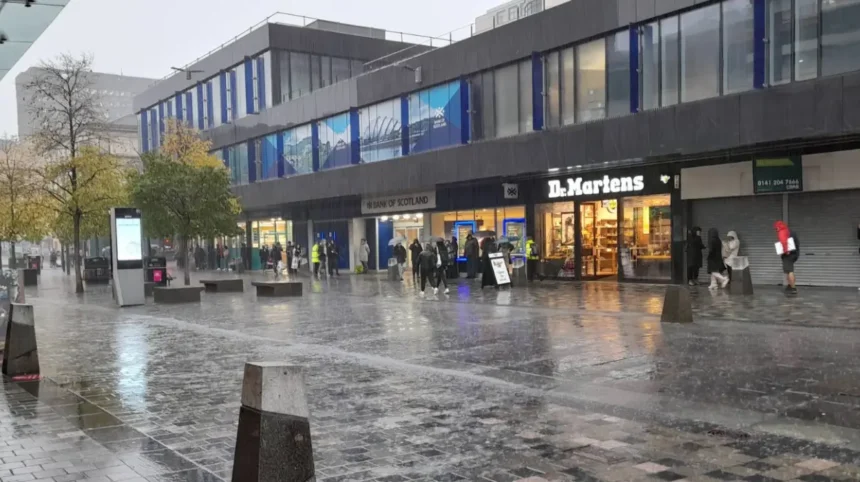
Glasgow (Glasgow Express) October 12, 2026 – Drivers navigating the streets of Glasgow are most likely to return to their vehicles and discover a parking ticket wedged beneath their windscreen wipers on Sauchiehall Street, according to newly released figures from local authorities. Data obtained through Freedom of Information disclosures reveals that Glasgow City Council issued 2,206 Penalty Charge Notices to vehicles parked on Sauchiehall Street between April and August of this year. With standard council parking penalties fixed at £100, the enforcement action on this single prominent stretch has generated a potential revenue figure of up to £220,600 for the city council within a five-month timeframe.
- Key Points
- Which Glasgow Streets Are Generating the Highest Parking Fine Revenues for the Council?
- How Does Glasgow City Council Administer and Process Penalty Charge Notices?
- Background of Glasgow Parking Enforcement Policies
- Prediction: How Will This Development Affect Glasgow Drivers and Local Business Visitors?
The disclosure highlights the specific urban corridors within Glasgow where parking enforcement officers are most active and where motorists encounter the highest rate of penalties. Sauchiehall Street, one of the city’s primary commercial and cultural thoroughfares, led the rankings across all recorded locations in the local authority area during the analyzed period.
Which Glasgow Streets Are Generating the Highest Parking Fine Revenues for the Council?
As reported by journalists at The Herald, figures released by Glasgow City Council under Freedom of Information legislation outline the top locations where parking regulations are most frequently breached and enforced. Beyond Sauchiehall Street, multiple busy commercial routes, city-centre arteries, and residential fringe zones saw substantial numbers of Penalty Charge Notices issued by enforcement staff between April and August.
The data demonstrates that high-density shopping areas, key public transport access routes, and zones with strict loading restrictions account for the overwhelming majority of parking enforcement activity across the local authority area.
How Does Glasgow City Council Administer and Process Penalty Charge Notices?
In Glasgow, parking enforcement is managed directly by the local authority to maintain traffic flow, clear restricted loading zones, and facilitate access for public services and emergency vehicles. Under the current penalty framework, a standard Penalty Charge Notice issued by Glasgow City Council carries a statutory surcharge of £100.
However, the enforcement structure incorporates a tiered payment system to encourage swift settlement:
- Early Payment Discount: Drivers who settle their Penalty Charge Notice within 14 days of issuance receive a 50 per cent reduction, lowering the cost to £50.
- Full Penalty Rate: Failure to pay within the initial 14-day window requires the driver to pay the full £100 charge.
- Formal Appeals: Motorists who believe a ticket was issued in error retain the right to submit a formal representation to Glasgow City Council within statutory timeframes.
If penalties remain unpaid beyond the designated period, the council possesses statutory powers to issue a Notice to Owner and escalate the penalty through formal debt recovery processes, which increases the financial liability for the vehicle owner.
Background of Glasgow Parking Enforcement Policies
Glasgow City Council’s parking strategy has undergone progressive changes over recent years to address urban congestion, encourage public transport usage, and reduce environmental emissions within the city core. The introduction of low-emission zones alongside expanded parking management areas has tightened restrictions across central Glasgow.
The management of parking meters, permit zones, and restricted loading bays forms a key operational component of the city’s transport infrastructure planning. Revenues generated from Penalty Charge Notices are processed under municipal finance guidelines, which dictate that net surpluses from parking operations must be ring-fenced for local transport infrastructure projects, road maintenance, and environmental improvements within the council boundary.
Prediction: How Will This Development Affect Glasgow Drivers and Local Business Visitors?
The publication of these enforcement figures is anticipated to influence driver behaviour, local business footfall, and future council transport planning across Glasgow in several distinct ways:
- Heightened Driver Caution and Shift to Off-Street Parking: Motorists visiting central Glasgow, particularly the Sauchiehall Street commercial district, are likely to exercise greater caution regarding parking duration and zone restrictions. This awareness may drive increased demand for multi-storey and private off-street car parks as drivers seek to avoid high-risk on-street enforcement locations.
- Impact on High Street Retail and Night-Time Economy: Local trade groups and business operators on Sauchiehall Street may express concern over the high volume of fines, arguing that aggressive enforcement could deter shoppers, diners, and evening visitors from frequenting the area compared to out-of-town retail parks offering free parking.
- Scrutiny of Council Enforcement Priorities: The disclosure of significant revenue potentials will likely prompt public debate regarding whether current parking restrictions on key thoroughfares are strictly calibrated for traffic management or serving as a substantial source of municipal income.