- Court Conviction: Thirty-eight-year-old Liam Connolly pleaded guilty to a breach of the peace offence at Glasgow Sheriff Court on 7 October 2026.
- Sentencing Handed Down: Connolly was issued a two-year Football Banning Order alongside a Community Payback Order requiring 150 hours of unpaid work.
- Casualties and Injuries: Two police officers sustained serious injuries and three members of the public required emergency hospital treatment during the events.
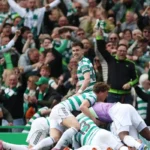
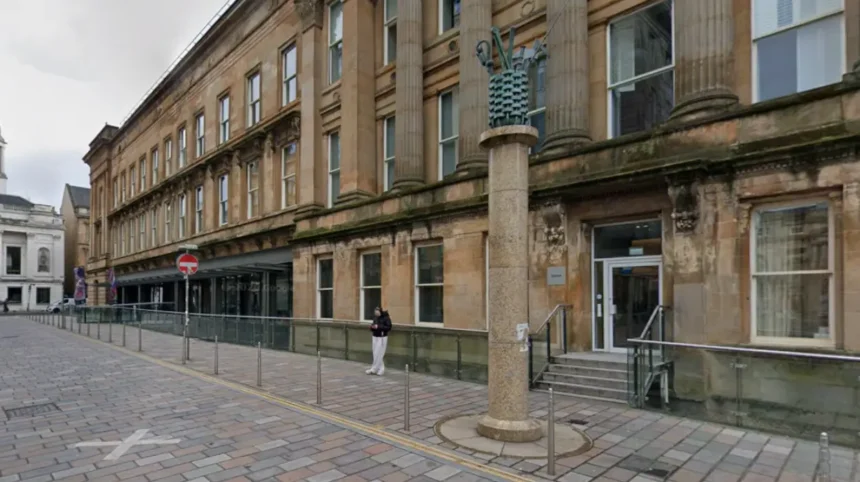
- Widespread Disorder: Thousands of Celtic supporters gathered in the Trongate area of Glasgow and at Celtic Park on 16 May 2026 following their Scottish Premiership title victory over Hearts.
- Escalation of Violence: Aggressive crowds engaged in climbing street furniture, throwing glass bottles, and hurling missiles at emergency responders, forcing riot police to intervene.
- Official Stance: Police Scotland confirmed a zero-tolerance approach to public disorder, emphasising that those involved in football-related hostility will face severe judicial consequences.
Glasgow (Glasgow Express) October 12, 2026 – A thirty-eight-year-old supporter has been handed a two-year Football Banning Order and a Community Payback Order after pleading guilty to public disorder offences during Celtic Football Club’s Scottish Premiership title celebrations. Liam Connolly admitted to a breach of the peace offence at Glasgow Sheriff Court following violent incidents that unfolded across the city on 16 May 2026. The widespread disturbance in the Trongate district and near Celtic Park left two police officers seriously injured and required three members of the public to be taken to hospital for emergency medical care.
- What Led to the Two-Year Football Ban Issued at Glasgow Sheriff Court?
- How Did the Celebrations in Glasgow’s Trongate District Escalate Into Violence?
- What Was the Impact of the Fan Disorder on Public Safety and Emergency Responders?
- What Official Statement Did Police Scotland Issue Following the Court Verdict?
- Background of Football Banning Orders and Public Celebrations in Glasgow
- Prediction: How Will This Legal Enforcement Affect Football Supporters, Local Communities, and Matchday Logistics?
What Led to the Two-Year Football Ban Issued at Glasgow Sheriff Court?
As reported by police reporting staff of Police Scotland, Liam Connolly, aged thirty-eight, appeared at Glasgow Sheriff Court on Wednesday, 7 October 2026, where he formally entered a guilty plea to a charge of breach of the peace. The court dealt with the charges stemming directly from the widespread disorder that took place in Glasgow city centre on Saturday, 16 May 2026, following Celtic’s full-time victory over Hearts in the final fixture of the Scottish Premiership season.
Sheriff court officials confirmed that in addition to being handed a two-year Football Banning Order, Connolly was issued a Community Payback Order requiring him to complete 150 hours of unpaid work in the community. The Football Banning Order strictly prohibits Connolly from attending any regulated football matches across the United Kingdom for the entire two-year duration of the sentence.
How Did the Celebrations in Glasgow’s Trongate District Escalate Into Violence?
As reported by journalists covering the Glasgow city court beat for the Herald Scotland, thousands of Celtic supporters gathered in the historic Trongate area of Glasgow city centre to celebrate their team’s league championship triumph over Hearts. The street gathering initially began as an unofficial title party but rapidly deteriorated into severe public disorder as crowds occupied major roadways, climbed traffic lights, and scaled urban architecture.
As reported by court reporters for Glasgow Live, the atmosphere became hostile when individuals within the crowd turned on responding law enforcement personnel. Police officers stationed at the scene were subjected to flying missiles and glass bottles thrown directly at them. The escalating aggression forced Police Scotland to deploy specialist public order officers wearing full protective gear and carrying shields to disperse the large crowds and restore public safety.
What Was the Impact of the Fan Disorder on Public Safety and Emergency Responders?
As reported by news reporters for the Glasgow Times, the incident resulted in significant casualties and widespread destruction of public space. Emergency services confirmed that two Police Scotland officers sustained serious injuries while attempting to manage the violent crowds and maintain public order in the city centre.
Furthermore, three members of the public suffered injuries that necessitated urgent transportation to hospital for formal medical treatment. Law enforcement authorities described the behavior encountered by emergency crews on the day as “unacceptable violence,” noting that the actions of hostile individuals put both officers and civilian bystanders at grave risk of harm.
What Official Statement Did Police Scotland Issue Following the Court Verdict?
As reported by Constable Ryan Beveridge of Police Scotland in an official force release, law enforcement authorities made their firm stance clear following the sentencing of Liam Connolly at Glasgow Sheriff Court. Constable Ryan Beveridge stated that:
“What followed at Celtic Park and towards the Trongate area of Glasgow after the final game of last season was completely unacceptable. We will not tolerate disorder and hostility of any kind and those involved will pay the consequences.”
Police Scotland reiterated that extensive investigations into the events of 16 May 2026 remain active, with officers continuing to review close-circuit television (CCTV) footage, mobile phone recordings, and social media media streams to identify and prosecute any further individuals involved in the violent scenes.
Background of Football Banning Orders and Public Celebrations in Glasgow
The implementation of Football Banning Orders (FBOs) in Scotland falls under statutory legislation designed to curtail hooliganism, violence, and anti-social behavior connected directly to domestic and international football matches. Introduced across the United Kingdom under the Football (Offences and Disorder) Act and refined in Scottish law, banning orders allow courts to prohibit convicted individuals from entering football stadiums for periods ranging from two to ten years. In addition to matchday stadium exclusions, individuals subject to FBOs are frequently required to surrender their passports during international fixtures and report to local police stations on matchdays.
Large-scale post-match gatherings in Glasgow city centre have been a recurring topic of debate among municipal leaders, emergency services, and community groups. Unofficial victory celebrations in key public areas—such as George Square, the Trongate, and the areas surrounding Celtic Park and Ibrox Stadium—have historically drawn tens of thousands of fans into restricted urban corridors. While many supporters gather peacefully, previous championship celebrations have similarly seen incidents of vandalism, street obstruction, missile throwing, and clashes with law enforcement.
In response to repeated episodes of public disorder during title celebrations, Police Scotland and Glasgow City Council have periodically reviewed public order strategy, increasing the deployment of public order units and utilizing retrospective video identification techniques. The conviction and banning of Liam Connolly represents part of a broader, ongoing law enforcement campaign aimed at deterring criminal behavior during major sporting celebrations through strict judicial consequences and court-ordered exclusions.
Prediction: How Will This Legal Enforcement Affect Football Supporters, Local Communities, and Matchday Logistics?
The legal precedent set by the sentencing of Liam Connolly at Glasgow Sheriff Court is anticipated to have notable ramifications for local communities, police operational tactics, and the broader Scottish football fanbase.
Increased Deterrence and Stricter Fan Governance
The imposition of a two-year Football Banning Order alongside a 150-hour Community Payback Order serves as a clear warning to match-goers and celebration attendees. Scottish football supporters are likely to observe heightened caution during future championship celebrations, knowing that public disorder charges carry mandatory match exclusions and community service penalties. This legal outcome reinforces Police Scotland’s zero-tolerance mandate regarding anti-social behavior at both sanctioned football venues and spontaneous street gatherings.
Heightened Security Measures for Urban Title Celebrations
For local residents, business owners, and emergency service providers in Glasgow city centre, this enforcement action signals an era of stricter security management surrounding major domestic fixtures. Local authorities and Police Scotland are expected to implement earlier street closures, enhanced CCTV monitoring, and larger designated fan containment zones for upcoming league finales. While these measures aim to minimize property damage and protect emergency personnel from violent incidents, they may also lead to stricter controls on spontaneous fan gatherings in central commercial hubs like the Trongate.