

Key Points
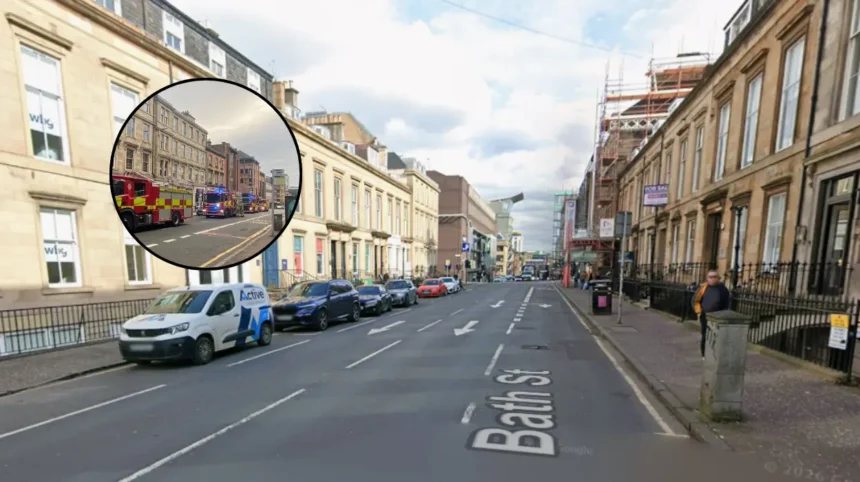
- Emergency services rushed to the Apex City of Glasgow Hotel on Bath Street following a fire alarm activation.
- Five fire engines descended on the location, with three displaying active blue lights.
- Firefighters were observed stationed inside the hotel lobby area while guests were evacuated outside.
- The Scottish Fire and Rescue Service later confirmed that there was no actual fire on the premises.
- A spokesperson clarified that the alarm was inadvertently triggered by steam inside the building.
- Emergency crews cleared the scene shortly after 8:30 AM, allowing guests to be safely escorted back inside.
Glasgow (Glasgow Express) October 6, 2026 — Emergency response teams descended upon a prominent hotel situated in the heart of Glasgow this morning after safety systems were triggered.
As reported by staff journalists at the Glasgow Times, five fire engines were spotted outside the Apex Hotels property located on Bath Street. Witnesses at the scene noted that firefighters were actively stationed inside the hotel’s ground-floor lobby area, while at least three of the responding fire appliances had their emergency blue lights illuminated.
During the unfolding incident, patrons staying at the establishment were required to leave the building. Images captured from the scene by Glasgow Times personnel showed hotel guests standing outside on the pavement waiting for further instructions from emergency personnel.
What caused the emergency evacuation at the Bath Street hotel?
Despite the substantial emergency presence that drew considerable attention from morning commuters and passersby, official representatives confirmed that there was no danger to the public.
According to an official statement from the Scottish Fire and Rescue Service, crews were dispatched directly in response to a fire alarm activation. However, a service spokesperson subsequently clarified that no actual blaze had occurred within the premises. Instead, the sensitive detection equipment had been set off by steam accumulating inside the building.
Following a thorough inspection of the facilities to ensure absolute safety, fire crews stood down and departed the area shortly after 8:30 AM. Hotel management and emergency personnel smoothly coordinated the return of patrons, with guests being escorted back inside the building to resume their normal schedules. Representatives for Apex Hotels were subsequently approached for further comment regarding the incident.
Background of the particular development
The incident highlights the heightened sensitivity and rapid deployment protocols of urban emergency services when dealing with high-occupancy commercial properties in major metropolitan areas like Glasgow. Modern hospitality venues are equipped with advanced, highly sensitive fire detection and suppression systems designed to comply with stringent UK fire safety regulations. Because city centre hotels house large numbers of transient guests who may be unfamiliar with evacuation routes, automated fire alarms are integrated to trigger immediate emergency responses upon detecting smoke, heat, or unusual particulate changes, such as heavy steam. While false alarms caused by steam or cooking vapors can occasionally cause brief disruptions, they underline the reliability of safety protocols engineered to prioritize occupant safety above all else.
Prediction
This development serves as a reminder of the robust safety measures governing the hospitality sector, which will likely reassure guests regarding the swift response times of local authorities. For the particular audience of hotel patrons, frequent travelers, and local Glasgow businesses, such incidents reinforce confidence that emergency protocols are functioning precisely as intended. While minor disruptions like steam-triggered evacuations can cause short-term inconvenience, they ultimately demonstrate that urban safety infrastructure remains exceptionally vigilant, minimizing risks and safeguarding public welfare without causing long-term operational impact to the local tourism and hospitality industry.